Democracy Gone Astray

Democracy, being a human construct, needs to be thought of as directionality rather than an object. As such, to understand it requires not so much a description of existing structures and/or other related phenomena but a declaration of intentionality.
This blog aims at creating labeled lists of published infringements of such intentionality, of points in time where democracy strays from its intended directionality. In addition to outright infringements, this blog also collects important contemporary information and/or discussions that impact our socio-political landscape.

All the posts here were published in the electronic media – main-stream as well as fringe, and maintain links to the original texts.

[NOTE: Due to changes I haven't caught on time in the blogging software, all of the 'Original Article' links were nullified between September 11, 2012 and December 11, 2012. My apologies.]

Showing posts with label Bitcoin. Show all posts

Wednesday, September 27, 2023

Sam Bankman-Fried Accused Of Using $100 Million In Stolen Funds For Political Donations

NEW YORK (Reuters) - Sam Bankman-Fried used money he stole from customers of his FTX cryptocurrency exchange to make more than $100 million in political campaign contributions before the 2022 U.S. midterm elections, federal prosecutors said on Monday.

An amended indictment accused the 31-year-old former billionaire of directing two FTX executives to evade contribution limits by donating to Democrats and Republicans, and to conceal where the money came from.
Monday, July 30, 2018

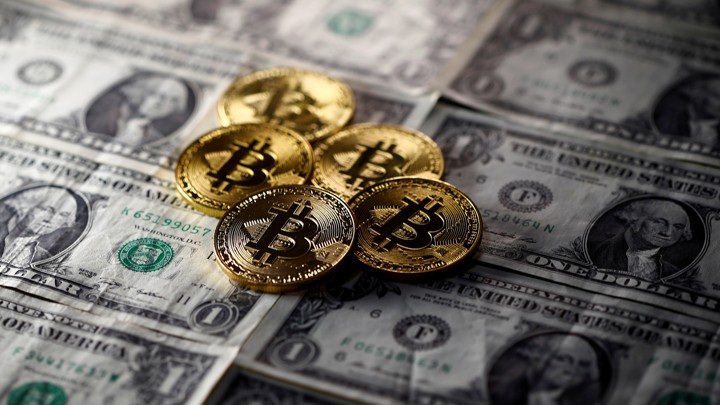
Bitcoin Is a Delusion That Could Conquer the World

A bar of gold. A disk of iron. A chain of beads. A card of plastic. A slip of cotton-linen paper. These things are worthless. One cannot eat them, or drink them, or use them as a blanket. But they are valuable, too. Their value comes from the simplest thing. People believe they are money, and so they are.

If every currency is a consensual delusion, then bitcoin, a digital cryptocurrency that changes hands over the internet, feels more like a consensual hallucination on psychedelic drugs. The concept of bitcoin was born in a detailed white paper published in late 2008 by a pseudonymous “Satoshi Nakamoto.” By 2013, one bitcoin was worth $12. As of this writing, it’s worth more than $10,000. Its value has doubled in the last two months alone. For any currency’s value to increase by 100 percent in eight weeks is, to use a technical term, bonkers. If the Japanese yen or American dollar did the same, their economies would plunge into an infernal deflationary spiral.


Monday, April 15, 2013

The Antisocial Network

Bitcoin’s wild ride may not have been the biggest business story of the past few weeks, but it was surely the most entertaining. Over the course of less than two weeks the price of the “digital currency” more than tripled. Then it fell more than 50 percent in a few hours. Suddenly, it felt as if we were back in the dot-com era.

The economic significance of this roller coaster was basically nil. But the furor over bitcoin was a useful lesson in the ways people misunderstand money — and in particular how they are misled by the desire to divorce the value of money from the society it serves.

Wednesday, April 10, 2013

Bitcoin, Explained

What is a Bitcoin? How did you pay for your coffee this morning, by cash? By credit card? If a growing number of bank-fearing techies have their way, you'll soon be able to pay for that mocha latte through an untraceable virtual currency called Bitcoin. As of this month, Bitcoins are worth over a billion dollars, and interest in the currency is skyrocketing. Here's everything you need to know about a currency that sounds like it belongs in a fantastical realm: You can't touch it, it's prized in the underworld, its creator disappeared in a cloud of mystery, and if you want to keep it safe, you should keep it hidden in a bunch of different places.

Monday, April 08, 2013

The Bitcoin Boom

On March 16th, the Cypriot President Nicos Anastasiades, who’d been in office for about a month, announced a strategy to solve the country’s banking crisis. This plan, which would be funded in part by confiscating money directly from every single bank account in Cyprus—even the very smallest—met with instantaneous and violent opposition from the country’s citizens. Offstage, the European Union, led by a group of adamant Germans, Finns, and Danes, as well as the I.M.F. and the European Central Bank, pointed a cannon at Anastasiades’s head: if he didn’t move forward with this plan, the Cyprus banks would go bust and their hapless customers would lose pretty much all their money, instead of a measly 6.75 per cent. However, under great pressure from their constituents, Cypriot M.P.s rejected the proposal and sent Anastasiades back to the drawing board.