
Showing posts with label Books. Show all posts
Showing posts with label Books. Show all posts
Wednesday, September 27, 2023
AI Isn’t Banning Books in Iowa Schools. Republicans Are.
Monday, December 26, 2016
RUSSIAN PURGE The Horror Story of Publishing Children’s Books in Russia

The book is called Say Hi to Me, it is a primer on refugees for elementary school children, and it contains a map of Russia and its neighbors. One of the countries on the map is Georgia, which Russia invaded in 2008, biting off two small regions. The regions have since declared independence, which is recognized only by Russia, Nicaragua, Venezuela, and the island microstates of Nauru, Tuvalu, and Vanuatu (though Tuvalu later reneged and Vanuatu seems to have had second thoughts). The map in the book shows the regions as being part of Georgia — the way most of the world sees it. But federal law dictates that any published map must reflect Russia’s official view of the world, which is that these tiny regions are independent. It is not clear what the penalty for violating this provision may be, but it’s clear that it spells trouble.
Monday, March 19, 2012
The Printed Word and the New Literary Elite
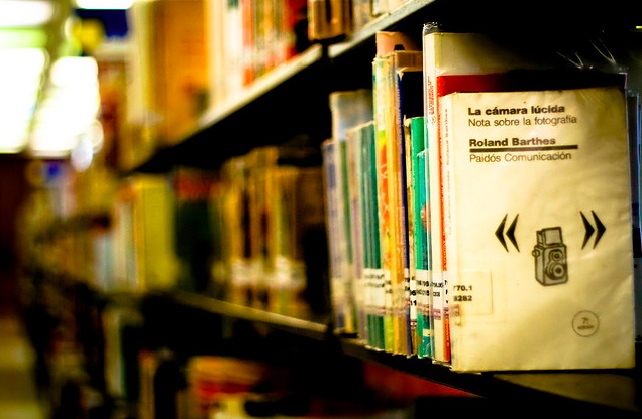 As our cultural products are digitized, the book-as-artifact takes on new cultural meaning.
If you’ve been reading of late, you will surely have read that books
are going out of style, and fast. Headlines proclaiming the ruination of
literature and accompanying doom of civilization have graced the pages
of nearly every heavyweight paper in some form or another. In 2007, The New Yorker’s Caleb Crain lit the literary flame
with his Bradburian headline, “Twilight of the Books: What will life be
like if people stop reading?” Following this, as is so often the case,
was a retort from The Guardian’s Steven Johnson, telling Crain and The New Yorker
to get a grip – the medium was the message here, and the message was
that people are still reading (perhaps even more than before), just not
in print. And for a trend that’s already been observed in a myriad of
other cultural arenas – the shift from vinyl to mp3, analog to digital,
etc. – it seemed a logical evolution.
The digitization of a cultural product feels inevitable, even destined to happen, leaving some to wonder how this hitherto entrenched progression of technology has possibly surprised anyone.
The digitization of a cultural product feels inevitable, even destined to happen, leaving some to wonder how this hitherto entrenched progression of technology has possibly surprised anyone.
Subscribe to:
Posts (Atom)