Democracy Gone Astray

Democracy, being a human construct, needs to be thought of as directionality rather than an object. As such, to understand it requires not so much a description of existing structures and/or other related phenomena but a declaration of intentionality.
This blog aims at creating labeled lists of published infringements of such intentionality, of points in time where democracy strays from its intended directionality. In addition to outright infringements, this blog also collects important contemporary information and/or discussions that impact our socio-political landscape.

All the posts here were published in the electronic media – main-stream as well as fringe, and maintain links to the original texts.

[NOTE: Due to changes I haven't caught on time in the blogging software, all of the 'Original Article' links were nullified between September 11, 2012 and December 11, 2012. My apologies.]

Showing posts with label eBooks. Show all posts

Saturday, October 27, 2012

Amazon tells customer she doesn’t own her e-books

If all the books on your shelf suddenly disappeared, you’d probably say you’d been robbed.

But when a Norwegian woman lost access to her Kindle books without warning, she learned she had never owned them in the first place.

Linn Jordet Nygaard, 30, an IT consultant from Oslo, said the debacle began two weeks ago when her Kindle stopped working; she later discovered she was locked out of her Kindle account, and could not access her library.
Monday, March 19, 2012

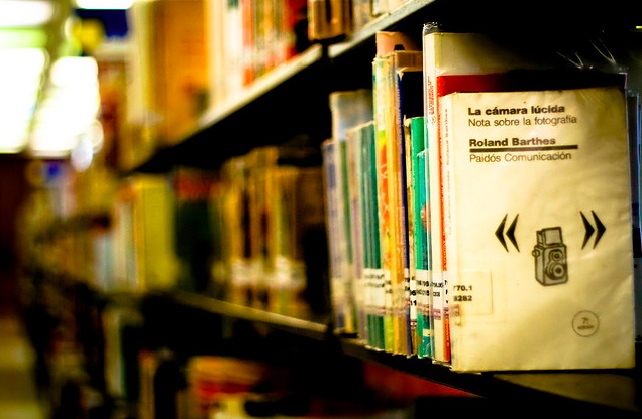
The Printed Word and the New Literary Elite

As our cultural products are digitized, the book-as-artifact takes on new cultural meaning.


If you’ve been reading of late, you will surely have read that books are going out of style, and fast. Headlines proclaiming the ruination of literature and accompanying doom of civilization have graced the pages of nearly every heavyweight paper in some form or another. In 2007, The New Yorker’s Caleb Crain lit the literary flame with his Bradburian headline, “Twilight of the Books: What will life be like if people stop reading?” Following this, as is so often the case, was a retort from The Guardian’s Steven Johnson, telling Crain and The New Yorker to get a grip – the medium was the message here, and the message was that people are still reading (perhaps even more than before), just not in print. And for a trend that’s already been observed in a myriad of other cultural arenas – the shift from vinyl to mp3, analog to digital, etc. – it seemed a logical evolution.

The digitization of a cultural product feels inevitable, even destined to happen, leaving some to wonder how this hitherto entrenched progression of technology has possibly surprised anyone.