
Showing posts with label CISPA. Show all posts
Showing posts with label CISPA. Show all posts
Tuesday, April 23, 2013
Anonymous and Libertarians Protest CISPA; Tech Giants Don't Give a Damn
Monday, April 22, 2013
CISPA Amendment Banning Employers From Asking For Facebook Passwords Blocked

A last-minute amendment to the Cyber Intelligence Sharing and Protection Act -- known as CISPA -- banning such a practice was blocked by members of the U.S. House of Representatives, despite the passage of the broad cybersecurity bill overall.
The provision, proposed by Rep. Ed Perlmutter (D-Co.), was voted down 224-189, with Republicans constituting the majority.
Thursday, April 18, 2013
CISPA Vote: House Passes Cybersecurity Bill To Let Companies Break Privacy Contracts
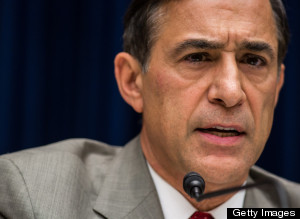
The Cyber Intelligence Sharing and Protection Act, known as CISPA, passed by a margin of 288 to 127, despite receiving a late veto threat from the Obama administration, which warned that the bill does not sufficiently protect civil liberties. The veto threat was particularly noteworthy, given President Barack Obama's Department of Justice has been urging Congress to expand its data-gathering and cybercrime powers for years. Congress shelved a similar bill last year after the White House expressed its formal opposition.
Wednesday, April 17, 2013
Mike Rogers: CISPA Cybersecurity Bill Opponents Are Teens In Their Basements

The bipartisan Cyber Intelligence Sharing and Protection Act, known as CISPA, aims to defend U.S. industries and corporate networks from cyber attacks by foreign governments, terrorist groups and other criminals. CISPA backers in the House of Representatives laid out their rationale during a hearing Tuesday afternoon when Rogers, the chief sponsor, invoked his 14-year-old nephew to describe the bill's opponents.
Thursday, May 24, 2012
Senate Advances Expanded, "Orwellian" Gov’t Surveillance With FISA Amendments, CISPA
 The Senate is closer to renewing controversial measures that critics
say would allow the emails and phone calls of U.S. citizens to be
monitored without a warrant. The Select Committee on Intelligence has
voted to extend controversial amendments to the Foreign Intelligence
Surveillance Act that were set to expire at the end of this year. “What
we’re asking is that they slow down this process and start first with
the question: What type of information are they picking up? How many
Americans are being affected? What is the government doing with it?,”
says Michelle Richardson of the American Civil Liberties Union, which
has sued over the U.S. government’s surveillance practices, saying
agencies would be able to tap their communications with clients and
sources overseas.
The Senate is closer to renewing controversial measures that critics
say would allow the emails and phone calls of U.S. citizens to be
monitored without a warrant. The Select Committee on Intelligence has
voted to extend controversial amendments to the Foreign Intelligence
Surveillance Act that were set to expire at the end of this year. “What
we’re asking is that they slow down this process and start first with
the question: What type of information are they picking up? How many
Americans are being affected? What is the government doing with it?,”
says Michelle Richardson of the American Civil Liberties Union, which
has sued over the U.S. government’s surveillance practices, saying
agencies would be able to tap their communications with clients and
sources overseas.We’re also joined by William Binney, who served in the National Security Agency for nearly 40 years, including a stint as technical director of its World Geopolitical and Military Analysis Reporting Group. Since retiring from the NSA in 2001, Binney has warned that the NSA’s data-mining program has become so vast that it could “create an Orwellian state.” "This is a continuation of the mindless legislation that our Congress has been putting out just to justify what they’ve been doing for a decade or more,” Binney says. “Instead of living up to their oath of office [and] defend the Constitution, they’ve decided to violate the civil liberties and the rights of all U.S. citizens." The Senate is also set to vote soon on the Cyber Intelligence Sharing and Protection Act — a bill opposed by many civil liberties and privacy groups.
Video
Source: Democracy Now!
Author: --
Friday, April 27, 2012
Paranoia About CISPA Is Justified

Civil-liberties groups have various objections to the bill.
The ACLU conjures up a problematic scenario that could happen if it passes. "Imagine you are emailing your doctor from your Gmail account about a medical condition. Your doctor pulls up your medical records from his cloud storage server and sends them your way. Somewhere in that communication, a virus crops up," staffer Zachary Katznelson writes. "Under CISPA, Google could send your emails, including the electronic copy of your medical records, to the NSA, so they can gather information on the virus. But, Google would be under no obligation whatsoever to scrub out your private details -- which have nothing to do with the virus. And now your medical records are in government hands indefinitely -- and the government can use them."
CISPA Passes House: Cybersecurity Bill Approved Despite White House Veto Threat

The bill passed 248 to 168, largely along party lines, despite the Obama administration's threats to veto the bill and its claims that the bill falls short in protecting civil liberties
The Cyber Intelligence Sharing and Protection Act, or CISPA, sponsored by Reps. Mike Rogers (R-Mich.) and Dutch Ruppersberger (D-Md.), would give businesses and the federal government legal protection to share information about cyber-threats with each other. The government does not currently share that data because the information is classified and companies fear violating anti-trust law. The bill would remove legal barriers so they can do so.
On the House floor before the vote, Rogers said the bill was about preventing other nations from stealing intellectual property from U.S. companies.
“You know, without our ideas, without our innovation that countries like China are stealing every single day, we will cease to be a great nation," Rogers said. "They are slowly and silently and quickly stealing the value and prosperity of America."
Thursday, April 26, 2012
CISPA Critics Warn Cybersecurity Bill Will Increase Domestic Surveillance and Violate Privacy Rights
 As it heads toward a House vote, critics say the Cyber Intelligence Sharing and Protection Act (CISPA)
would allow private internet companies like Google, Facebook and
Microsoft to hand over troves of confidential customer records and
communications to the National Security Agency, FBI and Department of Homeland Security, effectively legalizing a secret domestic surveillance program already run by the NSA.
Backers say the measure is needed to help private firms crackdown on
foreign entities — including the Chinese and Russian governments —
committing online economic espionage. The bill has faced widespread
opposition from online privacy advocates and even the Obama
administration, which has threatened a veto. "CISPA
… will create an exception to all existing privacy laws so that
companies can share very sensitive and personal information directly
with the government, including military agencies like the National
Security Agency," says Michelle Richardson, legislative counsel for the
American Civil Liberties Union. "Once the government has it, they can
repurpose it and use it for a number of things, including an undefined
national security use."
As it heads toward a House vote, critics say the Cyber Intelligence Sharing and Protection Act (CISPA)
would allow private internet companies like Google, Facebook and
Microsoft to hand over troves of confidential customer records and
communications to the National Security Agency, FBI and Department of Homeland Security, effectively legalizing a secret domestic surveillance program already run by the NSA.
Backers say the measure is needed to help private firms crackdown on
foreign entities — including the Chinese and Russian governments —
committing online economic espionage. The bill has faced widespread
opposition from online privacy advocates and even the Obama
administration, which has threatened a veto. "CISPA
… will create an exception to all existing privacy laws so that
companies can share very sensitive and personal information directly
with the government, including military agencies like the National
Security Agency," says Michelle Richardson, legislative counsel for the
American Civil Liberties Union. "Once the government has it, they can
repurpose it and use it for a number of things, including an undefined
national security use."Video
Source: Democracy Now!
Author: ---
Subscribe to:
Posts (Atom)