Democracy Gone Astray

Democracy, being a human construct, needs to be thought of as directionality rather than an object. As such, to understand it requires not so much a description of existing structures and/or other related phenomena but a declaration of intentionality.
This blog aims at creating labeled lists of published infringements of such intentionality, of points in time where democracy strays from its intended directionality. In addition to outright infringements, this blog also collects important contemporary information and/or discussions that impact our socio-political landscape.

All the posts here were published in the electronic media – main-stream as well as fringe, and maintain links to the original texts.

[NOTE: Due to changes I haven't caught on time in the blogging software, all of the 'Original Article' links were nullified between September 11, 2012 and December 11, 2012. My apologies.]

Showing posts with label Colonialism. Show all posts

Sunday, July 22, 2018

Removing monuments to Canadians who helped conquer Africa

Some good might come in Canada from neo-fascists marching in Charlottesville, Virginia.
Taking advantage of media interest in protests over monuments to historical figures with racist views activists in Halifax are pushing to remove commemorations to two individuals who helped conquer Africa. And there's no lack of other such memorials to target across the Great White North.

Wednesday, July 20, 2016

Britain’s New Foreign Secretary Says British Colonialism In Africa Wasn’t So Bad

Following the resignation of British Prime Minister David Cameron, new PM Theresa May named her Cabinet Wednesday. One of the most notable names on the list was pro-Brexiter and former London Mayor Boris Johnson, who was appointed Foreign Secretary.

Critics of Johnson’s appointment have already pointed out his numerous gaffes and propensity for offending foreign leaders. Many media outlets published articles listing all the various countries that Johnson has offended during his reign as mayor.

Sunday, February 28, 2016

Corporate Canada And Africa's Last Colony

In violation of international law two major Canadian companies are buying the non-renewable resources of Africa's last remaining colony.

Saskatoon's PotashCorp and Calgary's Agrium have partnered with Morocco's state owned OCP to export phosphate mined in Western Sahara, a sparsely populated territory in northwestern Africa that was ruled by Spain until 1975. When the Spanish departed Moroccan troops moved in and a bloody 15 year war drove tens of thousands of Sahrawi into neighboring Algeria, where they still live in camps.

Friday, February 12, 2016

Marc Andreessen Riles Up Twitter After Defending Colonialism In India

Venture capitalist and Facebook board member Marc Andreessen was, unsurprisingly, disappointed that India's telecom regulator recently thwarted Facebook's plans to expand Free Basics, the company's free but limited Internet service aimed at developing markets. On Tuesday, Andreessen turned to Twitter to air his grievances:


Wednesday, October 01, 2014

Julian Assange Fires Back At Eric Schmidt And Google's 'Digital Colonialism'

ECUADORIAN SOIL -- A police officer stands just inside the lobby of 3 Hans Crescent, a nondescript apartment building just around the corner from Harrods of London and a few blocks south of Hyde Park. He's watching the door to apartment 3b, a mini-flat that has for two years been the home of WikiLeaks' Julian Assange.

On the building's stoop stands another cop. Near him is parked a festive, multicolored paddy wagon. Several other officers loiter nearby, all of them charged with making sure Assange doesn't step outside the apartment, the home of the Ecuadorian Embassy, where he has asylum.

Friday, February 01, 2013

Choosing not to look away: Confronting colonialism in Canada

Canada has "no history of colonialism." So said Stephen Harper in 2009. Today the Idle No More movement is shouting down this lie through actions both creative and courageous. In its place, it is telling Canadians at large what some of us have always known: that the country we live in was founded as -- and continues to be -- a colonial-settler state.

Colonialism involves one society seeking to conquer another and then rule over it. European countries worked to conquer the Americas, Africa and most of Asia between the end of the 1400s and the 1800s. In the beginning, the goal was usually to gain access to resources -- including gold, silver, furs and fish -- that could give a boost to the feudal societies that existed in most of Europe at that time.

Thursday, January 31, 2013

'Idle No More' and colonial Canada

Canada's colonial reality is now in the spotlight, as Idle No More protests voice the struggles of indigenous people against sustained political and economic oppression.

Thousands are joining historic actions to call for fundamental changes in Canada's relations to aboriginal people.

Central to Idle No More are longstanding indigenous demands for justice around land rights, economic resources and self-determination that rest at the heart of both Canada's history and future.

Friday, January 18, 2013

"Unintended Consequences of Military Intervention": Roots of Mali, Algeria Crisis Tied to Libya War

In Algeria, at least 22 foreign hostages remained unaccounted for in what has been described as one of the biggest international hostage crises in decades. Islamist militants opposed to the French air strikes in neighboring Mali seized a gas facility near the Libyan border. It remains unclear how many people died on Thursday when Algerian forces stormed the desert gas complex to free the workers. Meanwhile, the Obama administration has acknowledged it is now directly aiding France’s military operation in Mali. We speak to Emira Woods, co-director of Foreign Policy In Focus at the Institute for Policy Studies.

Video
Source: Democracy Now!
Author: --

Friday, October 19, 2012

Britain goes to trial for colonial crimes Kenyans look for financial compensation and a state apology for torture committed 60 years ago

As of this month, the British Empire is on trial. Or so goes the story in London.

On Oct. 5, a British high court ruled that three elderly Kenyans who were tortured and abused by colonial authorities in Kenya in the 1950s can proceed with their case against the British government. They are asking for financial compensation and a state apology. Pushing aside the claims of the Foreign and Commonwealth Office (FCO) that too much time has elapsed for a fair trial, and that modern-day Britain is not to blame for the wrongs of its colonial forebears, the high court has, for the first time, allowed colonial victims to sue the British state.

Monday, October 08, 2012

Dennis Banks: Palestinian Suffering Under U.S.-Backed Occupation Recalls Plight of Native Americans

Dennis Banks, the legendary Native American activist and co-founder of the American Indian Movement, was in New York City this weekend to serve as a jurist at the Russell Tribunal on Palestine, an international people’s tribunal created in 2009 to bring attention to the responsibility other states bear for Israel’s violations of international law. Banks says, "What is happening to [Palestinians] is what we went through during the last century. It is, unfortunately, the same people [backing it]: it is the U.S. government which funnels money to Israel, and then it goes to hurt the Palestinian people."

Video
Source: Democracy Now!
Author: --

Sunday, April 29, 2012

Britain destroyed records of colonial crimes

Thousands of documents detailing some of the most shameful acts and crimes committed during the final years of the British empire were systematically destroyed to prevent them falling into the hands of post-independence governments, an official review has concluded.

Those papers that survived the purge were flown discreetly to Britain where they were hidden for 50 years in a secret Foreign Office archive, beyond the reach of historians and members of the public, and in breach of legal obligations for them to be transferred into the public domain.

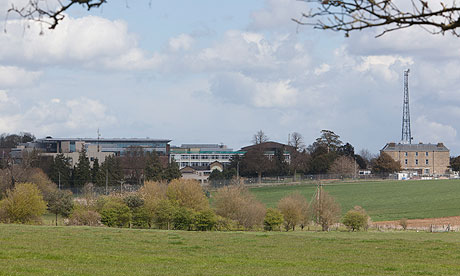
The archive came to light last year when a group of Kenyans detained and allegedly tortured during the Mau Mau rebellion won the right to sue the British government. The Foreign Office promised to release the 8,800 files from 37 former colonies held at the highly-secure government communications centre at Hanslope Park in Buckinghamshire.

The historian appointed to oversee the review and transfer, Tony Badger, master of Clare College, Cambridge, says the discovery of the archive put the Foreign Office in an "embarrassing, scandalous" position. "These documents should have been in the public archives in the 1980s," he said. "It's long overdue." The first of them are made available to the public on Wednesday at the National Archive at Kew, Surrey.