Democracy Gone Astray

Democracy, being a human construct, needs to be thought of as directionality rather than an object. As such, to understand it requires not so much a description of existing structures and/or other related phenomena but a declaration of intentionality.
This blog aims at creating labeled lists of published infringements of such intentionality, of points in time where democracy strays from its intended directionality. In addition to outright infringements, this blog also collects important contemporary information and/or discussions that impact our socio-political landscape.

All the posts here were published in the electronic media – main-stream as well as fringe, and maintain links to the original texts.

[NOTE: Due to changes I haven't caught on time in the blogging software, all of the 'Original Article' links were nullified between September 11, 2012 and December 11, 2012. My apologies.]

Showing posts with label Ed Broadbent. Show all posts

Friday, April 10, 2015

Ed Broadbent Says Canada Became More Unequal Under Stephen Harper

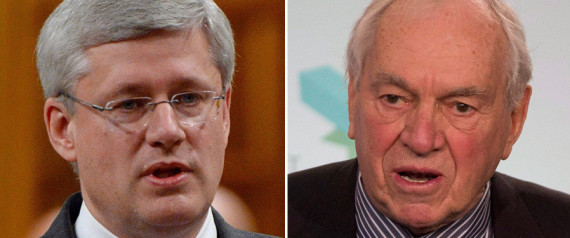
Canada has become a more unequal society under Stephen Harper, says Ed Broadbent, former head of the federal New Democratic Party and now chair of the Broadbent Institute, a progressive think-tank.

By failing to invest in universal child care and concentrating on the petroleum sector to the exclusion of other areas of the economy, Harper has moved Canada away from the path set by many western European democracies, Broadbent said.

Monday, March 30, 2015

Anti-terror bill threatens Charter rights, Ed Broadbent warns

The federal Conservative government is jeopardizing the civil rights of Canadians through its anti-terrorism legislation and has sat idly by as a wealth gap makes this a “vastly unequal country,” says former NDP leader Ed Broadbent.

Moreover, he says that as Canadian voters prepare for a federal election this year, they must consider replacing Prime Minister Stephen Harper’s Tories after nearly a decade in power.

Broadbent says Harper is wrong to boast about his economic record – as “good jobs” increasingly become scarce – and that the governing Conservatives have abandoned environmental regulation in favour of letting oil companies “trample” the interests of many communities and First Nations.

Wednesday, February 27, 2013

Manning and Broadbent find common ground

A political odd couple is backing an opposition motion allowing Canadians to sign online petitions, and even trigger a House of Commons debate, on issues that concern them.

Reform party founder Preston Manning, one of the most respected voices in the Canadian conservative movement, is endorsing B.C. New Democratic Party MP Kennedy Stewart's motion to be voted on before the summer break.

He joins former NDP leader Ed Broadbent as well as 20 MPs, including two Conservatives, who have formally endorsed the motion.

Tuesday, October 09, 2012

What kind of Canada do we want?

Canada is in the process of destroying decades of progress. We are developing limited, American-style access to social programs, our employment insurance system is being slowly starved to death, tuition fees are skyrocketing — all in the name of “austerity.”

Is this the kind of Canada we want to leave to future generations?

Inequality has increased substantially in recent years. Our national income is rising, yet it mainly benefits the top 1 per cent of Canadians, to the detriment of middle-class families whose incomes have stagnated. And far too many Canadians still live in poverty — and even more are unemployed or underemployed.

Broadbent Institute makes income inequality its first focus

The new social democratic think-tank named after former NDP leader Ed Broadbent wants to spark a national policy debate by building on the central theme of last year's Occupy Movement.

In a preface to The Broadbent Institute's first full policy report, "Towards a More Equal Canada," Broadbent calls growing inequality "the defining political issue of our time," saying Canada is "moving in the wrong direction."

The report's release today is accompanied by a YouTube video narrated by Broadbent himself, in which a "Play-Doh Ed" armed with a marker and whiteboard sketches out the causes and impact of growing disparities in Canadian incomes.

Canada must move on income inequality: Broadbent Institute

OTTAWA — Canada is moving in the wrong direction and must address its extreme and growing income inequality, according to a new discussion paper from the Broadbent Institute.

The paper, released to Postmedia News on Monday, argues that developing a comprehensive policy agenda — which could include affordable housing, improvements to Employment Insurance, “fair” taxes and a national prescription drug program — is needed to address the problem.

Income Inequality In Canada: Ed Broadbent Wants To Give Tories 'A Good Shake'

hereEd Broadbent has a novel idea for convincing Prime Minister Stephen Harper and other Conservative politicians to care about income inequality.
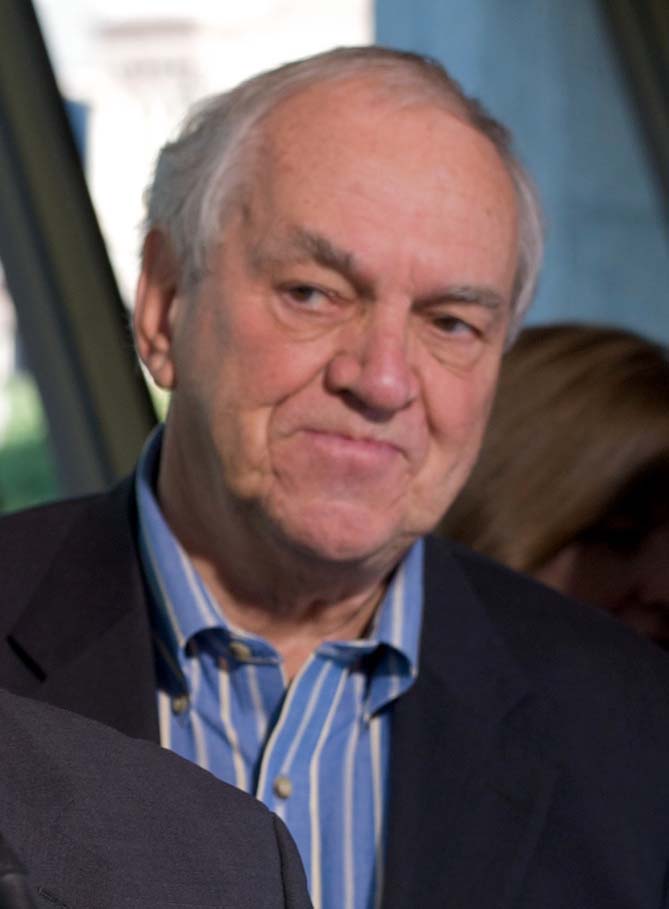
“I would like to take them all and give them a good shake, and take them back to talk to their parents or grandparents,” he said.

Gap between rich and poor is the defining issue of our time: Broadbent Institute

A year after the Occupy movement set up camps in cities around the world to protest economic disparities, the institute founded by former NDP leader Ed Broadbent has conducted a study that says income inequality is the defining issue of our time.

“Reasonable people can differ over what income and wealth differences are needed to provide incentives and appropriate motivation in a market economy,” said the report released Tuesday. “But extreme economic inequality clearly undermines equal developmental opportunities and individual freedom since unequal economic resources give rise to significant imbalances of power.”

Tuesday, March 20, 2012

What Broadbent said

Given the reaction in political circles in the last few days, one might think Ed Broadbent had said something truly controversial, even offensive. But the former leader of the NDP merely expressed his opinions about two of the leadership candidates in the current race.

Broadbent had already endorsed Brian Topp, but found it necessary, about a week before the convention, to express his concerns about the personality and ideology of Thomas Mulcair, who seems to have momentum.

A Canadian Press story called Broadbent's comments a "grenade lobbed into the NDP leadership race." Postmedia columnist Michael Den Tandt wrote that it "shows appalling judgment. It dramatically increases the odds that, should Mulcair lose, the NDP will lose Quebec." Chantal Hébert wrote in the Toronto Star that "Broadbent has poisoned the well for whoever wins the leadership this week - including his own favourite Brian Topp."

Monday, March 19, 2012

Broadbent's attack on Mulcair shows appalling judgment

Jack Layton, among other talents, played a not-bad 12-string guitar and had a pleasant baritone. One of his favourite tunes, a comedic lament, was something he called 'the NDP Blues.' Canadians love the New Democrats between elections, Layton would croon, with mock sorrow. But on voting day they flee to Liberal red or Conservative blue, leaving the orange high and dry.

NDP patriarch Ed Broadbent, apparently, would like for his beloved New Democrats to keep warbling that song in perpetuity. How else to explain Broadbent's extraordinary and uncharacteristically nasty 11th-hour intervention in the NDP leadership race? Brian Topp, Broadbent's favourite, has promised to hew to the NDP's history as a tax-and-spend, niche party of the left. Thomas Mulcair wants to renew and refurbish, with a view to forming government. This, and little else, will be at issue this weekend at the party's leadership convention in Toronto.

Sunday, March 18, 2012

Will Broadbent’s bomb turn out to be a bust?

Ed Broadbent has gone nuclear on Thomas Mulcair. It is a strange thing to see one of the NDP's most respected senior statesman look to blow up the campaign of the apparent front-runner. Who knew the holier than thou NDP were capable of such primal political behaviour?

It is well known I am no fan of Mr. Mulcair but I didn't know Mr. Broadbent shared such a visceral view of the surly NDP member from Outremont. It is certainly well known in Ottawa that Mulcair prefers to scorch the earth rather than engage in the co-operative farming process his many colleagues prefer.

I honestly have no idea what impact Mr. Broadbent's sermon on the tomfoolery of taking Thomas to the top will have on NDP members as they vote for a new leader. But I know such extreme preaching often blows up on the preacher blowing past the congregation he is trying to sway.

Broadbent attack on Mulcair reverberates in NDP leadership contest

OTTAWA - The grenade lobbed into the NDP leadership race by former leader Ed Broadbent continues to reverberate.

Supporters of front-runner Thomas Mulcair, the target of some blunt criticism from Broadbent on Thursday, say the unprecedented attack has backfired, repulsing many New Democrats who fear for the long-term unity of the party.

And they say it has made Brian Topp, Broadbent's preferred choice for leader, look desperate.

But Topp's backers believe the intervention has helped define the race, heading into the final week, as a fundamental choice between Mulcair and Topp, sidelining the other five contenders.

For his part, Broadbent insists he'll support whoever wins.

Broadbent gave a series of interviews Thursday in which he questioned Mulcair's temperamental suitability to lead the party, denounced his apparent willingness to turn the NDP into a more centrist party and accused him of taking undue credit for the party's electoral success in Quebec.

Thursday, March 15, 2012

Broadbent blasts Mulcair, warns against pushing NDP toward centre

After providing an early boost to backroom strategist Brian Topp, NDP sage Ed Broadbent is now taking aim at the leadership candidacy of Thomas Mulcair and his promise to modernize the party.

In his first public comments on the matter, Mr. Broadbent raised concerns about the future of the New Democratic Party as a social-democratic force if its 130,000 members choose the centrist Mr. Mulcair at the Toronto leadership convention on March 24.

“It would be a central mistake for us to move in a calculating way to the centre,” Mr. Broadbent said from his home in Ottawa this week.

Mr. Broadbent also wondered openly about Mr. Mulcair’s abilities as a leader, namely in terms of maintaining cohesion among the large 101-member Official Opposition caucus. His comments echoed a concern among NDP workers and supporters about Mr. Mulcair’s temper, which he has carefully kept in check during the seven-month race.