
Showing posts with label Charter of Rights. Show all posts
Showing posts with label Charter of Rights. Show all posts
Sunday, February 26, 2017
Supreme Court ruling in Ernst fracking case poses threat to Charter rights
Sunday, December 25, 2016
Bill C-51 is violating our Charter rights and Canada doesn't care

We are given a unique opportunity to voice our concerns of our unbridled national security apparatus. We need to push for a national security platform that is mandated to respect human rights (domestically, and abroad) and held accountable to those standards. Before this, we need to understand some of the major human rights concerns that this legislation enables.
Sunday, January 24, 2016
Charter Rights at Issue in Fracking Supreme Court Case

Jessica Ernst claims fracking contaminated the water supply at her homestead near Rosebud, about 110 kilometres east of Calgary. She is seeking $33 million in damages.
Ernst is also taking on the agency that regulates the energy industry in Alberta, claiming it has denied her the right to raise her concerns effectively and is shielded by unconstitutional legislation that bar citizens from suing it for wrongdoing.
Tuesday, October 06, 2015
Lawyer’s lawsuit highlights Ottawa’s court clashes over Charter rights

Monday, in an Ottawa courtroom, his lawsuit against the Justice Minister, deputy justice minister and the department comes to trial, calling attention to an issue that has received little notice thus far in the federal election campaign: the Conservative government’s frequent clashes with the courts over the Charter of Rights.
Monday, March 30, 2015
Anti-terror bill threatens Charter rights, Ed Broadbent warns

Moreover, he says that as Canadian voters prepare for a federal election this year, they must consider replacing Prime Minister Stephen Harper’s Tories after nearly a decade in power.
Broadbent says Harper is wrong to boast about his economic record – as “good jobs” increasingly become scarce – and that the governing Conservatives have abandoned environmental regulation in favour of letting oil companies “trample” the interests of many communities and First Nations.
Saturday, November 29, 2014
Anti-terror bill C‑44: Pushing the limits of Canadian rights
 On October 29, 2014 the government introduced Bill C‑44, an Act to amend the Canadian Security Intelligence Service Act and other (related) Acts, cited in short form as the Protection of Canada from Terrorists Act. Public Safety Minister Steven Blaney statedthat the amendments put forward under Bill C‑44 are required to keep Canadians safe from terrorism and to protect and uphold the privacy of confidential informants. However, in achieving the government's stated goals, Bill C‑44 deliberately pushes the limits of Canadians' right to privacy, protection from unreasonable search and seizure, and the right to life, liberty and security of the person.
 Tory Bill To Boost CSIS Spying Powers Abroad Is Constitutional, Official Says
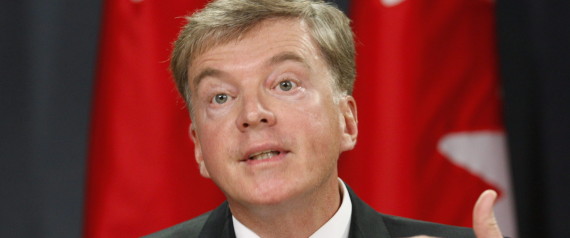
At a Commons committee meeting, Francois Guimont assured MPs that Justice Department lawyers had vetted the legislation against the Charter of Rights and Freedoms.
Friday, August 22, 2014
Lawsuit Over U.S. FATCA Law Alleges 1 Million Canadians Had Charter Rights Violated

Gwen Deegan of Toronto and Ginny Hillis of Windsor, Ont., have launched a claim against the Attorney General of Canada.
In it, they accuse Ottawa of breaching the Constitution by complying with a sweeping new American tax fraud law, known as the Foreign Account Tax Compliance Act.
Monday, June 30, 2014
Stephen Harper Failing To Protect Charter Rights, Lawyers Claim

Simon Potter, a past president of the association, is to deliver that scathing message in the keynote address to the day-long conference on the state of constitutional law in Canada.
Saturday, October 26, 2013
Canadian spy agency sued for allegedly violating charter

Speaking on Tuesday morning in Vancouver, representatives for the two civil rights groups said the broad and unchecked surveillance of Canadians by the spy agency is unconstitutional.
Sunday, March 24, 2013
'There is no right to protest': Montreal police deny Charter rights
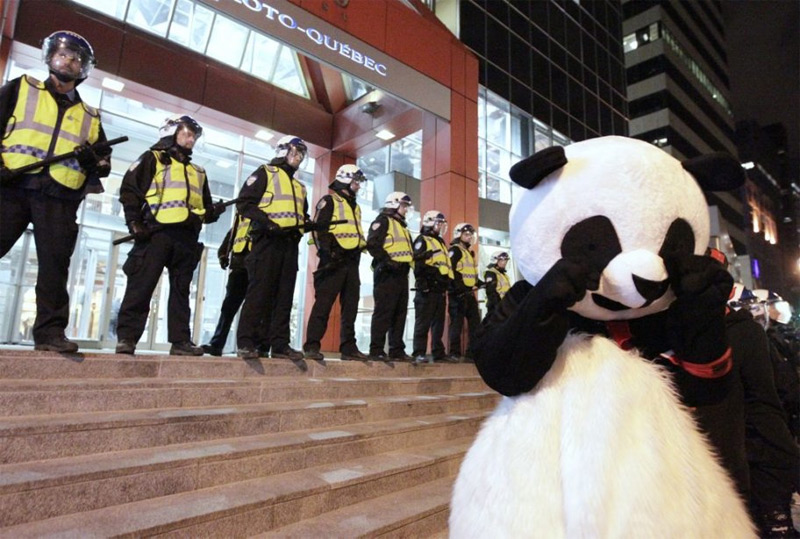
"Did they really, actually arrest Anarchopanda????" replied well known Québécoise pundit Josée Legault.
Friday, March 22, 2013
All rights, including speech rights, are subject to limits

First, several comments suggest that the case poses a “danger” to free speech, and that the court failed to consider meaningfully the interests of free speech. The reality is that the court held that portions of the hate speech provisions in Saskatchewan’s human rights code did violate free speech rights, and that the violation was an infringement of Charter rights.
Thursday, March 07, 2013
NDP MP claims failure to Charter-proof bills breaches privilege
As the Senate ponders whether to order the parliamentary budget office to cease and desist his efforts to seek clarity from the courts on the extent of his mandate, another ongoing federal court case has sparked a sweeping privilege claim from New Democrat MP Pat Martin.
Yesterday afternoon, Martin made his case for what he described as an "unprecedented" potential breach of privilege.
Yesterday afternoon, Martin made his case for what he described as an "unprecedented" potential breach of privilege.
Thursday, January 17, 2013
Does Nature Belong in Canada's Charter?

Sunday, October 28, 2012
Moving trials along an ongoing struggle, top judge concedes Read more: http://www.ctvnews.ca/politics/moving-trials-along-an-ongoing-struggle-top-judge-concedes-1.1013893#ixzz2AcoJ5M6m

In an interview broadcast on CTV’s Question Period Sunday, Supreme Court Chief Justice Beverley McLachlin said expediting trials while still following proper procedure is an ongoing difficulty.
Monday, July 16, 2012
Peckford writes alternate version of Canada’s Constitution

That’s Brian Peckford’s problem now. The former Newfoundland premier is determined to set the record straight on how the agreement came about in November 1981 to patriate the Constitution. He has written a political memoir that aims to change the story of how the deal went down.
Thursday, June 07, 2012
Charter Anniversary: Tories Nixed Elaborate Birthday Party For Canadian Charter Of Rights And Freedoms
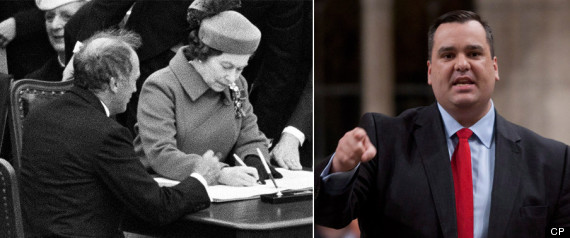
Instead, the idea of a ceremony to commemorate the charter's 30th anniversary in April was overruled by Heritage Minister James Moore in favour of a terse press release.
The plan, obtained by The Canadian Press under Access to Information, was drafted in February, less than two months before the milestone.
Bureaucrats proposed birthday party for charter, but Tories refused to RSVP

Instead, the idea of a ceremony to commemorate the charter's 30th anniversary in April was overruled by Heritage Minister James Moore in favour of a terse press release.
The plan, obtained by The Canadian Press under Access to Information, was drafted in February, less than two months before the milestone.
The Proclamation of the Constitution Act was signed on a rainy Saturday in 1982, giving Canada full control over its foundational laws and bringing the charter into force.
Sunday, May 20, 2012
Hey Parliament, Keep Your Laws Off my Body
Canadian women won equality rights 27 years ago when the gender equality clause in our Charter of Rights and Freedoms took effect in 1985. Our Supreme Court has since protected and advanced women's constitutional rights on numerous occasions. Yet, several times since the turn of the 21st century, Parliament has seen fit to debate whether women's rights should be restricted. How can this happen?
I'm speaking of course of the abortion debate, in which anti-choicers pretend that it's all about saving an unprotected class of "human beings" -- fetuses and embryos -- and not about completely subordinating pregnant women to their childbearing function, including forcing women by law to forfeit their own health and lives if necessary. Most anti-choicers, including Canada's national anti-choice group Campaign Life Coalition, want to ban abortion under all circumstances, including to save the woman's life.
I'm speaking of course of the abortion debate, in which anti-choicers pretend that it's all about saving an unprotected class of "human beings" -- fetuses and embryos -- and not about completely subordinating pregnant women to their childbearing function, including forcing women by law to forfeit their own health and lives if necessary. Most anti-choicers, including Canada's national anti-choice group Campaign Life Coalition, want to ban abortion under all circumstances, including to save the woman's life.
Saturday, May 19, 2012
The Charter guarantees 'peaceful' assembly

The students and their leaders have behaved outrageously. Only all-out victory will satisfy them. Thus, they are not partners for negotiations. They demand their constitutional rights be protected, as if their rights were absolute, yet they have no compunction about trampling on the rights of others.
Subscribe to:
Posts (Atom)