Democracy Gone Astray

Democracy, being a human construct, needs to be thought of as directionality rather than an object. As such, to understand it requires not so much a description of existing structures and/or other related phenomena but a declaration of intentionality.
This blog aims at creating labeled lists of published infringements of such intentionality, of points in time where democracy strays from its intended directionality. In addition to outright infringements, this blog also collects important contemporary information and/or discussions that impact our socio-political landscape.

All the posts here were published in the electronic media – main-stream as well as fringe, and maintain links to the original texts.

[NOTE: Due to changes I haven't caught on time in the blogging software, all of the 'Original Article' links were nullified between September 11, 2012 and December 11, 2012. My apologies.]

Showing posts with label Energy. Show all posts

Saturday, August 11, 2018

With the U.S. focused on election interference, Putin puts his energy gambit into action

As the FBI drills down in its investigation into Russian interference in the 2016 election and the Pentagon vows to build new capabilities to take on Russian weapons, Russia is, in plain sight, also working on a global power grab with its energy gambit.

Nord Stream 2, the deal that prompted President Donald Trump to blow a gasket at the NATO summit earlier this month, has Germany doubling the amount of natural gas it is buying from Russia. Russia is also building a pipeline through Turkey, reaching Eastern Europe, hoping to close the European loop.

Tuesday, July 24, 2018

Australia's energy policy is a world-class failure and Abbott wears the gold medal of blame

If you’ve watched the inglorious spectacle of the failure of Australian politics on climate and energy policy over the last 10 years, it’s a bit hard to look out on the wreckage without feeling sick to the stomach.

But look we must and, if we look now, we are able to chart the consequences of abject failure in highly specific ways.

What Australians are experiencing now – rising prices, rising emissions and a grid that creaks and sputters in extreme weather – is the logical consequence of a decade of unconscionable public policy failure.

Wednesday, April 06, 2016

Here's Another Way Politicians Are Screwing You Over

Let's talk about climate change, for once without politics. Instead, money.

That's right. Forget the red and blue, the heated tempers and rising rhetoric. Instead think about the coal factories that still power much of the country, and who pays for every pound of carbon they add to the atmosphere. Right now, your state is making bets on its future economy, by choosing whether or not to change those factories by acting preemptively on a contested emissions rule.

Wednesday, January 27, 2016

How Much Of Canada's Energy Industry Is Foreign-Owned? Good Question

OTTAWA — Prime Minister Justin Trudeau's attempt Friday to attract more foreign investment to Canada comes as the government struggles to get a handle on exactly what foreigners own in the country's crucial oil and gas sector.

Documents obtained by The Canadian Press show the Finance Department only has a rough estimate on foreign ownership in the energy sector — a key destination for investment from abroad.

Saturday, August 22, 2015

Canadian Province Pulls the Plug on Renewable Energy Program

LONDON—The Canadian province of Nova Scotia, on the country’s Atlantic seaboard, has ended a programme which gave citizens an incentive to produce renewable energy.

The decision, which will initially mean lower prices for energy users, is at odds with widespread warnings that renewable energy must rapidly replace fossil fuels.

One Nova Scotian told the Climate News Network the government’s decision was a backwards step: “They have not only cut the legs out from under independent energy developers…they have stolen citizens’ right to access ownership of energy.”

Thursday, June 25, 2015

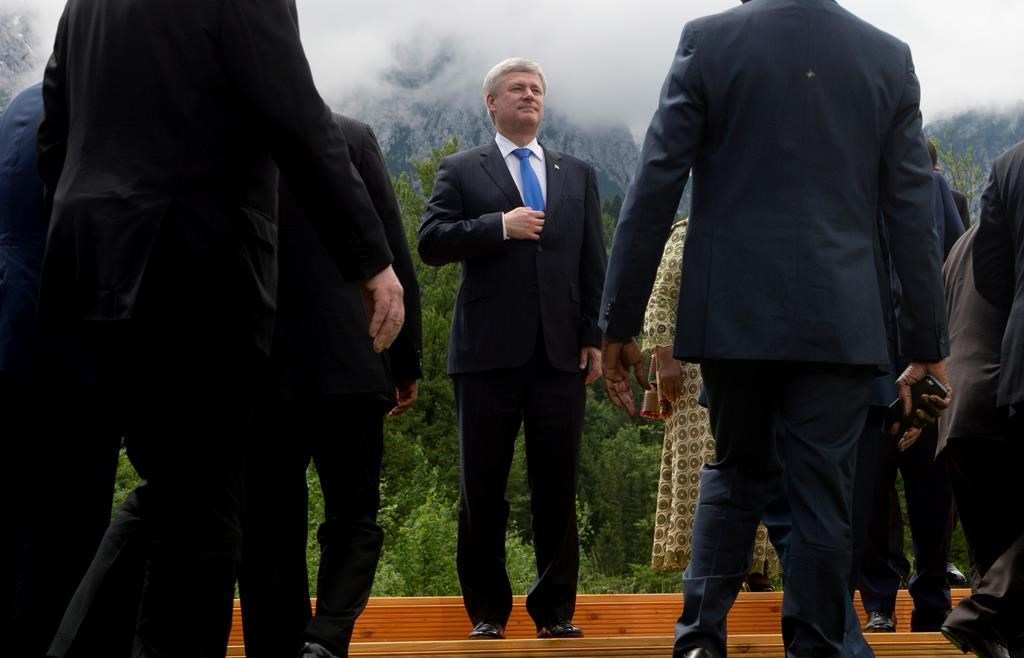
G7 puts Canada on the spot, calls for low emissions in energy sector

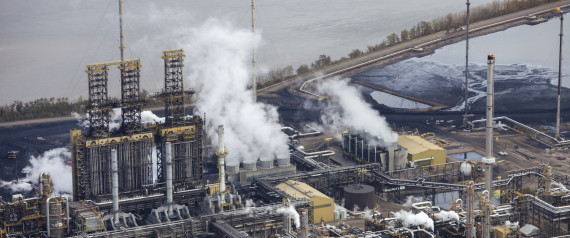
SCHLOSS ELMAU, Germany — Canada's energy sector will have to transform itself to lower greenhouse gas emissions in the long term, Prime Minister Stephen Harper said Monday.
He was commenting at the end of the G7 leaders' summit which called on its members to put their energy sectors on a low-carbon footing by 2050, a move with serious implications for Canada's greenhouse-gas-emitting oilsands.

German Chancellor Angela Merkel fell short of her goal of pushing her fellow leaders to a broad, iron-clad commitment to a low-carbon economy by 2050. Instead, the G7 agreed to a full-blown no-carbon economy, but not until 2100.

Wednesday, January 28, 2015

Social Conscience Is Key to Cutting Household Energy

LONDON—Altruism is alive and well and living in California. An extended experiment involving more than 100 households suggests that people are more likely to reduce energy use if they believe it is good for the environment rather than good for their pockets.

Those who tuned into the messages about public good saved, on average, 8% on their fuel bills, while households with children reduced their energy use by 19%. But people who were repeatedly reminded that they were using more power than an economy-conscious neighbour altered their consumption hardly at all.

Tuesday, December 16, 2014

Auditor General: Ontarians Paying Billions Extra For Electricity

TORONTO - People in Ontario are paying billions of dollars extra for electricity thanks to a flawed smart meter program and the above-market rates the province pays most power generators, Ontario's auditor general reported Tuesday.

Energy Minister Bob Chiarelli disputed the auditor's conclusions, suggesting her numbers were inaccurate because she didn't understand the "complex" electricity system.

Ratepayers will pay $50 billion between 2006 and 2015 because of an extra charge on their electricity bills that covers the gap between guaranteed prices paid to contracted power generators and the market price, auditor general Bonnie Lysyk wrote in her annual report.

Wednesday, November 12, 2014

Public Will Need to Seize Control of Energy

In 1989, we've been told, communism died.

But did capitalism win?

Perhaps for a while. It's still acting as if it did, but time has shown that capitalism as we knew it is outdated, and to say the least, undemocratic.

The reasons for communism in the first place haven't gone away. There's still massive poverty throughout the world, and perhaps even worse, that plus working poverty in the industrial world. The capitalistic system just doesn't work for a hell of a lot of people all over the globe.

Thursday, October 23, 2014

HAMBURG CITIZENS VOTE TO BUY BACK ENERGY GRID

Last Sunday, citizens in Hamburg, Germany’s second biggest city, not only re-elected Angela Merkel as chancellor but also gave their electoral mandate to the city authority to buy back the energy grid in their Hanseatic city. Why? Because they concluded that the private sector cannot be trusted with public services – and that community ownership and participatory governance is the way to go.

Monday, October 20, 2014

Five Lessons for Canada from Germany's Clean Energy Revolution

When Dr. David Jacobs comes to North America from Europe, he hears the same myths repeated over and over about Germany's state-led shift to a zero-carbon society. Replacing oil, coal, gas and nuclear with wind and solar will tank the economy; clean energy is a luxury only citizens of wealthy European countries can afford; and embracing it hasn't even reduced carbon emissions. "There are lots of very basic misconceptions," he said during a recent interview at Vancouver's Georgia Hotel.

Jacobs, who heads a consulting firm called International Energy Transition and teaches energy policy at the Free University of Berlin, was in town for Clean Energy B.C.'s Generate 2014 conference. He'd spent the morning before our chat correcting misconceptions about Germany's Energiewende (or energy transition) for a private audience of local policymakers and academics. The best myth-busting tools at his disposal are hard economic facts. These days, Jacobs has a lot of them to share.

Monday, October 13, 2014

Winter Forecast Has Energy Industry Bracing For The Worst

OTTAWA - Hang on to your wallet and put on an extra sweater.

Energy industry players say they've learned from last year's so-called polar vortex and are bracing for what the Farmer's Almanac says will be another bitterly cold season — one that's already being dubbed the "T-Rex" of winters.

But a number of factors, including unpredictable winter temperatures and the strength of the Canadian dollar, could create a perfect storm and trigger a spike in energy prices, much like the one that occurred last year.

Thursday, October 02, 2014

World's Most Energy-Guzzling Countries: Canada Ranks Ahead Of U.S.

Canadians are the world’s eighth-largest energy consumers, sucking up about 7 per cent more energy than Americans, according to research from OilPrice.com.

On average, Canadians consume the equivalent of 7,333 kg of oil per year, compared to 6,793 kg per capita in the U.S. (That includes energy from all sources, expressed as kilograms of oil.)

“While many equate Canada's energy sector with the oil sands, it is, in fact, other forms of energy that account for the lion's share of consumption,” OilPrice.com reports.

Tuesday, September 23, 2014

Errors and Emissions

This just in: Saving the planet would be cheap; it might even be free. But will anyone believe the good news?

I’ve just been reading two new reports on the economics of fighting climate change: a big study by a blue-ribbon international group, the New Climate Economy Project, and a working paper from the International Monetary Fund. Both claim that strong measures to limit carbon emissions would have hardly any negative effect on economic growth, and might actually lead to faster growth. This may sound too good to be true, but it isn’t. These are serious, careful analyses.

Thursday, April 24, 2014

The Energy Revolution Is In Reverse

BERLIN—Keeping the rise in global average temperatures to no more than 2°C above pre-industrial levels will not be prohibitively expensive, the Intergovernmental Panel on Climate Change (IPCC) says, though it won’t be easy.

There’s just one problem: the atmospheric facts show that the world is not simply ignoring the IPCC. It’s moving smartly away from the clean energy future that the Panel says is attainable towards an inexorably hotter and more risky future.

Canada's Inflation Rate Accelerates As Energy Prices Jump

OTTAWA - A big jump in energy costs and cigarette prices helped push up Canada's inflation rate to 1.5 per cent last month, matching the highest level in the annualized consumer price index in almost two years.

The increase, while significant, was mostly in line with expectations of analysts, who had calculated that the observed strengthening of oil and natural gas prices last month would play a dominant role in the report Thursday.

Friday, March 21, 2014

A waste-to-energy spin doctor's playbook

It's every waste-to-energy company's dream to have independent policymakers defending an incinerator with the same passion as Prime Minister Stephen Harper when he goes to bat for the oil sands. But how does such a company find good allies?

Establishing a supportive relationship with a respected, independent politician is an essential early step for incinerator companies determined to win contracts in reluctant Canadian communities, writes industry representative writes John Foden in Waste Management World magazine.

Thursday, February 27, 2014

At US Science Confab, Two Energy Futures Duel Across the Hall

A short stroll across the hall at the Hyatt Regency Hotel in Chicago was a leap across a wide, wide, wide, philosophical chasm -- from a belief that humans can change, to one where they can't.

While one group of researchers explored the possibility of reducing greenhouse gas emissions 80 per cent by 2050, the other group took on the Canadian environment versus economy debate about the Alberta oilsands.

In the emissions session, speakers treated the audience to a couple of useful and thoughtful critiques. Peter Loftus of Primaira LLC, a product development and commercialization company full of engineers, designers, and technicians based in Woburn, Massachusetts (they work on innovative appliance design, medical devices, food waste management, and other products), shared his review of major studies that map ways to drastically reduce emissions in less than 40 years.

Friday, January 31, 2014

Electric Shadyland: How Power Companies Rip You Off

Mabel Buford hadn't been home from the hospital very long when a sales rep knocked on her door in Washington, DC, and announced that she could save her some money. Buford, a 72-year-old widow who is battling cancer, told the woman she didn't feel well. But the sales rep wouldn't leave. For the next hour, she urged, cajoled, and pressured Buford to show her one of her electric bills. Finally, exhausted and groggy from medication, Buford relented. "I just got tired of her," she says.

The sales rep put Buford on the phone with her company, Starion Energy, to sign up. Buford, a retired federal contracts officer, warned that she had a contract with another electric provider and wanted no trouble with her bills. "She promised it would be okay," Buford recalls. "She honest to God stood over the stoop and hugged me. I told her, 'Don't play with me.' But, see, she tried it anyway."

Wednesday, January 29, 2014

‘60 Minutes’ Does It Again


“I’m exhausted,” claimed 60 Minutes correspondent Lesley Stahl on Sunday, as she ticked off a list of clean energy companies that have failed in recent years.

What’s really getting exhausting is the amount of shoddy reporting that has aired on CBS’s 60 Minutes in recent weeks, from a retracted account of the attack on the US consulate in Benghazi to segments on the National Security Agency and Amazon’s drones that were more infomercial than news.