Democracy Gone Astray

Democracy, being a human construct, needs to be thought of as directionality rather than an object. As such, to understand it requires not so much a description of existing structures and/or other related phenomena but a declaration of intentionality.
This blog aims at creating labeled lists of published infringements of such intentionality, of points in time where democracy strays from its intended directionality. In addition to outright infringements, this blog also collects important contemporary information and/or discussions that impact our socio-political landscape.

All the posts here were published in the electronic media – main-stream as well as fringe, and maintain links to the original texts.

[NOTE: Due to changes I haven't caught on time in the blogging software, all of the 'Original Article' links were nullified between September 11, 2012 and December 11, 2012. My apologies.]

Showing posts with label Food Prices. Show all posts

Sunday, February 28, 2016

Our Food Issues Are So Much Bigger Than Overpriced Cauliflower

We've fielded several calls lately from journalists working on stories about rising food prices. You've probably read a few: most aim to provide quick tips for how Canadians can make a dollar go further in the grocery store, and how to eat healthy for less.

Many of those tips are helpful: buy in season and in bulk, soak your beans, get comfortable with a few empty-the-fridge recipes that can help you curb food waste. Making the most of what you've got is always good practice, especially when what you've got is not a lot. And eating well doesn't have to be complicated. These are ideas that underpin the many healthy cooking and growing programs offered by our partner Community Food Centres. When a few good ideas or skills can make the difference, making changes is easy.


Thursday, February 12, 2015

The failure that is food policy in Nunavut

The Canadian government's food policy is having dire consequences for communities in Nunavut. Aside from being proof of further deterioration of government-Indigenous relations, Canada's food policy has been an illustration of mismanagement and the consequences of what occurs when a program lacks transparency and denies power to those it claims to protect.
Historically, it's always been more expensive to transport food to Nunavut (or any rural community) but costs of $55 for infant formula and $105 for a case of water is causing Canada's Nutrition North Program to be seen as a failed attempt by the Canadian government to subsidize the food that gets to Nunavut.

Aglukkaq's Nutrition North Comment Criticized As 'Dangerous Political Thinking'

Months after Auditor General Michael Ferguson lacerated the federal government’s inadequate oversight of Nutrition North, a Conservative cabinet minister reiterated it’s up to retailers to make sure food subsidies are passed on to shoppers.

“At the end of the day, the retailers have to ensure that the federal subsidy is being passed on to the consumers,” Environment Minister Leona Aglukkaq told APTN News at an Economic Club of Canada luncheon on Feb. 3.

Friday, January 23, 2015

Food-Cost Crisis In Canada's North: 'We Can't Pretend It Doesn't Exist Any More'

IQALUIT, Nunavut - Israel Mablick opens the door of his refrigerator and takes stock of its meagre offerings.

"This is all we have for food," he says, gesturing to the mostly empty shelves.

There is a small pot of leftover seal meat on the second shelf, next to a tub of margarine and a couple of slices of bread. There's juice, a bag of milk, some water and a carton of eggs, plus condiments and a small bag of shredded cheese.

Monday, December 29, 2014

Food Prices Grow At Fastest Pace In 3 Years, As Meat Soars

Want to save on your food bill? Switch to chicken.

Inflation slowed down in November, thanks primarily to plummeting gas prices, but the rapid rise in meat prices that has stalked consumers this year showed no signs of slowing.

Overall inflation fell to a 2-per-cent pace in November, Statistics Canada reports, below the 2.4-per-cent pace a month earlier and below the 2.2 per cent forecast by economists.

The gas price index fell 7.5 per cent in the space of a month. Prices for clothing and entertainment equipment also fell.

Thursday, December 18, 2014

Nunavut's Food Crisis Prompts Intense Scrutiny

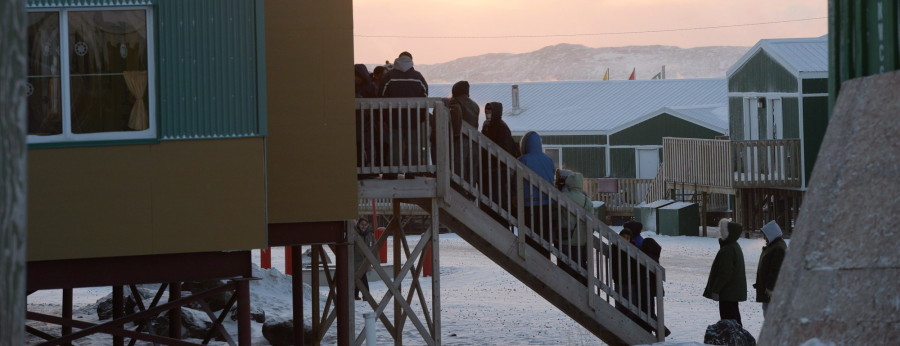
IQALUIT, Nunavut - The line-up for Iqaluit's soup kitchen stretches out the door, down a flight of wooden steps and onto the icy street. Dozens of people wait patiently in -40 C cold, braced against the gusting shards of wind.

Inside, Cathy Sawer stirs an industrial-sized pot brimming with chicken soup, enough for 200 servings. The 65-year-old and her fellow volunteers have been in the kitchen since 8 a.m., preparing a lunch that will be the only meal of the day for many of those waiting outside.

Tuesday, December 16, 2014

Food prices 12% higher on average in real terms than in 2007

The amount households are spending on food has fallen by 3.9% since 2010 despite rising prices, according to figures published on Thursday. The Department for Environment, Food and Rural Affairs report also found that Brits are eating less beef, cutting back on biscuits and chocolate, and drinking fewer alcoholic and fizzy drinks – although we are drinking more low-calorie soft drinks.

UK households are buying less food but spending more of their budget on it since prices rose in 2007, with those on the lowest incomes hardest hit, according to a new report.

The Horrifying Reason Why Your Fruit Is Unblemished

Back in 2010, I visited a labor camp that houses some of the migrant workers who grow America's fruit and vegetables. I found people living densely in shanty-like structures made of scrap metal and cinder block, surrounded by vast fields and long rows of greenhouses. Strangers in a strange land who didn't speak the language, hundreds of miles from home, they lived at the mercy of labor contractors who, they claimed, made false promises and paid rock-bottom wages. Like all Big Ag-dominated areas, the place had a feeling of desolation: all monocropped fields, mostly devoid of people, and lots of billboards hawking the products of agrichemical giants Monsanto and Syngenta.

Monday, March 24, 2014

Nunavummiut speak out to feed their families

Two years ago, communities across Nunavut joined together to speak out against the shockingly high food prices in the north, protesting in front of local grocery stores. This was the first time such actions had been organized in the remote, fly-in communities of Canada's northernmost territory. Feeding My Family (FMF) is the movement that grew out of these protests. The Facebook site quickly grew to over 19,000 members, and FMF has provided a forum for Nunavummiut to come together to share personal struggles and expose the impacts of hunger in the north. Members have been posting photos of the exorbitant food costs in the north, showing prices as high as  $28 for a head of cabbage and $99 for a whole fish .

Tuesday, September 25, 2012

Food price hikes: Why I blame investors

Andrew Hepburn is a former hedge fund researcher. He writes on commodities, the stock market and the financial industry–but without the jargon.

Once again, food prices are soaring. For the third time in five years, the world seems on the verge of a crisis. Prices for corn, soybeans and wheat have all skyrocketed on international markets, rising 21 per cent, 41 per cent and 31 per cent respectively since the start of the year.

Thursday, September 06, 2012

Higher food prices may not hurt Canadian shoppers

Bad weather across much of the United States and parts of Europe is driving up the cost of some food stuffs, but Canadian consumers are not expected to feel the full effect.

Corn and soybean production in the U.S. has been cut by up to 13 per cent this summer because of drought and prices for those commodities have jumped by as much as 40 per cent since June. Poor weather in Ukraine, Russia and other parts of Eastern Europe has hurt wheat crops and sent wheat prices up 36 per cent this year. The question now is how hard those rising prices will hit consumers.

Wednesday, August 15, 2012

U.S. drought could spark another global food price crisis, experts warn

As the worst U.S. drought in more than half a century persists, experts are calling for international action to avoid a repeat of the worldwide food price crisis of 2008.

Sixty-two per cent of America’s farms are in drought-struck areas, according to the U.S. Department of Agriculture. As of last year, U.S. exports of maize and soybeans accounted for more than 40 per cent of total world exports.

Tuesday, August 07, 2012

Food prices set to skyrocket thanks to U.S. drought

WASHINGTON - Drought in the U.S. farm belt may result in higher prices for poor people around the world, according to the head of an agricultural think tank who on Monday also recommended a halt to ethanol production from corn.

Shenggen Fan, director general of the International Food Policy Research Institute, said the global spike in food prices in 2008 showed how poor crops and tight supplies have wide impact. I FP RI is the analytical arm of a coalition of agricultural research facilities.

Monday, August 06, 2012

U.S. drought will hit food prices like a derecho

Those who do not learn from the past are condemned to, well, sweat like a cheese plate, watch corn crops wither to dust and learn that those miracle technologies behind crop yield enhancement can do only so much.

And not having learned it, they will repeat it, of course, the following year, having forgotten over the winter just how hot and dry the northern hemisphere can become.

That’s the problem with fixing global warming, as the economist Paul Krugman writes despairingly. People have short memories. “Let the days grow a bit cooler and the rains fall,” he says, “and inevitably people’s attention turns to other matters.”

Thursday, July 26, 2012

Drought imperils eastern Canada crops

Weeks of drought have turned much of Ontario’s prime agricultural land into a dust bowl. And it is corn farmers, especially in the southwest and eastern parts of the province, who have been the hardest hit.

“It is a bad year in eastern Canada and it is getting worse,” said Evan Fraser, a geography professor who studies global food security at the University of Guelph, west of Toronto. The far southwest part of Ontario is “looking grim,” Dr. Fraser said, and in other parts of the province “it’s a bit of a wait-and-see game.”

Wednesday, July 25, 2012

Canada Drought: NDP Warn Food Prices Set To Skyrocket With Dry Crops In Eastern Provinces

OTTAWA - Stand far enough away and the fields of Debra Pretty-Straathof's family farm appear green and lush.

But a closer look reveals parched earth littered with dead or dying leaves, and crops whose growth has been stunted by severe heat and drought.

Saturday, July 21, 2012

The era of cheap food and fuel may be at its end

I took my old sailboat down the Ottawa River to Montreal for the jazz fest this summer, and had an idyllic, sun-dappled holiday, with only about five minutes of rain the whole time.

After locking through the Seaway, around Montreal, we turned around at Ile Sainte-Helene and motored up upstream to the old port, passing under the Jacques Cartier bridge through the Courant Sainte-Marie, where the current runs five nautical miles an hour.

Monday, June 11, 2012

Nunavut Food Prices: Poverty, High Costs Of Northern Businesses Leave Some Inuit Unable To Cope With Expenses

For those in Canada’s south, seeing the price of food in Nunavut induced instant sticker shock.

However $105 cases of water, $28 heads of cabbage and $55 boxes of infant formula are only one piece of the poverty puzzle that Northern communities face.

Contrary to the myth, living in the North doesn’t guarantee high wages. Inuit living in the territories make far less than non-Aboriginals in the same region — about $43,378 less. Within Inuit Nunangat, the traditional Inuit homeland, non-Aboriginals made an average of $50,128 according to 2005 Statistics Canada numbers. For Inuit, it was only $16,669.

Saturday, June 09, 2012

Nunavut Food Protest: Inuit Organize Widespread Protest Over Hunger And Food Costs

IQALUIT, Nunavut - A head of cabbage for $20. Fifteen bucks for a small bag of apples.

A case of ginger ale: $82.

Fed up and frustrated by sky-high food prices and concerned over widespread hunger in their communities, thousands of Inuit have spent weeks posting pictures and price tags from their local grocery stores to a Facebook site called Feed My Family.

That site is now the nucleus of an unprecedented protest across Nunavut organized for Saturday to draw attention to food prices that would shock southerners.

Tuesday, June 05, 2012

Nunavut Food Price Rebellion: Where a box of macaroni costs $13.99

There are three sure things in Nunavut: death, taxes and extremely high food prices.

Even so, Leesee Papatsie, a mother of five living in Iqaluit, says enough is enough and has launched her own protest to bring attention to prices that would have people in southern Ontario marching in the streets.

“I have one simple message: prices are too high here in the north,” Papatsie told the Toronto StarTuesday.