Democracy Gone Astray

Democracy, being a human construct, needs to be thought of as directionality rather than an object. As such, to understand it requires not so much a description of existing structures and/or other related phenomena but a declaration of intentionality.
This blog aims at creating labeled lists of published infringements of such intentionality, of points in time where democracy strays from its intended directionality. In addition to outright infringements, this blog also collects important contemporary information and/or discussions that impact our socio-political landscape.

All the posts here were published in the electronic media – main-stream as well as fringe, and maintain links to the original texts.

[NOTE: Due to changes I haven't caught on time in the blogging software, all of the 'Original Article' links were nullified between September 11, 2012 and December 11, 2012. My apologies.]

Showing posts with label Drought. Show all posts

Tuesday, October 10, 2023

Why First Nations Bear the Brunt of BC’s Drought

The state of drought in British Columbia is at a critical point, and government officials are watering down their responsibility to act.

This points to widespread governmental policy failures in climate change, forest and mining practices, and emergency management. Front and centre of this failure are decades of water mismanagement, including regulations that absolve B.C.’s most prolific water users from paying the true cost of water extraction.

Recently, the B.C. government heeded calls to create a Watershed Security Fund, contributing $100 million. While this is a positive step forward, it is a drop in the bucket for what is needed to invest in our watersheds. The provincial government should immediately commit to a minimum of $500 million and work with the federal government to match these contributions.

Saturday, October 10, 2015

California's Drought Is About Economic Inequality

Bulmario Tapia Madrigal doesn't want to shower in a stream of dirt. He doesn't want to cook with bottled water, haul a bucketful to flush the toilet, or wonder if he has enough water to clean the diabetes wounds on his feet. But since his well went dry three months ago, that's how life has been.

Saturday, August 29, 2015

Drought Relief Bill Threatens to Drown Sacred Sites of a Northern California Tribe

The McCloud River gurgles and gushes down the Cascade Range, gathering streams from the towering Mount Shasta, a mountain of mythic and sacred symbolism to many. The river pours down three waterfalls over basaltic lava flows, where Chinook salmon once heroically jumped up the falls to spawn and propagate. This August, members of the Winnemem Wintu tribe gathered for their annual "salmon challenge," an effort to trace the path of their revered fish as it once swam its way up the McCloud River. The venerated salmon are long gone: The Shasta Dam's construction in 1944 framed a permanent deleterious barrier, and the salmon were unable to reach their spawning grounds upstream to regenerate as they had for millennia.

Friday, August 28, 2015

The Drought Isn't Just a California Problem

California's been getting a lot of attention for the drought, but it's not alone in its lack of rain: This year is on track to be the driest on record for several western states. As the map below—a recent iteration from the US Drought Monitor—shows, virtually all of Washington, Oregon, and Nevada are covered in swaths of "severe," "extreme," or "exceptional" drought. 

Sunday, July 26, 2015

Drought-Parched BC All but Gives away Water

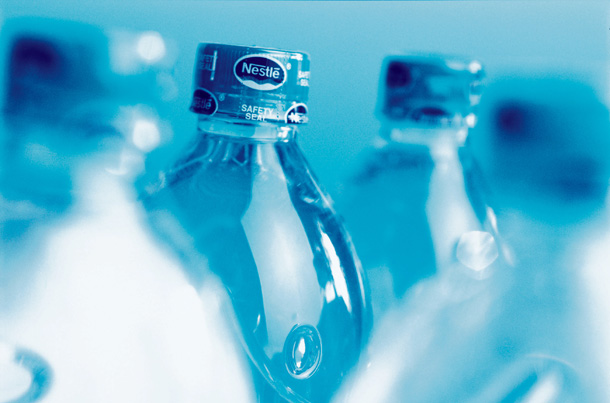
"That means that as a human being you should have a right to water. That's an extreme solution." -- Peter Brabeck-Letmathe, Chairman, Nestle, 2005

As British Columbians face increasing water use restrictions due to a heat wave, forest fires and drought, the province must answer why it is charging bottled water companies only $2.25 per million litres taken from B.C. sources.

Friday, June 26, 2015

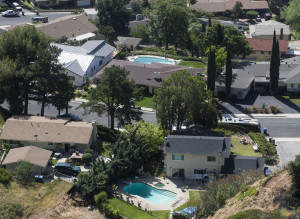
Rich Californians balk at limits: ‘We’re not all equal when it comes to water’

RANCHO SANTA FE, CALIF. — Drought or no drought, Steve Yuhas resents the idea that it is somehow shameful to be a water hog. If you can pay for it, he argues, you should get your water.

People “should not be forced to live on property with brown lawns, golf on brown courses or apologize for wanting their gardens to be beautiful,” Yuhas fumed recently on social media. “We pay significant property taxes based on where we live,” he added in an interview. “And, no, we’re not all equal when it comes to water.”

State Rep Suggests Abortion Is To Blame For California Drought

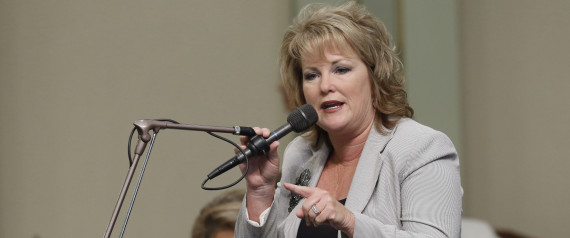
Scientists are still exploring the causes of California's historic drought, but one local lawmaker thinks it might all come down to one thing: God's wrath over abortion.
While speaking at the California ProLife Legislative Banquet last week, California Assemblywoman Shannon Grove (R) suggested a theory that the state's worst drought in 1,200 years may be divine retribution for California providing women with access to abortions, RH Reality Check reported.

Wednesday, April 08, 2015

7 Key Facts About the Drought

There's been a lot of talk lately about the drought in California, especially since this past week, when Gov. Jerry Brown introduced mandatory water cuts for the first time in the state's history. So what exactly makes this drought so bad? And what are people doing about it? Here are a few important points to keep in mind:
Drought is the norm in California. How bad is this one? There are always wet years and dry years, but the past three years have been among the driest on record—and state officials worry that 2015 will be even drier. Last week, for the first time in the state's history, Brown imposed mandatory water restrictions, requiring all cities and towns to cut their water usage by 25 percent. Though agriculture uses more than 80 percent of the state's water, the regulations merely require farmers to submit "water management plans."

Monday, March 16, 2015

California has about one year of water left. Will you ration now?

Given the historic low temperatures and snowfalls that pummeled the eastern U.S. this winter, it might be easy to overlook how devastating California's winter was as well.

As our “wet” season draws to a close, it is clear that the paltry rain and snowfall have done almost nothing to alleviate epic drought conditions. January was the driest in California since record-keeping began in 1895. Groundwater and snowpack levels are at all-time lows. We're not just up a creek without a paddle in California, we're losing the creek too.

Tuesday, March 10, 2015

California Drought Just Broke A 120-Year Record

Drought-stricken California, which just had its driest January ever recorded, smashed another dismal record last month: the hottest February.
Peter Gleick, a climate, water and sustainability scientist and member of the U.S. National Academy of Science, tweeted a graph from the National Oceanic and Atmospheric Administration on Friday, pointing out the shocking data point. February's heat topped all previous Februaries since the agency began collecting weather information in 1895.

Tuesday, March 03, 2015

The "Mega-Drought Future," the Disappearance of Coral Reefs and the Unwillingness to Listen

Scientists are now mapping a world that is changing rapidly in often-terrifying ways. Climate disruption and world leaders' unwillingness to act have put us at risk of experiencing mega-droughts, the disappearance of coral reefs and other ecological impacts of an anthropogenically warming planet.
The UN World Meteorological Organization recently announced that 14 of the 15 hottest years ever recorded have occurred since 2000. Ponder that for a moment before reading further.

Tuesday, December 16, 2014

California’s Drought Is So Bad That Some Communities Are Trucking In Their Water

On the eastern edge of the San Joaquin Valley, at 2,000 feet above sea level, the wells of Auberry, California, are among the first in the state to tap the perennial groundwater flowing out of the Sierra Nevada Mountains. The fresh supply of snowmelt, which accounts for more than 60 percent of California’s water supply and which, since the state’s drought began three years ago, has become one of the most precious commodities in the western United States, flows down the range’s granite bedrock slopes in subterranean streams dozens of feet beneath the houses, shops and farms of the tiny foothill community.

Scott Houston’s livelihood depends on those streams flowing, as well as on their not flowing. Several times a day, Houston, 49 years old and stout as a boulder, drives his eight-ton water truck to a parking lot two miles down the road from his home, connects a hose from the 2,035-gallon tank on the back of his rig to the valve of a fire hydrant atop a well, and fills it with groundwater purchased from the school district. Then he hauls the water to customers throughout northeastern Fresno County whose residential wells have run dry, for about $225 per delivery. With last winter’s Sierra snowpack at less than a fifth of what is considered normal, business this year is very good.

Monday, December 15, 2014

California Drought, High Temperatures Create Worst Conditions In 1,200 Years

SACRAMENTO, Calif., Dec 5 (Reuters) - A combination of record high temperatures and sparse rainfall during California's three-year drought have produced the worst conditions in 1,200 years, according to a study accepted for publication by the American Geophysical Union (AGU).

The state has gone through numerous periods of dry weather, with as little or less rainfall as the past few years, but scientists looking at the cumulative effects of temperature, low precipitation and other factors said that it all adds up to the worst conditions in more than a millennium.

Friday, October 31, 2014

These Maps of California's Water Shortage Are Terrifying

Just how bad is California's water shortage? Really, really bad, according to these new maps, which represent groundwater withdrawals in California during the first three years of the state's ongoing and epochal drought:
Images by J.T. Reager, NASA Jet Propulsion Laboratory, California Institute of Technology, from "The Global Groundwater Crisis," Nature Climate Change, November 2014, by James S. Famiglietti

Sunday, September 07, 2014

Hustle and Flow: Here's Who Really Controls California's Water

"Water flows uphill towards money," a source told Marc Reisner in Cadillac Desert, the seminal book on California water politics. Today the complex web of political interests that Reisner detailed some 30 years ago has become even more arcane and intertwined. As California confronts its worst drought in years, these power brokers will largely determine who gets water, and who gets left high and dry:

DIANNE FEINSTEIN: The chair of the powerful energy and water panel of the Senate Appropriations Committee has a history of siding with the state's agricultural interests, which use 80 percent of the state's water. In a March email to two Cabinet secretaries, Feinstein joined Republicans in urging federal water officials to capture "the maximum amount of water" from the Sacramento San Joaquin River Delta for farmers. Two months later, she pushed a drought bill through the Senate by a unanimous vote, over the objections of environmentalists who said it would open the door to permanently increasing water allocations to farmers at the expense of endangered fish. Environmental groups "have never been helpful to me in producing good water policy," she later told the San Francisco Chronicle. She is now hammering out a compromise bill with House Republicans who want to do even more to gut endangered species laws.

Tuesday, February 25, 2014

Obama On California Drought: Climate Change Threatens The Nation

LOS BANOS, Calif. (AP) — Warning that weather-related disasters will only get worse, President Barack Obama said Friday the U.S. must rethink the way it uses water as he announced new federal aid to help drought-stricken California.

Obama drew a clear connection between California's troubles and climate change as he toured part of a farm that will go unsown this year as the state faces its worst drought in more than 100 years. Even if the U.S. takes action now to curb pollution, the planet will keep getting warmer "for a long time to come" thanks to greenhouse gases that have already built up, Obama said.

Monday, April 15, 2013

Drought: Why the Dust Bowl may be coming back

Drought conditions in more than half of the United States have slipped into a pattern that is uncomfortably similar to the most severe droughts in recent history, including the 1930s Dust Bowl, climatologists say.

The 2013 drought season is off to a worse start than in 2012 or 2011. It’s a good indicator, based on historical records, that the entire year will be drier than last year, even if spring and summer rainfall and temperatures remain the same, says scientists at the National Oceanic and Atmospheric Administration (NOAA).

Friday, April 05, 2013

The strategic importance of a 'talkfest' on drought

To grasp just how dangerous droughts are, consider that, according to the top UN disaster experts, there's simply nothing bigger "in terms of human mortality." Not even famine or flooding.

When drought combined with famine and social unrest in Ethiopia in 1984-85, a million people died within weeks.

Drought prevention ranks up there with nuclear safety as, well, super important.

Thursday, August 30, 2012

Drought-hit farmers asked to repay funds from mad-cow crisis

As Eastern Ontario farmers deal with the worst drought in more than a decade, the provincial government is asking approximately 4,500 farmers to return overpayments from as far back as 2003.

Carleton-Mississippi Mills MPP Jack MacLaren’s office says Agricorp, an Ontario government agency that provides risk management programs for farmers, began sending the letters to Ontario farmers in April. MacLaren, a farmer, received a letter himself.

Wednesday, August 15, 2012

U.S. drought could spark another global food price crisis, experts warn

As the worst U.S. drought in more than half a century persists, experts are calling for international action to avoid a repeat of the worldwide food price crisis of 2008.

Sixty-two per cent of America’s farms are in drought-struck areas, according to the U.S. Department of Agriculture. As of last year, U.S. exports of maize and soybeans accounted for more than 40 per cent of total world exports.