
Showing posts with label Food Safety. Show all posts
Showing posts with label Food Safety. Show all posts
Monday, March 28, 2016
Iowa’s 60 Million Laying Hens Aren’t Being Monitored by Food-Safety Inspectors
Wednesday, June 24, 2015
If Food Is a Right, Who Should Provide It?
"We all work for charities that are very non-partisan and would never suggest that you vote in any particular way," said Laura Track, counsel for the B.C. Civil Liberties Association, alluding to federal laws that restrict what organizations with charitable status can say.
Sunday, March 29, 2015
1 In 3 Suffer From Food Insecurity In Nunavut, StatsCan Data Reveals
 More than one-third of households in Nunavut lack access to safe and healthy food — a level that is four times the national average, according to a new Statistics Canada report.
The report “Food Insecurity in Canada,” released Wednesday, found an average of 8.3 per cent of Canadian households did not have access to the variety or quantity of food they need due to a lack of money during the years studied, 2011-2012. That amounts to 1.1 million Canadian households.
Tuesday, September 09, 2014
India's Smog Destroyed Enough Crops In A Year To Feed 94 Million People: Study

According to a new study published in the journal Geophysical Research Letters, ground-level ozone, the main component of smog, damages about 6.7 million tons of India's staple crops, including wheat and rice, in a single year. Researchers say those lost crops, worth an estimated $1.3 billion, could feed around 94 million people, or about a third of the country's poor.
Wednesday, August 06, 2014
First Nations Report: Heavy Metals From Oilsands Contaminating Food

"There's something unique that is happening in Fort Chipewyan," Stephane McLachlan, the lead researcher from the university, told a news conference Monday.
"It's a situation that is alarming and demands attention."
Monday, March 31, 2014
Conservative Climate Panel Warns World Faces ‘Breakdown Of Food Systems’ And More Violent Conflict

Wednesday, November 06, 2013
4 Foods That Could Disappear If New Food Safety Rules Pass

The law, known the Food Safety Modernization Act, was a pretty modest piece of work when it came to reining in massive operations that can sicken thousands nationwide with a single day's output. No surprise, since Big Food's main lobbying group, the Grocery Manufacturers Association, notes on its web site that "GMA worked closely with legislators to craft the FDA Food Safety Modernization Act and will work closely with the FDA to develop rules and guidance to implement the provisions of this new law. " (Food and Water Watch summarizes FSMA here; Elanor Starmer lists some of its limitations here.)
Tuesday, June 04, 2013
Harper government to fine companies for leaving unsafe products on store shelves

Health Minister Leona Aglukkaq is scheduled to confirm the fines at a morning news conference in Ottawa, finalizing a process that began years earlier.
Wednesday, March 27, 2013
Food Safety Modernization Act Testing Requirement Axed In White House Review

Wednesday, March 20, 2013
Undernourishment a risk for 1 in 3 older Canadians

The results of the survey suggested 34 per cent of Canadians aged 65 or older were at nutritional risk, the agency said in its report Wednesday.
"Nutrition is a building block for optimal health," report author Pamela Ramage-Morin said in Ottawa. "We know that undernourishment can lead to falls, it can lead to hospitalization."
Flies, Maggots, Rats, and Lots of Poop: What Big Ag Doesn't Want You To See

Sunday, February 10, 2013
US food industry battles against regulation
Why are Americans getting fatter, and who's to blame? It's a question members of the US Congress need to be asking.
Like the war on tobacco decades ago, the US is now fighting a new battle on obesity. On one side are US public health officials advocating for their government to put in place better nutrition policies. But those efforts have met stiff resistance, in part because the $1 trillion US food and beverage industry is fighting regulation with a powerful weapon: its deep pockets.
Friday, February 01, 2013
Infected salmon declared fit for human consumption by Canadian Food Inspection Agency

Last week the Canadian Food Inspection Agency declared fit for human consumption 240,000 Atlantic salmon with infectious salmon anemia — a disease it says poses no risk to human heath. The ruling is the first time the CFIA has opted not to destroy fish carrying the virus since it started regulating the fish farming industry in 2005.
Wednesday, January 16, 2013
Insecticide 'unacceptable' danger to bees, report finds
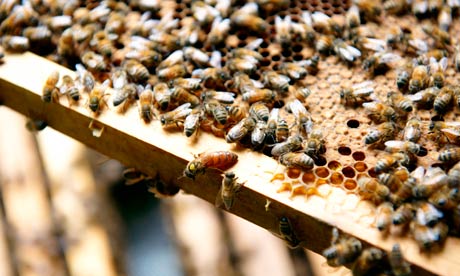
The chemical's manufacturer, Bayer, claimed the report, released on Wednesday, did not alter existing risk assessments and warned against "over-interpretation of the precautionary principle".
Friday, January 11, 2013
Up to half of world’s food goes to waste, report says

Customers, who preferred whole tea leaves to make the perfect cuppa, had no use for the dust or the small bits of leaves known as fannings that came with their purchase.
So engineers came up with a solution: tea bags, which contained the fannings, dust and residue.
Tuesday, January 08, 2013
Alberta slaughterhouse reprimanded six times before E. coli scare, reports reveal

The Star obtained six “Corrective Action Requests”— the reports federal food inspectors file when they notice something amiss — the Canadian Food Inspection Agency (CFIA) issued to the XL Foods plant in Brooks, Alta., last year.
Sunday, December 23, 2012
AquaAdvantage Genetically Modified Salmon Not A Threat To Nature, FDA Says

The Food and Drug Administration on Friday released its environmental assessment of the AquaAdvantage salmon, a faster-growing fish which has been subject to a contentious, yearslong debate at the agency. The document concludes that the fish "will not have any significant impacts on the quality of the human environment of the United States." Regulators also said that the fish is unlikely to harm populations of natural salmon, a key concern for environmental activists.
Saturday, December 22, 2012
Ontario Mayors Denounce 'Dangerous' Packaging Deregulation

The federal government plans to deregulated package sizes. But the 20 mayors worry that will put Ontario food processors at a disadvantage to their American counterparts and cause what processors previously called "massive job loss."
Tuesday, December 18, 2012
Brominated vegetable oil: PepsiCo and Coca-Cola not removing chemical from Canadian drinks
 Major soft drink-makers and Health Canada say the use of brominated vegetable oil in Canadian beverages is safe, despite a growing movement elsewhere to ban its use.
The additive, which is used to cloud and stop separation in some drinks, has been banned in most of Europe for decades and Japan recently discontinued its use. However, BVO continues to be used in popular drinks sold in Canada, including some flavours of Gatorade, Powerade, Fresca, Mountain Dew and Amp Energy Drink.
Thursday, December 06, 2012
Why Isn't the FDA Stopping the Epidemic of Foodborne Illness?

On Tuesday, September 13, 2011, Schwarz complained to his daughter Janice of abdominal pains and a slight fever. She took him to his doctor, who said it was likely a case of stomach flu. By Thursday the symptoms had worsened, and Schwarz had developed diarrhea. Janice took him to the emergency room. Once again flu was the diagnosis, and he was sent home. For a time, his condition improved. He called his son, also named Paul, that Sunday and cheerfully assured him that he'd eaten a big breakfast and felt a lot better.
Subscribe to:
Posts (Atom)