Democracy Gone Astray

Democracy, being a human construct, needs to be thought of as directionality rather than an object. As such, to understand it requires not so much a description of existing structures and/or other related phenomena but a declaration of intentionality.
This blog aims at creating labeled lists of published infringements of such intentionality, of points in time where democracy strays from its intended directionality. In addition to outright infringements, this blog also collects important contemporary information and/or discussions that impact our socio-political landscape.

All the posts here were published in the electronic media – main-stream as well as fringe, and maintain links to the original texts.

[NOTE: Due to changes I haven't caught on time in the blogging software, all of the 'Original Article' links were nullified between September 11, 2012 and December 11, 2012. My apologies.]

Showing posts with label François Hollande. Show all posts

Tuesday, March 07, 2017

UK will have to give up all EU perks after Brexit, François Hollande warns

The French president, François Hollande, has warned that Britain cannot hang on to the advantages of EU membership after it leaves, saying his message to Britain is: “That’s not possible; the UK will become an outsider to the European Union.”

In an interview with the Guardian and five other European newspapers as he prepares to host a summit in Versailles to discuss the future of the European Union after Britain’s departure, Hollande said he regretted Britain’s decision to leave but stressed France’s long-held position that the UK could not exit the EU while holding on to any of the perks of membership.

Sunday, January 01, 2017

In Final New Year’s Message, Hollande Takes Subtle Jab At National Front

PARIS (Reuters) - French President Francois Hollande on Saturday warned against the risks of rising nationalism in his last New Year address ahead of the election of his successor next spring.

Hollande, who said this month he would not seek a second term in 2017, defended his legacy as president and addressed the policies of the anti-immigration and anti-euro National Front, whose leader Marine Le Pen is set to make it to the second round of the election, if recent polls are correct.

Monday, December 26, 2016

French Socialists in chaos as Valls confronts Hollande

PARIS — France’s ruling Socialists fell into disarray Monday after a row between Prime Minister Manuel Valls and President François Hollande threatened to turn their upcoming presidential primary into a farce.

The men met for their weekly lunch as usual the day after Valls hinted in a Journal du Dimanche interview that he might run in the primary even if Hollande also put his name forward. The French president has so far declined to say whether he would try for a second term.

Tuesday, November 08, 2016

May gets Hollande ultimatum: free trade depends on free movement


  • French leader takes hard line in meeting with British prime minister
  • Leave camp may struggle to deliver on referendum promises
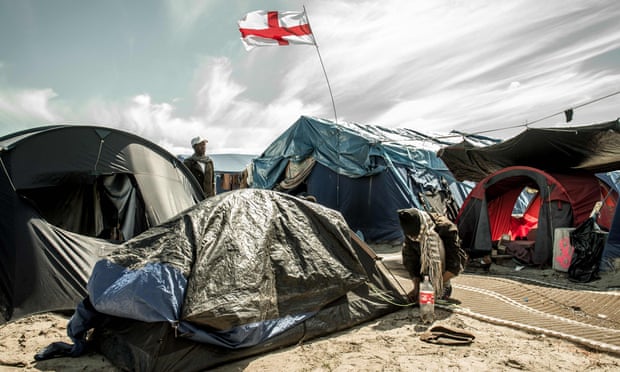
  • Calais checks under Le Touquet agreement will stay in place, says president

Theresa May was warned by the French president, François Hollande, at their first meeting in Paris that the UK cannot expect access to the single market if it wants to put immigration controls on EU citizens.

Saturday, January 09, 2016

Hollande: Fight Against ISIS Demands Constitutional Changes

During a rare trip to the Palace of Versailles Monday French President François Hollande called on lawmakers to change France’s constitution in order to better protect the country.

Hollande referred to article 36 of the charter as outdated, and asked that parliament change it to give the government greater power without needing to resort to a state of emergency.

“We are at war, this new kind of war demands a constitution that can manage a state in crisis," he said.

Wednesday, July 29, 2015

The Real Reasons Francois Hollande Wanted To Keep Greece In The Eurozone

Before the agreement between Greece and its creditors was even official, European centrists' leader Guy Verhofstadt paid tribute to French President François Hollande for his role in the talks. “France played an important, constructive and positive role in these negotiations,” Verhofstadt said Monday on France Inter, just minutes before the European Council’s president announced that the 19 eurozone nations had unanimously agreed to the conditions for Greek aid.

Friday, January 31, 2014

Paris Protest: 250 Arrested, 19 Police Injured During Demonstration Against President Francois Hollande

PARIS (AP) — Paris police say 19 officers were injured and some 250 people detained after a protest against President Francois Hollande's leadership degenerated into violence.

Police said Monday that none of the injuries is critical. The numbers of injured and detentions is high compared with other protests in recent weeks expressing discontent with Hollande, who is particularly unpopular for his handling of the economy.
Police say some 17,000 people took part in Sunday's largely peaceful protest, while organizers put the number several times higher.
Some 50 associations were involved, including conservative and far right groups. Also present were supporters of provocateur-comic Dieudonne, who has been repeatedly convicted of anti-Semitism and racism.
Original Article
Source: huffingtonpost.com/
Author: AP

Monday, December 16, 2013

France: President Francois Hollande Will Not Attend 2014 Winter Olympics In Russia's Sochi

PARIS, Dec 15 (Reuters) - Neither President Francois Hollande nor any top French official will attend the 2014 Winter Olympics in Russia's Sochi, Foreign Minister Laurent Fabius said on Sunday.

Fabius offered no explanation for the move.

The decision to hold the Winter Olympics in Russia has been criticised in France due to concerns about human rights abuses and a law passed in June that bans "gay propaganda" which critics say discriminates against homosexuals.

"There are no plans to attend," Fabius told Europe 1 radio, referring to Hollande and himself. "Top French officials have no plans to be there."

German President Joachim Gauck's office announced last week that he would not be attending the Games and the government's human rights commissioner praised Gauck's decision as a "wonderful gesture". (Reporting By Nicholas Vinocur; Editing by Janet Lawrence)

Original Article
Source: huffingtonpost.com/
Author: Reuters

Monday, June 10, 2013

François Hollande: the eurozone crisis is over

François Hollande, the French president, has declared an end to the eurozone debt crisis, despite record unemployment across the continent.

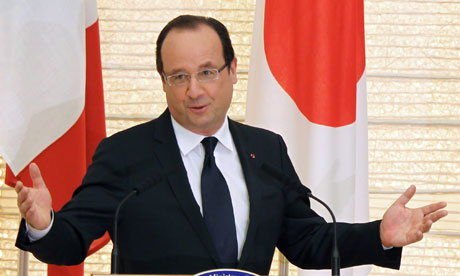
"You must understand that the crisis in the eurozone is over," Hollande told an audience in Japan during a three-day state visit.

"Europe has become more stable, but it must now be oriented toward growth," he said during a speech in Tokyo. "I believe that the crisis, far from weakening the eurozone, will strengthen it.

Friday, January 18, 2013

France: hostage crisis justifies Mali action

Francois Hollande, French president, has said the on-going hostage crisis in Algeria is evidence that France's military intervention in Mali is justified.

Speaking to business leaders in Paris on Thursday, Hollande said "What's happening in Algeria provides further evidence that my decision to intervene in Mali was justified."

Wednesday, May 09, 2012

François Hollande's Socialist France

Masses of people thronged Place de la Bastille -- symbolically representative of the French revolution -- to cheer the electoral victory May 6 of French Socialist Party candidate François Hollande, over conservative incumbent President of the Republic Nicholas Sarkozy.

The joyful celebratory mood was a welcome change. Over a decade of grim employment news had brought a measure of despondency to the nation once noted for its "joie de vivre." On the campaign trail, Hollande was called the only happy person in a morose country.

In his election campaign, Hollande pledged to be a "normal" president. By promising to fulfill the role chief of state with dignity, and eschew partisanship, Hollande implicitly asked the electorate to compare him favourably to the outgoing hyperactive Sarkozy, whose presidency was marked by displays of personal excess, and his dissing of political opponents.

Monday, May 07, 2012

France's Hollande to buck Europe's austerity trend

Political upheavals in Europe, including a newly elected anti-austerity president in France and a Greek election that created a fractured parliament, are rattling economic markets and adding uncertainty to plans for eurozone spending cuts.

Socialist François Hollande, who swept to victory in France on Sunday, is insisting austerity measures announced by defeated incumbent Nicolas Sarkozy are not the only way to fix Europe's financial woes.

In his victory speech to supporters, Hollande said his win over Sarkozy sent a clear message that France did not want to be crippled by austerity measures. He said the message that change is coming is for people across Europe.

"In all the capitals, beyond government leaders and state leaders, there are people who, thanks to us, are hoping, are looking to us, and want to put an end to austerity," Hollande said.

Sunday, May 06, 2012

François Hollande defeats Nicolas Sarkozy to become French president

PARIS—François Hollande swept to victory on Sunday, becoming the first socialist to become president of France since François Mitterrand left office in 1995.

Hollande campaigned on a kinder, gentler, more inclusive France, but his victory over Nicolas Sarkozy will also be seen as a challenge to the German-dominated policy of economic austerity in the eurozone, which is suffering from a recession and record unemployment.

French voters may not like belt-tightening, but both Hollande and Sarkozy had promised to balance the budget in the next five years. The vote was viewed domestically as a rejection of the unpopular Sarkozy and his relentless effort to appeal to the voters of the far-right National Front party. Sarkozy is the first incumbent president to lose since 1981.

With about half the vote counted, preliminary results released by the Interior Ministry shortly after the last polling stations closed at 8 p.m. showed Hollande had secured about 51 per cent of the vote while Sarkozy, of the centre-right Union for a Popular Movement, won about 49 per cent. Opinion pollsters suggested that the final result would be closer to 52 percent versus 48 percent.

Saturday, May 05, 2012

French election: Who is the real François Hollande?

The declaration, delivered by the calm, bespectacled man to a large crowd of cheering union members on Tuesday, sent waves of alarm through trading desks and foreign capitals.

“I have given myself one objective,” François Hollande said in a May Day speech in the Burgundy town of Nevers: “To be the long-awaited successor to François Mitterrand.”

From the man who is very likely to become the next French president when votes are counted Sunday night, this was a seemingly radical statement, suggesting a repeat of the jarring regime change France experienced in 1981, when the country became something of an ideological island.

Did he really mean it? Had the “vanilla pudding” candidate gone radical? Bond traders worried, driving up the price of French debt in anticipation. A stark cover of The Economist warned of “The rather dangerous Monsieur Hollande.”

Thursday, May 03, 2012

In debate, Sarkozy fails to upend Socialist challenger

After nearly three hours of intense exchanges, dozens of accusations of “liar” and “slanderer,” 137 statistical citations and a tsunami of finger-pointing, hand-waving and gesticulation, there was something of a consensus on France’s only presidential debate.

President Nicolas Sarkozy, almost everyone agreed, had failed in his self-stated mission to “explode” the “nullity” of his challenger, Socialist Party Leader Francois Hollande. While few were terribly impressed with the arguments of Mr. Hollande, a former party insider who has never been in a major debate before, most agreed that he had held his ground and allowed Mr. Sarkozy to knock himself out.

“Hollande entered the debate in the leading position, and there he still remains,” Le Monde wrote, and most other publications agreed.

Mr. Hollande’s style lacked the glamour and personability of Mr. Sarkozy’s – while the conservative president began the evening by addressing the camera directly, in the style of a North American politician, Mr. Hollande stared only at his opponent, and the long evening devolved into an out-and-out argument between two men who often seemed oblivious to the TV cameras.

But Mr. Hollande’s physical style – he sat ramrod straight, with few gestures beyond poking his pen at his interlocutor – caused the famously hyperactive Mr. Sarkozy to seem skittish and explosive, and in his more animated exchanges, such as those about immigration, the president appeared to be bobbing about like a bladder on a stick.

Wednesday, May 02, 2012

France’s next president, François Not Sarkozy

François Hollande was in Nevers today, in the Burgundy region south of Paris. Five days before the runoff vote in France’s presidential election, and on May Day, the Socialist candidate had come to lay a wreath at the grave of Pierre Bérégovoy, two-time socialist finance minister and then prime minister during the last days of the Socialist parliamentary majority from 1992 to 1993.

I was in Paris 19 years ago tonight when I heard Bérégovoy had shot himself to death. I’ll never forget where a bunch of us students were when we heard the news. It wasn’t just grief over the Socialists’ legislative defeat that made him do it; it was a personal humiliation. As budget minister in the 80s and again in the 90s, he had to rein in Socialist spending while defending social-democratic goals. He had been attempting a similar feat — think Chrétien or Clinton or Schröder a couple of years later — when France’s voters tossed his party out. He’d lost his party’s favour for being a bad Socialist, and the electorate’s for being a Socialist. It was brutal treatment at history’s hands, and he killed himself.

Of course everyone thought the world of him as soon as he was dead. The last honest man, focused on results instead of image, why can’t politics be more like him, all of that. Today he is not often mentioned. In France as in other places, politics is polarized, the engaged voters are the ones who like to pick a side, and Bérégovoy remains essentially a confusing figure.

Monday, April 30, 2012

Vive la France

The Presidency of France’s Fifth Republic is a monarchical role, shaped to the elongated scale and the grand manners first of Charles de Gaulle and then of François Mitterrand. Although Jacques Chirac more recently gave the role a distinctly sleepy, roi fainéant flavor, it remains a throne more than a mere office. So the idea of a sort of citizen king, who giggles and wears glasses and is known to be on a diet, is a little unsettling. But it’s entirely likely that, after the second round of voting, on May 6th, the next President of France will be François Hollande, the inoffensive, myopic, weight-conscious Socialist candidate, a man so milky-mild that one has to project onto him a secret life to make him seem not just a fully credible politician but a fully credible human being. (And, indeed, Hollande’s love life is more intricate than one might expect: having fathered four children with his lover, the previous Socialist Presidential candidate, Ségolène Royal, he left her, or was left by her, for another partner, meaning that his Presidency could include a role for an ex-mistress who is also a would-be queen.)

The strength of Hollande’s candidacy speaks mainly to the weakness of Nicolas Sarkozy’s, and the pervasive sense that his free-market reformist project has failed. After the twelve dead-man’s-float years of the Chirac Presidency, it was hard not to root at least a little for Sarkozy, and, in truth, his economic record, given the circumstances, is far from the worst on the Continent, or off it, for that matter. Yet he quickly came to seem arrogant instead of energetic, and he never quite shook a reputation, earned in the first days of his Presidency, for flashiness and bling. Even his marriage to Carla Bruni, and the child they had together, left the French unmoved. People will forgive a short man with a beautiful wife if he seems sufficiently surprised; Sarkozy seemed merely showy, and his energy, over time, merely antic and self-pleasing.
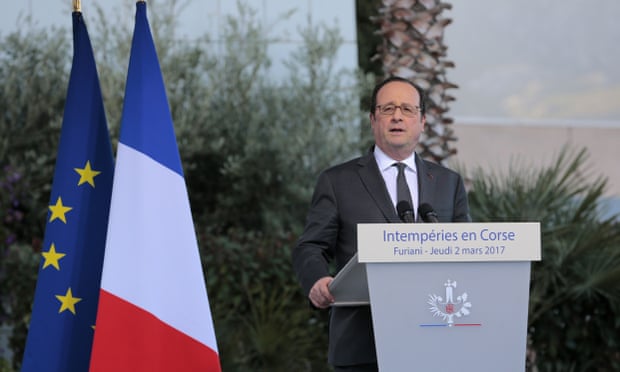
Saturday, April 28, 2012

Hollande and Merkel clash looms over eurozone austerity

Germany and France moved towards a bruising and potentially destabilising showdown over how to tackle the European debt crisis when Chancellor Angela Merkel abruptly dismissed one of François Hollande's central presidential campaign pledges.

As the French Socialist leader extended his poll lead over Nicolas Sarkozy to 10 points on Fridaywith just over a week until the French vote, Merkel declared that his drive to reopen the EU's fiscal pact penalising spendthrift eurozone governments was futile.

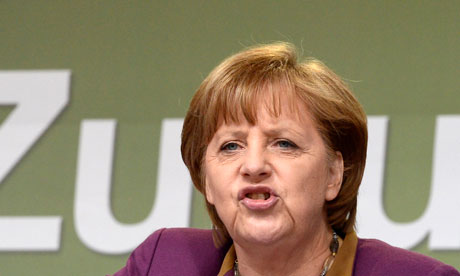
"The fiscal pact has been negotiated, it has been signed by 25 government leaders, and has already been ratified by Portugal and Greece. Parliaments all over Europe are about to pass it. Ireland has a referendum on it at the end of May. It cannot be negotiated anew," Merkel told the WAZ media group.

But with governments across Europe falling victim to a backlash against austerity, the policy debate in Europe is shifting from German insistence on austerity towards a greater emphasis on boosting growth and creating jobs.

If he wins the French presidency on 6 May and also secures a parliamentary majority in June, Hollande and his team are committed to not ratifying the EU pact unless it is fine-tuned to include growth-boosting policies. The pact, a new rulebook for the eurozone, can come into force even if France does not ratify it, but this is seen as politically inconceivable.