Democracy Gone Astray

Democracy, being a human construct, needs to be thought of as directionality rather than an object. As such, to understand it requires not so much a description of existing structures and/or other related phenomena but a declaration of intentionality.
This blog aims at creating labeled lists of published infringements of such intentionality, of points in time where democracy strays from its intended directionality. In addition to outright infringements, this blog also collects important contemporary information and/or discussions that impact our socio-political landscape.

All the posts here were published in the electronic media – main-stream as well as fringe, and maintain links to the original texts.

[NOTE: Due to changes I haven't caught on time in the blogging software, all of the 'Original Article' links were nullified between September 11, 2012 and December 11, 2012. My apologies.]

Showing posts with label Oil Spill. Show all posts

Sunday, July 29, 2018

TransCanada's Keystone Pipeline Spills 795,000 Litres Of Crude In South Dakota

CALGARY — TransCanada Corp. says its Keystone pipeline has leaked an estimated 795,000 litres of oil in Marshall County, S.D.

The company says its crews shut down the pipeline early this morning after detecting a drop in pressure and are assessing the situation.

Wednesday, March 01, 2017

Researcher says Alberta regulator underestimating impact of thousands of oil spills

A researcher says the agency that monitors Alberta’s energy industry has underestimated the impact of tens of thousands of spills going back decades.

Kevin Timoney, an Edmonton−area consulting biologist, used sophisticated statistical analysis, an extensive research review and comparisons with other jurisdictions to conclude the Alberta Energy Regulator doesn’t have a good handle on how much oil and saline water has been released into the environment or remains there.

Friday, February 12, 2016

Fish deformities spiked after Lac-Mégantic oil spill, report says

MONTREAL—Scientists have recorded an “unprecedented” spike in the fish deformities in the wake of the deadly 2013 train derailment and oil spill in Lac-Mégantic, Que., according to a provincial government report.

The report into the effects of the disaster on the 185-km-long Chaudière River, which begins in Lac Mégantic, found that in some parts of the river as many as 47 per cent of the fish they collected had an external deformation.

Friday, July 31, 2015

WARNINGS FROM MIMICO CREEK'S OIL SPILL

Toronto Wildlife Centre (TWC) has released the last of the 111 oil-smothered ducks rescued from Mimico Creek after a spill from an overturned truck, but enviros say the threat to wildlife is far from over.

A transport truck carrying transformers rolled over at 427 and 401 earlier this month, dumping some 6,000 litres of petroleum-based oil. Storm sewers carried the slick down to Mimico Creek, where TWC rescued most of the birds, and into Lake Ontario. A spokesperson for Ontario’s Ministry of the Environment and Climate Change says the spill was vacuumed up and “all impacts to the Creek were remediated.” But questions remain.

Thursday, July 30, 2015

Nexen Oil Spill Could Have Been Leaking For Over 2 Weeks

ANZAC, Alta. - Nexen Energy said Wednesday it can narrow down when a pipeline ruptured in northern Alberta to a two-week period, something that one environmental group said is cause for alarm.

Ron Bailey, the company's senior vice-president of Canadian operations, said officials still don't know precisely when the pipeline began leaking after a five million litre spill was discovered last Wednesday in Anzac, about 35 kilometres southeast of Fort McMurray.

Nexen pipeline spill cause could take months to determine

It could take months for Nexen to fully understand what caused a pipeline leak that spilled five million litres of bitumen and water into muskeg near Fort McMurray, Alta., the company says.

Nexen CEO Fang Zhi, who spoke to the media Wednesday at the site of the spill, personally apologized for the damage.

Wednesday, July 29, 2015

Pipeline Spill In The Heart Of Canada’s Tar Sands Industry Leaks 1.3 Million Gallons Of Oily Emulsion

An pipeline spill in Alberta, Canada has leaked some 1,320,000 gallons, or 31,000 barrels, of emulsion — a mixture of bitumen, produced water, and sand — south of Fort McMurray, a hub for Canada’s tar sands mining and refining industry.

The leak, which was discovered Wednesday afternoon, is the largest pipeline spill in the province in 35 years, when a 54,000 barrel oil spill became Canada’s worst-ever pipeline incident.

Nexen Pipeline Spills 5 Million Litres Of Emulsion Near Fort McMurray

CALGARY - A pipeline at Nexen's Long Lake oilsands project in northeastern Alberta has failed, spilling an estimated five million litres of bitumen, produced water and sand.

The company, which was taken over by China's CNOOC Ltd. in 2013, said the affected area is about 16,000 square metres, mostly along the pipeline's route.

The company and the Alberta Energy Regulator say it's too soon to say what might have caused the leak

Nexen pipeline leak in Alberta spills 5 million litres

One of the largest leaks in Alberta history has spilled about five million litres of emulsion from a Nexen Energy pipeline at the company's Long Lake oilsands facility south of Fort McMurray.

The leak was discovered Wednesday afternoon.

Nexen said in a statement its emergency response plan has been activated and personnel were onsite. The leak has been stabilized, the company said.

Friday, May 29, 2015

Pipeline Burst Along Santa Barbara Coast Spills Into 4-Mile Long Oil Slick

GOLETA, Calif. (AP) -- A broken onshore pipeline spewed oil down a storm drain and into the Pacific Ocean for several hours before it was shut off, creating a slick some 4 miles long across a scenic stretch of central California coastline, officials said.

Initial estimates put the spill at about 21,000 gallons Tuesday, but that figure would likely change after a Wednesday morning flyover gave a better sense of the spill's scope, U.S. Coast Guard spokeswoman Jennifer Williams said.

Thursday, April 30, 2015

Four Things We May Never Know about the Vancouver Fuel Spill

Late Saturday afternoon, Transport Canada officially cleared the MV Marathassa to leave Canadian waters, weeks after the ship spilled an undetermined amount of fuel into Burrard Inlet.

As it exits the Salish Sea, the bulk carrier leaves angry mayors, a combative coast guard, a distrustful public and many, many questions in its wake. Here are four things we don't know -- and may never know -- about what happened in English Bay.

U.S. worried about Canada’s ability to respond to oil spills, records reveal

Newly released U.S. documents show American authorities are nervously eyeing Canadian proposals to triple the number of oil tanker voyages through the shared waters off B.C.’s coast, saying among themselves that Canadian standards to clean up a major spill are decades behind those of the U.S. and leave states vulnerable to environmental damage and costs.

After the MV Marathassa spilled sticky, toxic bunker fuel into Vancouver’s harbour this month, Washington State officials noted in interviews with The Globe and Mail that the state’s oil-spill response regime was far advanced from Canada’s. One former maritime lawyer said if the U.S. Coast Guard ranked an eight or nine out of 10 worldwide, then Canada’s Coast Guard would rank a one or two.

Wednesday, April 29, 2015

Big Oil Uses Toxic Chemicals to Clean Up Spills. Will the Feds Finally Make Them Stop?

Five years ago this week, the Deepwater Horizon oil rig exploded, killing 11 workers and setting off the worst oil spill in US history. The images are unforgettable: The Gulf of Mexico on fire. Pelicans emerging from the water entirely covered in thick, black oil. Planes flying overhead, spraying more than a million gallons of an oil-dispersing chemical called Corexit in an attempt to control the spill.

Monday, April 27, 2015

Secrecy Shrouds Decade-Old Oil Spill In Gulf Of Mexico

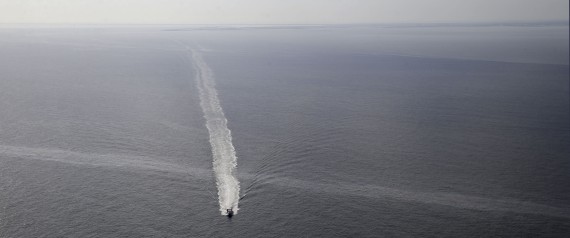
OVER THE GULF OF MEXICO (AP) — A blanket of fog lifts, exposing a band of rainbow sheen that stretches for miles off the coast of Louisiana. From the vantage point of an airplane, it's easy to see gas bubbles in the slick that mark the spot where an oil platform toppled during a 2004 hurricane, triggering what might be the longest-running commercial oil spill ever to pollute the Gulf of Mexico.

Yet more than a decade after crude started leaking at the site formerly operated by Taylor Energy Company, few people even know of its existence. The company has downplayed the leak's extent and environmental impact, likening it to scores of minor spills and natural seeps the Gulf routinely absorbs.

Friday, April 24, 2015

Former Coast Guard commander casts doubt on 'excellent' spill cleanup claim

Retired Commander Frederick E. Moxey said based on his experience, government claims of having contained "80 per cent" of the English Bay spill were likely false.

“I’ve been in hundreds of spills and never seen an 80 per cent recovery," Moxey said. "Usually you recover 30 per cent at most, more like 10, and that’s with an immediate response and a trained crew with sponges and straw pulling the oil out by hand.”

Original Vancouver Oil Spill Estimate Was 'Conservative': Officials

VANCOUVER - Investigators say mechanical problems with valves and pipes aboard a grain carrier were partly to blame for a spill into Vancouver's English Bay of about 2,700 litres of bunker fuel, saying that's a "conservative" estimate.

Transport Canada spokeswoman Yvette Myers said investigators have also found another unrelated problem on the MV Marathassa contributed to the spill but declined to provide details because of an ongoing investigation.

Private Clean-up Firm Defends Oil Spill Response

The private firm which spent an entire night attempting to contain a heavy oil spill in English Bay last week has defended the length of time it took to arrive at the accident -- about 80 minutes -- as "an incredible response time."

However, Michael Lowry, a spokesman for Western Canada Marine Response Corporation (WCMRC), suggested the longer delay came after the Canadian Coast Guard alerted British Columbia's network of emergency management partners that a spill had occurred.

It took that group nearly three hours -- from 5:14 p.m. to 8:06 p.m. -- to notify WCMRC that a serious spill had occurred. WCMRC is the oil-industry owned consortium responsible for spill clean up on the West Coast.

Monday, April 13, 2015

Vancouver's Preview of a Spill from Hell

Vancouver just got a small whiff of what a sevenfold increase in tanker traffic could mean for a place aspiring to be the world's greenest city. On a calm afternoon in English Bay this week, a grain freighter at anchor apparently started leaking bunker fuel into the scenic waters off Stanley Park.

Local residents and their municipal government were not informed for 13 hours. The Coast Guard was ostensibly in charge of the cleanup, but its private sector partners at West Coast Marine Response Corporation took six hours to start skimming the oil and nine hours to put a boom around the leaking vessel.

Vancouver Oil Spill Cleanup Will Be Done By Trained Workers

Despite being inundated with well-meaning offers of help, Vancouver officials say only trained crews in protective gear should be cleaning up the oil spill from a ship in English Bay.

An estimated 3,000 litres of bunker fuel leaked into the water from a brand-new cargo ship that apparently had a malfunction on Wednesday evening.

Oil residue has been washing up on local beaches, and some residents have been out with gloves, brushes, and buckets of soapy water to try and clean up.

Vancouver Oil Spill: Ship That Leaked Fuel Into English Bay Had Malfunction

VANCOUVER - The toxic spill that fouled Vancouver's English Bay has created some poison between federal, provincial and city politicians.

B.C.'s premier and Vancouver's mayor criticized the sluggish and inadequate response of the clean up operation by the coast guard on Friday.

Industry Minister James Moore reacted defensively, telling reporters that it was unhelpful to have politicians "piling on and spreading misinformation."