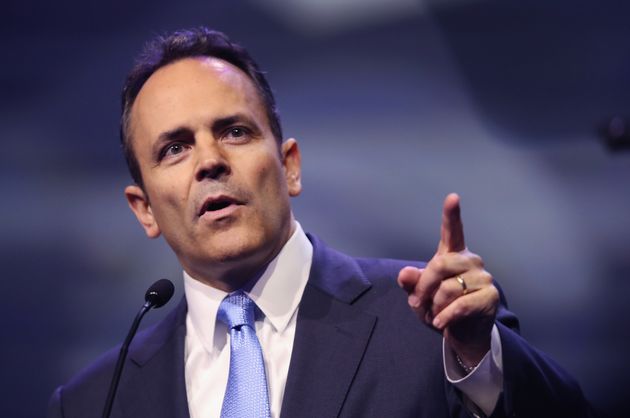
Kentucky’s public pension system is a long-running, worst-in-the-nation disaster. Even as state workers chip in their fair share, the system suffers from years of chronic underfunding by the state. Seeking higher returns, the program, formally known as Kentucky Retirement Systems, has turned to “alternative investments” such as private equity and hedge funds. But those funds also carry far more risk than traditional investments in stocks and bonds ― and much higher fees.
Democracy Gone Astray
Democracy, being a human construct, needs to be thought of as directionality rather than an object. As such, to understand it requires not so much a description of existing structures and/or other related phenomena but a declaration of intentionality.
This blog aims at creating labeled lists of published infringements of such intentionality, of points in time where democracy strays from its intended directionality. In addition to outright infringements, this blog also collects important contemporary information and/or discussions that impact our socio-political landscape.
All the posts here were published in the electronic media – main-stream as well as fringe, and maintain links to the original texts.
[NOTE: Due to changes I haven't caught on time in the blogging software, all of the 'Original Article' links were nullified between September 11, 2012 and December 11, 2012. My apologies.]
Showing posts with label Hedge Funds. Show all posts
Sunday, July 16, 2017
Monday, May 30, 2016
Hedge Funds Launch New Lobbying Effort To Protect Their Power
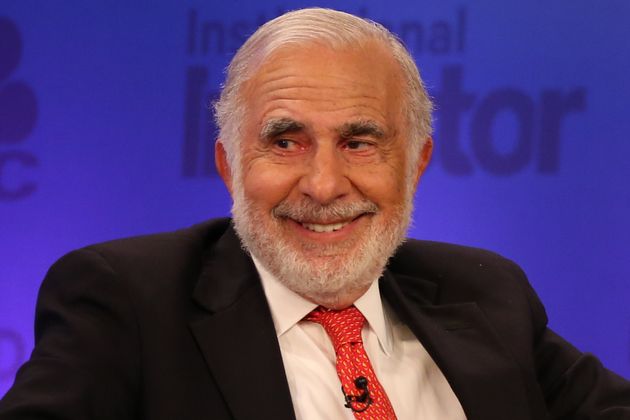
WASHINGTON — Billionaire activist investors are joining forces to raid Congress for more power.
According to a Wall Street Journal report, hedge fund operators Paul Singer, Carl Icahn, Bill Ackman, Barry Rosenstein and Dan Loeb formed a lobbying trade group called the Council for Investor Rights and Corporate Accountability, or CIRCA. The new group will push back against recent efforts to reform rules allowing activist shareholders, like the group’s founders, to raid companies to maximize shareholder profit, often at the expense of workers’ jobs. It comes at the same time hedge funds are waging under-the-radar lobbying battles on issues in which they have investments, like Puerto Rican debt and Fannie Mae, to increase their profits.
Wednesday, May 25, 2016
The Vultures’ Vultures: How A New Hedge-Fund Strategy Is Corrupting Washington
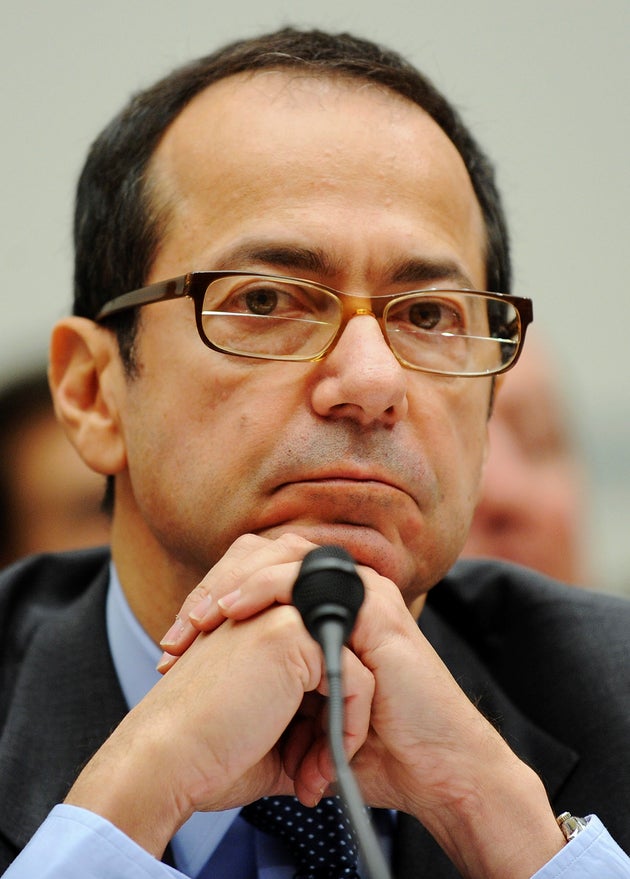
A Harvard-trained economist, Shapiro is the head of a consulting firm called Sonecon. That business card doesn’t do it for you? He’s got a few more in his wallet:
- Senior fellow at the Georgetown University School of Business.
- Adviser to the International Monetary Fund.
- Director of the Globalization Initiative at NDN, a progressive think tank.
Thursday, May 12, 2016
The Top 25 Hedge Fund Managers Earned $13 Billion in 2015
As many companies lost billions of dollars or closed last year, the world’s top 25 hedge fund managers earned a total of $13 billion—more than the entire economies of Namibia, the Bahamas or Nicaragua.
The Guardian reports:
Kenneth Griffin, founder and chief executive of Citadel, and James Simons, founder and chairman of Renaissance Technologies, shared the top spot, taking home $1.7bn each – equivalent to the annual salaries of 112,000 people taking home the US federal minimum wage of $15,080.
The Guardian reports:
Kenneth Griffin, founder and chief executive of Citadel, and James Simons, founder and chairman of Renaissance Technologies, shared the top spot, taking home $1.7bn each – equivalent to the annual salaries of 112,000 people taking home the US federal minimum wage of $15,080.
Wednesday, May 11, 2016
Hedge funds win no matter what: These are the obscene salaries of the industry’s top managers

For the world’s top hedge fund managers, 2015 was a fantastic year, with an astounding amount of money made. Institutional Investor’s Alpha magazine released its annual review of how the top managers fared last year, and the tally for the group of 25 came in at nearly $13 billion, up 10 percent over 2014. In any year, that figure would likely grab headlines, but considering that it was the worst year for funds since 2011 – with Atlantic Investment Management founder Alexander Roepers telling the Wall Street Journal “Everything went wrong” – those totals seem particularly enormous.
Monday, March 14, 2016
Who’s Pumping Money Into the 2016 Election? Hedge Fund Heads
Hedge fund managers are upping their game in this election season, with Democratic front-runner Hillary Clinton and Republican Ted Cruz the biggest beneficiaries, Reuters’ review of Federal Election Commission filings found.
Thursday, February 18, 2016
Friday, July 31, 2015
Hedge funds tell Puerto Rico: lay off teachers and close schools to pay us back

Billionaire hedge fund managers have called on Puerto Rico to lay off teachers and close schools so that the island can pay them back the billions it owes.
The hedge funds called for Puerto Rico to avoid financial default – and repay its debts – by collecting more taxes, selling $4bn worth of public buildings and drastically cutting public spending, particularly on education.
Wednesday, July 29, 2015
How Hedge and Vulture Funds Have Exploited Puerto Rico’s Debt Crisis

New York–born Puerto Rican activist David Galarza spent a recent sultry summer Monday picketing a meeting of bondholders by day and meeting with professionals, students, and working people in the evening concerned about the increasingly scary crisis over the island’s $72 billion debt. “I picked up a Freddy Krueger mask on the way down there—a little bit of theater, you know?” Galarza told me. He had come to get a look at Anne Krueger, the former IMF official behind a recent report suggesting solutions to the crisis—solutions that imposed draconian neoliberal “adjustment” burdens on the island’s distressed population—and didn’t hesitate to read her body language as she entered the building. “She looked a little mystified, like she was bewildered that we were even there. She seemed to have an ‘I’m trying to help you people’ attitude.”
Wednesday, October 15, 2014
Why Are These Hedge Fund Kingpins Dumping Millions Into the Midterms?
As Democrats and Republicans battle for control of the Senate, hedge funds are dumping millions of dollars into congressional campaigns. Most of these companies are lining up behind one party or the other. But the second-biggest spender, Long Island-based Renaissance Technologies, is playing both sides of the aisle. As of early September, the firm's CEO, Robert Mercer, had given $3.1 million to Republican candidates and super-PACs. Its founder and chairman, James Simons—a brilliant former National Security Agency code breaker—had donated $3.2 million to their Democratic counterparts.
Monday, October 06, 2014
The Empire of Edge
As Dr. Sid Gilman approached the stage, the hotel ballroom quieted with anticipation. It was July 29, 2008, and a thousand people had gathered in Chicago for the International Conference on Alzheimer’s Disease. For decades, scientists had tried, and failed, to devise a cure for Alzheimer’s. But in recent years two pharmaceutical companies, Elan and Wyeth, had worked together on an experimental drug called bapineuzumab, which had shown promise in halting the cognitive decay caused by the disease. Tests on mice had proved successful, and in an initial clinical trial a small number of human patients appeared to improve. A second phase of trials, involving two hundred and forty patients, was near completion. Gilman had chaired the safety-monitoring committee for the trials. Now he was going to announce the results of the second phase.
Tuesday, September 30, 2014
Hedge Funds Are Richer Than Ever

Things are looking pretty good for the superrich.
The largest Americas-based hedge funds are controlling more money than ever before, according to a new analysis by Absolute Return, a hedge fund news site.
Friday, May 16, 2014
HOW DO HEDGE FUNDS GET AWAY WITH IT? EIGHT THEORIES
The other day, I asked how hedge funds manage to bestow such great riches on their managers despite the fact that, in many cases, their performance seems pretty ordinary. That got quite a reaction. The responses ranged from claims that hedgies are remunerated perfectly appropriately to charges that they are outright crooks who prey on gullible and greedy investors. Because the industry has grown enormously in recent years—according to one industry source, hedge funds now manage about $2.1 trillion of capital, a good deal of which comes from pension funds and charitable endowments—it’s not a trivial matter which of these explanations is the most accurate.
Thursday, May 15, 2014
THE GREAT HEDGE-FUND MYSTERY: WHY DO THEY MAKE SO MUCH?
This is the time of year when publications that cover the hedge-fund industry do their annual rankings, and people get irate about the vast sums of money that the top hedgies make—in some cases, billions of dollars. At the top of this year’s list, according to a survey from Institutional Investor Alpha, are four familiar names: David Tepper, of Appaloosa Management, who made $3.5 billion; Stephen Cohen, of SAC Capital ($2.4 billion); John Paulson, of Paulson & Co. ($2.3 billion); and James Simons, of Renaissance Technologies ($2.2 billion).
Friday, November 29, 2013
How Wall Street Has Turned Housing Into a Dangerous Get-Rich-Quick Scheme—Again
You can hardly turn on the television or open a newspaper without hearing about the nation's impressive, much celebrated housing recovery. Home prices are rising! New construction has started! The crisis is over! Yet beneath the fanfare, a whole new get-rich-quick scheme is brewing.
Over the last year and a half, Wall Street hedge funds and private equity firms have quietly amassed an unprecedented rental empire, snapping up Queen Anne Victorians in Atlanta, brick-faced bungalows in Chicago, Spanish revivals in Phoenix. In total, these deep-pocketed investors have bought more than 200,000 cheap, mostly foreclosed houses in cities hardest hit by the economic meltdown.
Wednesday, July 10, 2013
Hedge Fund Advertising Ban Lifted By SEC
WASHINGTON — For the first time, hedge funds will be allowed to advertise to the general public under a rule adopted Wednesday by federal regulators.
The Securities and Exchange Commission voted 4-1 to lift a decades-old ban on hedge funds marketing their investments to a wide audience.
Hedge funds are still allowed to sell securities only to an exclusive group of investors: those with a net worth of at least $1 million excluding their primary residence, or annual income of more than $200,000 in each of the two most recent years. About 7.8 percent of U.S. households would qualify.
The change was mandated by legislation enacted last year. The law also makes it easier for small startup companies to raise capital without having to comply immediately with SEC reporting rules.
Original Article
Source: huffingtonpost.com
Author: AP
The Securities and Exchange Commission voted 4-1 to lift a decades-old ban on hedge funds marketing their investments to a wide audience.
Hedge funds are still allowed to sell securities only to an exclusive group of investors: those with a net worth of at least $1 million excluding their primary residence, or annual income of more than $200,000 in each of the two most recent years. About 7.8 percent of U.S. households would qualify.
The change was mandated by legislation enacted last year. The law also makes it easier for small startup companies to raise capital without having to comply immediately with SEC reporting rules.
Original Article
Source: huffingtonpost.com
Author: AP
Friday, December 30, 2011
SEC Doubles Down On Its Efforts To Find Hedge Fund Fraud
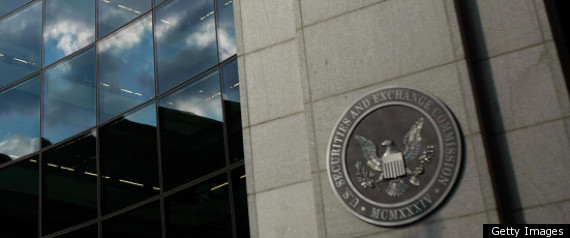
According to a report in The Wall Street Journal, the SEC has devised a method of sorting data that highlights hedge funds whose balance sheets never seem to suffer, no matter how rocky the market gets. The WSJ notes that the agency is trying to spot the next Bernie Madoff before he or she can defraud investors of billions of dollars, the way Madoff did with his Ponzi scheme. Already, the WSJ says, the SEC has initiated four civil-fraud lawsuits based on their data review system.
It's an auspicious time for the SEC to be seen bringing the hammer down on Wall Street scofflaws, because many have criticized the agency since the height of the financial crisis for not doing more to identify and prosecute financial malpractice.
In one such high-profile instance, Harry Markopolos, the fraud investigator who spent almost a decade building a case against Madoff's wealth management firm, told the House Financial Services Committee in 2009 that the SEC was "financially illiterate" and "captive to the industry it regulates."
Wednesday, June 08, 2011
Hedge funds 'grabbing land' in Africa
Hedge funds are behind "land grabs" in Africa to boost their profits in the food and biofuel sectors, a US think-tank says.
In a report, the Oakland Institute said hedge funds and other foreign firms had acquired large swathes of African land, often without proper contracts.
It said the acquisitions had displaced millions of small farmers.
Foreign firms farm the land to consolidate their hold over global food markets, the report said.
They also use land to "make room" for export commodities such as biofuels and cut flowers.
"This is creating insecurity in the global food system that could be a much bigger threat than terrorism," the report said.
The Oakland Institute said it released its findings after studying land deals in Ethiopia, Tanzania, South Sudan, Sierra Leone, Mali and Mozambique.
Full Article
Source: BBC
Subscribe to:
Posts (Atom)


