Democracy Gone Astray

Democracy, being a human construct, needs to be thought of as directionality rather than an object. As such, to understand it requires not so much a description of existing structures and/or other related phenomena but a declaration of intentionality.
This blog aims at creating labeled lists of published infringements of such intentionality, of points in time where democracy strays from its intended directionality. In addition to outright infringements, this blog also collects important contemporary information and/or discussions that impact our socio-political landscape.

All the posts here were published in the electronic media – main-stream as well as fringe, and maintain links to the original texts.

[NOTE: Due to changes I haven't caught on time in the blogging software, all of the 'Original Article' links were nullified between September 11, 2012 and December 11, 2012. My apologies.]

Showing posts with label IEA. Show all posts

Tuesday, June 11, 2013

Global Carbon Dioxide Emissions From Energy Rose To Record High In 2012, IEA Reports

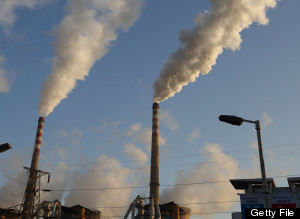
STOCKHOLM (AP) — The world's energy-related carbon dioxide emissions rose 1.4 percent in 2012 to a record high of 31.6 billion tons, even though the U.S. posted its lowest emissions since the mid-1990s, the International Energy Agency said Monday.

In its annual World Energy Outlook report, the Paris-based IEA said top carbon polluter China had the largest emissions growth last year, up 300 million tons, or 3.8 percent, from 2011. Still, the increase was among the lowest seen in a decade as China continues to invest in renewable energy and energy efficiency.
Tuesday, December 18, 2012

Coal Consumption Booms Amid Rising Climate Concerns: IEA Coal Report 2012

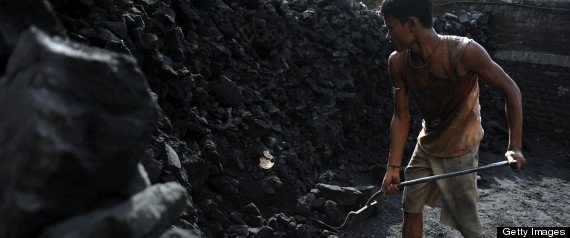
In a report destined to frustrate advocates for global action on climate change, the Paris-based International Energy Agency projected Tuesday morning that in five years' time, the amount of coal burned around the globe every year will increase by an additional 1.2 billion metric tons -- an amount roughly equivalent to the current annual coal consumption of the U.S. and Russia combined.

The uptick, virtually all of it attributable to rapid economic expansion in China and India, comes even as the U.S. continues to experience decreases in coal use for electricity generation amid the availability of cheap and plentiful natural gas -- which has a smaller carbon footprint than coal when burned.