Democracy Gone Astray

Democracy, being a human construct, needs to be thought of as directionality rather than an object. As such, to understand it requires not so much a description of existing structures and/or other related phenomena but a declaration of intentionality.
This blog aims at creating labeled lists of published infringements of such intentionality, of points in time where democracy strays from its intended directionality. In addition to outright infringements, this blog also collects important contemporary information and/or discussions that impact our socio-political landscape.

All the posts here were published in the electronic media – main-stream as well as fringe, and maintain links to the original texts.

[NOTE: Due to changes I haven't caught on time in the blogging software, all of the 'Original Article' links were nullified between September 11, 2012 and December 11, 2012. My apologies.]

Showing posts with label James Clapper. Show all posts

Thursday, May 28, 2015

Attorney: Spy chief had 'forgotten' about NSA program when he misled Congress

Director of National Intelligence Jim Clapper wasn’t lying when he wrongly told Congress in 2013 that the government does not “wittingly” collect information about millions of Americans, according to his top lawyer.

He just forgot.

“This was not an untruth or a falsehood. This was just a mistake on his part,” Robert Litt, the general counsel for the Office of the Director of National Intelligence, said during a panel discussion hosted by the Advisory Committee on Transparency on Friday.

“We all make mistakes.”

Tuesday, April 29, 2014

James Clapper Bans Intelligence Community From 'Unauthorized' Media Contacts

Two months after promising a new era of transparency at the nation's intelligence agencies, Director of National Intelligence James Clapper has slammed the door on media access with a sweeping new order last month that bans nearly all unauthorized contact with reporters.

The intelligence community directive Clapper issued on March 20 applies to all "contact with the media about intelligence-related information, including intelligence sources, methods, activities, and judgments," regardless of whether they are classified. Violations will be handled at a minimum as a security violation and may be referred to the Justice Department for criminal prosecution, according to the memo.

Sunday, December 08, 2013

Patriot Act Author Jim Sensenbrenner: DNI James Clapper Should Be Prosecuted For Lying To Congress

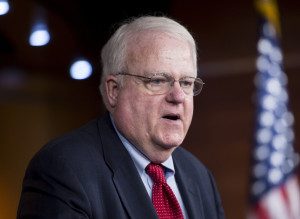
Director of National Intelligence James Clapper should be fired and prosecuted for lying to Congress about the National Security Agency's widespread surveillance activities, Wisconsin Rep. James Sensenbrenner (R) told the Hill.

Sensenbrenner was the original author of the Patriot Act, which the NSA claims allows it to collect records of every phone call made in America. But Sensenbrenner has said he is shocked by the agency's interpretation of the law.

Saturday, August 17, 2013

Prosecute James Clapper, Voters In Five State Polls Say

Polls say Americans are concerned about National Security Agency surveillance. According to a progressive group's survey, many want to see a top intelligence official punished for giving Congress inaccurate answers about the NSA's efforts.

An internal NSA audit, released Thursday by The Washington Post, found that the agency has violated privacy rules thousands of times every year since 2008. But even before those revelations, a majority of voters in five state-level polls said that James Clapper, the director of national intelligence, should be prosecuted for giving Congress a "clearly erroneous" answer about NSA surveillance.

Wednesday, August 14, 2013

James Clapper, Director Of National Intelligence Who Misled Congress, To Establish Surveillance Review Group

President Barack Obama on Monday announced that Director of National Intelligence James Clapper will establish a review group designed to assess the nation's intelligence gathering and surveillance capabilities.

Obama announced the creation of an "independent group" of "outside experts" to review privacy issues raised by the nation's surveillance programs during a Friday press conference. "We’re forming a high-level group of outside experts to review our entire intelligence and communications technologies," he said, adding that the group would "consider how we can maintain the trust of the people, how we can make sure that there absolutely is no abuse in terms of how these surveillance technologies are used."

Tuesday, July 02, 2013

James Clapper is still lying to America

“James Clapper Is Still Lying”: That would be a more honest headline for yesterday’s big Washington Post article about the director of national intelligence’s letter to the U.S. Senate.

Clapper, you may recall, unequivocally said “no, sir” in response to Sen. Ron Wyden, D-Ore., asking him: “Does the NSA collect any type of data at all on millions or hundreds of millions of Americans?” Clapper’s response was shown to be a lie by Snowden’s disclosures, as well as by reports from the Guardian, the Washington Post, the Associated Press and Bloomberg News (among others). This is particularly significant, considering lying before Congress prevents the legislative branch from performing oversight and is therefore a felony.

Wednesday, June 12, 2013

James Clapper: I Gave 'Least Untruthful' Answer Possible On NSA Surveillance

Director of National Intelligence James Clapper sought to clarify his claim that the National Security Agency does not collect information on millions of Americans, telling NBC News' Andrea Mitchell that he gave the "least untruthful" answer possible on the agency's surveillance program.

During a Senate Intelligence Committee hearing on March 12, Sen. Ron Wyden (D-Ore.) asked the intelligence czar if the NSA gathers "any type of data at all on millions of Americans.”

"No, sir," Clapper responded. "Not wittingly. There are cases where they could inadvertently perhaps collect, but not wittingly."

Friday, June 07, 2013

Phone Spying Program Details To Be Declassified: Intelligence Chief Says Public Must Understand Limits

WASHINGTON — The top U.S. intelligence official denounced the disclosure of highly secret documents Thursday and sought to set the record straight about how the government collects intelligence about people's telephone and Internet use. He said he was declassifying some aspects of the monitoring to help Americans understand it better.

Director of National Intelligence James Clapper called the disclosure of an Internet surveillance program "reprehensible" and said it risks Americans' security. He said a leak that revealed a program to collect phone records would affect how America's enemies behave and make it harder to understand their intentions.

Tuesday, January 31, 2012

U.S. Intel: Iran Willing To Attack on American Soil

American intelligence officials believe that Iran might be willing to conduct attacks inside the United States. That was the big take-away from the prepared testimony Director of National Intelligence James Clapper delivered to the Senate Intelligence Committee on Tuesday.

The Washington Post explains that the concerns arose after the alleged plot by the Islamic Republic to assassinate the Saudi ambassador while he was in Washington came to light last year. According to Clapper, that incident "shows that some Iranian officials—probably including Supreme Leader Ali Khamenei—have changed their calculus and are now more willing to conduct an attack in the United States in response to real or perceived U.S. actions that threaten the regime."

Clapper added: "We are also concerned about Iranian plotting against U.S. or allied interests overseas."

As the Post explains, up until now, the United States had been cautious about publicly stating exactly how high up they thought the alleged plot went in the Iranian government. Clapper's testimony was the first time that Khamenei has been mentioned by name in connection to the alleged plot.

Iran was of chief concern at the annual assessment of threats to U.S. security. Tensions have risen between the two countries in recent months, as Iran faces oil sanctions from the West, and the West contends with the possibility of Iran possessing technology to build a nuclear weapon.

Also discussed as a major threat were increased spying capabilities—including of the cyber variety— of China, Russia, and Iran, Reuters notes.

Original Article
Source: slatest 
Author: Abby Ohlheiser