Democracy Gone Astray

Democracy, being a human construct, needs to be thought of as directionality rather than an object. As such, to understand it requires not so much a description of existing structures and/or other related phenomena but a declaration of intentionality.
This blog aims at creating labeled lists of published infringements of such intentionality, of points in time where democracy strays from its intended directionality. In addition to outright infringements, this blog also collects important contemporary information and/or discussions that impact our socio-political landscape.

All the posts here were published in the electronic media – main-stream as well as fringe, and maintain links to the original texts.

[NOTE: Due to changes I haven't caught on time in the blogging software, all of the 'Original Article' links were nullified between September 11, 2012 and December 11, 2012. My apologies.]

Showing posts with label Mass Incarceration. Show all posts

Tuesday, March 07, 2017

Mass Incarceration in the Cornfields: Shattered Families and Racial Profiling in Small-Town America

Annette Taylor first lost her father to the prison system at age four. He was gone for four years, then came home for a few months, only to return to the Department of Corrections for another 16 years. "My dad was my everything," Taylor told Truthout. Once her father was gone, Taylor remembers that her mother "just worked, worked, worked. She really wasn't around." Her mother worked two, sometimes three jobs -- doing laundry in hotels and laboring in factories in Champaign County, Illinois, where their family lived. When still a preteen, Taylor had to take on the role of mothering her younger siblings -- "get the dinner out that my mom made, make sure my little sister was doing her homework." By the time she was fourteen, Taylor was pregnant. "I didn't even tell my dad," she recalls. She was terrified he would be disappointed. He only learned about the child a year later.

Saturday, May 28, 2016

Tom Cotton Thinks America Isn’t Locking Enough People Up
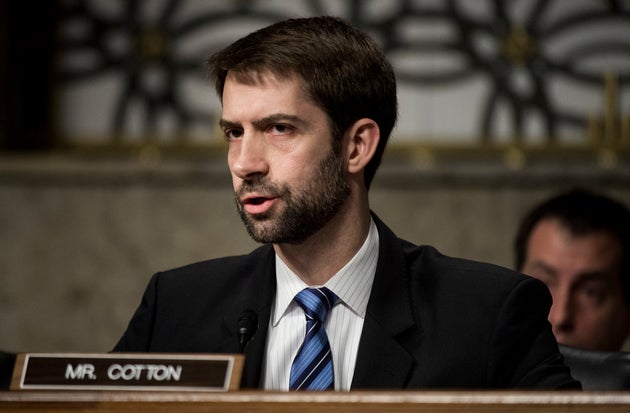
Sen. Tom Cotton (R-Ark.) is criticizing efforts to reform America’s criminal justice system, arguing on Thursday that the country actually has an “under-incarceration problem” — even though the U.S. has the world’s largest prison population.

Cotton gave a speech on criminal justice Thursday at the Hudson Institute, a conservative think tank in Washington, D.C. During his remarks, he argued that policy goals like reducing mandatory minimum sentences, restoring voting rights for felons and reducing barriers to employment for ex-offenders are misguided and “dangerous.”

Wednesday, April 13, 2016

President Bill Clinton Gets It Wrong On Mass Incarceration

President Bill Clinton doubled down on his 1994 Crime Bill, pulling back from his recent apology for his role in the over incarceration of young African Americans. Instead, today he labeled these youth in similar fashion to his wife’s description 20 years ago, as a type of predator that leads to people being “hopped up on crack.” Mass incarceration has largely been the type of stain on the Clinton legacy with Black Americans that doesn’t wash out with words. Clinton’s bill has left in its wake a trail of devastated African American families cut off from loved ones that have served sentences for nonviolent drug offenses that were decades too long. For former President Bill Clinton to now insinuate that Black Lives Matter protestors are defending murderers and gang leaders, is offensive to a people that have been through so much due to his legislative actions. Yet, here we stand in 2016 hearing the same rhetoric espoused to create the Crime Bill, now being used to justify its abhorrent results. Where as in 1996 Hillary Clinton called young blacks super predators, that is now replaced with Bill Clinton saying,

Thursday, February 11, 2016

Mass Incarceration Since 1492: Native American Encounters With Criminal Injustice

The recent right-wing militia occupation of federal land in Oregon once again reminds us that we actually live in what historian Roxanne Dunbar-Ortiz refers to as the US "settler colonial state." Amazingly, Ammon Bundy and his clan took over this land with the claim that they were the rightful owners. With typical settler arrogance, they neglected the historical truth - that the Indigenous people of the Northern Paiute nation were there long before a single imperialist ship set sail from Europe. As journalist Simon Moya-Smith has pointed out "for Native America being overlooked is nothing new. Our voices are seldom in the mainstream, our issues disregarded ... this country has yet to recognize our humanity."

Thursday, January 21, 2016

Racism and Mass Incarceration in the US Heartland: Historical Roots of the New Jim Crow

If asked what state has the highest incarceration rate of Black people, most people would likely cite Mississippi, Alabama or perhaps Louisiana. They would be about 1,000 miles too far south.

According to labor analysts John Pawasarat and Lois M. Quinn, the answer is Wisconsin. Moreover, neighboring Iowa has the country's highest ratio of Black-to-white incarceration. Illinois, from available statistics, has the greatest disparity between Black people in the general population (15 percent) and Black people in the state prison population (58 percent). In fact, according to Sentencing Project calculations, all of the key Midwestern states - Illinois, Indiana, Minnesota, Michigan, Missouri, Ohio and Wisconsin - show a higher ratio of Black-to-white incarceration than Alabama, Florida, Georgia, Louisiana or Mississippi. Across the region, Black people are incarcerated up to 13 times the rate of white people and three to five times the rate of those identified as Hispanic.

Tuesday, September 15, 2015

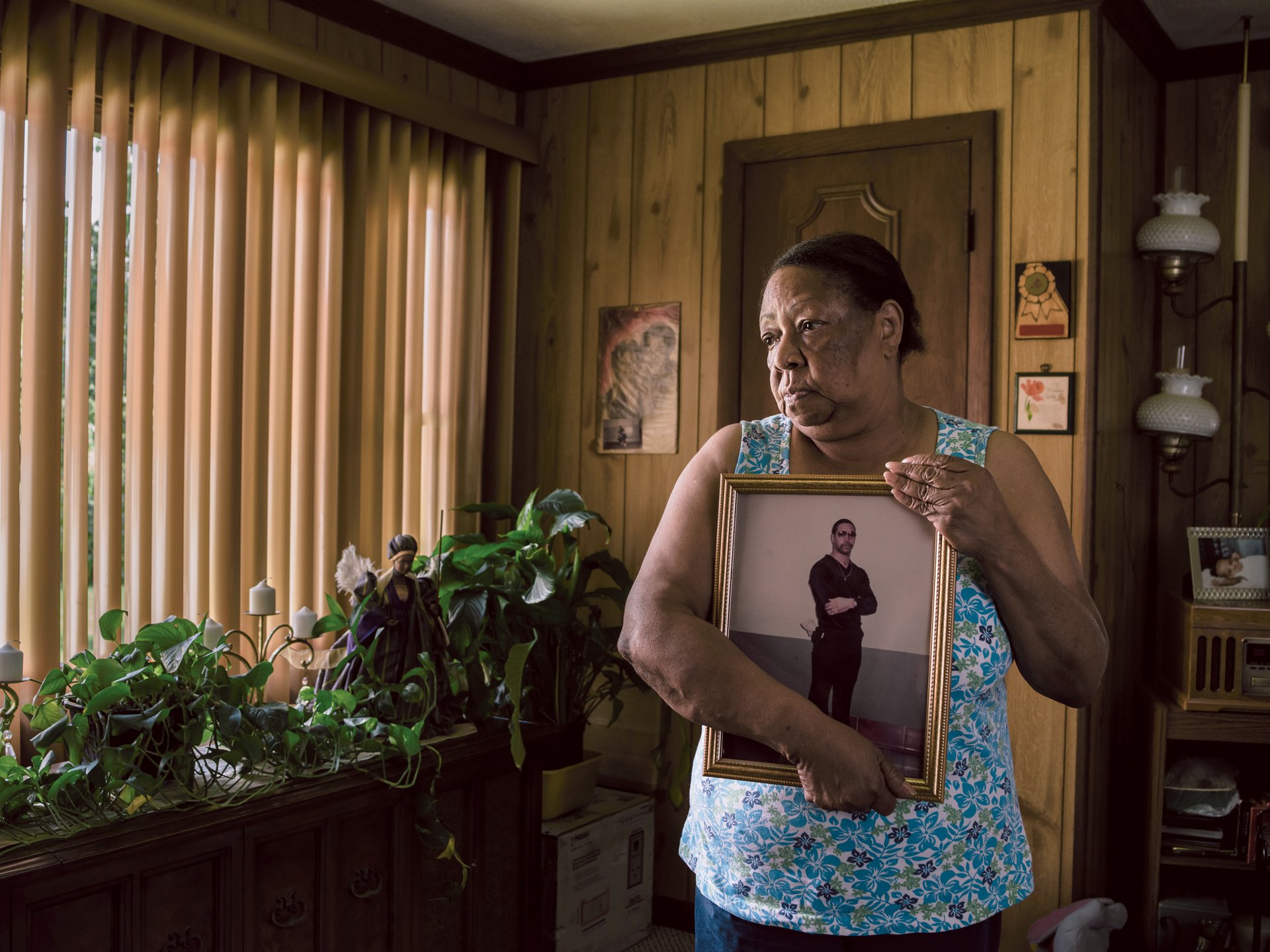
The Black Family in the Age of Mass Incarceration
Never marry again in slavery.
— Margaret Garner, 1858

Wherever the law is, crime can be found.
— Aleksandr Solzhenitsyn, 1973

I.

“lower-class behavior in our cities is shaking them apart.”

By his own lights, Daniel Patrick Moynihan, ambassador, senator, sociologist, and itinerant American intellectual, was the product of a broken home and a pathological family. He was born in 1927 in Tulsa, Oklahoma, but raised mostly in New York City. When Moynihan was 10 years old, his father, John, left the family, plunging it into poverty. Moynihan’s mother, Margaret, remarried, had another child, divorced, moved to Indiana to stay with relatives, then returned to New York, where she worked as a nurse. Moynihan’s childhood—a tangle of poverty, remarriage, relocation, and single motherhood—contrasted starkly with the idyllic American family life he would later extol. “My relations are obviously those of divided allegiance,” Moynihan wrote in a diary he kept during the 1950s. “Apparently I loved the old man very much yet had to take sides … choosing mom in spite of loving pop.” In the same journal, Moynihan, subjecting himself to the sort of analysis to which he would soon subject others, wrote, “Both my mother and father—They let me down badly … I find through the years this enormous emotional attachment to Father substitutes—of whom the least rejection was cause for untold agonies—the only answer is that I have repressed my feelings towards dad.”