
Showing posts with label Media Spin. Show all posts
Showing posts with label Media Spin. Show all posts
Sunday, August 05, 2018
6 Classic Ways Cops Spin the Media to Hide Their Abuses of Power
Tuesday, September 15, 2015
Please Advise! 'Wizard from Oz' Ready to Drag Canada's Election Down Under
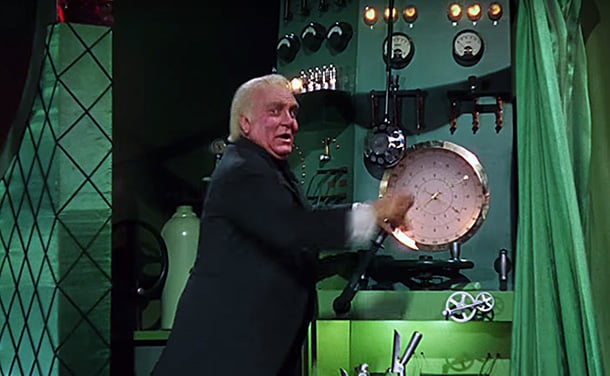
Dear Dr. Steve,
I have just been brought in as the new advisor to the Conservative campaign. I'm new to this scene, having previously worked my magic in Australia and Britain. Any professional advice for me?
Yours in spin,
Lynton Crosby
Friday, September 04, 2015
Harper deflects StatsCan recession report as NDP and Liberals pounce

That distinction was carved into the federal election campaign trail on Tuesday after Statistics Canada reported the economy met the technical definition of a recession at the end of June.
The agency said the economy contracted at an annual pace of 0.5 per cent in the second quarter of 2015 — a second straight quarter of contraction — and it laid down a key marker for the leaders of the three main federal parties.
Harper: New GDP Numbers Show Canada's Economy Rebounding

That summed up Stephen Harper's approach Tuesday to new Statistics Canada data showing the country fell into a technical recession in the first half of the year.
Rather than focus on those numbers, Harper instead saw a silver lining, which was that GDP actually rose 0.5 per cent in June — proof, he said, of the renewed growth upon which a Conservative government is basing most of its own economic projections.
Monday, August 31, 2015
Harper's economic plan: spin to win

Thursday, April 30, 2015
Right-Wing Media Try to Spin the Baltimore Riots Into a 2016 Victory

Winning GOP message: Against anarchy & chaos, at home & abroad. Cheney-Giuliani 2016 probably too much to hope for…But if not them, who?
— Bill Kristol (@BillKristol) April 28, 2015
Who, indeed? Kristol’s dream ticket is so monstrous that anything short of it would seem moderate by comparison.
Tuesday, February 24, 2015
Dear Government Spin Doctor: A Journalist's Final Warning

I am working on a story about how your job is helping to kill Canada's democracy.
I know that your role, as a so-called communications professional, is to put the best spin on what the government is or isn't doing.
That means you often don't respond to the questions I ask; you help elected officials do the same thing; and you won't let me talk to those who have the answers.
Friday, July 15, 2011
Canadian journalism and the mote in our own eye
Can we declare a moratorium on Canadian Schadenfreude over Rupert Murdoch and his British tabs? They deserve what they're getting and more. But it tends to conceal the mote in our own eye.
What mote is that? Jonathan Schell in the The Nation (and reprinted in the Star) says the Murdoch papers "replaced" the noble aims of journalism with "titillation and gossip." Try not to think of Canadian coverage of the royal tour last week when you read that, I dare you. It was all T&G all the time. The CBC was the worst and it lacks even the excuse of needing to maximize profits for shareholders. Now, with the royals departed, it's still hard to find much on CBC news.
What about the Murdochian impulse to control politics along a right-wing axis? Well, the National Post was clearly created in 1998 to push Canadian journalism rightward and has had smashing success. In last May's election, every daily in Canada, except the Star and the smallish Le Devoir, endorsed Stephen Harper. Even in the last U.K. election you didn't get such uniformity.
I repeat: In a pissing contest, the Murdoch tabs win. They piss farthest and foulest. But we're only talking quantity at that point.
I don't consider these traits a failure of "journalism" because I don't think of journalism as a kid going to school and taking exams. Schell says: "Journalism's essential role in a democracy is to enable people to fulfill their roles as citizens." How does he know -- did God tell him? I hate essential roles. They're usually moral one-upmanship.
Journalism is a mixed bag that includes Murdochs. It arose in the 1700s partly to help owners of printing presses offset their heavy investment. It gravitated to titillation and gossip because it's hard to find enough to put in a paper every day. Similar impulses led to political posturing. Freedom of the press was invented, said Canadian historian Harold Innis, to conceal the monopoly power of those who owned the presses. At most, as Gandhi said about Western civilization, it would be a good idea, worth achieving some day.
Journalism isn't an inherently virtuous activity like medicine or teaching, that can get distorted. It's more like government: it's there, probably won't go away, but can act in various directions, depending on lots of things. People have different motives and visions and there are always conflicting approaches.
Toronto's first mayor, William Lyon Mackenzie, was a newspaperman all his life. He got into it to give a voice to the "hardworking farmers and labourers," since none of the many other papers in the colony did so.
The Star is an interesting case. It was begun by striking newspaper workers in 1892 as an alternative to the five other Toronto dailies, and run for 50 years by "crusading" editor Joseph Atkinson. It may be the only paper anywhere with a specific set of goals, along the lines of social justice and equality, built right into its corporate legal structure. That's like acknowledging journalism is an area of moral contention, where values clash and are constructed, rather than some city on a hill that everyone pointlessly genuflects to. Of course even then, "the struggle continues," as they say, since verbalizing a set of values isn't the same thing as embodying them in your paper (or life) each day.
There was a redeeming moment for Canadian journalism in the week of the mote. His name is Kai Nagata. He's 24 and was CTV's eastern Canada reporter till he quit last Friday with a detailed explanation. He gave it a shot but it wasn't what he had in mind. He objected to the pressures to look a certain way on camera, the trivialization (he was especially disgusted by CBC's royals coverage) and the anti-social drift of Canadian politics. He'd hoped to make his contribution as a citizen but couldn't see it happening at CTV. He didn't know what would come next and had some fear, but will try to find a better route. He just wasn't willing to piss his life away in that kind of journalism.
That's what gives a person hope, not the (probably temporary) fall of the House of Murdoch.
This article was first published in the Toronto Star.
Origin
Source: Rabble.ca
What mote is that? Jonathan Schell in the The Nation (and reprinted in the Star) says the Murdoch papers "replaced" the noble aims of journalism with "titillation and gossip." Try not to think of Canadian coverage of the royal tour last week when you read that, I dare you. It was all T&G all the time. The CBC was the worst and it lacks even the excuse of needing to maximize profits for shareholders. Now, with the royals departed, it's still hard to find much on CBC news.
What about the Murdochian impulse to control politics along a right-wing axis? Well, the National Post was clearly created in 1998 to push Canadian journalism rightward and has had smashing success. In last May's election, every daily in Canada, except the Star and the smallish Le Devoir, endorsed Stephen Harper. Even in the last U.K. election you didn't get such uniformity.
I repeat: In a pissing contest, the Murdoch tabs win. They piss farthest and foulest. But we're only talking quantity at that point.
I don't consider these traits a failure of "journalism" because I don't think of journalism as a kid going to school and taking exams. Schell says: "Journalism's essential role in a democracy is to enable people to fulfill their roles as citizens." How does he know -- did God tell him? I hate essential roles. They're usually moral one-upmanship.
Journalism is a mixed bag that includes Murdochs. It arose in the 1700s partly to help owners of printing presses offset their heavy investment. It gravitated to titillation and gossip because it's hard to find enough to put in a paper every day. Similar impulses led to political posturing. Freedom of the press was invented, said Canadian historian Harold Innis, to conceal the monopoly power of those who owned the presses. At most, as Gandhi said about Western civilization, it would be a good idea, worth achieving some day.
Journalism isn't an inherently virtuous activity like medicine or teaching, that can get distorted. It's more like government: it's there, probably won't go away, but can act in various directions, depending on lots of things. People have different motives and visions and there are always conflicting approaches.
Toronto's first mayor, William Lyon Mackenzie, was a newspaperman all his life. He got into it to give a voice to the "hardworking farmers and labourers," since none of the many other papers in the colony did so.
The Star is an interesting case. It was begun by striking newspaper workers in 1892 as an alternative to the five other Toronto dailies, and run for 50 years by "crusading" editor Joseph Atkinson. It may be the only paper anywhere with a specific set of goals, along the lines of social justice and equality, built right into its corporate legal structure. That's like acknowledging journalism is an area of moral contention, where values clash and are constructed, rather than some city on a hill that everyone pointlessly genuflects to. Of course even then, "the struggle continues," as they say, since verbalizing a set of values isn't the same thing as embodying them in your paper (or life) each day.
There was a redeeming moment for Canadian journalism in the week of the mote. His name is Kai Nagata. He's 24 and was CTV's eastern Canada reporter till he quit last Friday with a detailed explanation. He gave it a shot but it wasn't what he had in mind. He objected to the pressures to look a certain way on camera, the trivialization (he was especially disgusted by CBC's royals coverage) and the anti-social drift of Canadian politics. He'd hoped to make his contribution as a citizen but couldn't see it happening at CTV. He didn't know what would come next and had some fear, but will try to find a better route. He just wasn't willing to piss his life away in that kind of journalism.
That's what gives a person hope, not the (probably temporary) fall of the House of Murdoch.
This article was first published in the Toronto Star.
Origin
Source: Rabble.ca
Canadian media's narrative of the Afghan war suspiciously like a fairy tale
The narrative of Canada's role in the Afghan civil war as told by the country's mainstream media is designed to lead readers and viewers to two inescapable conclusions:
First, that after 10 years, Canada's involvement in the conflict has come to a definitive end.
Second, that thanks to the efforts and sacrifices of Canada's troops, at least 157 of whom have died with scores more maimed physically and mentally, the West has triumphed unconditionally in Afghanistan.
Alas, the balance of probability is high that both these yarns are baloney.
It is equally likely that the people spinning these Afghan fairy tales know very well they are not true, and that they are designed principally to serve the political needs of the country's Conservative government.
Nevertheless, the tone of Canadian coverage of the Afghan war brooks no argument that these dubious conclusions are somehow the unchallengeable truth.
Consider a story in my local paper and many others across Canada on July 8. This tale by correspondent Matthew Fisher was distributed by Postmedia News, which it is fair to say has served as a trusty Sherpa to the Harper Government's line on Afghanistan, loyally humping the government's propaganda day after day all the way back to Canada from the Hindu Kush.
So begins this tale, with startling precision: "Canada's first war in more than half a century ended at 11:18 a.m. local time Thursday, about 300 metres away from where the first Canadian combat troops set foot in Kandahar on Jan. 19, 2002."
Alas, it cannot be said that Canada's involvement in this war was over by any definition by 11:19 a.m., or indeed that it likely will be until the day the last Western troops and their supporters are taken by helicopter off the roof of the Intercontinental Hotel in Kabul … metaphorically speaking, that is.
For that matter, Canada's "combat role," technically defined, is not even over, as many of our troops will remain to assist with the handover of the occupied territory to more numerous U.S. soldiers.
Beyond that, the government of Stephen Harper, ever loyal to American imperial projects, foresees our troops remaining for a three-year hitch in a "training" capacity to bring the Afghan National Army to a point at which it can defend the regime of Afghan President Hamid Karzai (and its inevitable pro-American successors) on its own.
At least three things are wrong with this story. First, the frequent description of military "trainers" and "advisers" as non-combatants is largely fictional. Historically, so-called combat trainers frequently found themselves in the thick of the fiercest fighting, lest they lose credibility with their students. Notwithstanding its pacific protestations, it is unclear what the intentions of the Harper government are for the activities of Canadian advisers.
Second, even if our soldiers remain "behind the wire," as we have been repeatedly promised, there's no guarantee their "students" can be depended upon not to turn on them -- as the soldiers of the German Bundeswehr discovered to their horror last February. This is a civil war in which the West has intervened, after all, and the motives of many groups, including elements of the Afghan army, remain murky.
Third, it seems highly unlikely that the Karzai government, without popular support among the country's Pashtun majority (notwithstanding the president's ethnicity), can survive without Western mercenaries to prop it up, no matter how well trained the Afghan army is.
From any sensible military perspective, then, the meter continues to run on Canada's involvement in the Afghan war -- and a tariff will still to have to continue to be paid, both in blood and treasure.
The other part of the Afghan fairy story is the claim that has been drummed into our heads that Western troops in Afghanistan, including Canada's, have succeeded in defeating the Taliban in a set-piece campaign, as if the Talibs were the Wehrmacht and this was late 1944 in Europe.
Turning again to the gospel according to Matthew Fisher: "the coalition succeeded in pushing the enemy off the battlefield. This allowed Canadian, American and Afghan forces to move in among the local population to ensure their security and to assist them with economic development."
But the Taliban, as the military arm of the Pashtun people in a civil war, are an insurgency. As such, they do not wear uniforms or march behind brass bands into battles on open ground upon which they can be conveniently defeated.
They ebb and flow, arming roadside bombs at night, farming innocently by day, wisely never turning up for a battle in which they can be crushed by their better-armed foe. As Mao Zedong explained and the Taliban recently practised atop the Intercontinental Hotel in Kabul and later in Kandahar: "The enemy advances, we retreat; the enemy camps, we harass; the enemy tires, we attack; the enemy retreats, we pursue."
If Western troops do pull out of Afghanistan in meaningful numbers, Taliban activity can be expected to pick up. If Westerners flow back to protect their allies, they will seem to evanesce.
Indeed, a study by the Rand Corp., the U.S. military's think tank, has suggested that defeating the Taliban insurgency would take up to 600,000 troops and 14 years -- which is arguably beyond the financial and manpower capacity of the West's armed forces, not to mention the patience of voters in Western democracies, even this one.
This is why, as British Prime Minister David Cameron recently sensibly suggested, in the words of the Telegraph, "Afghanistan's long-term future lies in a negotiated settlement with the Taliban." He argued for the model that was used to entice the Irish Republican Army into a peaceful role in government in Northern Ireland in return for giving up its insurgency.
For even if its numbers are severely depleted, as may or may not be the case, the Taliban can continue almost forever to make trouble for the occupiers and their collaborators. And so even the brother of President Karzai, walled away in his Kandahar redoubt and protected by his Praetorian Guard, could not escape the long reach of the Taliban. To quote Fidel Castro, another old Commie revolutionary of whom the Taliban would likely not approve, "no cause will be lost while there is one revolutionary and there is one gun."
The true story of the Afghan war comes down to this: If the West cannot make an accommodation with the Pashtun people through the Taliban, the war will continue until the West is driven out. That may take a long time, and there may be a high cost, but it will happen.
"News stories" that tell you differently, or that claim Canada's involvement in this tragic conflict has now ended, are designed to advance a political program that has its roots closer to home than in the high dusty mountains of the Hindu Kush.
This post also appears on David Climenhaga's blog, Alberta Diary.
Origin
Source: Rabble.ca
First, that after 10 years, Canada's involvement in the conflict has come to a definitive end.
Second, that thanks to the efforts and sacrifices of Canada's troops, at least 157 of whom have died with scores more maimed physically and mentally, the West has triumphed unconditionally in Afghanistan.
Alas, the balance of probability is high that both these yarns are baloney.
It is equally likely that the people spinning these Afghan fairy tales know very well they are not true, and that they are designed principally to serve the political needs of the country's Conservative government.
Nevertheless, the tone of Canadian coverage of the Afghan war brooks no argument that these dubious conclusions are somehow the unchallengeable truth.
Consider a story in my local paper and many others across Canada on July 8. This tale by correspondent Matthew Fisher was distributed by Postmedia News, which it is fair to say has served as a trusty Sherpa to the Harper Government's line on Afghanistan, loyally humping the government's propaganda day after day all the way back to Canada from the Hindu Kush.
So begins this tale, with startling precision: "Canada's first war in more than half a century ended at 11:18 a.m. local time Thursday, about 300 metres away from where the first Canadian combat troops set foot in Kandahar on Jan. 19, 2002."
Alas, it cannot be said that Canada's involvement in this war was over by any definition by 11:19 a.m., or indeed that it likely will be until the day the last Western troops and their supporters are taken by helicopter off the roof of the Intercontinental Hotel in Kabul … metaphorically speaking, that is.
For that matter, Canada's "combat role," technically defined, is not even over, as many of our troops will remain to assist with the handover of the occupied territory to more numerous U.S. soldiers.
Beyond that, the government of Stephen Harper, ever loyal to American imperial projects, foresees our troops remaining for a three-year hitch in a "training" capacity to bring the Afghan National Army to a point at which it can defend the regime of Afghan President Hamid Karzai (and its inevitable pro-American successors) on its own.
At least three things are wrong with this story. First, the frequent description of military "trainers" and "advisers" as non-combatants is largely fictional. Historically, so-called combat trainers frequently found themselves in the thick of the fiercest fighting, lest they lose credibility with their students. Notwithstanding its pacific protestations, it is unclear what the intentions of the Harper government are for the activities of Canadian advisers.
Second, even if our soldiers remain "behind the wire," as we have been repeatedly promised, there's no guarantee their "students" can be depended upon not to turn on them -- as the soldiers of the German Bundeswehr discovered to their horror last February. This is a civil war in which the West has intervened, after all, and the motives of many groups, including elements of the Afghan army, remain murky.
Third, it seems highly unlikely that the Karzai government, without popular support among the country's Pashtun majority (notwithstanding the president's ethnicity), can survive without Western mercenaries to prop it up, no matter how well trained the Afghan army is.
From any sensible military perspective, then, the meter continues to run on Canada's involvement in the Afghan war -- and a tariff will still to have to continue to be paid, both in blood and treasure.
The other part of the Afghan fairy story is the claim that has been drummed into our heads that Western troops in Afghanistan, including Canada's, have succeeded in defeating the Taliban in a set-piece campaign, as if the Talibs were the Wehrmacht and this was late 1944 in Europe.
Turning again to the gospel according to Matthew Fisher: "the coalition succeeded in pushing the enemy off the battlefield. This allowed Canadian, American and Afghan forces to move in among the local population to ensure their security and to assist them with economic development."
But the Taliban, as the military arm of the Pashtun people in a civil war, are an insurgency. As such, they do not wear uniforms or march behind brass bands into battles on open ground upon which they can be conveniently defeated.
They ebb and flow, arming roadside bombs at night, farming innocently by day, wisely never turning up for a battle in which they can be crushed by their better-armed foe. As Mao Zedong explained and the Taliban recently practised atop the Intercontinental Hotel in Kabul and later in Kandahar: "The enemy advances, we retreat; the enemy camps, we harass; the enemy tires, we attack; the enemy retreats, we pursue."
If Western troops do pull out of Afghanistan in meaningful numbers, Taliban activity can be expected to pick up. If Westerners flow back to protect their allies, they will seem to evanesce.
Indeed, a study by the Rand Corp., the U.S. military's think tank, has suggested that defeating the Taliban insurgency would take up to 600,000 troops and 14 years -- which is arguably beyond the financial and manpower capacity of the West's armed forces, not to mention the patience of voters in Western democracies, even this one.
This is why, as British Prime Minister David Cameron recently sensibly suggested, in the words of the Telegraph, "Afghanistan's long-term future lies in a negotiated settlement with the Taliban." He argued for the model that was used to entice the Irish Republican Army into a peaceful role in government in Northern Ireland in return for giving up its insurgency.
For even if its numbers are severely depleted, as may or may not be the case, the Taliban can continue almost forever to make trouble for the occupiers and their collaborators. And so even the brother of President Karzai, walled away in his Kandahar redoubt and protected by his Praetorian Guard, could not escape the long reach of the Taliban. To quote Fidel Castro, another old Commie revolutionary of whom the Taliban would likely not approve, "no cause will be lost while there is one revolutionary and there is one gun."
The true story of the Afghan war comes down to this: If the West cannot make an accommodation with the Pashtun people through the Taliban, the war will continue until the West is driven out. That may take a long time, and there may be a high cost, but it will happen.
"News stories" that tell you differently, or that claim Canada's involvement in this tragic conflict has now ended, are designed to advance a political program that has its roots closer to home than in the high dusty mountains of the Hindu Kush.
This post also appears on David Climenhaga's blog, Alberta Diary.
Origin
Source: Rabble.ca
Subscribe to:
Posts (Atom)