Democracy Gone Astray

Democracy, being a human construct, needs to be thought of as directionality rather than an object. As such, to understand it requires not so much a description of existing structures and/or other related phenomena but a declaration of intentionality.
This blog aims at creating labeled lists of published infringements of such intentionality, of points in time where democracy strays from its intended directionality. In addition to outright infringements, this blog also collects important contemporary information and/or discussions that impact our socio-political landscape.

All the posts here were published in the electronic media – main-stream as well as fringe, and maintain links to the original texts.

[NOTE: Due to changes I haven't caught on time in the blogging software, all of the 'Original Article' links were nullified between September 11, 2012 and December 11, 2012. My apologies.]

Showing posts with label Middle East. Show all posts

Monday, September 09, 2024

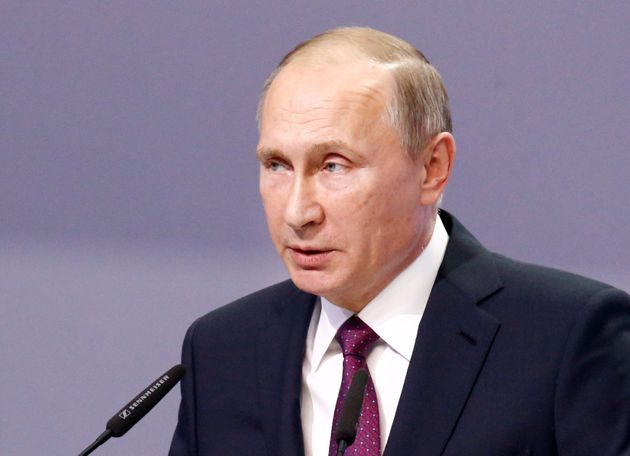
Putin hijacks Israel-Gaza war to fuel tensions in the West

The Israeli-Hamas war has given Russia a golden opportunity to sow division among its Western enemies. It's a chance Vladimir Putin's disinformation machine was never going to miss.

Since the outbreak of hostilities on October 7, Kremlin-linked Facebook accounts have ramped up their output by almost 400 percent, with the Middle East crisis now dominating posts from Russian diplomats, state-backed outlets and Putin supporters in the West. 

The lies spread by Moscow's digital propagandists now include claims that Hamas terrorists are using NATO weapons to attack Israel and that British instructors trained Hamas attackers.

Sunday, September 08, 2024

Joe Biden’s Middle East Mess

JERUSALEM — Speak to any Israeli official these days, and there is a good chance they will mention the conceptzia. The term traces back to the commission of inquiry after the surprise Yom Kippur war of 1973, a way to describe not just operational failures of intelligence but conceptual ones. Now as then, Israel’s vaunted security services had built policy on a flawed assumption: this time, that Hamas was focused on preserving its grip on Gaza and had lost interest in large-scale confrontation with Israel. The concept made sense — until Hamas proved it grimly wrong by killing more than 1,400 Israelis on Oct. 7.

Saturday, October 14, 2023

Across the Middle East, Mass Protests Erupt Over Israel’s Assault on Gaza

Tens of thousands of people took to the streets across the Middle East on Friday to protest Israel’s assault on the occupied Gaza Strip, which has killed more than 1,500 people, displaced more than 330,000, devastated the enclave’s infrastructure, and pushed its healthcare system to the brink of collapse.

Demonstrators in Jordan, Yemen, Iraq, Pakistan, Malaysia, Bahrain, Iran, Egypt, and Lebanon expressed outrage over Israel’s ongoing attack and the decadeslong occupation of Palestinian territory.

“This rally is aimed at condemning what is happening in occupied Palestine, the bloodletting, and the violation of rights,” Abu Kayan, an organizer of a rally in Baghdad, told Agence France-Presse.

Thursday, August 02, 2018

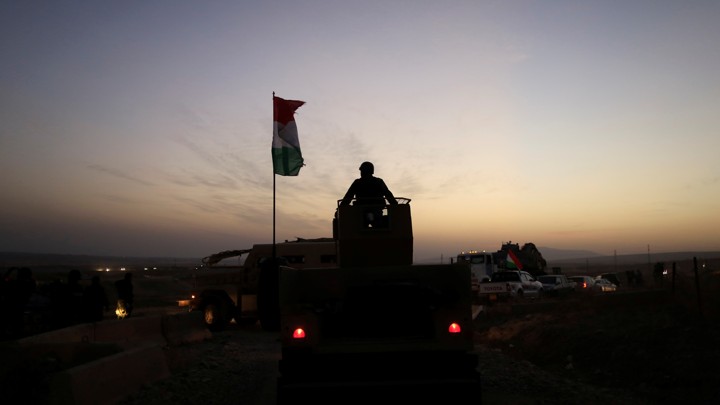
The Perils of a Post-ISIS Middle East

As 2017 draws to a close, the mood among leading pundits on the U.S.-led campaign to dislodge the Islamic State from Iraq and Syria might seem justifiably upbeat, even jubilant. After all, the accomplishments in the campaign’s first three years are many: eliminating key ISIS leaders, clearing the group from its so-called “dual capitals” of Mosul and Raqqa, and reducing the territorial safe havens from which it can plot attacks. It’s with some justification that, on December 9, Iraqi Prime Minister Haider al-Abadi declared victory over ISIS in Iraq.

Sunday, July 29, 2018

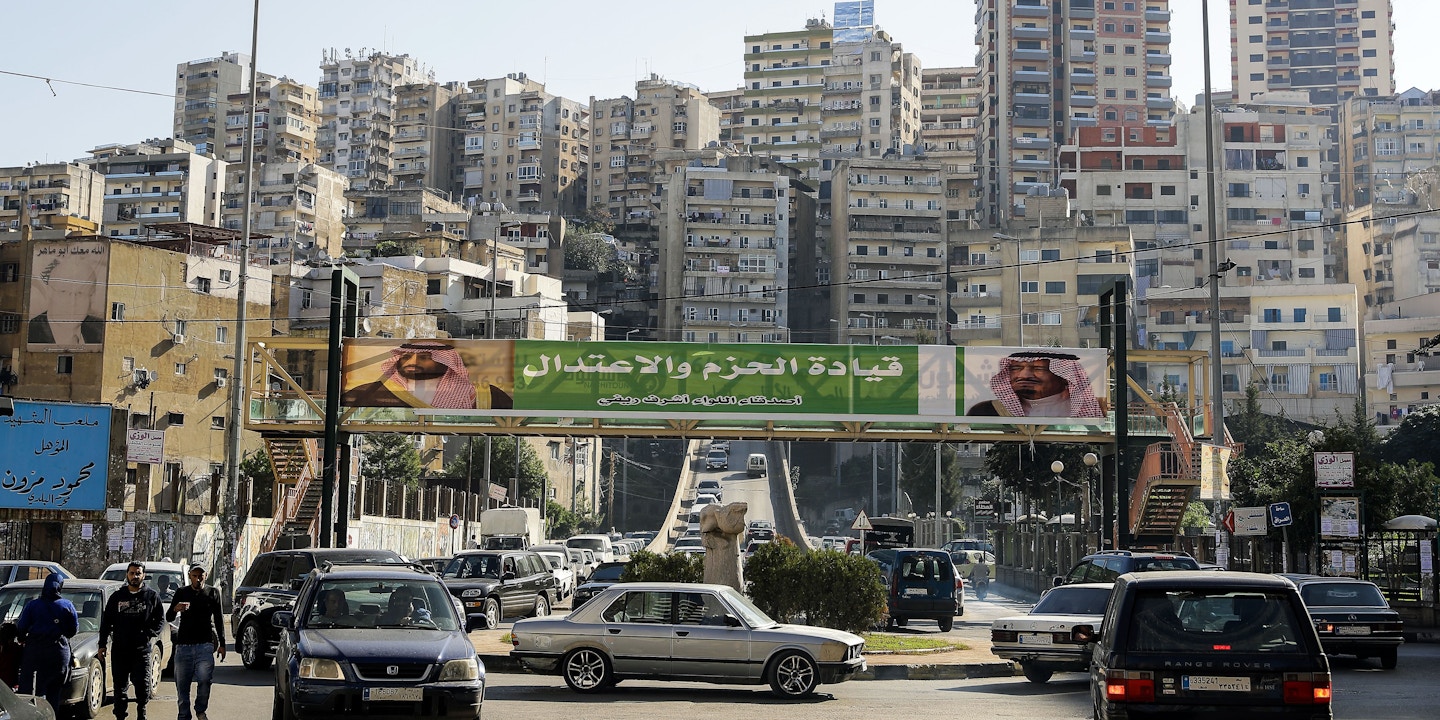
The Reverse Midas Touch of Saudi Arabia’s Crown Prince Is Turning the Middle East to Dust

Kudos to Germany’s spooks. Back in December 2015, the German foreign intelligence agency, BND, distributed a one-and-a-half-page memo to various media outlets titled: “Saudi Arabia — Sunni regional power torn between foreign policy paradigm change and domestic policy consolidation.” The document was pretty astonishing, both in its undiplomatic bluntness and remarkable prescience.

Wednesday, July 05, 2017

Trudeau has abandoned the cause of peace in the Middle East

Once again — in a way that almost no one will notice or care about — Justin Trudeau has failed an important leadership test.

And no, I don’t mean his government’s perplexing and inexcusable failure to intervene on behalf of Canadian citizen Dr. Hassan Diab. Dr. Diab was locked up in a French jail for two years with scant evidence suggesting he is guilty of anything. He remains enmeshed in the French legal system.

Tuesday, June 27, 2017

U.S. Military Should Get out of the Middle East

It’s time to end US military engagements in the Middle East. Drones, special operations, CIA arms supplies, military advisers, aerial bombings — the whole nine yards. Over and done with. That might seem impossible in the face of ISIS, terrorism, Iranian ballistic missiles, and other US security interests, but a military withdrawal from the Middle East is by far the safest path for the United States and the region. That approach has instructive historical precedents.

Sunday, December 25, 2016

Russia Has Long-Term Ambitions In The Middle East: Israeli Official

Israel should be concerned about the deepening disconnect between Russia’s aims in the Middle East and its own goals, according to a senior Israeli official who held high-level meetings in Moscow last week.

Avi Dichter, chairman of Israel’s foreign affairs and defense committee and the former head of the Shin Bet intelligence agency, said Russia’s views on Iran, Syria’s Bashar al-Assad and the Lebanese militia Hezbollah were in sharp contrast to Israel’s and a growing source of potential conflict.

Wednesday, April 27, 2016

Andrew Bacevich and America’s Long Misguided War to Control the Greater Middle East

THE CONVICTION that invasion, bombing, and special forces benefit large swaths of the globe, while remaining consonant with a Platonic ideal of the national interest, runs deep in the American psyche. Like the poet Stevie Smith’s cat, the United States “likes to gallop about doing good.” The cat attacks and misses, sometimes injuring itself, but does not give up. It asks, as the U.S. should,

    What’s the good
    Of galloping about doing good
    When angels stand in the path
    And do not do as they should

Friday, March 11, 2016

Obama Seeks to Pave Way to Mideast Deal After He Leaves Office

WASHINGTON — President Obama, resigned to his failure to broker a peace deal between Israel and the Palestinians, is looking past his time in office and weighing a plan that would preserve at least the principle of a two-state solution for his successor to pursue.

The White House is debating whether the president should lay down the outlines of an agreement, several officials said, perhaps through a resolution at the United Nations Security Council or in a presidential speech. The objective would not be to revive direct negotiations — almost nobody believes that is likely now — but to enshrine the proposals Secretary of State John Kerry made during his last failed effort at peacemaking in 2014.

Sunday, March 06, 2016

Will Hillary Clinton Lead Us Into Another War in the Middle East?

In Libya, former Secretary of State Hillary Clinton showed herself to be quick to use the American military without thinking about what comes next. As the decisive voice pushing the Obama administration to war, Clinton had no serious plan for a post-Qaddafi Libya, a point driven home forcefully once again in a New York Times cover story on Sunday.

Wednesday, March 02, 2016

Middle East Summers Could Become Unlivable By End Of Century

James Hansen has a dire warning for the Middle East and tropical areas: Summer is coming.

By the end of the century, the so-called "father of global warming" predicts that rising temperatures caused by human-induced climate change will render the countries that already experience hot summers unlivable during those months.

Monday, February 01, 2016

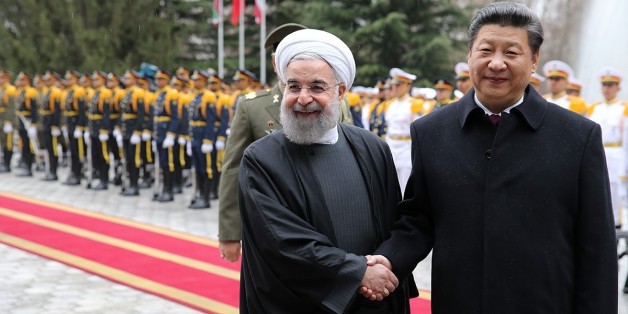
Inside China's Risky Gamble in the Middle East

Chinese President Xi Jinping's three-country tour of the Middle East and North Africa offers yet another example of Beijing's expanding drive for increased global influence. During his first visit to the region, Xi traveled to Saudi Arabia, Egypt and Iran where he inserted his government into the mix of some of the world's most volatile regions.

Wednesday, January 27, 2016

U.S. snubs its Canadian ally over electoral promise to withdraw fighter jets from Middle East

The lead, Western warmaking/regime-change countries intervening in northern Iraq and Syria held a strategy conference of their ministers of war in Paris on January 20. The meeting made waves in Canada because Ottawa was not invited to attend.
The meeting of ministers of the United States, Britain, Germany, France, Italy, Australia and the Netherlands discussed ongoing plans for intervention in Syria and Iraq. Canada is fully engaged in that intervention, more so than some of the other countries attending in Paris. For example, neither Italy or Germany have fighter aircraft engaged in bombings. But Canada was not invited to the party because Prime Minister Justin Trudeau made a promise during the national election campaign of October 19, 2015 that, if elected, his government would withdraw its six fighter-bomber jets from the U.S.-led warmaking alliance and instead focus on ground operations, including training of allied Iraqi and Kurdish forces.

Monday, January 25, 2016

HOW JUSTIN TRUDEAU COULD HELP REMAKE MIDDLE EAST POLITICS

Light armoured vehicles like this are part of $15 billion contract.

-----------------------------------------------------------

It's like a scene out of George Bernard Shaw's anti-war play Major Barbara.

The Liberals have tried to downplay the sale of military equipment (a secret $15 billion blockbuster deal for light armoured vehicles, or LAVs, signed by the Harper Conservatives in 2014) to Saudi Arabia in the wake of that country's beheading of 47 people last week. But the matter of Canada's cozy relationship with that perennial human rights violator, and the boon that relationship has been for Canadian weapons makers, constitutes a major test of Justin Trudeau's foreign policy intentions.

Monday, October 26, 2015

 US Engagement in the Middle East Is Riskier Than Ever

What if the United States had not invaded Iraq in 2003? How would things be different in the Middle East today? Was Iraq, in the words of presidential candidate Bernie Sanders, the “worst foreign policy blunder” in American history? Let’s take a big-picture tour of the Middle East and try to answer those questions. But first, a request: After each paragraph that follows, could you make sure to add the question “What could possibly go wrong?”

Wednesday, September 09, 2015

Canada must face 'long haul' military mission in Middle East: Harper

Conservative Leader Stephen Harper says Canada’s military mission in the Middle East must last for “the long haul” to defeat Jihadist extremists in the region.

As well, as political pressure mounts on the prime minister to bring more Syrian refugees to Canada, he insists this won’t solve the problem.

Friday, September 04, 2015

Last September, as Islamic State militants rampaged through Syria and Iraq, the Pentagon hosted a top-secret meeting to debate strategy. At the invitation of the Defense Policy Board, which advises the secretary of defense, a small group of foreign policy eminences, including former National Security Advisor Zbigniew Brzezinski, former Secretary of State Madeleine Albright and former ambassador to Iraq Ryan Crocker, gathered in a conference room in the E-ring of the building.

Friday, April 10, 2015

Air Strikes Won't Make Middle East Safe

"France has no friends, only interests," Charles de Gaulle once said, and what is true of France is true of all countries. All countries including Canada must be worriedly trying to identify their true interests in the war now extending from Nigeria to Libya to Iraq to Yemen and Kenya.

The 2010 public suicide of Mohamed Bouazizi, a Tunisian vegetable seller, triggered the Arab Spring and then anarchy -- not a clash of civilizations but a clash within one civilization struggling to redefine itself.

"U.S. Militarism Brings Chaos": As Obama Plans a War on ISIS, a Call for a Middle East-Led Response

President Obama has launched an effort to rally Congress and the public behind a sustained offensive against the militant group, Islamic State. Obama is set to meet with Congress on Tuesday followed by a national address Wednesday. The United States says it will lead the offensive against the Islamic State with a so-called "core coalition" of 10 countries. The White House says the fight could last beyond the end of President Obama’s term in early 2017. Meanwhile on Sunday, Arab League foreign ministers met in Cairo and announced they would cooperate with efforts to combat militants who have overrun parts of Iraq and Syria. Their resolution did not explicitly support the U.S. campaign against the Islamic State, but suggested it would back the effort.

We are joined by Rami Khouri, director of the Issam Fares Institute for Public Policy and International Affairs at the American University of Beirut and editor-at-large of the Beirut-based newspaper, The Daily Star. "Combining American militarism with Arab dictatorships is probably the stupidest recipe that anybody could possibly come up with to try to fight jihadi movements like al-Qaeda and the Islamic State and others," Khouri says. "It was that combination of Arab autocracy and American militarism that actually nurtured and let these movements expand."

Video
Source: democracynow.org/
Author: --