Democracy Gone Astray

Democracy, being a human construct, needs to be thought of as directionality rather than an object. As such, to understand it requires not so much a description of existing structures and/or other related phenomena but a declaration of intentionality.
This blog aims at creating labeled lists of published infringements of such intentionality, of points in time where democracy strays from its intended directionality. In addition to outright infringements, this blog also collects important contemporary information and/or discussions that impact our socio-political landscape.

All the posts here were published in the electronic media – main-stream as well as fringe, and maintain links to the original texts.

[NOTE: Due to changes I haven't caught on time in the blogging software, all of the 'Original Article' links were nullified between September 11, 2012 and December 11, 2012. My apologies.]

Showing posts with label Peace. Show all posts

Thursday, September 21, 2023

‘Get Israel off our backs’: Palestinians react to Kushner plan

Analysts have rebuked the economic part of the United States‘s Middle East peace plan for failing to address the main problem that has heavily curbed the Palestinian economy – the 52-year-old Israeli military occupation over the Palestinian territories.

The economic plan was released by the White House on Saturday and is set to be presented during a US-led workshop in Bahrain on June 25-26.

Tuesday, September 19, 2023

Ex-Taliban official: ‘No Afghan peace deal if air raids continue

Kabul, Afghanistan – A return to peace is not possible in Afghanistan if its government continues to conduct air strikes which have resulted in countless civilian casualties, a former Taliban official has said.

In a press conference in Kabul on Wednesday, Syed Mohammad Akbar Agha, who is the current leader of Rah-e-Nejat (High Council of Salvation), said President Ashraf Ghani‘s government is sabotaging peace talks being held in Qatar between Taliban representatives and US officials.

Monday, August 13, 2018

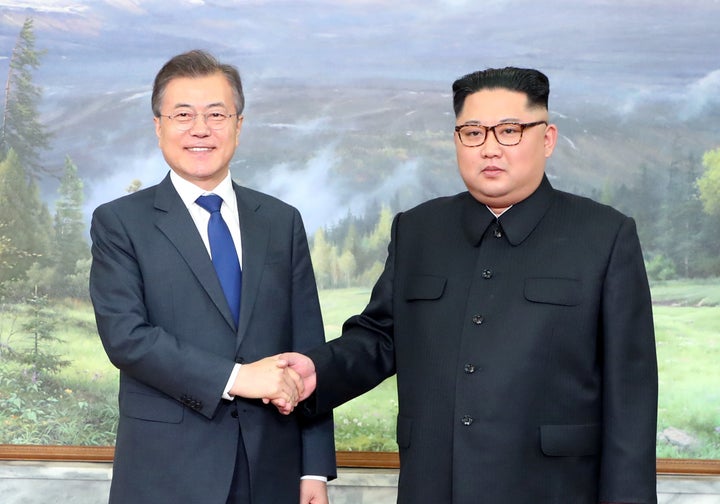
Koreas Agree To Hold Another Summit In September

SEOUL, Aug 13 (Reuters) - North and South Korea agreed to hold a summit in Pyongyang in September, the latest step forward in cross-border ties this year after more high-level talks on Monday, the South’s Unification Ministry said.

North Korean leader Kim Jong Un and South Korean President Moon Jae-in met in April and May at the border truce village of Panmunjom, within the demilitarized zone (DMZ) that separates the two Koreas, and agreed that the next summit in autumn would be held in the North Korean capital.

Sunday, August 05, 2018

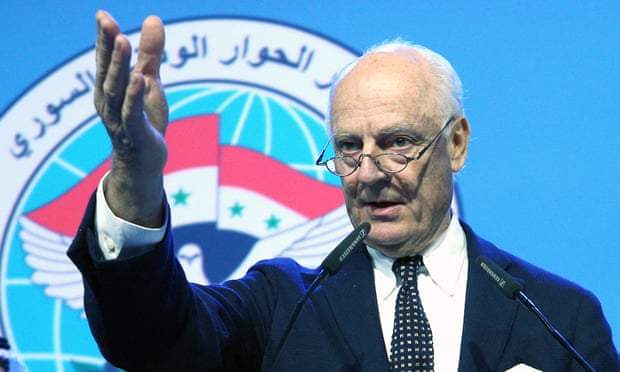
Russia-backed Syrian peace talks agree deal on new constitution

A 50-strong commission representing most strands of Syrian society will draft a new constitution for the country, the UN and Russia have agreed at the end of a peace conference put together by Vladimir Putin in the Russian Black Sea resort of Sochi.

The UN special envoy Staffan de Mistura faced intense criticism from the Syrian opposition for attending the conference, which the opposition boycotted on the basis that it was an attempt to supplant the UN peace process and marginalise their role in ending Syria’s seven-year civil war.

Wednesday, July 05, 2017

Trudeau has abandoned the cause of peace in the Middle East

Once again — in a way that almost no one will notice or care about — Justin Trudeau has failed an important leadership test.

And no, I don’t mean his government’s perplexing and inexcusable failure to intervene on behalf of Canadian citizen Dr. Hassan Diab. Dr. Diab was locked up in a French jail for two years with scant evidence suggesting he is guilty of anything. He remains enmeshed in the French legal system.

Thursday, June 25, 2015

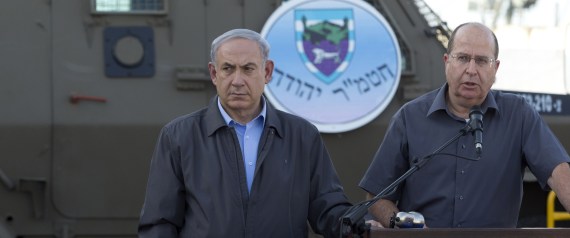
Israeli Defense Minister Moshe Yaalon Sees No Peace With Palestinians In His Lifetime

HERZLIYA, Israel, June 9 (Reuters) - Israel's defense minister said on Tuesday he did not believe a stable peace agreement could be reached with the Palestinians in his lifetime - one of the bleakest assessments from a top-level cabinet member since talks collapsed last year.

Moshe Yaalon, one of Prime Minister Benjamin Netanyahu's closest allies, accused the Palestinians of having "slammed the door" on efforts to keep discussions going, and said they had rejected peace-for-land deals for at least 15 years.

Wednesday, June 24, 2015

Israelis And Palestinians Would Gain Billions From Peace, New RAND Study Finds

JERUSALEM (AP) — Israelis and Palestinians would gain billions of dollars from making peace with each other while both would face daunting economic losses in case of other alternatives, particularly in case of a return to violence, according to a new study released on Monday.

The RAND Corp., a U.S.-based nonprofit research organization, interviewed some 200 officials from the region and elsewhere during more than two years of research into the costs of the Israeli-Palestinian conflict. Its main finding was that following a peace agreement, Israelis stood to gain $120 billion over the course of a decade. The Palestinians would gain $50 billion, marking a 36-percent rise in their average per-capita income, the report said.

Wednesday, January 29, 2014

Rashid Khalidi & Noam Chomsky: For Peace Today, US Must End Support for Sharon’s Expansionist Legacy

Upon the death of former Israeli Prime Minister Ariel Sharon, we look at how his legacy of separating Gaza from the West Bank and building a "separation wall" to seal off Israeli settlements has impacted the peace process in the Middle East today. We speak with Noam Chomsky, world-renowned political dissident, linguist, author and Institute Professor Emeritus at Massachusetts Institute of Technology; Rashid Khalidi, Edward Said Professor of Arab Studies at Columbia University; and Avi Shlaim, Emeritus Professor of International Relations at Oxford University, widely regarded as one of the world’s leading scholars on the Israeli-Arab conflict. "What [Secretary of State] John Kerry should do is insist on implementing a very broad international consensus, virtually universal, calling for a two-state settlement on the internationally recognized border," Chomsky says. "This is supported by the entire world; it’s been blocked by the United States for 35 years. We should shift that policy, join the world, and carry out measures which might conceivably bring a semi-decent peace."

Video
Source: democracynow.org
Author: --

THE JEWISH STATE IN QUESTION

Jodi Rudoren writes in today’s Times that the great sticking point for Israeli-Palestinian peace negotiations is Benjamin Netanyahu’s demand that Palestinians recognize Israel as a “Jewish state,” or as “the nation-state of the Jewish people”—something along these lines. Rudoren asks, “Can Israel preserve its identity as a Jewish democratic state while also providing equal rights and opportunities to citizens of other faiths and backgrounds? With a largely secular population, who interprets Jewish law and custom for public institutions and public spaces? Is Judaism a religion, an ethnicity or both?”

Saturday, September 21, 2013

Thinking Outside the Two-State Box

A National Intelligence Estimate prepared by the U.S. intelligence community said the following: “If Israel continues to occupy conquered territory for an extended period, say two to three years, it will find it increasingly difficult to relinquish control. Domestic pressures to establish paramilitary settlements in occupied areas would grow, and it would be harder to turn back to the Arabs land which contained such settlements.”

One might, as I’ve written before, think that that is a very grim prognosis and that by 2016 the two-state solution will surely be impossible. But that N.I.E. was written in 1968, only a year after Israel occupied the West Bank and when barely a couple thousand settlers lived beyond the Green Line. Now, some six hundred fifty thousand Israelis are there, with well over a hundred colonies, turning maps of the West Bank into Swiss cheese. It is farcical to talk about the impending death of the two-state solution—it’s been long dead and decomposing before our eyes, yet few have had the common decency to bury it.

Wednesday, March 20, 2013

Russell Tribunal's final session renews call for justice in Palestine

The concluding session of the Russell Tribunal on Palestine took place in Brussels, March 16 -17. The Tribunal was launched in Brussels in 2009 in the spirit of British philosopher Bertrand Russell, who established the International War Crimes Tribunal to investigate crimes committed in Vietnam and judge them according to international law.

 The Russell Tribunal on Palestine was set up to examine violations of international law that prevent the Palestinian people from exercising their fundamental human rights, including the right to a sovereign state. The aim is thus to examine the various responsibilities that lead to the continued occupation of Palestine by Israel and the factors which maintain the ongoing violations of international and humanitarian law that permit the oppression to continue.

Could two become one?

IN 1942, as the Holocaust in Europe was entering its most horrific phase, a pacifist American rabbi called Judah Magnes helped found a political party in Palestine called Ihud. Hebrew for unity, Ihud argued for a single binational state in the Holy Land to be shared by Jews and Arabs. Its efforts—and those of like-minded idealists—came to naught. Bitterly opposed to the partition of Palestine, Magnes died in 1948 just as the state of Israel—the naqba, or catastrophe, to Palestinians—was being born. Decades of strife were to follow.

Thursday, May 24, 2012

No peace in Afghanistan without peace in Pakistan

We know that Stephen Harper breaks promises — legislating a fixed election date but flouting the law; forswearing a deficit but piling up one; pledging parliamentary oversight but being in contempt of Parliament; promising transparency and accountability but imposing censorship and autocratic rule; condemning partisan appointments only to become the king of patronage; committing himself not to abandon human rights in China for “the almighty dollar” but doing precisely that.

Canadians cursed him or praised him depending on their own prejudices. In some cases, a majority supported his pragmatism, as in federal spending to fight off the 2008 economic slowdown. The same applies to his latest flip-flop — vowing never to “cut and run” from Afghanistan but now doing so.

He even conceded at the NATO summit in Chicago that he wished “it was earlier. But I think we are doing it as early as is feasible.”

Monday, February 13, 2012

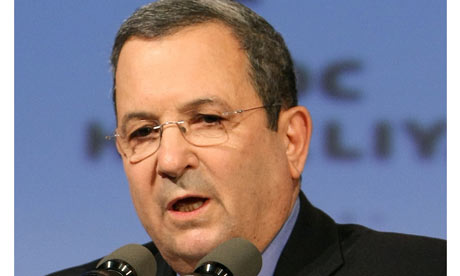
Barak: make peace with Palestinians or face apartheid

Ehud Barak, Israel's defence minister, last night delivered an unusually blunt ­warning to his country that a failure to make peace with the Palestinians would leave either a state with no Jewish ­majority or an "apartheid" regime.

His stark language and the South African analogy might have been unthinkable for a senior Israeli figure only a few years ago and is a rare admission of the gravity of the deadlocked peace process.

There have been no formal negotiations between Israel and the Palestinians in more than a year, but Barak was speaking at a rare joint event with the Palestinian prime minister, Salam Fayyad, as part of an annual national security conference in the Israeli city of Herzliya. The pair shook hands and both were warmly applauded.

Barak, a former general and Israel's most decorated soldier, sought to appeal to Israelis on both right and left by saying a peace agreement with the Palestinians was the only way to secure Israel's future as a "Zionist, Jewish, democratic state".

"As long as in this territory west of the Jordan river there is only one political entity called Israel it is going to be either non-Jewish, or non-democratic," Barak said. "If this bloc of millions of ­Palestinians cannot vote, that will be an apartheid state."

He described Israel and the Palestinian territories as the historic "land of Israel" to which Israelis had a right.

Wednesday, January 18, 2012

The VIPs' hush money

It's no coincidence that a group of young Palestinians now organizing protests in the West Bank against a return to negotiations is called 'Palestinians for Dignity.'


Two people signed the entry permit into Israel that Mahmoud Abbas received from Israel's Civil Administration on January 1 (and which will be in force until March 1 ): 1st Lt. Noy Mitzrafi, commander of the permits office, and Lt. Col. Wissam Hamed, a department head in the Israel Defense Forces' operations directorate. It is this limited permit that Abbas, the Palestinian Authority president and PLO chairman, complained of receiving instead of his normal VIP permit during a closed meeting of his Fatah faction.

The permit also states that Abbas lives in the Gaza Strip (where, as is well known, he has not set foot since 2007 ); that he is "allowed to go into Israel, except for Eilat, and into the Judea and Samaria region [i.e. the West Bank]," but not to drive a car in Israel. It states that his reason for entry is that he is "a senior PA official"; that he may stay overnight only in the West Bank or Gaza, even though the permit is in force from 00:00 to 00:00 (midnight to midnight ). Also, it says he is allowed to move about without a magnetic ID card, but the permit is "valid despite the [security] prevention" - meaning the Shin Bet security service registers him as a security menace, but the permit is given as a gesture of kindness.

The PA says a few dozen other senior officials have also been stripped of their VIP permits since mid-2011 as punishment for the PA's application for admission to the United Nations as a member state. But regarding Abbas' permit, a spokesman for the Coordinator of Government Activities in the Territories insisted that this was purely a technical error.

Contrary to the interpretation that this was an intentional humiliation of Abbas, for once it's actually believable that this was a mere technical error. Humiliation is part of the system's DNA, and the clerks who implement the system imbibe the techniques of humiliation from the day they enter the army - until they view them as immutable laws of nature.

Tuesday, January 03, 2012

Israel is missing another opportunity for peace

Reading through the papers these days gives one a sense of deja vu - as if we are back in 2002 and the Saudi peace initiative is being presented for the first time: All the Arab states are offering Israel full normalization of relations "in the context of peace," in return for an independent Palestinian state in keeping with the 1967 borders and a just solution to the refugee issue.

An amazing historic initiative - and, seemingly, Israel's greatest dream and its perfect triumph. But the Israeli regime doesn't even respond, displaying total disregard as if the initiative never existed.

In 2007, the Saudi initiative was again approved by the Arab League, and still - not a single voice in response. The initiative was even ratified by the Organization of the Islamic Conference; but from Israel - nothing. It doesn't even consider the option of entering into negotiations over it.

The thing is, it is not only the regime that is displaying total disregard. The Israeli media - frighteningly institutionalized as it has always been - also almost completely ignored the Saudi initiative. In fact, the initiative was so ignored that the vast majority of Israeli citizens - yes, all of you - aren't even aware of the existence of the initiative and its historic, revolutionary content. And even those who did notice it thought to themselves: If it is getting overlooked that way, it must be really negligible and it's probably me who misunderstood it.

And now, in real time, it is happening once again: Hamas is suspending its acts of terror, opting for popular resistance, recognizing a Palestinian state along the 1967 borders and even joining the Palestine Liberation Organization, the organization empowered to conduct negotiations with Israel. They aren't saying it outright, but joining the PLO also means accepting the agreements signed with Israel; and there is also the recognition of Israel, as well as responsibility and partnership in political decisions.

Friday, December 23, 2011

I Shall Not Hate: A small book that should change Harper’s foreign policy

Exactly three years ago, Israel attacked the Gaza Strip. It is of course quite impossible to write anything about the Israeli-Palestinian conflict without being accused of bias by someone, and the Gaza war is no exception. But here are what I believe to be agreed facts.

Israel stated the attack was to stop rockets being fired from Gaza into Israel. Since 2001, thousands had been launched resulting in 28 Israeli deaths and hundreds of casualties. The Gazans responsible said they were justified in attacking Israel as an occupying power.

During the three-week operation, 1,200 to 1,400 Palestinians and 13 Israelis were killed. Of the 13, three were civilians and ten soldiers. Of the Palestinians, about 700 were civilians, 250 of them younger than 16. All fighting occurred on Gaza soil. Four thousand homes were destroyed by the Israeli Defence Forces. Tens of thousands were left homeless. Many observers, including Israeli human rights groups and a UN commission, found the Israelis guilty of using seriously disproportionate force.

Thursday, December 08, 2011

How peace vanished from Israeli discourse

The hope of peace has vanished from the sky of our lives and the Palestinians' lives, and Israel bears critical responsibility for this


It happens a lot. A figure once significant in our lives fades away gradually. Not with a slam of the door or a tough fight, but almost imperceptibly, a kind of slow evaporation, until one day we suddenly notice he has completely disappeared.

That's how peace has vanished from our lives. Nobody talks about it anymore; even the negotiations about it, the longest in history, are officially dead - and we didn't even notice. There is no peace, no negotiations, not even a dream. The only context it's mentioned in, if at all, is the awful danger lurking within it. It doesn't occur to anyone that there are also conditions of real peace, with few risks and the promise of another reality - that in peace there is no shooting, for example. Only in war.

Last week Palestinian President Mahmoud Abbas submitted his detailed answers to the Quartet, failing to elicit even a yawn around here. Jerusalem didn't even bother to respond. This week the prime minister gave his ambiguous speech at Ben-Gurion's grave, and it didn't occur to anybody he was talking about the most forgotten notion in our lives.

Benjamin Netanyahu spoke of "courageous decisions" and said "we are all here today because Ben-Gurion made the right decision." He spoke about the founding father "who understood that that decision carried a heavy price, but realized that not making that decision had a heavier price" - and everyone knew what he meant.

Friday, October 21, 2011

East Jerusalem Settlement Plan Clears Hurdle, Threatens Peace Process

JERUSALEM -- A plan for settling thousands more Jews in a strategic part of Israeli-annexed east Jerusalem has quietly cleared a key bureaucratic hurdle, threatening to cut a link between Jerusalem and the West Bank and endanger already slim peace prospects.

The proposed Givat Hamatos development would complete a Jewish band around a part of east Jerusalem, the Palestinians' hoped-for capital, complicating any future partition of the city.

"This is a game changer," Daniel Seidemann, a Jerusalem expert, said of Givat Hamatos. While relatively small in size, "this is a mega-settlement in terms of impact," he added.

The plan calls for about 2,600 apartments, including about 1,800 for Givat Hamatos and 800 for an expansion of Beit Safafa, an adjacent Palestinian neighborhood, Seidemann said. Construction could begin by the second half of 2012, he said.

Sunday, September 25, 2011

A Palestinian state is Israel’s best path to security

The Middle East crisis returned this week to its place of birth in New York City. The United Nations statehood resolution by the Palestinians is dangerous, impractical and possibly the only way to create a secure life for Israel and its neighbours.

Using a UN General Assembly resolution to make an end run around potential negotiations and create a Palestinian state is not a new idea, of course. It’s exactly what was done in 1947, under strikingly similar circumstances, and the resulting Palestinian state became known as Israel. That experience taught us a lot about the hazards of statehood by declaration from above – and about its occasional necessity.

The creation of a Jewish homeland was one of the first acts of a UN that had just been formed in the face of the unprecedented genocidal atrocity and refugee crisis that made Israel’s birth a tragic necessity. It was done at the General Assembly, without the approval of the Security Council, with a sense of urgency.

We should beware of precedent. Resolution 181 of 1947, let us not forget, seemed like a fairly simple matter but ended up producing more than 60 years of trouble. It was meant to create one multiethnic nation with two internal states, one Jewish majority and one Arab majority – a “partition with economic union,” to borrow its subtitle.