Democracy Gone Astray

Democracy, being a human construct, needs to be thought of as directionality rather than an object. As such, to understand it requires not so much a description of existing structures and/or other related phenomena but a declaration of intentionality.
This blog aims at creating labeled lists of published infringements of such intentionality, of points in time where democracy strays from its intended directionality. In addition to outright infringements, this blog also collects important contemporary information and/or discussions that impact our socio-political landscape.

All the posts here were published in the electronic media – main-stream as well as fringe, and maintain links to the original texts.

[NOTE: Due to changes I haven't caught on time in the blogging software, all of the 'Original Article' links were nullified between September 11, 2012 and December 11, 2012. My apologies.]

Showing posts with label Myanmar. Show all posts

Saturday, September 16, 2023

Aung San Suu Kyi on Reuters jailing: show me the miscarriage of justice


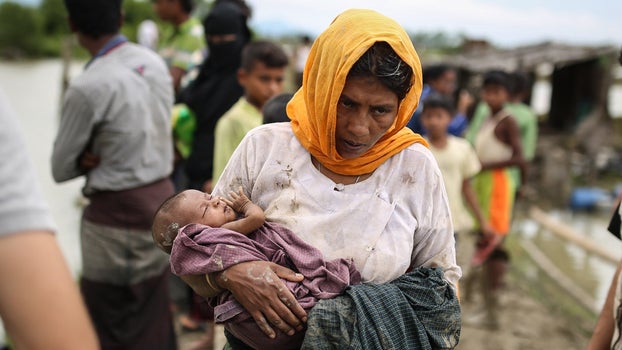
Myanmar leader Aung San Suu Kyi has vehemently defended the imprisonment of the two Reuters journalists who were given seven-year jail terms after reporting on the massacre of Rohingya Muslims in Rahkine state.

Aung San Suu Kyi had remained notably silent over the case, which was widely condemned by international governments and the UN as a miscarriage of justice and a symbol of the major regression of freedom of expression in Myanmar.

Monday, July 05, 2021

Myanmar Rohingya: UN says military leaders must face genocide charges


A UN report has said top military figures in Myanmar must be investigated for genocide in Rakhine state and crimes against humanity in other areas.

The report, based on hundreds of interviews, is the strongest condemnation from the UN so far of violence against Rohingya Muslims.

It says the army's tactics are "grossly disproportionate to actual security threats". Myanmar rejected the report.

At least 700,000 Rohingya fled violence in the country in the past 12 months.

Saturday, August 11, 2018

'For how long?': Displaced Rohingya lament life in no-man's land

Cox's Bazar, Bangladesh - With a blue and white-checkered lungi tied around his waist, Nur al-Amin gazes across a narrow muddy canal running along rows of tarpaulin-roofed bamboo shacks.

"There is no work here and nothing to do," he says, recounting his monotonous routine.

Wednesday, August 01, 2018

Now we know: Myanmar has killed at least 9,000 Rohingya in less than 4 months

After nearly four months of what started out as a crackdown against the Muslim minority Rohingya by the government of Myanmar, we now have our first rough estimates for how many lives have been lost: At least 9,000 Rohingya have been killed since August 25.

According to a Doctors Without Borders survey released on Thursday, about 6,700 of those deaths occurred in the first two months of the campaign that has been called everything from ethnic cleansing to apartheid to genocide.

Tuesday, July 24, 2018

‘Textbook Example Of Ethnic Cleansing’ Taking Place Right Now In Myanmar, UN Warns

GENEVA (Reuters) - The top U.N. human rights official on Monday denounced Myanmar’s “brutal security operation” against Muslim Rohingyas in Rakhine state which he said was “clearly disproportionate” to insurgent attacks carried out last month.

Communal tensions appeared to be rising across Myanmar on Monday after two weeks of violence in Rakhine state that have triggered an exodus of about 300,000 Rohingya Muslims, prompting the government to tighten security at Buddhist pagodas.

Monday, July 23, 2018

A Nobel Peace Prize winner is standing idly by as her country moves closer to genocide

A Nobel Peace Prize winner once hailed as her country’s Nelson Mandela has stood by as ethnically motivated violence and mass atrocities tear apart her country.

Democracy activist Aung San Suu Kyi spent 15 (out of 21) years under military house arrest in Myanmar, the country formerly known as Burma. Largely locked away for chunks of time from the end of the 1990s through the early years of this century, she earned a global reputation for quiet strength in the face of a brutal military junta. Suu Kyi refused to leave her country, even though it meant forgoing a life with her sons and husband, who lived overseas.

Wednesday, June 25, 2014

Gap Is Starting To Make Clothes In Myanmar, Where Workers Are Horribly Mistreated

Gap is proudly touting its plans to start making clothes in Myanmar. One executive even called it a "historic moment" for the beleaguered Southeast Asian country. The retail giant will be the first American apparel maker to have clothes made in the country since U.S. sanctions were lifted two years ago.

But human rights advocates say, "Not so fast." Myanmar has a miserable track record when it comes to workers, who are frequently underpaid and horribly mistreated. Gap simply wants to get its clothes produced as cheaply as possible, the advocates argue, and it's dressing up the move as global philanthropy.

Thursday, April 11, 2013

Suu Kyi Rebuff Of Canadian Invite Caused Diplomatic Scramble

Canadian diplomats seemed caught off-guard late last summer when Nobel Peace Prize laureate Aung Sang Suu Kyi turned down an invitation to visit Canada.

Newly released documents under access to information show diplomats scrambling in late August 2012 after the office of the opposition leader in Burma, also known as Myanmar, stopped responding to telephone calls and emails from Canadian officials before apologizing, saying Suu Kyi's schedule was "too tight" and they were "unable to plan for this September trip to Canada."

Monday, March 25, 2013

Myanmar Buddhist-Muslim Violence Spreads

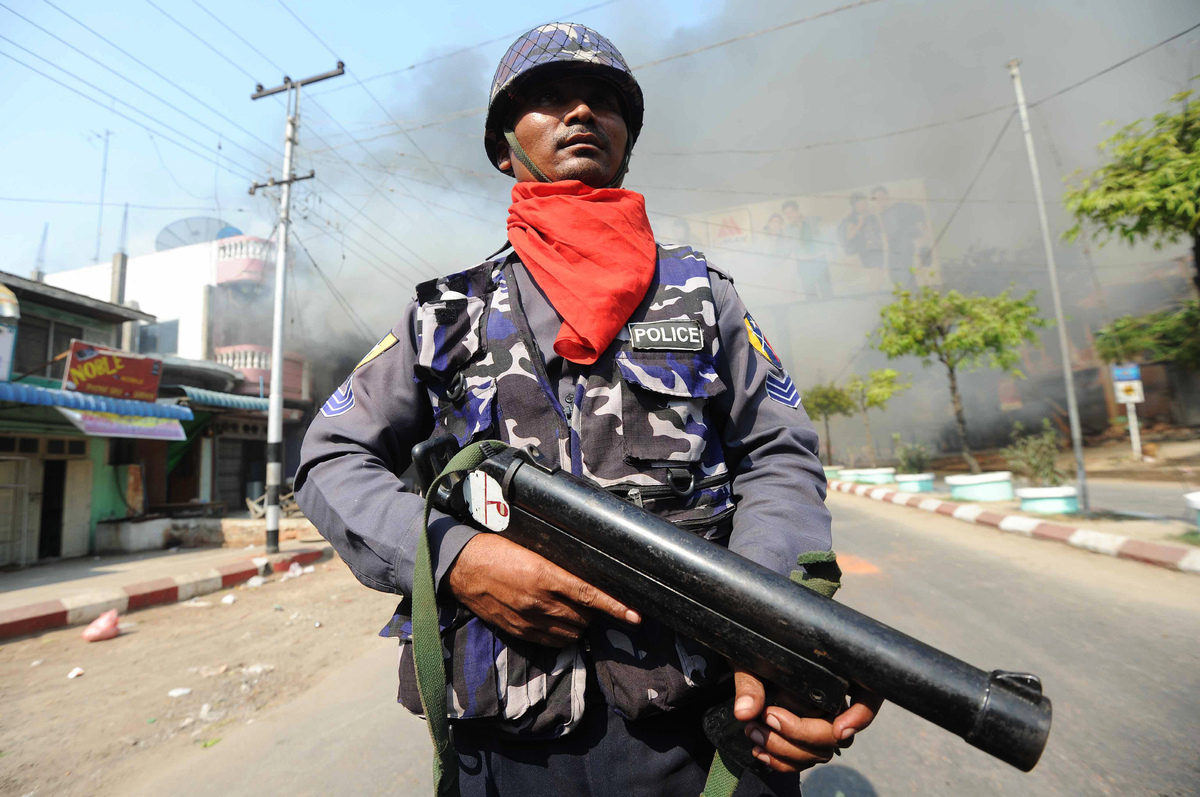
YANGON, Myanmar - Anti-Muslim mobs rampaged through three more towns in Myanmar's predominantly Buddhist heartland over the weekend, destroying mosques and burning dozens of homes despite government efforts to stop the nation's latest outbreak of sectarian violence from spreading.

President Thein Sein declared a state of emergency in central Myanmar on Friday and deployed army troops to the worst hit city, Meikhtila, where 32 people were killed and 10,000 mostly Muslim residents were displaced. But even as soldiers imposed order there after several days of anarchy that saw armed Buddhists torch the city's Muslim quarters, anti-Muslim unrest has spread south toward the capital, Naypyitaw.

Tuesday, January 10, 2012

Beware of Becoming Burma's Useful Idiots

When I made my first trip to Burma in 1989, the blood on the streets from a harsh crackdown on student protesters had hardly dried. The climate of fear was so acute that I'd meet with terrified young activists in secret, and evaded government agents pretty much at every turn.

I'd slipped in as a journalist masquerading as a children's book writer. At that time, journalists were banned from the country and the climate of fear and repression was palpable.

Now, as the country appears to be entering a new phase in its relationship with the West, a parade of foreign secretaries -- led by Hillary Clinton and the UK's William Hague -- are assessing whether the Burmese generals have genuine intentions towards long-awaited reform, including allowing the persecuted opposition leader, Aung San Suu Kyi, to stand as a bona fide candidate in elections.

The West's sudden rapprochement with Burma (also known as Myanmar) wouldn't be happening without a nod from Suu Kyi, who for many months has been signalling that she welcomed reforms that allows her National League for Democracy (NLD) party to stand for re-elections.

Suu Kyi reminded Clinton -- and no doubt Hague -- that hundreds of political prisoners still remain behind bars. Of the estimated 180,000 inmates in Burmese jails and labour camps, as many as 1,700 are political prisoners.

History shows us that the Burmese generals can be astonishingly brutal and vengeful, not to mention unpredictable and manipulative. Just ask Suu Kyi, who, despite winning a landslide election victory in 1990, was denied official recognition. The Nobel Peace Prize winner's party was never allowed to take power.

Wednesday, July 13, 2011

Ruthless clear-cutting bares Myanmar’s hills

For more than two decades, the merchants in the Kunming Southwest Timber Market have conducted a brisk trade in a coveted but controversial resource: teak and other woods harvested from isolated, military-ruled Myanmar.

But these days, the merchants who warehouse their refined timber and raw logs in a muddy maze of garages on the edge of this southwestern Chinese city say they can no longer make a go of it dealing in Myanmar timber alone. Some have started shifting their focus to the relatively unscathed forests of Laos, while others have switched from forestry to mining in Myanmar. Some have already closed their shops for good.

What is happening is a tragedy foretold for years by opponents of the generals who rule the country better known as Burma. Desperate for cash, and hemmed in by international sanctions, Myanmar’s government opened up the country’s bountiful forests, and other natural resources, to companies in China, long the country’s only major trading partner.

After 20 years of almost unhindered clear-cutting, the traders and forestry experts say, only a fraction of Myanmar’s legendary forests of teak and redwood remain standing. Timber merchants in Kunming – the biggest hub anywhere for buying and selling Myanmar timber – say there will be no more Myanmar teak left to harvest in a decade, maybe less.

“It can’t last more than another 10 years, maybe just five or six years if they cut faster,” said Chen Jinian, office manager at Sen Long Timber, a company owned by his uncle that has been importing wood from Myanmar since the early 1990s.

Mr. Chen recently returned from a cross-border trip to negotiate a purchase, and said that his company has had to go deeper and deeper into the heart of Myanmar to find good-quality wood since the once-lush forests in the borderlands were now all but exhausted. In Yunnan province, on the Chinese side of the border, cutting is strictly regulated by authorities and the mountains are still topped with valuable but protected forests.

In Myanmar, Mr. Chen said, it’s a free-for-all, with the central government in Naypyidaw, local military commanders and anti-government ethnic militias that control the border areas all willing to sell the forests under their control in exchange for desperately needed cash. “When you cross the border to the Myanmar side, you can see the mountains that no longer have any trees on them,” he said. “Soon the trees will be all cut. Without the trees, there will be only mountains. So we will look into mining them.”

Mr. Chen’s bleak description is matched by other traders in the Kunming timber market, where the growing scarcity of Myanmar teak and redwood has driven up prices and hurt demand. Traders say business has fallen sharply in recent years, due in part to the global financial downturn, but also to the Chinese government’s efforts to regulate trade across the Myanmar border, which has resulted in the imposition of tariffs of as high as 100 per cent on some wood.

Full Article
Source: Globe & Mail