Democracy Gone Astray

Democracy, being a human construct, needs to be thought of as directionality rather than an object. As such, to understand it requires not so much a description of existing structures and/or other related phenomena but a declaration of intentionality.
This blog aims at creating labeled lists of published infringements of such intentionality, of points in time where democracy strays from its intended directionality. In addition to outright infringements, this blog also collects important contemporary information and/or discussions that impact our socio-political landscape.

All the posts here were published in the electronic media – main-stream as well as fringe, and maintain links to the original texts.

[NOTE: Due to changes I haven't caught on time in the blogging software, all of the 'Original Article' links were nullified between September 11, 2012 and December 11, 2012. My apologies.]

Showing posts with label Norway. Show all posts

Monday, October 09, 2023

How Norway outstrips US on Ukraine spending

The United States has poured more than a hundred billion dollars into Ukraine's effort to repel Russia's invasion, spending far more than any other nation. But as President Volodymyr Zelensky comes to Washington to ask for more, there is growing Republican scepticism about funding the war effort.

In his Tuesday speech to the UN, Joe Biden made a passionate plea for the global community to not turn its back on Ukraine.

Wednesday, June 29, 2016

After Living in Norway, America Feels Backward. Here’s Why.

Some years ago, I faced up to the futility of reporting true things about America’s disastrous wars and so I left Afghanistan for another remote mountainous country far away. It was the polar opposite of Afghanistan: a peaceful, prosperous land where nearly everybody seemed to enjoy a good life, on the job and in the family.

It’s true that they didn’t work much, not by American standards anyway. In the US, full-time salaried workers supposedly laboring 40 hours a week actually average 49, with almost 20 percent clocking more than 60. These people, on the other hand, worked only about 37 hours a week, when they weren’t away on long paid vacations. At the end of the work day, about four in the afternoon (perhaps three in the summer), they had time to enjoy a hike in the forest or a swim with the kids or a beer with friends — which helps explain why, unlike so many Americans, they are pleased with their jobs.

Friday, July 31, 2015

Norway Pumps Up ‘Green Battery’ Plan for Europe

LONDON—Norway is hoping to become the “green battery of Europe” by using its hydropower plants to provide instant extra electricity if production from wind and solar power sources in other countries fade.

Without building any new power stations, engineers believe they could use the existing network to instantly boost European supplies and avoid other countries having to switch on fossil fuel plants to make up shortfalls.

Wednesday, June 24, 2015

Norway Confirms Major Divestment From Coal

STOCKHOLM (AP) — Norway's Parliament has formally endorsed a move to exclude coal companies from the country's $900 billion oil fund because of their impact on climate change.

Friday's decision was expected after a parliamentary committee last week unanimously recommended dropping coal investments.

Friday, April 24, 2015

Albertans Have Plenty of Reason to Norwail

What do the right-wing pundits of Canada have against Norway? Lately we have seen a rash of commentary from Maclean's, and Alberta Oil Magazine pooh-poohing comparisons between the trillion-dollar Norwegian oil economy and the economic disaster of Alberta. The Twittersphere even coined the new pejorative "Norwailing" to dismiss such troublesome arguments.

As perhaps the original Norwailer, I am happy this obvious comparison is finally being noticed by the mainstream media. On March 23, CBC's The National broadcasted a documentary on the Norwegian oil industry, which they said was "without a doubt... our most-read story of the week." The Alberta Federation of Labour is also inviting Rolf Wiborg, an outspoken Norwegian oil engineer whom I profiled on The Tyee, to address its convention in Calgary on April 17.

Sunday, March 29, 2015

Norway’s sovereign wealth holds lessons for Canada

In Stavanger, a quaint, seaside city on Norway’s coast, a local newspaper publishes a series called "The Oil Kids" that reports on the lifestyles of wealthy second-generation beneficiaries of Norway’s offshore oil riches.

“If you compare to our parents or grandparents which built this country, I think we’re a little bit spoiled," admits Bjorn Knudsen, whose father worked for a large North Sea oil company.

Fifty years ago, Stavanger's biggest industry was canning herring. Now, this city is the country's de facto oil capital.

Monday, March 23, 2015

Norway's Sovereign Wealth Fund Holds Lessons For Canada

In Stavanger, a quaint, seaside city on Norway’s coast, a local newspaper publishes a series called "The Oil Kids" that reports on the lifestyles of wealthy second-generation beneficiaries of Norway’s offshore oil riches.

“If you compare to our parents or grandparents which built this country, I think we’re a little bit spoiled," admits Bjorn Knudsen, whose father worked for a large North Sea oil company.

Fifty years ago, Stavanger's biggest industry was canning herring. Now, this city is the country's de facto oil capital.

Saturday, March 21, 2015

Alberta Not Stashing Enough Royalties, Study Finds

CALGARY - An analysis of three oil-producing heavy hitters suggests Alberta isn't socking away enough money from oil royalties.

The Calgary Chamber of Commerce says there would be an extra $150 billion in the Heritage Savings Trust Fund if Alberta put aside resource taxes the way Norway does.

The study also looked at the royalties approach taken by Alaska.

Monday, March 31, 2014

Canada Is a Lousy Oil Negotiator

There is an old adage in business that you don't get what you deserve, you get what you negotiate. And there are few businesses bigger than Big Oil. The top 50 petroleum companies collectively have annual revenues over $5.6 trillion.

Subsurface mineral rights worldwide typically remain the property of sovereign nations, and oil companies only access that bounty through negotiated leases. You can imagine these negotiations are high stakes affairs. With potentially trillions of dollars on the table, both sides have a lot to gain and a lot to lose.

Monday, February 24, 2014

Norway's sovereign wealth fund 'is example for oil-rich nations'

Norway has much to teach spendthrift nations such as the UK, its outgoing prime minister has said.

Jens Stoltenberg said indebted European nations should look to Norway, which has become one of the wealthiest countries in the world mainly by refusing to spend its huge oil revenues and placing them instead in a sovereign wealth fund.

"That way the fund lasts for ever," he said in a speech at Harvard University. "The problem in Europe with the deficits and the debt crisis is that many European countries have spent money they don't have. The problem in Norway is that we don't spend money we do have. That requires a kind of political courage."

What Norway did with its oil and we didn’t

When oil was discovered in the Norwegian continental shelf in 1969, Norway was very aware of the finite nature of petroleum, and didn’t waste any time legislating policies to manage the new-found resource in a way that would give Norwegians long-term wealth, benefit their entire society and make them competitive beyond just a commodities exporter.

“Norway got the basics right quite early on,” says John Calvert, a political science professor at Simon Fraser University. “They understood what this was about and they put in place public policy that they have benefited so much from.”

Wednesday, January 29, 2014

Norway's Oil Fund Heads For $1 Trillion; So Where Is Alberta's Pot Of Gold?

Every man, woman and child in oil-rich Norway became a theoretical millionaire this week.

The country’s oil fund — which collects taxes from oil profits and invests the money, mostly in stocks — exceeded 5.11 trillion crowns ($905 billion) in value this week, making it worth a million crowns per person, or about $177,000 per Norwegian.

Tuesday, November 26, 2013

Norway's Army Tries To Save The World... By Going Vegetarian

The Norwegian military said Tuesday it plans to put its troops on a vegetarian diet once a week in a bid to fight a new kind of enemy -- climate change.

The army said its new meatless Mondays are meant to cut its consumption of ecologically unfriendly foods whose production contributes heavily to global warming.

"It's a step to protect our climate. The idea is to serve food that's respectful of the environment," spokesman Eystein Kvarving told AFP.

Wednesday, May 08, 2013

Will Canada respond to terror like the United States or like Norway?

Last week, the National Post's Christie Blatchford wrote about Canada's response to the alleged Al Qaeda-linked terror plot to derail a Via Rail passenger train.

In the piece, she referenced Boston Red Sox designated hitter David Ortiz's fist-pump inducing speech at Fenway Stadium in which he told fans that, "This is our fucking city, and nobody gonna dictate our freedom."

Friday, March 29, 2013

Good idea for Canada? How Norway captures oil revenues to benefit Norwegians

Canada is one of the only jurisdictions in the world that allows private, foreign ownership of public oil resources. Norway has held more tightly to its public resources. With a world-class pension fund delivered by oil and gas revenues, it has mastered the balance between its oil and gas industry and its national interests. Now as debates heat up over Canada's oil sands and its economy, critics are calling on Harper's Tory government to learn from Norway's success story.

Norway’s Example of Oil and Gas Boom Done Right

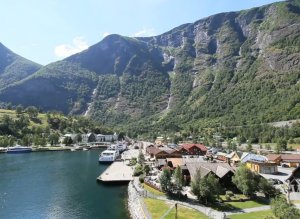
In the pretty harbor city of Stavanger, on Norway’s North sea coast, the seagulls are screeching high above the town square adjacent to a sparkling blue fjord. Here, it’s easy to get a glimpse of the country’s hardscrabble economic past and its booming present day spectacular wealth.

This harbor used to be lined with herring canneries, dozens of them. Piers Croker, the curator of the Norway Canning Museum, says it was the lifeblood of Stavanger.

Thursday, January 24, 2013

Our way or the Norway: Managing petroleum wealth in Canada

One of goals in my paper, The Petro-Path Not Taken, was to compare Norway and Canada-Alberta's record in distributing petroleum wealth amongst persons and amongst provinces. Norway has been very effective in distributing oil wealth amongst it regions and its population. Its level of income inequality is one of the lowest in the world.

Canada's level of inequality, on the other hand, has been among the fastest growing and now among the highest in the OECD.

Thursday, January 17, 2013

Oil Industry Canada: Norway Offers Lessons On How To Manage Resource Wealth, CCPA Says

CALGARY - A new report has some advice for Canada when it comes to managing its oil wealth — be more like Norway.

The study from the Canadian Centre for Policy Alternatives released Thursday calls for a more hands-on approach both provincially and federally toward developing the resource, divvying up its riches and reducing its environmental impacts.

Alberta should learn from Norway on managing oil

Momentum is building across Canada on the need to develop a sustainable national energy strategy.

On this front, Canada and Alberta, its main petro-province, have much to learn from another major petroleum-producing and exporting country, Norway.

Canada and Norway are advanced industrialized countries with highly developed political, bureaucratic and economic institutions.

Thursday, January 10, 2013

Idle No More, Meet the Norwegians

Norway is a long way from Attawapiskat but there may be some important lessons for Canada's First Nations from across the Atlantic in the looming showdown with Stephen Harper. In a recent series for The Tyee, I documented how this tiny Nordic country stood up to powerful outside oil interests intent on exploiting their natural resources and achieved a remarkable economic success.