Democracy Gone Astray

Democracy, being a human construct, needs to be thought of as directionality rather than an object. As such, to understand it requires not so much a description of existing structures and/or other related phenomena but a declaration of intentionality.
This blog aims at creating labeled lists of published infringements of such intentionality, of points in time where democracy strays from its intended directionality. In addition to outright infringements, this blog also collects important contemporary information and/or discussions that impact our socio-political landscape.

All the posts here were published in the electronic media – main-stream as well as fringe, and maintain links to the original texts.

[NOTE: Due to changes I haven't caught on time in the blogging software, all of the 'Original Article' links were nullified between September 11, 2012 and December 11, 2012. My apologies.]

Showing posts with label Oil-by-Train. Show all posts

Friday, August 28, 2015

Moving Alberta Oil By Rail Under Fire By U.S. Opponents

CALGARY — To crude producers hankering for a route to market while pipeline proposals stall, a bevy of crude-by-rail projects planned on the U.S. West Coast may look enticing.

But efforts to connect trainloads of crude to refineries and marine terminals in Washington, Oregon and California aren't having an easy time of it either.

Big environmental organizations and small community groups have been teaming up to fight rail projects in various stages of development in the region. Among the concerns is the prospect of more Alberta bitumen, derided as "dirty'' in some quarters, coming to the area by rail.

Thursday, June 25, 2015

Oil Trains Don't Have to Derail or Explode to Be Hazardous, Doctors Warn

In May, hundreds of doctors, nurses and health-care professionals from Physicians for Social Responsibility (PSR) called on Washington Gov. Jay Inslee and Oregon Gov. Kate Brown to take a stronger position against proposed oil-by-rail shipping terminals in their respective states, in order to insure the health and physical security of families and communities there.

Washington PSR describes itself as a group that promotes "peace and health for the human community and the global ecosystem by empowering members, citizens and policy makers to develop and model for the rest of the nation socially just and life-enhancing policies regarding nuclear issues, climate change, environmental toxins, vulnerable populations and other risks to human health."

Thursday, March 12, 2015

Yet Another Oil Train Disaster

Another day, another oil train derailment. Early Saturday morning, a Canadian National Railway train carrying Alberta crude derailed outside the tiny town of Gogama in northern Ontario. Thirty-eight cars came off the tracks, and five of themsplashed into the Mattagami River system. The accident caused a massive fire and leaked oil into waterways used by locals—including a nearby indigenous community—for drinking and fishing. No one was injured, but according to CN Railway's Twitter feed, fire fighters were still suppressing fires earlier today. People in the area, including members of the Mattagami First Nation, have been complaining of respiratory issues from the smoke.

Tuesday, March 10, 2015

CN train with crude oil derails in northern Ontario, no injuries, fire at site

GOGAMA, Ont. - A CN Rail train carrying crude oil derailed early Saturday in northern Ontario, causing numerous tank cars to catch fire and spill into a local river system, the railway and provincial police say.

Ontario Provincial Police say the derailment occurred at about 2:45 a.m. about four kilometres southwest of Gogama, Ont., which is about 80 km south of Timmins.

They say the derailment involved 10 train cars — some of which caught fire and entered the Mattagami River System.

OPP Const. Gillian Coughlin says officers are at the scene to ensure public safety and the Gogama Fire Department was called to assist in containing the blaze.

Wednesday, February 18, 2015

Trains Hauling Crude Oil Across North America Just Keep Exploding

A train hauling more than 100 tankers from North Dakota's booming oil fieldsderailed during a snowstorm on Monday in West Virginia. The accident sparked massive explosions that prompted the evacuation of two nearby towns, and an oil spill that threatened the water supply of thousands of local residents. The train was heading to Yorktown, Virginia, and came off its tracks 33 miles southeast of Charleston, West Virginia. A state of emergency was declared.

Tuesday, February 17, 2015

West Virginia Oil Train Derailment Sends Crude Tanker Into River

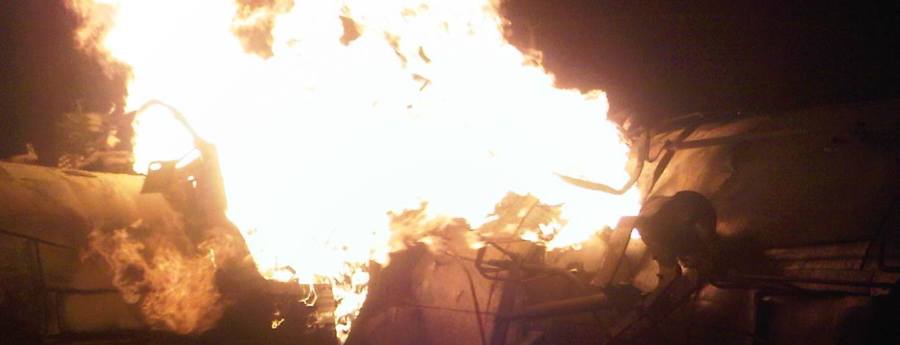
MOUNT CARBON, W.Va. (AP) — Fires burned for hours Tuesday after a train carrying 109 tankers of crude oil derailed in a snowstorm alongside a West Virginia creek, sending fireballs into the sky and threatening the nearby water supply.

Hundreds of families were evacuated and two water treatment plants were shut down after dozens of the cars left the tracks and 19 caught fire Monday afternoon, creating shuddering explosions and intense heat.

Part of the formation hit and set fire to a house, and one person was treated for smoke inhalation, but no other injuries were reported, according to a statement from the train company, CSX.

Friday, February 06, 2015

Oil train trouble in Toronto: citizens demand answers

A Toronto neighbourhood group, alarmed by what appears to be a surge in oil trains rumbling past their urban backyards, is taking the unusual step of urging the Auditor General of Canada to intervene to help it get answers to safety concerns.

The group, called Safe Rail Communities, says it has been asking basic questions to CN, CP Rail and the federal government about the safety of transporting these explosive fuels, but found the responses lacking.

“We’re getting stonewalled,” said Helen Vassilakos, co-founder of Safe Rail Communities, who lives near the train tracks.

Friday, October 10, 2014

Governments Should Stop Playing Railway Russian Roulette

Another major disaster happened Oct. 7 involving oil by rail transportation and there was a major derailment of oil train in Saskatchewan. Evacuation of nearby residents but no deaths reported.

That mishap occurred two days after I outlined the dangers inherent as a result of government inaction and massive deployment of trains to transport oil across the U.S. and Canada in the New York Post. Here's that piece:

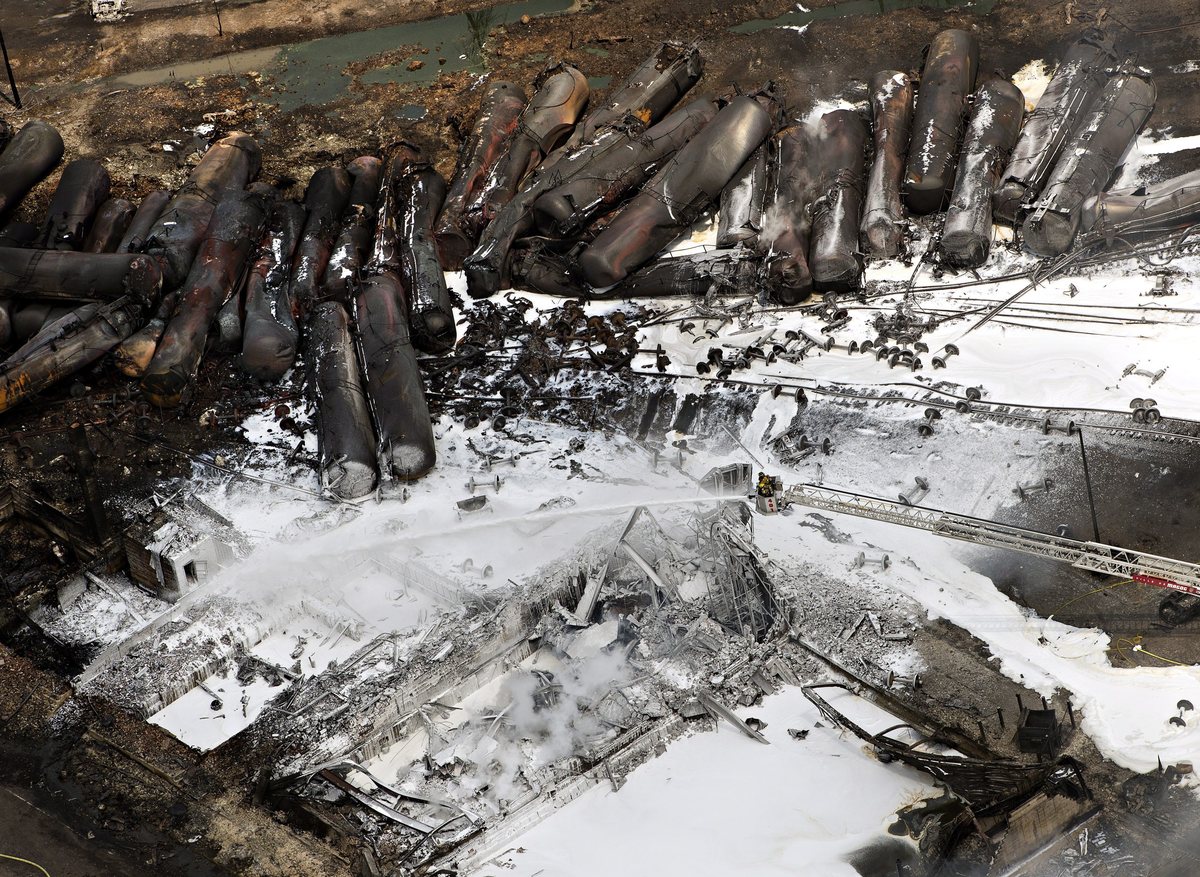
On July 5, 2013, just before midnight, the sole engineer of a US train carrying 73 carloads of North Dakota crude oil parked miles outside a small town in Quebec on a gentle slope. Less than an hour later the unattended train began to roll downhill and eventually reached a speed of 60 miles per hour before derailing, exploding and destroying the town of Lac-Megantic and killing 47 people.

Sunday, May 11, 2014

Canada's Oil-By-Rail Shipments Jump Nine-Fold In 2 Years

VANCOUVER - There has been a nine-fold increase in Canada's oil-by-rail exports over the past two years.

Data released by the National Energy Board says 15,980 barrels a day of crude were exported by rail in the first quarter of 2012.

By the fourth quarter of 2013 — October to December of last year — that had increased to 146,047 barrels a day.

Moving crude by rail has been on the rise, as production increases in the Alberta oil sands and oil pipeline proposals like Keystone XL and the Northern Gateway remain mired in opposition.

Alarms bells sounded after a crude-carrying train derailed and exploded in Lac-Megantic, Que., killing 47 people.

The federal government vowed after the deadly crash to address safety issues and phase out older tank cars being used to transport oil.

Original Article
Source: huffingtonpost.ca/
Author: CP

Friday, May 02, 2014

Safety and climate concerns as oil-by-rail surges forward in North America

On April 23, Canada's minister of transport, Lisa Raitt, announced changes to railway transportation regulations in Canada that she says will make safe the rapidly growing transport of crude oil and Alberta tar sands bitumen in North America.
Raitt's changes come in response to citizen pressure following a string of spectacular oil train crashes in the past nine months, most particularly the crash in Lac-Mégantic, Quebec on July 6, 2013 that killed 47 people.

Latest on oil train that crashed and burned in James River and downtown Lynchburg

The latest North American oil train crash occurred yesterday in the heart of the city of Lynchburg, Virginia. Fourteen wagons of crude oil derailed from a CSX train in the middle of the afternoon. The train was pulling 105 crude oil wagons.

A city spokeswoman said three or four wagons caught fire. The burning wagons spilled their loads into the James River. The surface of the river was on fire from the oil contamination. A portion of the city center was evacuated. The river bank where the rail line is located has been saturated by recent rains.

Friday, January 31, 2014

Accidents Surge as Oil Industry Takes the Train

CASSELTON, N.D. — Kerry’s Kitchen is where Casselton residents gather for gossip and comfort food, especially the caramel rolls baked fresh every morning. But a fiery rail accident last month only a half mile down the tracks, which prompted residents to evacuate the town, has shattered this calm, along with people’s confidence in the crude-oil convoys that rumble past Kerry’s seven times a day.

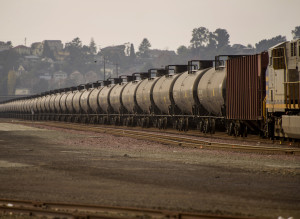
What was first seen as a stopgap measure in the absence of pipelines has become a fixture in the nation’s energy landscape — about 200 “virtual pipelines” that snake in endless processions across the horizon daily. It can take more than five minutes for a single oil train, made up of about 100 tank cars, to pass by Kerry’s, giving this bedroom community 20 miles west of Fargo a front-row seat to the growing practice of using trains to carry oil.

Tuesday, November 05, 2013

Premier Clark Played by Oil by Rail Push?

The best way to weaken resolve is to ceaselessly play on fundamental fears. The most effective way to reclaim resolve is to understand how you are being played.

It probably wouldn't be worth addressing the latest pro-bitumen fear-mongering tactic if the topic hadn't wormed its way onto the agenda for Tuesday's meeting between British Columbia Premier Christy Clark and Alberta Premier Alison Redford.

Their plan is to discuss ways and means of expanding energy exports. As if lifted right out of the Fraser Institute's playbook, the transportation section of the agenda claims that oil by rail is a viable alternative to pipelines, and warns: "If pipelines are not developed, rail will step into the void to deliver bitumen to the West Coast."

Monday, October 28, 2013

Lac-Mégantic: Where Does the Buck Stop?

Canadians trust that their government will take reasonable measures to protect them, their workplaces, communities and their environment. Like the young people partying at the Musi-café in Lac-Mégantic, we are all in a way, oblivious to the risks that governments impose on us. When a catastrophic accident like Lac-Mégantic happens, people’s confidence in the system is shaken.

Was it the result of an improbable sequence of events? An "accident" that occurred in spite of a sound regulatory system and corporations committed to public safety?

Saturday, October 26, 2013

Gainford Train Derailment: CN Anxious To Quell Safety Concerns, Experts Say

TORONTO - CN Rail's (TSX:CNR) strong and swift response to the derailment of a fuel-laden train in Alberta shows how anxious the company is to quell safety concerns as more dangerous goods travel by rail, experts said Sunday.

The railway company dispatched its top brass, led by Chief Operating Officer Jim Vena, to handle the crisis after 13 cars carrying crude oil and liquefied petroleum gas came off the tracks and caught fire early Saturday west of Edmonton.

Explosions, fire after train derails in Alberta

GAINFORD, Alta. - Firefighters battling a major blaze after a CN tanker train derailed west of Edmonton on Saturday decided to withdraw and wait for the flames to burn themselves out.

With no further explosions expected from the 13 cars carrying oil and liquefied petroleum gas, that's the safest thing to do, said Parkland County fire chief Jim Phelan.

"This fire needs to be extinguished by consuming the product," Phelan said. "We're going to let it burn itself out."

But Phalen told a news conference in the nearby community of Seba Beach later Saturday that it could be anywhere from 24 to 72 hours before evacuated residents could go home.

Monday, September 16, 2013

Derailments in Calgary, mislabelled oil at Lac-Mégantic: Oil-by-train dangers further exposed

For the second time in three months, a CP Rail train carrying toxic and flammable hydrocarbons has derailed in the city of Calgary.

Wednesday, eight railway wagons carrying a diluting product used in the pipeline shipment of tar sands bitumen derailed in the Inglewood neighbourhood of Calgary. The train was traveling at a slow speed while exiting CP Rail's Alyth yard in the southeast of the city. Brian McAsey, assistant deputy fire chief of Calgary, told the Calgary Herald, "[The product] is extremely flammable and very volatile."