Democracy Gone Astray

Democracy, being a human construct, needs to be thought of as directionality rather than an object. As such, to understand it requires not so much a description of existing structures and/or other related phenomena but a declaration of intentionality.
This blog aims at creating labeled lists of published infringements of such intentionality, of points in time where democracy strays from its intended directionality. In addition to outright infringements, this blog also collects important contemporary information and/or discussions that impact our socio-political landscape.

All the posts here were published in the electronic media – main-stream as well as fringe, and maintain links to the original texts.

[NOTE: Due to changes I haven't caught on time in the blogging software, all of the 'Original Article' links were nullified between September 11, 2012 and December 11, 2012. My apologies.]

Showing posts with label West Virginia. Show all posts

Tuesday, March 08, 2016

West Virginia Overrides Governor’s Veto To Pass Radical NRA-Backed Gun Law

Gun owners in West Virginia will no longer need to get a permit to have a concealed weapon, putting it among the most far-reaching states for gun rights. The House voted on the measure Friday and officially overrode a gubernatorial veto on Saturday.

The law, which does away with the permit and training program for people 21 and older who want to carry a concealed weapon, was supported by the National Rifle Association, but opposed by law enforcement across the state.

Monday, February 15, 2016

West Virginia Republicans Just Delivered A Huge Blow To Unions

Republicans in the West Virginia legislature overrode the governor's veto of a contentious right-to-work bill on Friday, delivering another major legislative setback to organized labor.

The swift override means that a majority of U.S. states now have right-to-work laws, with West Virginia becoming the 26th. Despised by unions, these laws give workers the option to stop paying fees to unions that must still represent them.

Wednesday, April 08, 2015

Company Wants 100 West Virginians’ Land For A Pipeline

A pipeline company is suing more than 100 landowners in West Virginia in an attempt to get access to their land, claiming that its proposed pipeline has the right of eminent domain.
Mountain Valley Pipeline LLC filed a lawsuit in U.S. District Court last week to force more than 100 property owners and three corporations in 10 West Virginia counties to open their land to surveying for the Mountain Valley Pipeline. The proposed pipeline, if approved, would carry natural gas about 300 miles from northwestern West Virginia to southern Virginia. Since it’s an interstate pipeline, the approval lies with the Federal Energy Regulatory Commission (FERC).

Tuesday, February 17, 2015

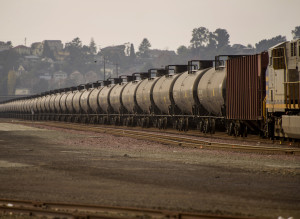
West Virginia Oil Train Derailment Sends Crude Tanker Into River

MOUNT CARBON, W.Va. (AP) — Fires burned for hours Tuesday after a train carrying 109 tankers of crude oil derailed in a snowstorm alongside a West Virginia creek, sending fireballs into the sky and threatening the nearby water supply.

Hundreds of families were evacuated and two water treatment plants were shut down after dozens of the cars left the tracks and 19 caught fire Monday afternoon, creating shuddering explosions and intense heat.

Part of the formation hit and set fire to a house, and one person was treated for smoke inhalation, but no other injuries were reported, according to a statement from the train company, CSX.

Wednesday, November 26, 2014

What’s the Matter with West Virginia?

Cartoon corporate villains don’t come more cartoonish than Don Blankenship, a former coal baron of West Virginia. Last week, Blankenship, the former chief executive officer of Massey Energy, was charged in a federal indictment for a variety of crimes in connection with a disaster at the Upper Big Branch mine in April, 2010, in which twenty-nine coal workers were killed. According to the forty-three-page indictment, Blankenship engaged in a lengthy pattern of deception in dealings with federal mine regulators, in an effort to cut costs, and, consequently, exposed his employees to appalling risks. (His lawyer, William Taylor III, told reporters that Blankenship was innocent and would fight the charges.)

Thursday, May 29, 2014

The Untold Story Of What Happened At An Overcrowded West Virginia Jail After The Chemical Spill

When roughly 10,000 gallons of chemicals leaked into a West Virginia watershed this January, Governor Earl Ray Tomblin declared a state of emergency. Officials shut down schools, deployed the National Guard, and rallied volunteers to bring water and support to the 300,000 people without potable water.
But in the state’s emergency response, there was one group that many forgot: the 429 prisoners locked in Charleston’s overcrowded jail, who were entirely dependent on the state to provide them clean water.

Wednesday, February 26, 2014

U.S. Attorney's Office Probing North Carolina Officials Following Coal Ash Spill

Federal authorities have initiated an investigation into the North Carolina Department of Environment and Natural Resources following last week's coal ash spill in the Dan River.

The Associated Press first obtained a copy of a grand jury subpoena that the U.S. attorney’s office in Raleigh issued requesting emails, memos and reports from the department dating back to 2010. The subpoena compels counsel for the DENR to appear before a grand jury March 18 to 20.

Former West Virginia Miner: We've Been Dumping Those Chemicals In The Water For Decades

When up to 7,500 gallons of toxic 4-methylcyclohexane methanol (MCHM) spilled into the Elk River in West Virginia, leaving 300,000 people without tap water for around a week, former miner Joe Stanley was well prepared. He hadn’t been drinking the water for years.

Stanley, 64, worked at West Virginia's Marrowbone Coal Mine from 1981 to 1996. His employer was Massey Energy, the same company responsible for the Upper Big Branch Mine Disaster in 2010 that killed 29 miners and which was bought out in 2011.

Friday, January 31, 2014

How the Coal Industry Impoverishes West Virginia

Charleston—There’s a joke circulating among Syrians who fled the brutal conflict devastating their country to the quiet mountains of West Virginia: “We escaped the lethal chemicals in Syria only for them to follow us here.” Of course, what’s happening in West Virginia right now is no laughing matter. But how could the refugees not be reminded of their decimated homeland after finding themselves, along with 300,000 other West Virginians, without access to potable water? Unfortunately, West Virginia is no stranger to having its living conditions compared to those in developing countries.

Behind West Virginia’s Massive Chemical Spill, A History Of Poverty And Pollution

CHARLESTON, WEST VIRGINIA — Maria Gunnoe remembers a time when the rivers in Boone County, West Virginia ran clear.

“In my childhood, I fished these streams, I spent time in these streams,” Gunnoe, who lives in Bob White, a town in Boone County, said. “That’s what we did. Nobody needed a pool; the streams were our playground.”

In September, the stream where she used to fish and play as a child turned white. The culprit was 2,400 gallons of a chemical called DT-50-D, which is used to cover coal and rail cars to cut down on dust. It had leaked into the river from the Eastern Associated Coal prep plant, and to Gunnoe, it was just one more example of how the coal and chemical industries have polluted West Virginia — the second poorest state in the nation — over her lifetime.

Thursday, January 30, 2014

Hospital admissions over W. Virginia chem spill double even after water declared safe

Despite recent declarations that the water in West Virginia is now safe to use, hospital admissions related to the Kanawha Valley chemical spill have doubled over the last week.

About a week and a half ago, a chemical mixture used to wash coal – called “Crude MCHM” – began leaking into the Elk River, contaminating the water supply used by nine counties and roughly 300,000 people.

Wednesday, January 29, 2014

How the West Virginia Spill Exposes Our Lax Chemical Laws

The West Virginia chemical spill that left some 300,000 people without access to water has exposed a gaping hole in the country's chemical regulatory system, according to environmental experts.

Much the state remains under a drinking-water advisory after the spill last week into the Elk River near a water treatment facility. As much as 7,500 gallons of the chemical 4-methylcyclohexane methanol, which is used in the washing of coal, leaked from a tank owned by a company called Freedom Industries.

Monday, October 28, 2013

Ohio, West Virginia Residents Sue DuPont Over Exposure To C8 Chemical Used In Teflon

CINCINNATI -- CINCINNATI (AP) — Nine Ohio and West Virginia residents who have cancer and other diseases have filed federal lawsuits this month against chemical giant DuPont, alleging the company knowingly contaminated drinking-water supplies with a chemical used by one of its plants.

The lawsuits, filed Oct. 8 and this week, are among about 50 such cases — including one alleging wrongful death — filed against DuPont since April, when a court-appointed science panel found probable links between exposure to perfluorooctanoic acid, also known as C8, and kidney cancer, testicular cancer and thyroid disease, among others.

Friday, March 29, 2013

West Virginia House Of Delegates Calls For Citizens United Constitutional Amendment

The Democratic-controlled West Virginia House of Delegates voted Thursday to call on Congress to enact a constitutional amendment overturning the Citizens United Supreme Court decision.

The resolution, which passed 60-39, asks for Congress to draft a constitutional amendment which would allow for corporations to be regulated in terms of how much money they could donate and spend on behalf of political candidates, The State-Journal reported. In 2010, the Supreme Court ruled that corporations could not be regulated on campaign spending, deeming that they were covered under the First Amendment to freedom of speech when it came to campaign donations. A number of Democratic lawmakers and others have been seeking to overturn the decision.

Friday, October 12, 2012

West Virginia Mountaintop Removal: How Coal Mines Have Changed The Appalachian Way Of Life

When mining companies level West Virginia mountains to get at the coal beneath, whole towns disappear. When a Michigan power plant burns coal to make electricity, it triggers asthma attacks among children living nearby. When coal ash blows onto a Paiute reservation in Nevada, elders die. Sierra asked people across the land to describe how the world’s dirtiest energy source has disrupted their lives— and what they’re doing to stop it.

Mountaintop removal mines in Appalachia have demolished an estimated 1.4 million acres of forested hills, buried an estimated 2,000 miles of streams, poisoned drinking water, and wiped whole towns from the map. Lindytown, West Virginia, once home to dozens of families, is now an isolated, lonely place, with only one original family remaining. Everyone else sold out to Massey Energy (now Alpha Natural Resources), which was laying waste to a nearby mountain. West of Lindytown, a mountaintop removal mine caused the population of Blair to fall from 700 people in the 1990s to fewer than 50 today, according to the Blair Mountain Heritage Alliance.

Original Article
Source: huffington post
Author: --