
Showing posts with label Pension Plans. Show all posts
Showing posts with label Pension Plans. Show all posts
Thursday, July 13, 2017
Liberals break pension plan promise with Bill C-27
Sunday, August 23, 2015
Wynne calls proposed Ontario pension plan ‘right thing to do’

After details for the proposed Ontario Retirement Pension Plan (ORPP) were revealed Tuesday, Wynne said something has to be done for the two-thirds of workers in the province who don’t have a workplace pension.
Sunday, May 31, 2015
With an election in sight, Harper budges a millimetre on pensions

After some cursory study they rejected the idea.
The late Finance Minister, Jim Flaherty, quite unabashedly said he did not want to cut into the business of the financial private sector.
Thursday, March 19, 2015
Chris Christie Officials Sent Pension Money To Subsidiary of Donor’s Foreign Firm

Weeks later, a Hong Kong-based executive director and board member of Prudential plc delivered a maximum $3,800 contribution to Christie’s gubernatorial campaign, followed by a maximum $32,400 donation to the Republican National Committee, which was about to launch a get-out-the-vote effort for Christie. Two months after that, New Jersey began moving public employees’ retirement savings into two funds managed by the Prudential subsidiary as part of the state’s new $300 million investment commitment to the company.
Thursday, November 06, 2014
Luxembourg tax files: how tiny state rubber-stamped tax avoidance on an industrial scale
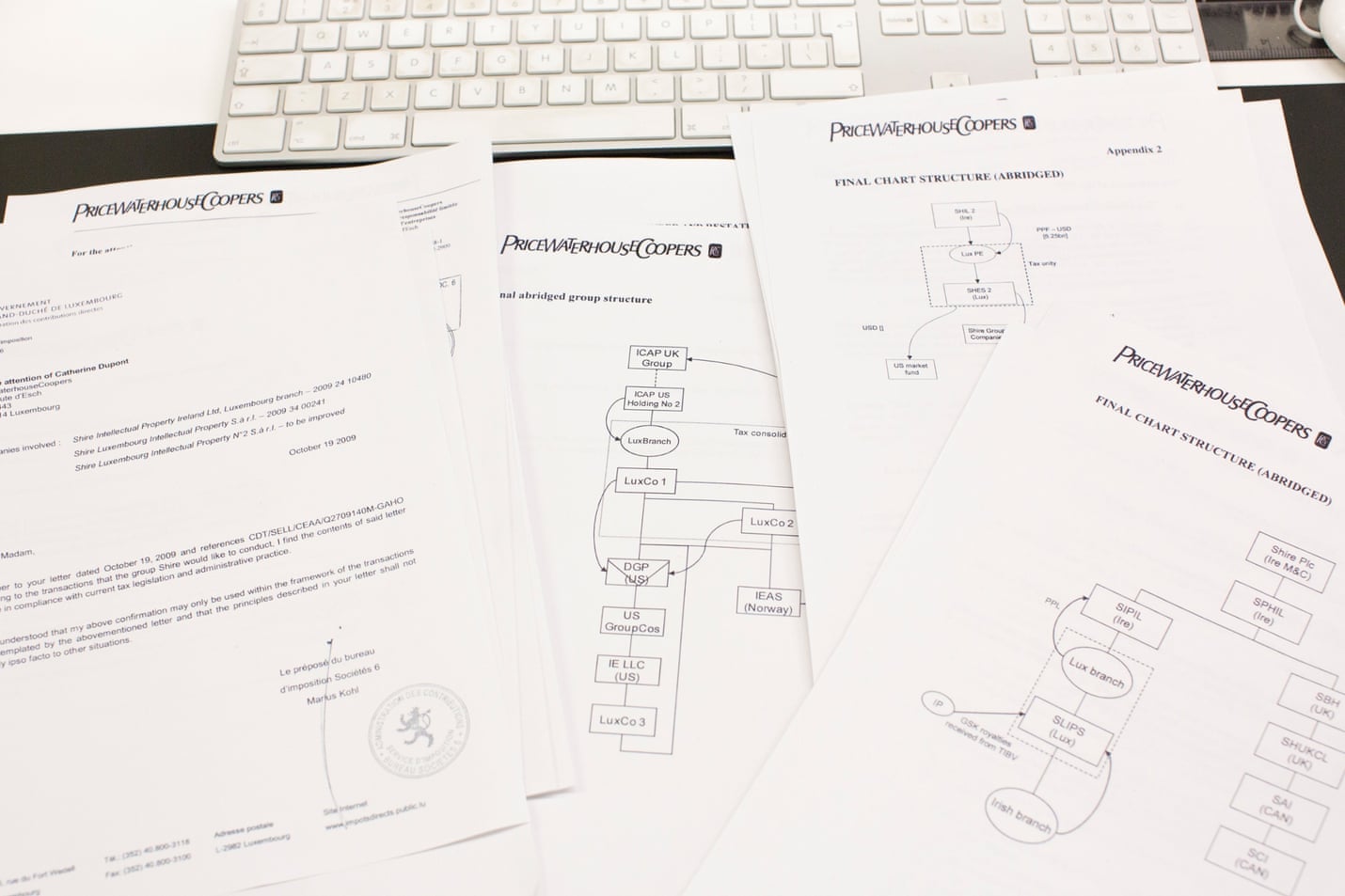
A cache of almost 28,000 pages of leaked tax agreements, returns and other sensitive papers relating to over 1,000 businesses paints a damning picture of an EU state which is quietly rubber-stamping tax avoidance on an industrial scale.
The documents show that major companies — including drugs group Shire, City trading firm Icap and vacuum cleaner firm Dyson, who are headquartered in the UK or Ireland — have used complex webs of internal loans and interest payments which have slashed the companies’ tax bills. These arrangements, signed off by the Grand Duchy, are perfectly legal.
Federal pension board used offshore 'scheme' to skirt foreign taxes

The arrangement involved two dozen entities, half of them based in the financial secrecy haven of Luxembourg, and all of them set up in order to invest money in real estate in Berlin by a Crown corporation called the Public Sector Pension Investment Board.
Wednesday, October 15, 2014
We need to talk about pensions with upcoming generations

How many times have we talked to our children, grandchildren, friends and neighbours about the issue of pensions, only to get the deer in the headlights look? I believe that it is one of the duties of those around the age of retirement to reach out to younger people about the importance of preparing for retirement. We know that Stephen Harper is doing all he can to make the Canada Pension Plan (CPP) unsustainable and to make people work longer to receive the benefits.
I know that many of our younger workers are working at minimum wage jobs and that surviving is very tough these days, but young people must start saving early -- even starting with $10 a payday, and as they manage that, upping the amount gradually so that when they are ready to retire they will have something to fall back on. I know they feel that they can't make ends meet now, but by starting small and increasing gradually they will learn to save and see the results as their pension grows.
Monday, October 06, 2014
Shift to Bad Retirement Plans Threatens Retirees With Privation

Christopher Flavelle reports at Bloomberg:
A survey last month from Towers Watson, the employee benefit consultant, shows just how rapidly the defined-benefit plan—the traditional pension that guarantees workers an annual income after they retire—has moved from the norm at Fortune 500 companies to all but extinct. In 1998, just more than half offered new hires a defined-benefit plan; by 2013, that had fallen to just 7 percent.
That trend continues: According to Towers Watson, at least three of the 34 Fortune 500 companies that offered defined-benefit plans to new hires last year won’t do so this year.
Tuesday, September 23, 2014
Christie's Pension Overseer Invested New Jersey Money In Fund He Is Linked To Privately

Sunday, May 11, 2014
Auditor General's Report: Public Pension Plans At Risk Over Longer Life Spans

In his spring report to Parliament, Michael Ferguson also warned that prolonged rock-bottom interest rates and lower-than-expected returns on assets could cost taxpayers billions down the road.
Tuesday, May 06, 2014
Joe Oliver: Pension Plan Criticism Is Not Ontario Election Interference

The Conservative government found itself knee-deep in the budding campaign last week when Prime Minister Stephen Harper panned Wynne's proposal to introduce a new mandatory pension plan for Ontario.
Wednesday, December 18, 2013
Why Jim Flaherty is turning his back on CPP reform

"We had full consensus from 10 provinces and three territories to continue work on enhancing the Canadian Pension Plan, and the feds just shut it down,'' Sheridan said Tuesday. ''That's never happened in the past.''
Tuesday, December 17, 2013
The pensions swindle sees labourers dropping dead a year after they retire

Back in the 1930s, the average life expectancy for a professional man was about 61. A retirement age of 60 was seen effectively as a short sabbatical from work, during which a patriarch could get his affairs in order before dropping dead. More recently, the dream has been of retirement as an extended period of mellow rest, a long holiday reward for those who have spent a lifetime working, with the mortgage paid off, no alarm clocks and long commutes, without the pressure of raising children. The dream turned out to be just that.
Monday, July 22, 2013
Rick Snyder Front, Center In Detroit Bankruptcy Drama

It's the eighth, former business executive and relative political novice Rick Snyder, who is aggressively tying his legacy to the prospects of a Detroit turnaround.
When he took office, Snyder pushed for more powers for the state to intervene in distressed cities and schools. After voters repealed the law last November, he ignored critics and signed another one. He also hired the city's turnaround specialist and, nearly four months later, blessed the request to file for bankruptcy.
Detroit, and the Bankruptcy of America's Social Contract

Wednesday, March 13, 2013
Air Canada gets pension lifeline with strings attached

Late Tuesday, Ottawa granted Canada's largest airline the lifeline it had sought in its pension problem, but made demands in return. Air Canada now has seven years to come up with at least $1.4 billion to fund the plan, and must put in at least $150 million in any given year until 2020. That's on top of regularly scheduled annual payments.
Friday, December 28, 2012
Pension shortfall worse than Ottawa admits
 Recent reforms notwithstanding, the generous pension plans for federal employees - not to mention the one for MPs - are in much worse shape than Ottawa admits, says a new study from the C.D. Howe Institute.
The same kind of collapse of investment returns that set back the retirement dreams of countless Canadians in the private sector has also hit the government plans, the analysis notes. But there are two key differences.
Thursday, December 20, 2012
Flaherty's pay-later pension plan will put the burden on our kids and grandkids
 Federal Finance Minister Jim Flaherty went into the meeting with his provincial colleagues firmly focused on the fiscal deficit and came out the same way.
The annual operating deficits Ottawa and the provinces have been running to get out of the global recession over the past few years while the economy has limped along have added billions to our cumulative debt.
Wednesday, December 19, 2012
Public service unions not entitled to $28B pension repayment, says Supreme Court
OTTAWA - The Supreme Court of Canada says several major public unions are not entitled to a $28-billion pension surplus that the government hived off to help pay down the deficit.
The unanimous high court ruled 9-0 that the government is not obliged to return funds to the public sector unions.
"The government was not under a fiduciary obligation to the plan members, nor was it unjustly enriched by the amortization and removal of the pension surpluses," Justice Marshall Rothstein writes for the court.
The unanimous high court ruled 9-0 that the government is not obliged to return funds to the public sector unions.
"The government was not under a fiduciary obligation to the plan members, nor was it unjustly enriched by the amortization and removal of the pension surpluses," Justice Marshall Rothstein writes for the court.
Monday, November 26, 2012
Teacher Decries Pension Plan's 'Unethical' Investments

But the teachers' pension plan tells a different story. Managed by the BC Investment Management Corporation (bcIMC), the Teachers' Pension Plan invests in Pearson, Enbridge, British American Tobacco, Haliburton, and other corporations associated with environmental destruction, sweatshop labour, and weapons manufacturing.
Subscribe to:
Posts (Atom)