
Showing posts with label Philanthropy. Show all posts
Showing posts with label Philanthropy. Show all posts
Wednesday, December 28, 2016
Democracy Endangered When "Philanthro-Barons" Try to Tip Courts
Saturday, January 23, 2016
Why Philanthropy Actually Hurts Rather Than Helps Some of the World's Worst Problems

Monday, December 23, 2013
New York City, Philadelphia, Atlantic City Break Temperature Records During December Heat Wave
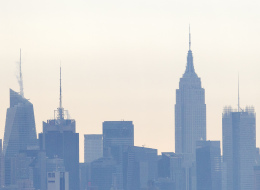
The National Weather Service says the temperature in Central Park hit a record-setting 65 degrees Saturday. The previous record was 62, set in 2011 and 1923.
Philadelphia and Atlantic City, N.J., reached 67 degrees on Saturday afternoon. That broke Atlantic City's previous mark of 63 degrees, set in 2011, and bested Philadelphia's previous high of 66 degrees, set in 1895.
The temperature rose to a balmy 68 in Wilmington, Del., beating the previous mark of 65, set in 1895. And the 64 degrees recorded in Newark, N.J. broke the previous mark of 62, set in 2011.
Sunday is supposed to be even warmer in the region. Temperatures could top 70.
Original Article
Source: huffingtonpost.com/
Author: AP
Friday, April 12, 2013
Oligarchs and Graphomaniacs

Monday, January 28, 2013
Michael Bloomberg's Contributions To Johns Hopkins University Top $1 Billion
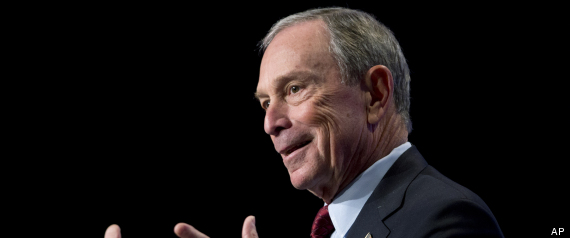
The university announced the commitment late Saturday saying it believe Bloomberg, who amassed his fortune creating the global financial services firm Bloomberg LP, is now the first person to give more than $1 billion to a single American university.
Sunday, November 27, 2011
A Family’s Billions, Artfully Sheltered
 As he stood in the opulent marble foyer of a Fifth Avenue mansion late last month, greeting the coterie of prominent guests arriving at his private art gallery, Ronald S. Lauder was doing more than just being a gracious host.
 To celebrate the 10th anniversary of the Neue Galerie, Mr. Lauder’s museum of Austrian and German art, he exhibited many of the treasures of a personal collection valued at more than $1 billion, including works by Van Gogh, Cézanne and Matisse, and a Klimt portrait he bought five years ago for $135 million.
Yet for Mr. Lauder, an heir to the Estée Lauder fortune whose net worth is estimated at more than $3.1 billion, the evening went beyond social and cultural significance. As is often the case with his activities, just beneath the surface was a shrewd use of the United States tax code. By donating his art to his private foundation, Mr. Lauder has qualified for deductions worth tens of millions of dollars in federal income taxes over the years, savings that help defray the hundreds of millions he has spent creating one of New York City’s cultural gems.
Monday, November 14, 2011
When 'Giving Back' Becomes 'Atonement'
As the federal government moves to reform how charities are funded, the 'moral debt' of wealthy philanthropists comes under the microscope.
Two seemingly separate storylines – one of taxing the rich and another of reforming the role of charity – have dominated our national news lately. The first chronicles the ongoing saga of the Occupy movement, which has spread northward from New York City to our own urban centres, and to hundreds of cities around the world. The public spaces around the Vancouver Art Gallery and Victoria Square in Montreal are now as "occupied" as those around Wall Street and St. Paul’s Cathedral, and the movement is generating debate among all quarters.
A second, apparently distinct storyline has emerged from the federal government’s recent proposal to reform the way it funds charitable organizations, and to move Canada closer to a U.K.-inspired "Big Society" model of social service provision. The latter story has expanded into an in-depth Globe and Mail series on philanthropy, which, among other things, sets out BMO Capital Markets advisory board member, Donald Johnson’s argument that the tax benefits available to Canadian philanthropists should be expanded even further at this time.
Sunday, October 30, 2011
Science for sale: A new kind of donor is transforming medical research
 The operating rooms at Toronto's Hospital for Sick Children run like an airport. Patients roll in as patients roll out – up to 60 elective surgeries a day, 11,000 a year. They flow through 18 rooms where surgeons remove tumours, save limbs, vision and babies the size of their palms.
 In 2005, the hospital's chief of surgery, James Wright, had to close four of them. He was tortured. “What if a school bus crashed off the Gardiner? What then? What would happen to the emergency cases?”
Closing the four rooms cut the hospital's capacity to operate by 25 per cent. But Dr. Wright felt that he had no choice. They were ancient ruins by modern medical standards, built in the 1950s for cart-and-trolley tools, not lasers and robotics. Even the air within them was a hazard, their antique ventilation increasing airborne exposure to infection and dangerous gases.
Thursday, August 18, 2011
Apparently We've Forgotten Who the Milkens Are
 Michael and Lowell Milken's role in the rise of junk bonds helped make them rich. That wasn't enough for UCLA to turn down Lowell's $10 million donation—or even acknowledge his family's checkered past.
If, 20 years from now, a major public university were to name a program after one of the most controversial figures in the financial scandals of the late aughts—say, for example, the Angelo Mozilo School of Finance, or the Joseph Cassano Department of Economics—would anyone notice? Would anyone care? A little-noticed event last week suggests not.
Last Tuesday, the University of California-Los Angeles announced that it had accepted a $10 million donation from Lowell Milken to start the "Lowell Milken Institute for Business Law and Policy." The university's press release described Milken as an "international businessman" and the "co-founder of Knowledge Universe, the world's largest early childhood education company." The Daily Bruin, the Associated Press, Los Angeles Times, and Los Angeles Daily News all decided to leave their characterizations at that. But there's a lot more to Milken's story.
Folks who are aware of events that happened before the Clinton administration, however, will recall that Lowell Milken is the brother and business partner of convicted fraudster Michael Milken. Michael was the "junk bond king" who, in 1990, was sentenced to 10 years in prison for six felony violations of federal law (he served 22 months). Lowell, like Michael, was indicted on federal racketeering and fraud charges connected to insider-trading violations at Drexel Burnham Lambert, the now-defunct Wall Street investment bank where both brothers worked.
Last Tuesday, the University of California-Los Angeles announced that it had accepted a $10 million donation from Lowell Milken to start the "Lowell Milken Institute for Business Law and Policy." The university's press release described Milken as an "international businessman" and the "co-founder of Knowledge Universe, the world's largest early childhood education company." The Daily Bruin, the Associated Press, Los Angeles Times, and Los Angeles Daily News all decided to leave their characterizations at that. But there's a lot more to Milken's story.
Folks who are aware of events that happened before the Clinton administration, however, will recall that Lowell Milken is the brother and business partner of convicted fraudster Michael Milken. Michael was the "junk bond king" who, in 1990, was sentenced to 10 years in prison for six felony violations of federal law (he served 22 months). Lowell, like Michael, was indicted on federal racketeering and fraud charges connected to insider-trading violations at Drexel Burnham Lambert, the now-defunct Wall Street investment bank where both brothers worked.
Subscribe to:
Posts (Atom)