Suddenly there’s a lively debate on both the left and the right about the specter of socialism in America. According to Gallup, Democrats now view socialism in a more positive light than capitalism. And Alexandria Ocasio-Cortez, a card-carrying member of the Democratic Socialists of America, became an instant political star after she clinched the Democratic Party’s nomination for the New York 14th District’s House seat.
Democracy Gone Astray
Democracy, being a human construct, needs to be thought of as directionality rather than an object. As such, to understand it requires not so much a description of existing structures and/or other related phenomena but a declaration of intentionality.
This blog aims at creating labeled lists of published infringements of such intentionality, of points in time where democracy strays from its intended directionality. In addition to outright infringements, this blog also collects important contemporary information and/or discussions that impact our socio-political landscape.
All the posts here were published in the electronic media – main-stream as well as fringe, and maintain links to the original texts.
[NOTE: Due to changes I haven't caught on time in the blogging software, all of the 'Original Article' links were nullified between September 11, 2012 and December 11, 2012. My apologies.]
Showing posts with label Capitalism. Show all posts
Friday, August 17, 2018
Tuesday, December 27, 2016
Capitalism Breeds Reckless Consumption and Starves the Public Sphere
Do we all bear some responsibility for the dominance of capitalism over democracy due to our unrestrained consumerism? The galloping consumption of progressives and conservatives alike extends to cars, bottled water, iPhones, large flat-screen televisions, fashion and more. Wolfgang Streeck explored this and other issues in the following interview with Truthout.
Mark Karlin: You cite the end of WWII as the time that capitalism and democracy became intractably enmeshed. How did it come to be that Western democracies came to assert that freedom could not exist without capitalism?
Thursday, November 17, 2016
Capitalism and democracy: the strain is showing
Is the marriage between liberal democracy and global capitalism an enduring one? Political developments across the west — particularly the candidacy of an authoritarian populist for the presidency of the most important democracy — heighten the importance of this question. One cannot take for granted the success of the political and economic systems that guide the western world and have been a force of attraction for much of the rest for four decades. The question then arises: if not these, what?
Thursday, November 10, 2016
We Must Reject Economic Cannibalism
"What can I do to fix a broken global economy?" It's a question I've been asked a lot these past few months as I've crisscrossed the US speaking at TED venues, music concerts, the World Affairs Council, bookstores, on radio and TV shows, and at a variety of other forums.
During this election year it is important to recognize that corporations pretty much run the world. Despite the outcome of the elections, they will continue to do so -- at least until we organize and change the rules that have created the dominant neoliberal system.
Sunday, July 17, 2016
US Politics' True Bipartisan Consensus: Capitalism Is Untouchable
The economic aim of both major US political parties is, in the end, the same: to protect and reinforce the capitalist system.
The Republican Party does so chiefly by means of a systematic, unremitting demonization of the government. They blame it for whatever ails the capitalist economy. If unemployment grows, they point to government policies and actions and attack particular politicians for what they did or did not do to stimulate the economy, directing criticism away from the employers who actually deprive workers of their jobs.
Saturday, May 28, 2016
The Free Market Is Incompatible With Public Education
The initial spark for this piece was going to be this story out of Philly, where parents are shocked, upset and frustrated to learn that the charter their children are attending is bailing on them at the end of this year.
But at this stage of the game “Charter Closes Doors and Abandons Students” is completely unremarkable, like breathless coverage of the sun rising in the East. The Center for Media and Democracy has done huge work on this, producing a map of the 2,500 (that’s two thousand, five hundred!) charter schools that closed by 2013. CMD has also ramped up pressure on the US Department of Education, which loves charters, pushes charters, throws money at charters — but in its “transparent” reporting claims to have no idea how many charters have actually closed. (Meanwhile, CMD continues to dig out the truth about charter scamming like this amazing report about KIPP. Do you contribute to the CMD? Because you really ought to.)
Tuesday, May 03, 2016
The Third Way: Share-the-Gains Capitalism
Mayer is CEO of Yahoo. Yahoo’s stock lost about a third of its value last year, as the company went from making $7.5 billion in 2014 to losing $4.4 billion in 2015. Yet Mayer raked in $36 million in compensation.
Sunday, April 17, 2016
Sadistic Capitalism: Six Urgent Matters for Humanity in Global Crisis
In these mean streets of globalized capitalism in crisis, it has become profitable to turn poverty and inequality into a tourist attraction.
The South African Emoya Luxury Hotel and Spa company has made a glamorized spectacle of it. The resort recently advertised an opportunity for tourists to stay "in our unique Shanty Town ... and experience traditional township living within a safe private game reserve environment." A cluster of simulated shanties outside of Bloemfontein that the company has constructed "is ideal for team building, braais, bachelors [parties], theme parties and an experience of a lifetime," read the ad. The luxury accommodations, made to appear from the outside as shacks, featured paraffin lamps, candles, a battery-operated radio, an outside toilet, a drum and fireplace for cooking, as well as under-floor heating, air conditioning and wireless internet access. A well-dressed, young white couple is pictured embracing in a field with the corrugated tin shanties in the background. The only thing missing in this fantasy world of sanitized space and glamorized poverty was the people themselves living in poverty.
Thursday, February 11, 2016
Capitalism, Slavery, Racism and Imprisonment of People of Color Cannot Be Separated
Slavery didn't end; it evolved. That's the powerful argument made in Slaves of the State by Dennis Childs. Ever since a clause in the 13th Amendment allowed for enslavement as "punishment for crime," the groundwork has been laid for the prison industrial complex to function as the 21st century equivalent of chattel slavery. Order your copy of this eye-opening book by making a donation to Truthout today!
The following is an interview with Dr. Dennis Childs, author of Slaves of the State: Black Incarceration From the Chain Gang to the Penitentiary.
Friday, January 29, 2016
The capitalist model for journalism is failing
The news this week that Rogers will send 200 of its TV, radio and publication workers packing is just the latest in a series of corporate media contractions that are bringing the entire system to the brink of collapse and forcing hundreds of media workers out of jobs across the country.
Just five companies -- Bell, Rogers, Shaw, Quebecor, and TELUS -- control nearly 90 per cent of Canada's media landscape.
Saturday, January 23, 2016
Capitalism’s Cult of Human Sacrifice
HOUSTON—Bryan Parras stood in the shadows cast by glaring floodlights ringing the massive white, cylindrical tanks of the Valero oil refinery. He, like many other poor Mexican-Americans who grew up in this part of Houston, struggles with asthma, sore throats, headaches, rashes, nosebleeds and a host of other illnesses and symptoms. The air was heavy with the smell of sulfur and benzene. The faint, acrid taste of a metallic substance was on our tongues. The sprawling refinery emitted a high-pitched electric hum. The periodic roar of flares, red-tongued flames of spent emissions, leapt upward into the Stygian darkness. The refinery seemed to be a living being, a giant, malignant antediluvian deity.
Tuesday, October 27, 2015
Higher Education: Capitalism at Its Most Despicable
Since 1862 public colleges had been expected to serve primarily as a means for the American people to achieve an inexpensive college education, and to benefit from academic research. The 1980 Bayh-Dole Act changed it all. It freed public universities from releasing new research discoveries to the public, allowing them instead to patent the results and make licensing deals with private companies. The University of California, anticipating big agri-business subsidies, took full advantage in 2013, siding with Monsanto in a lawsuit against a farmer who was accused of stealing the company’s seed. The farmer lost. And universities became more deeply entrenched in the capitalist world.
Sunday, October 25, 2015
The Downsides of Cheap Abundance
In college, Economics 101 is often described as the social science discipline that deals with the production, distribution and consumption of goods and services. MIT Economist Paul Samuelson liked to focus on scarcity, or more specifically, the allocation of scarce resources. “Abundance” was always a pretty word with an idyllic connotation for Professor Samuelson. I often wonder why there weren’t a few classes about the real-life consequences of abundance, along with scarcity and people’s material welfare.
Monday, October 19, 2015
Remember When America Doubted Capitalism?
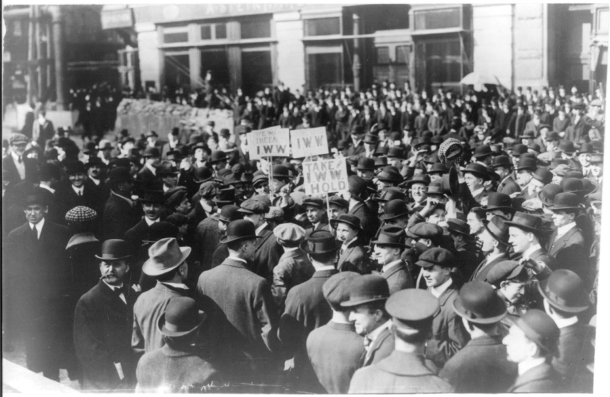
- The Age of Acquiescence: The Life and Death of American Resistance to Organized Wealth and Power
- Steve Fraser
- Little, Brown (2015)
Tuesday, September 15, 2015
Manifesto backed by prominent NDPers calls for overhaul of capitalist economy
OTTAWA — Just as Tom Mulcair attempts to convince Canadians that the NDP is a safe, moderate choice in the Oct. 19 election, some of his party's highest profile supporters are issuing a manifesto calling for a radical restructuring of the country's economy.
The "leap manifesto," signed by more than 100 actors, musicians, labour unions, aboriginal leaders, environmentalists and other activists, aims to pressure the next federal government to wean Canada entirely off fossil fuels in as little as 35 years and, in the process, upend the capitalist system on which the economy is based.
Wednesday, July 29, 2015
The end of capitalism has begun

The red flags and marching songs of Syriza during the Greek crisis, plus the expectation that the banks would be nationalised, revived briefly a 20th-century dream: the forced destruction of the market from above. For much of the 20th century this was how the left conceived the first stage of an economy beyond capitalism. The force would be applied by the working class, either at the ballot box or on the barricades. The lever would be the state. The opportunity would come through frequent episodes of economic collapse.
Monday, July 27, 2015
Unbridled capitalism is the 'dung of the devil', says Pope Francis
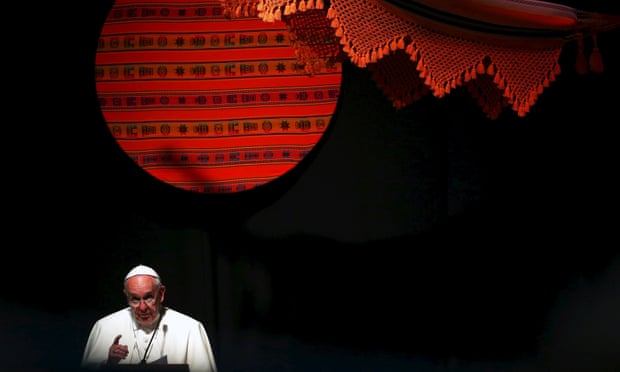
Pope Francis has urged the downtrodden to change the world economic order, denouncing a “new colonialism” by agencies that impose austerity programs and calling for the poor to have the “sacred rights” of labor, lodging and land.
In one of the longest, most passionate and sweeping speeches of his pontificate, the Argentine-born pope used his visit to Bolivia to ask forgiveness for the sins committed by the Roman Catholic church in its treatment of native Americans during what he called the “so-called conquest of America”.
Sunday, March 22, 2015
Justice, capitalism and progress: Paul Tudor Jones II at TED2015
Can capital be just? As a firm believer in capitalism and the free market, Paul Tudor Jones II believes that it can be. Jones is the founder of the Tudor Investment Corporation and the Tudor Group, which trade in the fixed-income, equity, currency and commodity markets. He thinks it is time to expand the “narrow definitions of capitalism” that threaten the underpinnings of our society and develop a new model for corporate profit that includes justness and responsibility.
It’s a good time for companies: in the US, corporate revenues are at their highest point in 40 years. The problem, Jones points out, is that as profit margins grow, so does income inequality. And income inequality is closely linked to lower life expectancy, literacy and math proficiency, infant mortality, homicides, imprisonment, teenage births, trust among ourselves, obesity, and, finally, social mobility. In these measures, the US is off the charts.
We Need a New Economic Model Because the Current Model Is Falling Apart
It’s now possible to sell a new product to hundreds of millions of people without needing many, if any, workers to produce or distribute it.
At its prime in 1988, Kodak, the iconic American photography company, had 145,000 employees. In 2012, Kodak filed for bankruptcy.
The same year Kodak went under, Instagram, the world’s newest photo company, had 13 employees serving 30 million customers.
At its prime in 1988, Kodak, the iconic American photography company, had 145,000 employees. In 2012, Kodak filed for bankruptcy.
The same year Kodak went under, Instagram, the world’s newest photo company, had 13 employees serving 30 million customers.
Saturday, March 21, 2015
Does money make you mean?
The road along the seafront in Los Angeles is lined with palm trees - skateboarders and dog-walkers stroll along, heading for the beach. And social psychologist Prof Paul Piff is spending the afternoon going back and forth over a pedestrian crossing.
Subscribe to:
Posts (Atom)