If they were a different group of women, living in other, richer parts of town, the police would have done more to find the killer. The public would have been outraged.
Democracy Gone Astray
Democracy, being a human construct, needs to be thought of as directionality rather than an object. As such, to understand it requires not so much a description of existing structures and/or other related phenomena but a declaration of intentionality.
This blog aims at creating labeled lists of published infringements of such intentionality, of points in time where democracy strays from its intended directionality. In addition to outright infringements, this blog also collects important contemporary information and/or discussions that impact our socio-political landscape.
All the posts here were published in the electronic media – main-stream as well as fringe, and maintain links to the original texts.
[NOTE: Due to changes I haven't caught on time in the blogging software, all of the 'Original Article' links were nullified between September 11, 2012 and December 11, 2012. My apologies.]
Showing posts with label Pickton Inquiry. Show all posts
Tuesday, December 18, 2012
Missing Women Inquiry: Bias Against Pickton's Victims Led To Police Failures, Indifference
If they were a different group of women, living in other, richer parts of town, the police would have done more to find the killer. The public would have been outraged.
Wednesday, March 07, 2012
Pickton Inquiry: Wally Oppal Says First Nations Have Not Been Silenced
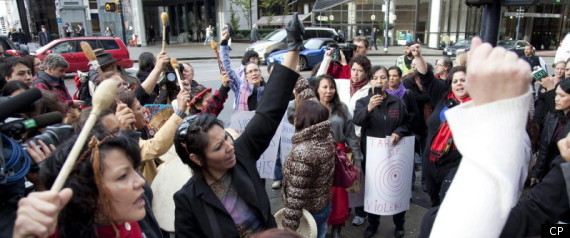
VANCOUVER - The head of a public inquiry into the Robert Pickton case defended the process Tuesday against allegations it's ignoring the voices of aboriginals, as a lawyer appointed to represent that community resigned and one of the few remaining First Nations groups left in the process pulled out.
Aboriginal activists have long dismissed the inquiry as a lopsided and favouring the police, and the latest departures suggest commissioner Wally Oppal has so far been unable to convince the First Nations community he's committed to listening to them.
The first to leave was Robyn Gervais, an independent lawyer appointed to advance the interests of the aboriginal community, who told Oppal on Tuesday morning that the hearings have been too heavily focused on police and not on the poor native women who overwhelmingly accounted for Pickton's victims.
That prompted the First Nations Summit, which represents many First Nations and tribal councils in British Columbia, to formally withdraw from the inquiry.
Aboriginal activists have long dismissed the inquiry as a lopsided and favouring the police, and the latest departures suggest commissioner Wally Oppal has so far been unable to convince the First Nations community he's committed to listening to them.
The first to leave was Robyn Gervais, an independent lawyer appointed to advance the interests of the aboriginal community, who told Oppal on Tuesday morning that the hearings have been too heavily focused on police and not on the poor native women who overwhelmingly accounted for Pickton's victims.
That prompted the First Nations Summit, which represents many First Nations and tribal councils in British Columbia, to formally withdraw from the inquiry.
Thursday, November 24, 2011
Pickton investigators were indifferent, Mountie says
A high-profile Mountie who recently came forward with allegations of sexual harassment in the RCMP has now made sensational new claims about the investigation of serial killer Robert Pickton.
Cpl. Catherine Galliford told CBC News earlier this month about abusive treatment inside the national police force, including sexual advances from several senior officers.
Galliford was the RCMP's spokeswoman during the Robert Pickton investigation and is scheduled to speak at the ongoing inquiry into the case, and told CBC News some of what she will reveal at the inquiry.
Galliford says she saw numerous problems inside the investigation, including investigators who were more interested in padding their paycheques and drinking alcohol than catching a serial killer.
"They would break between noon and 2 p.m. PT to just drink and party and go for lunch, but then they would go back to work on Friday and claim double-time," she said Wednesday.
Cpl. Catherine Galliford told CBC News earlier this month about abusive treatment inside the national police force, including sexual advances from several senior officers.
Galliford was the RCMP's spokeswoman during the Robert Pickton investigation and is scheduled to speak at the ongoing inquiry into the case, and told CBC News some of what she will reveal at the inquiry.
Galliford says she saw numerous problems inside the investigation, including investigators who were more interested in padding their paycheques and drinking alcohol than catching a serial killer.
"They would break between noon and 2 p.m. PT to just drink and party and go for lunch, but then they would go back to work on Friday and claim double-time," she said Wednesday.
Monday, November 21, 2011
Pickton Inquiry: Leadership Failures Stalled Probe Of Missing Sex Workers
VANCOUVER - A massive leadership failure within the Vancouver Police Department stalled the investigation into reports of missing sex workers in the late 1990s, the public inquiry into the Robert Pickton case heard Monday.
That failed leadership extended all the way up to the chief, who was apparently unaware of the most basic details of the case and did nothing to ensure it was taken seriously, according to a review prepared by an outside police agency.
"While some recognized the increased number of missing women as significant, certain officers failed to take ownership and ensure the proper resources were dedicated to the problem," says the report by Deputy Chief Jennifer Evans of Ontario's Peel Regional Police.
Evans' report offers scathing criticism of both the Vancouver police and the RCMP, which together failed to stop Pickton as he hunted sex workers in the late 1990s and early 2000s. He was able to continue killing for years after he was first identified as a suspect.
That failed leadership extended all the way up to the chief, who was apparently unaware of the most basic details of the case and did nothing to ensure it was taken seriously, according to a review prepared by an outside police agency.
"While some recognized the increased number of missing women as significant, certain officers failed to take ownership and ensure the proper resources were dedicated to the problem," says the report by Deputy Chief Jennifer Evans of Ontario's Peel Regional Police.
Evans' report offers scathing criticism of both the Vancouver police and the RCMP, which together failed to stop Pickton as he hunted sex workers in the late 1990s and early 2000s. He was able to continue killing for years after he was first identified as a suspect.
Subscribe to:
Posts (Atom)