Democracy Gone Astray

Democracy, being a human construct, needs to be thought of as directionality rather than an object. As such, to understand it requires not so much a description of existing structures and/or other related phenomena but a declaration of intentionality.
This blog aims at creating labeled lists of published infringements of such intentionality, of points in time where democracy strays from its intended directionality. In addition to outright infringements, this blog also collects important contemporary information and/or discussions that impact our socio-political landscape.

All the posts here were published in the electronic media – main-stream as well as fringe, and maintain links to the original texts.

[NOTE: Due to changes I haven't caught on time in the blogging software, all of the 'Original Article' links were nullified between September 11, 2012 and December 11, 2012. My apologies.]

Showing posts with label Radicalism. Show all posts

Saturday, August 11, 2018

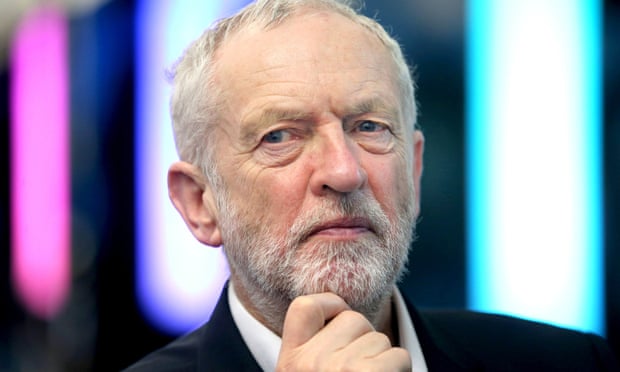
Jeremy Corbyn: Labour is not a threat to Jewish life in Britain

Jeremy Corbyn has broken his silence over the antisemitism row engulfing Labour, acknowledging the party has “a real problem” over the issue but strongly rejecting the idea that it poses any threat to the Jewish community in the UK.

Writing in the Guardian following increasing calls for him to take a lead and address the concerns of many Jewish groups, the Labour leader accepted that the party’s incomplete adoption of an internationally recognised definition of antisemitism had caused genuine worries.

Jeremy Corbyn won’t compromise — no matter the cost

LONDON — The greatest danger to Jeremy Corbyn is himself.

Despite the almost-daily revelations about anti-Semitism in the Labour Party, which have reached all the way to the leader’s door, Corbyn remains all-but unassailable for now, most MPs and senior party aides say.

But the crisis has exposed a split at the very top of the Labour movement which — if not contained — poses a genuine threat to the Corbyn project, some senior figures now believe.

Sunday, July 22, 2018

Revolutionary Ferment: From the Russian Revolution to the Contemporary US

Labor historian Paul Le Blanc is the author of more than 20 books and has served as an editor of the eight-volume International Encyclopedia of Revolution and Protest (2009) and of the Complete Works of Rosa Luxemburg (begun in 2013). Le Blanc has more than half a century of activist experience in social movements and is an internationally recognized scholar of working-class history and revolutionary politics.

In this interview, Le Blanc discusses the radicalization process that he sees unfolding in the United States today and possible revolutionary strategies for the future.

Tuesday, February 28, 2017

In 1971 the People Didn't Just March on Washington—They Shut It Down

The following is an excerpt from L.A. Kauffman's new book, Direct Action: Protest and the Reinvention of American Radicalism (Verso, 2017). This excerpt was originally published on Longreads.com. 

If the government won’t stop the war, we’ll stop the government.

The largest and most audacious direct action in US history is also among the least remembered, a protest that has slipped into deep historical obscurity. It was a protest against the Vietnam War, but it wasn’t part of the storied sixties, having taken place in 1971, a year of nationwide but largely unchronicled ferment. To many, infighting, violence, and police repression had effectively destroyed “the movement” two years earlier in 1969.

Tuesday, December 27, 2016

Rise of the alt-right: How mainstream conservatives’ obsession with purity fueled a new right-wing radicalism

Faced with the emergence of the new racist political movement known as the “alt-right,” mainstream conservatives have generally responded in two ways: angry denunciation or cooptation of its worst tendencies. Both approaches have been ineffective, largely because of the political weakness of “movement conservatism” in the post-Cold War world, but also because fringe views are more closely integrated within today’s American right than they were in the days of Dwight Eisenhower or Richard Nixon.

Wednesday, July 20, 2016

The Single Most Radical Line In The Republican Party Platform

The Constitution, by its own terms, is the “supreme law of the land.” All judges are bound by the words of the Constitution, and all laws made by legislatures within the United States must yield to the Constitution’s provisions. This is the central insight of the American republic — the idea that the structure and limits of government are laid out in a written document, and that document is binding on all government actors subject to its terms.

The Republican Party’s 2016 Platform rejects this concept outright.

Thursday, April 28, 2016

Letter Details FBI Plan for Secretive Anti-Radicalization Committees

Of the plans put forward by the federal government to identify and stop budding terrorists, among the least understood are the FBI’s “Shared Responsibility Committees.”

The idea of the committees is to enlist counselors, social workers, religious figures, and other community members to intervene with people the FBI thinks are in danger of radicalizing — the sort of alternative to prosecution and jail time many experts have been clamoring for. But civil liberties groups worry the committees could become just a ruse to expand the FBI’s network of informants, and the government has refused to provide details about the program.

Thursday, April 14, 2016

FBI’s “Shared Responsibility Committees” to Identify “Radicalized” Muslims Raise Alarms

The FBI’s plan to enlist community leaders in “Shared Responsibility Committees” all across the country with the goal of identifying “radicalized” individuals is raising alarm among civil rights activists.

The Shared Responsibility Committees, known as SRCs, “are expanding the informant program under the guise of an intervention program, which it is not,” said Abed Ayoub, legal director of the American-Arab Anti-Discrimination Committee (ADC).

Sunday, June 28, 2015

The Toronto G20 radicalized me

Tommy Taylor had never been to a protest. He had never spoken former Toronto Police chief Bill Blair’s name. In his own words, he was just a 30-year-old “straight white guy from Mississauga” who taught Shakespeare to high school students.

He was decidedly not an activist.

Then, on June 26, 2010, he wandered over to Queen’s Park to watch thousands marching down cop-lined streets during the G20 Summit. Hours later, he became one of hundreds rounded up and detained in a makeshift jail. He was crammed into a tiny cell for nearly 24 hours with 39 others and made to beg for water.

Friday, February 27, 2015

ISIS recruits: Radicalized young women motivated by ideology, sense of adventure

Young women who become radicalized and make the trip to ISIS-controlled lands are motivated by the same reasons as male recruits, including a sense of adventure and a desire to right perceived wrongs in the Muslim world, according to experts.

When they arrive they are usually quickly married to a fighter with the Islamic State in Iraq and Syria and begin a strictly controlled domestic life of child-rearing, cooking and cleaning.

Tuesday, February 03, 2015

Am I a ‘Radical’?

How did a nice, conservative, Southern white boy become a civilly disobedient, older (but still white) guy bent on transformative change in our system of political economy?
Here’s how a recent interviewer summarized my career:
His résumé is as mainstream and establishment as it gets: environmental advisor to Presidents Carter and Clinton, founder of the Natural Resources Defense Council and World Resources Institute, administrator of the UN Development Program, dean of the Yale School of Forestry and Environmental Studies, now a professor at Vermont Law School, and distinguished senior fellow at Demos…. This elder environmental statesman is the author of the acclaimed books Red Sky at Morning (2003) and The Bridge at the Edge of the World (2008)…[and a] forceful new book, America the Possible: Manifesto for a New Economy.

Friday, October 24, 2014

Demonizing those Canada calls 'radicalized'

Scare headlines about young people becoming "radicalized," going overseas, being transformed into robotic Super Muslims, graduating from Beheading School, and being returned to Canada ready to strike at the heart of our values, freedoms, and traditions have filled the media in the past few months, leading to an upcoming Canadian campaign of bombing Iraq and repressive new legislation to be introduced this week in Parliament.
Given the Fourth Estate's role as stenographer to power, it is unsurprising that the many articles asking "why" young people are attracted to overseas adventures are all playing into the same "blame Islam" game that results in horrible "jihad" headlines, increased fear, and suspicion of anyone who does not look like the CBC's Peter Whitemansbridge.

Tuesday, August 19, 2014

Was Iraq's Top Terrorist Radicalized at a US-Run Prison?

In early July, Abu Bakr al-Baghdadi, the head of the jihadist terror group now known as the Islamic State—formerly the Islamic State in Iraq and Syria, or ISIS—preached on high in Mosul and declared himself the "Caliph Ibrahim" of a new fundamentalist Sunni state stretching from western and northern Iraq to northern Syria. This announcement came after months of fighting over territory and skirmishes with Iraqi forces, as ISIS invaded and captured dozens of Iraqi cities including Tikrit, Saddam Hussein's hometown.

Tuesday, May 28, 2013

Get apocalyptic: Why radical is the new normal

Feeling anxious about life in a broken-down society on a stressed-out planet? That's hardly surprising: Life as we know it is almost over. While the dominant culture encourages dysfunctional denial -- pop a pill, go shopping, find your bliss -- there's a more sensible approach: Accept the anxiety, embrace the deeper anguish -- and then get apocalyptic.

We are staring down multiple cascading ecological crises, struggling with political and economic institutions that are unable even to acknowledge, let alone cope with, the threats to the human family and the larger living world. We are intensifying an assault on the ecosystems in which we live, undermining the ability of that living world to sustain a large-scale human presence into the future. When all the world darkens, looking on the bright side is not a virtue but a sign of irrationality.