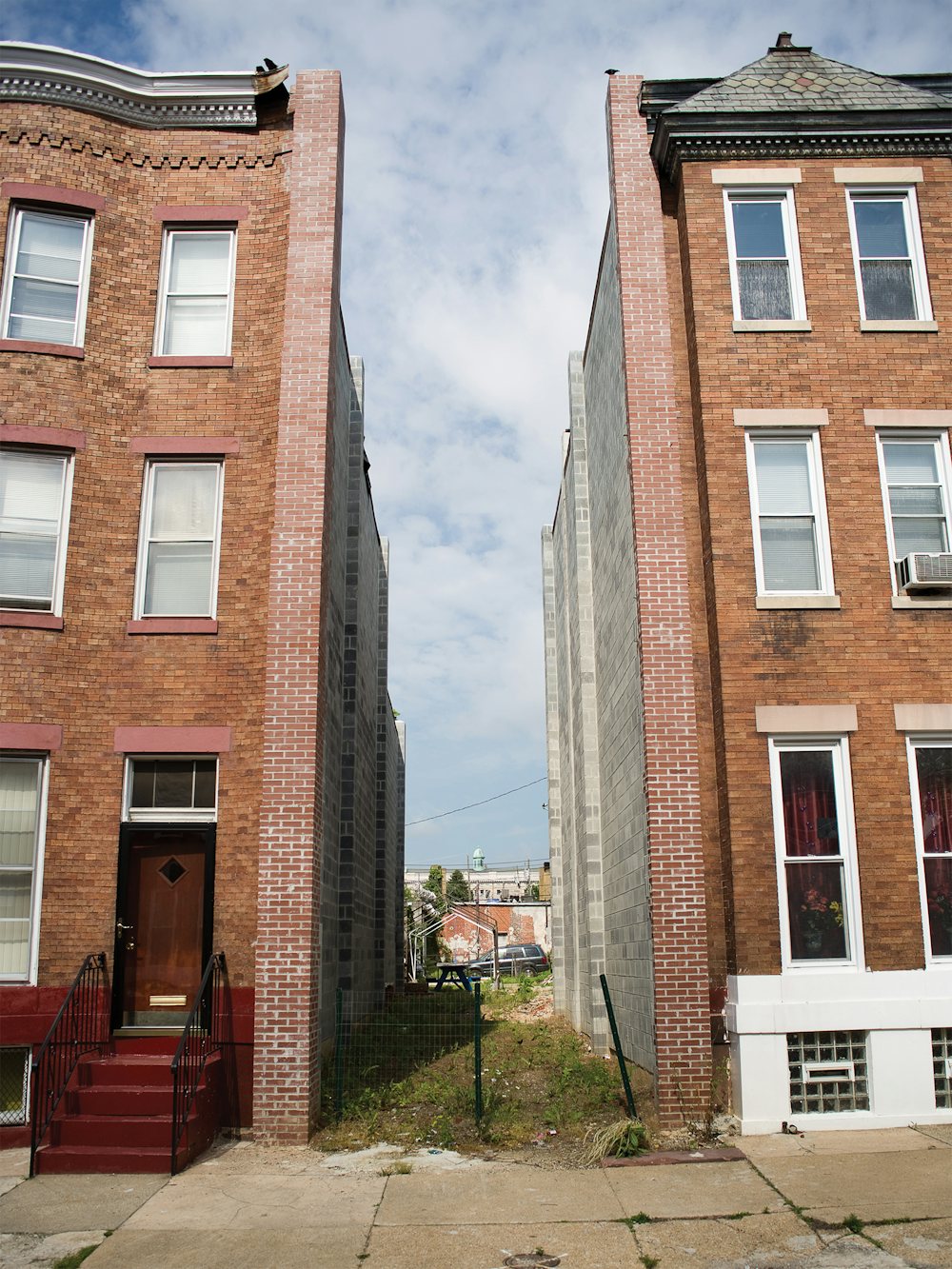
When it was still standing, 1906 Boone Street was a classic example of a Baltimore row house: three stories tall and only 15 feet wide, with a curved bay window in front and a narrow garden out back. Built in 1920, it featured a red brick facade, five bedrooms, and a claw-foot tub in the second-floor bathroom. Karen Saunders, who now lives two doors down, remembers living in the house as a child in the 1960s. Lewis Mitchell, a Coast Guard welder, purchased the house next door 21 years ago. Together with his brother, who lives one house over, Mitchell spent more than a year cleaning, painting, and repairing his new home. “I build ships,” Mitchell says. “I figured I could do a house.”
Democracy Gone Astray
Democracy, being a human construct, needs to be thought of as directionality rather than an object. As such, to understand it requires not so much a description of existing structures and/or other related phenomena but a declaration of intentionality.
This blog aims at creating labeled lists of published infringements of such intentionality, of points in time where democracy strays from its intended directionality. In addition to outright infringements, this blog also collects important contemporary information and/or discussions that impact our socio-political landscape.
All the posts here were published in the electronic media – main-stream as well as fringe, and maintain links to the original texts.
[NOTE: Due to changes I haven't caught on time in the blogging software, all of the 'Original Article' links were nullified between September 11, 2012 and December 11, 2012. My apologies.]
Showing posts with label Real Estate. Show all posts
Tuesday, July 24, 2018
Thursday, July 13, 2017
Nine Things the Real Estate Industry Doesn’t Want You to Know
You’ve heard it a million times. The reason so few of us can afford Vancouver is because there aren’t enough new homes being built. This is the version of reality that real estate industry leaders and their political allies want us to believe.
But an investigation of the industry by The Tyee has revealed reality to be much more complex. Over the past six months I spoke at length with financial analysts, economists, industry consultants, realtors and many others to learn the true causes of Vancouver’s housing crisis and who is profiting from it. They were in broad agreement that real estate is at the centre of a massive realignment between our society’s rich and poor — and one that few leaders in the industry seem willing to publicly acknowledge. Here are the key takeaways from those conversations.
Friday, April 08, 2016
From Panama to Hong Kong — and why you can’t afford to live in Vancouver
When the dust settles on the Panama Papers saga, the Canadian angle may not be how much federal and provincial treasuries have been bilked by our own One Percenters, but what an inviting and unquestioning haven this country is for foreigners wishing to hide their wealth.
Two key Canadian government agencies have already warned that this country’s lack of rules, regulations or even basic data-gathering leaves it open to money-laundering and questionable investments. These warnings have come after a belated examination of the vast amounts of money being thrown into the Toronto and Vancouver property markets, primarily — but not exclusively — by wealthy Chinese, many of them closely connected by blood or loyalty to the Communist Party regime in Beijing.
Thursday, February 11, 2016
Vancouver Real Estate Agents To Be Probed For Fraud, Insider Trading
VANCOUVER — The independent office charged with overseeing the British Columbia real estate market will investigate allegations of fraud and insider trading by some Metro Vancouver real estate agents, the provincial government said Monday.
Superintendent of Real Estate Carolyn Rogers will work with an advisory group being set up by the Real Estate Council of B.C. to look into concerns raised by media reports and opposition politicians, said B.C. cabinet minister Peter Fassbender.
Monday, November 16, 2015
Real Estate Shell Companies Scheme to Defraud Owners Out of Their Homes
Partially paralyzed and reliant on a wheelchair, Ozella Campbell spends a lot of time watching television. It was under those circumstances in February 2014 that she saw a commercial urging her to call MyHouseIsADump.com, a company that offered to buy houses in as-is condition, in cash, and to close the purchase within seven days.
She called the toll-free number and within hours, she said, a well-spoken young man appeared at her brownstone, a longtime family home in Bedford-Stuyvesant, a Brooklyn neighborhood in the throes of transformation.
Friday, June 26, 2015
How to Dump Tenants and Make a Fortune
It is 7:45 am, and 18 real-estate professionals are gathered around a conference table in downtown Manhattan, a hairbreadth from Wall Street. They are agents, insurers, asset managers, investors—there is even an architect who uses her allotted 30 seconds of introduction to mention her knack for creating spaces with high-end finishes on economical budgets. Everyone is here to listen to Simon Moule speak.
The topic, as described by the invitation, is “making sense of NYC Rent Stabilization Laws,” and Moule is a guru when it comes to understanding what he describes as “millions of rules.” The people in this room seek understanding with a specific endgame in mind: increasing capitalization of a building, if not a portfolio of buildings. As the lawyer who introduces Moule puts it: “If you know the rent laws, that’s where the juice is. You can really squeeze as much as possible out of a building.”
Saturday, May 09, 2015
New Ruling Is Bad News For Home Owners Looking To Sell Without An Agent
A push to make it easier for potential home buyers to see sellers' contact information online has been rejected by Canada's Competition Tribunal.
It's a setback for Canadians looking for a more do-it-yourself approach to real estate. The ruling, released Friday, said that the Canadian Real Estate Association's (CREA) current restrictions on the amount of information low-fee agents post on their popular realtor.ca website or any website that links to it are fair and do not contravene competition regulations.
Wednesday, October 15, 2014
Moncton Castle Sells For Less Than Most Urban Homes
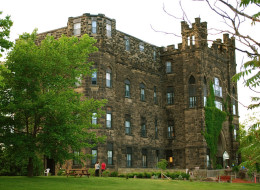
A group of investors in B.C. has purchased a New Brunswick castle for $475,000, and plans to convert the 54-room heritage building into high-end condos.
New Brunswick developer Jay K. Tse told The Times-Transcript that he and some of his family in British Columbia plan to salvage what they can from Castle Manor Estate, which has been an orphanage and nursing home.
Monday, October 06, 2014
This Is Why People Are Getting Frustrated With Real Estate Agents
When it comes to cutting land transfer taxes that tack on thousands to the cost of a home, Canada’s realtors are happy to talk.
But when it comes to realtors’ fees, which have been soaring in recent years in tandem with house prices, the realtor lobby will accept no questions. And they will tell you you're not even allowed to ask about it.
The Toronto Real Estate Board (TREB) hosted a campaign event for Doug Ford this week, giving him a venue to promote his plan to cut Toronto’s land transfer tax by 15 per cent.
But when it comes to realtors’ fees, which have been soaring in recent years in tandem with house prices, the realtor lobby will accept no questions. And they will tell you you're not even allowed to ask about it.
The Toronto Real Estate Board (TREB) hosted a campaign event for Doug Ford this week, giving him a venue to promote his plan to cut Toronto’s land transfer tax by 15 per cent.
Wednesday, October 01, 2014
Real Estate, Finance, Oil And Gas Earnings Soar In Canada: StatsCan
Given the slump in Canada’s job market this year, wages are holding up reasonably well, StatsCan’s latest survey of payroll hours and earnings shows.
But some parts of the economy are much stronger than others, and that’s coming through in the wage gains seen in various industries.
Real estate professionals are seeing Canada’s biggest gains, with average weekly earnings soaring 12.8 per cent over the past year, Stats Can found.
But some parts of the economy are much stronger than others, and that’s coming through in the wage gains seen in various industries.
Real estate professionals are seeing Canada’s biggest gains, with average weekly earnings soaring 12.8 per cent over the past year, Stats Can found.
Saturday, August 30, 2014
Foreigners Are Taking Over Canadian Real Estate Definitely Maybe
The housing market is so inflated that the international community warns of a bubble ready to burst and locals fret that soaring prices have pushed the dream of home ownership forever out of reach.
Some weary house hunters have turned wary as reports circulate about an influx of wealthy foreign buyers, particularly from China, buying up the housing stock.
This isn’t Vancouver. Or Toronto. Or anywhere in Canada.
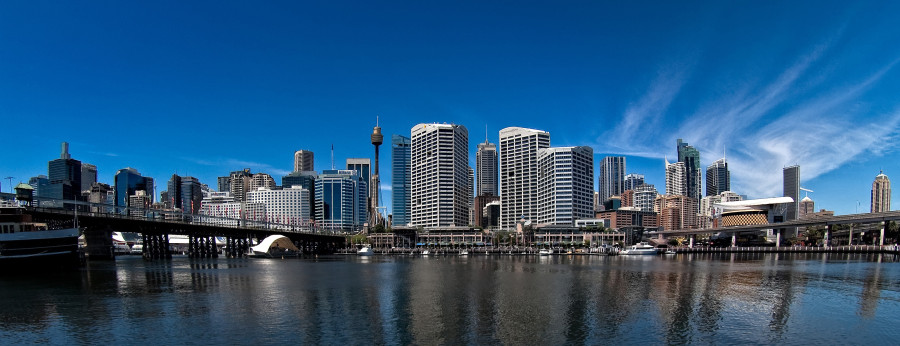
This is the scene in Sydney and cities across Australia where, similar to Canada, low interest rates have sparked a years-long rush into the market amid cries of overvaluation and deteriorating affordability.
Some weary house hunters have turned wary as reports circulate about an influx of wealthy foreign buyers, particularly from China, buying up the housing stock.
This isn’t Vancouver. Or Toronto. Or anywhere in Canada.
This is the scene in Sydney and cities across Australia where, similar to Canada, low interest rates have sparked a years-long rush into the market amid cries of overvaluation and deteriorating affordability.
Wednesday, May 28, 2014
REAL ESTATE GOES GLOBAL
The most expensive housing market in North America is not where you’d think. It’s not New York City or Orange County, California, but Vancouver, British Columbia. Now, Vancouver is a beautiful city—a thriving deep-water port, a popular site for TV and movie shoots. By all accounts, it is a wonderful place to live. But nothing about its economy explains why—in a city where the median income is only around seventy grand—single-family houses now sell for close to a million dollars apiece and ordinary condos go for five or six hundred thousand dollars. “If you look at per-capita incomes, we look like Reno or Nashville,” Andy Yan, an urban planner at the Vancouver-based firm Bing Thom Architects, told me. “But our housing prices easily compete with San Francisco’s.”
When price-to-income or price-to-rent ratios get out of whack, it’s often a sign of a housing bubble. But the story in Vancouver is more interesting. Almost by chance, the city has found itself at the heart of one of the biggest trends of the past two decades—the rise of a truly global market in real estate.
Wednesday, January 29, 2014
Royal LePage: No Risk Of Downturn As House Prices Grow
TORONTO - The latest Royal LePage housing survey shows average price of a home in Canada increased between 1.2 per cent and 3.8 per cent in the fourth quarter of 2013.
It says the average cost of a standard two-storey home rose 3.6 per cent year-over-year to $418,282, while detached bungalows went up 3.8 per cent to $380,710.
Thursday, November 28, 2013
Home Affordability Deteriorating As Prices, Rates Rise: RBC
OTTAWA - Higher prices and an increase in mortgage rates have made home affordability more of a problem for the average Canadian family, says a new report from the Royal Bank of Canada (TSX:RY).
RBC's latest research on the portion of average household income needed to maintain a home shows that affordability deteriorated over the summer, the second consecutive drop in as many quarters.
The level of deterioration differs from region to region and between types of homes, but for the average bungalow the affordability measure rose 0.7 of a percentage point to 43.3 per cent nationally in the third quarter, after a 0.3-percentage-point gain in the second quarter.
RBC's latest research on the portion of average household income needed to maintain a home shows that affordability deteriorated over the summer, the second consecutive drop in as many quarters.
The level of deterioration differs from region to region and between types of homes, but for the average bungalow the affordability measure rose 0.7 of a percentage point to 43.3 per cent nationally in the third quarter, after a 0.3-percentage-point gain in the second quarter.
Tuesday, November 26, 2013
Calgary's Average Resale Home Prices Will Rise To Over Half A Million Dollars: Report
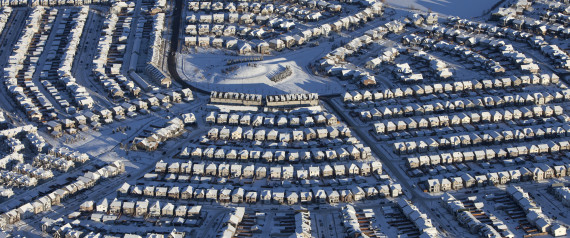
The average price for a resale home in Calgary will rise to over half a million dollars by 2017, according to a new report released Tuesday.
The city's real estate market managed to "largely shrug off the floods," with the average resale price actually rising in June, and a steady price growth is expected in 2014 and the years to come, says a report released by the Conference Board of Canada Autumn Metropolitan Housing Outlook.
Tuesday, November 12, 2013
To Home Ownership and Back Again
The cellphone rang. I pulled off to the shoulder of the road. Coverage is spotty on the Okanagan Connector, but the message came through loud and clear. "They took the offer!!!" It was my wife Sheila on the phone, from the house we were renting in the Okanagan.
It was the happiest God damn moment of my life. Sure, the day my wife said "yes" was fantastic. And of course, so were the birth of my son and daughter several years later. This, however, was the opportunity to lay down roots.
I had spent so many years telling myself that I didn't earn enough money to be a homeowner, and that somehow -- in Vancouver at any rate -- I hadn't quite "made the grade."
It was the happiest God damn moment of my life. Sure, the day my wife said "yes" was fantastic. And of course, so were the birth of my son and daughter several years later. This, however, was the opportunity to lay down roots.
I had spent so many years telling myself that I didn't earn enough money to be a homeowner, and that somehow -- in Vancouver at any rate -- I hadn't quite "made the grade."
Monday, October 28, 2013
This street in east London tells a story of the great British divide: those who own property and those who don't
Six years ago, only a few months before Northern Rock collapsed and the world plunged into a financial storm from which it still has not properly recovered, I met Alex Rossiter, a 29-year-old freelance radio producer, in the basement kitchen of his parents' house in Hackney, east London.
His father, Alan, a community arts worker, told me how he had bought the house for £9,300 in 1977 and that now "it's probably worth £500,000, if you can believe that". Actually, I told him, it's probably more like £800,000. At which point, he nearly fell off his chair.
Wednesday, October 09, 2013
August Building Permits Down 21.2 Per Cent, Statistics Canada Says
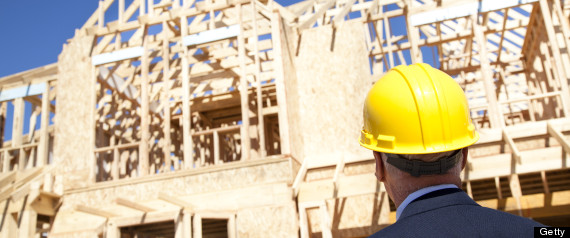
OTTAWA - Statistics Canada says municipalities issued $6.3 billion worth of building permits in August, down 21.2 per cent from July.
The agency says the decline, which followed a 21.4 per cent increase in July, was the result of lower construction intentions in both non-residential and residential sectors.
It says with this decline, the trend in the value of building permits has become relatively flat since the beginning of 2013.
With the exception of British Columbia and Newfoundland and Labrador, every province registered declines in August with Ontario, Alberta and Quebec posting the largest drops.
In the non-residential sector, the total value of building permits fell 37.9 per cent to $2.4 billion in August, its lowest level since February 2013.
The value of permits in the residential sector decreased 5.4 per cent to $3.9 billion in August.
Original Article
Source: huffingtonpost.ca
Author: CP
The agency says the decline, which followed a 21.4 per cent increase in July, was the result of lower construction intentions in both non-residential and residential sectors.
It says with this decline, the trend in the value of building permits has become relatively flat since the beginning of 2013.
With the exception of British Columbia and Newfoundland and Labrador, every province registered declines in August with Ontario, Alberta and Quebec posting the largest drops.
In the non-residential sector, the total value of building permits fell 37.9 per cent to $2.4 billion in August, its lowest level since February 2013.
The value of permits in the residential sector decreased 5.4 per cent to $3.9 billion in August.
Original Article
Source: huffingtonpost.ca
Author: CP
Tuesday, September 24, 2013
Construction Jobs Could Be First Victims Of ‘Unbalanced' Economy
The proportion of the economy related to construction is more than twice as high in Canada as it is in the U.S., Porter said in a client note this week. Of all the economic activity in Canada, 13.4 per cent is related to construction, compared to 5.8 per cent for the U.S.
Saturday, September 21, 2013
MLS Phantom Listings Distorting House Prices: Consultant
A real estate consultant’s warning that housing market data in Canada
is being artificially inflated has some economists and market observers
wondering whether the recent upswing in house sales and prices might be
partly an illusion.
Real estate consultant Ross Kay alleges that realtors in certain parts of the country — particularly in Greater Toronto and southern Ontario — are artificially inflating home sales by listing the same property twice, or sometimes even three times.
Subscribe to:
Posts (Atom)


