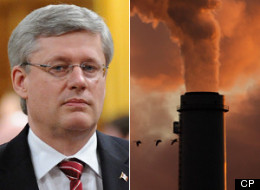
Democracy Gone Astray

Democracy, being a human construct, needs to be thought of as directionality rather than an object. As such, to understand it requires not so much a description of existing structures and/or other related phenomena but a declaration of intentionality.
This blog aims at creating labeled lists of published infringements of such intentionality, of points in time where democracy strays from its intended directionality. In addition to outright infringements, this blog also collects important contemporary information and/or discussions that impact our socio-political landscape.

All the posts here were published in the electronic media – main-stream as well as fringe, and maintain links to the original texts.

[NOTE: Due to changes I haven't caught on time in the blogging software, all of the 'Original Article' links were nullified between September 11, 2012 and December 11, 2012. My apologies.]

Showing posts with label Scott Vaughan. Show all posts

Monday, January 28, 2013

Environment commissioner ‘spinning wheels’ in top post, quits two years early

Colleagues of Canada’s Environment Commissioner Scott Vaughan say they aren’t surprised that he will resign from his post with more than two years left on his seven-year mandate so that he can head the International Institute for Sustainable Development.

“I was not surprised at the news,” admitted Scott Findlay, a member of Mr. Vaughan’s panel of environmental advisers and a professor of biology at the University of Ottawa. “None of us are dummies. We were all very well aware of the extent to which the environment is a priority of the current government.”

Saturday, January 19, 2013

Stephen Harper’s environment watchdog to resign after series of stinging reports

OTTAWA – The federal environment watchdog, Scott Vaughan, is resigning after nearly five years on the job and a series of stinging reports that have occasionally drawn criticism from Prime Minister Stephen Harper’s government.

“He never expressed frustration to me, but he wouldn’t be mortal if he had not been frustrated and insulted,” said Green Party leader Elizabeth May on learning the news. “I think that he was treated with disrespect.”

Tuesday, May 08, 2012

Scott Vaughan, Environment Watchdog, Says There's No Federal Plan To Cut Greenhouse Gas

OTTAWA - The federal government still has no solid plan to reduce greenhouse gas emissions and it’s almost certainly too late for it to recover in time to reach its 2020 goals, says a new environmental audit.

"Although the federal government has begun to lower greenhouse gas emissions, right now the reductions are not happening fast enough to meet the 2020 target," Environment Commissioner Scott Vaughan said in a report tabled in the House of Commons on Tuesday.

Federal officials have a few new regulatory packages in the works, Vaughan said. But only one in eight targeted sectors has been given new rules so far. Plus, the regulations take years to develop, and even longer to implement.

"Given that an additional 178 million tonnes in reductions are needed to meet the 2020 target, it is unlikely that enough time is left to develop and establish regulations that together will contribute sufficient GHG reductions to meet the 2020 target."

Tuesday, December 13, 2011

Vaughan backs embattled Environment Canada scientists

Canada’s environment commissioner stood by the embattled scientists at Environment Canada in a report released Tuesday, praising their “long record of accomplishments” and highlighting concerns about how the government is treating them.

Environment Commissioner Scott Vaughan noted that Environment Canada is one of the few organizations with the capacity to carry out credible, long-term environmental research and monitoring at the national level, in the public interest. His audit concluded it produces high-quality work.

“We found that Environment Canada’s systems and practices to ensure the quality of its science activities are consistent with those generally used in the scientific community,” Vaughan said.

He praised the department’s environmental monitoring in particular, which provides Canadians with information about local weather, air and water quality and the ecology of national parks.

“Environmental monitoring is necessary to know whether the quality of our environment is getting better or worse,” Vaughan said. “The information the government collects serves many users, including municipal planners, resource managers, and Canadian families.”