Democracy Gone Astray

Democracy, being a human construct, needs to be thought of as directionality rather than an object. As such, to understand it requires not so much a description of existing structures and/or other related phenomena but a declaration of intentionality.
This blog aims at creating labeled lists of published infringements of such intentionality, of points in time where democracy strays from its intended directionality. In addition to outright infringements, this blog also collects important contemporary information and/or discussions that impact our socio-political landscape.

All the posts here were published in the electronic media – main-stream as well as fringe, and maintain links to the original texts.

[NOTE: Due to changes I haven't caught on time in the blogging software, all of the 'Original Article' links were nullified between September 11, 2012 and December 11, 2012. My apologies.]

Showing posts with label Silicon Valley. Show all posts

Monday, July 23, 2018

Silicon Valley’s burgeoning labor movement

Since the late 20th century, Silicon Valley has been so closely associated with the concept of innovation that the very notion of unionization has seemed almost anachronistic. We embody the new economy, you could practically hear the region's defenders proclaim. Unionization is so passe!

Apparently not.

Sunday, July 16, 2017

The Poverty Just Over the Hills From Silicon Valley

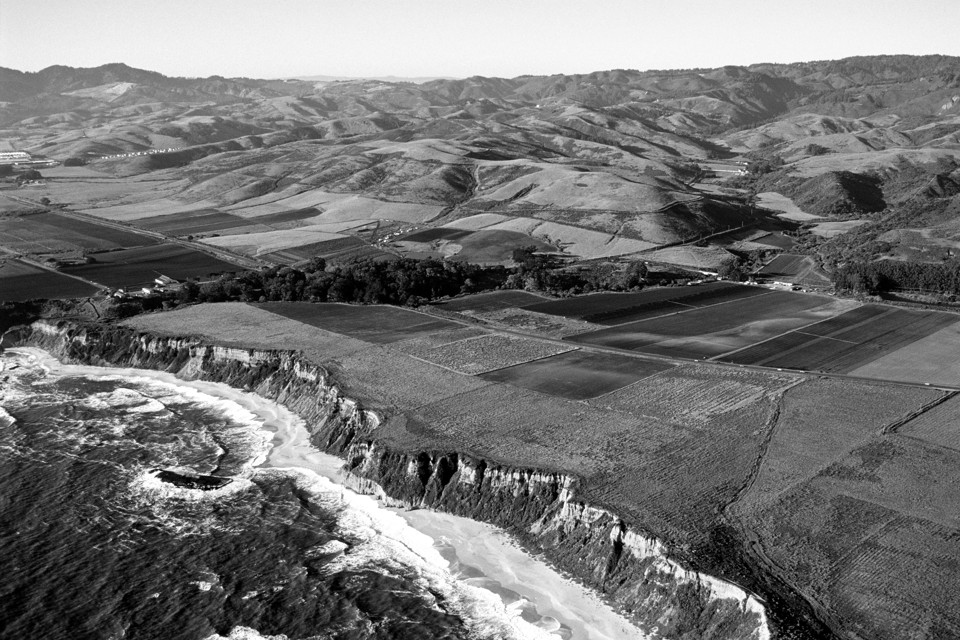
On the drive up the coast from the southernmost part of Northern California’s San Mateo County, Highway 1’s two lanes are surrounded by wind-whipped seas on one side and redwood forests on the other. The landscape is dotted with wild yellow mustard in the spring and pumpkins in the fall. A popular place for day-trippers to picnic, go wine-tasting, and shop at roadside farm stands, the region—affectionately nicknamed “the Slowcoast” for its unhurried pace—is a balm to the busyness nearby in Silicon Valley, to the east, and San Francisco, to the north.

Wednesday, June 28, 2017

Silicon Valley Sweatshops

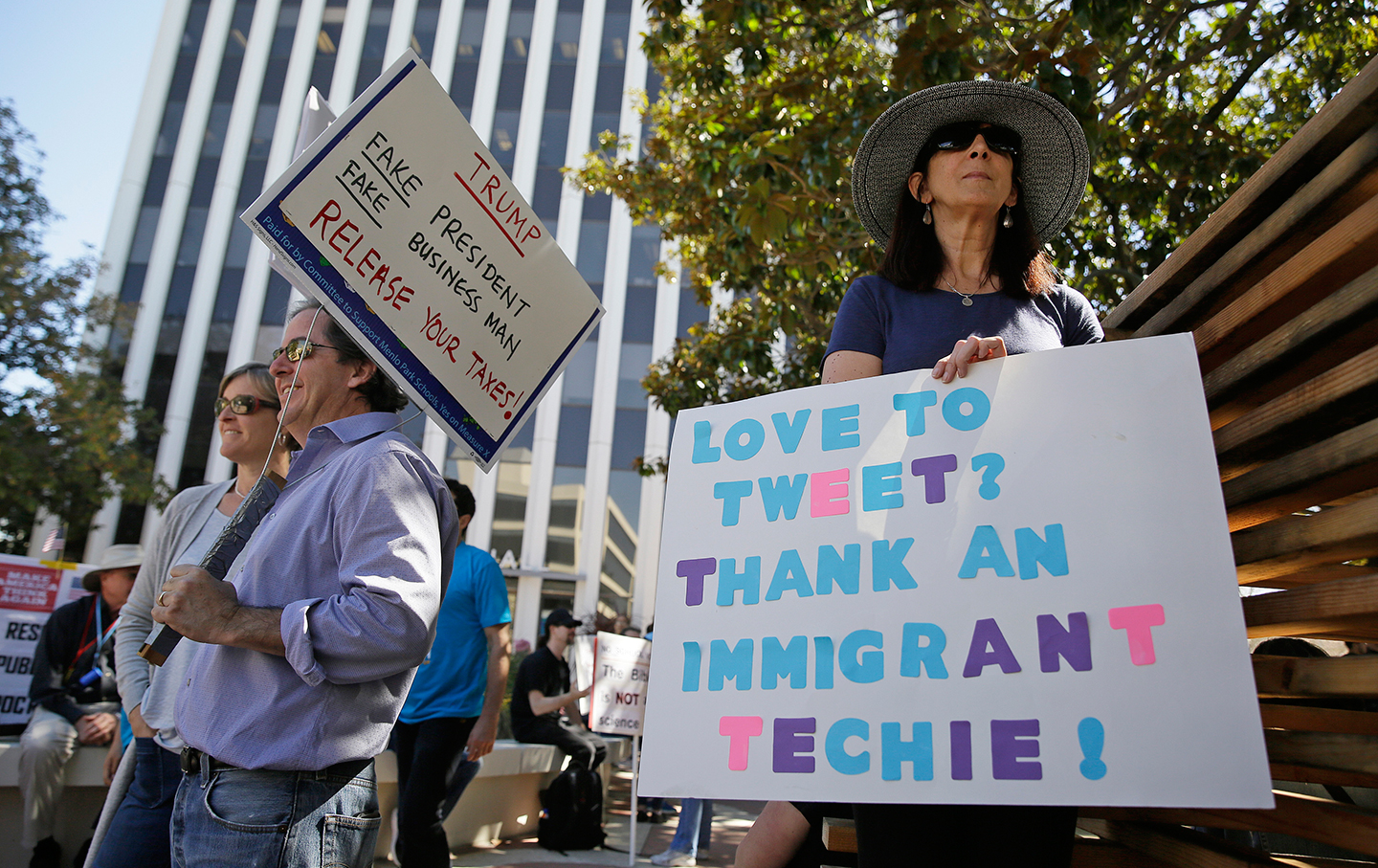
No one knows talent better than Donald Trump. That’s supposedly why the president has vowed to end exploitative temporary-visa labor systems and instead promote “merit-based” foreign-labor recruitment, so good jobs are reserved for skilled, deserving Americans, we’re told. He’s not just talking about building walls to keep out immigrants, but targeting engineers the United States imports to build our booming tech sectors, through the H-1B foreign-labor visa program.

Tuesday, May 31, 2016

What Silicon Valley's billionaires don't understand about the first amendment

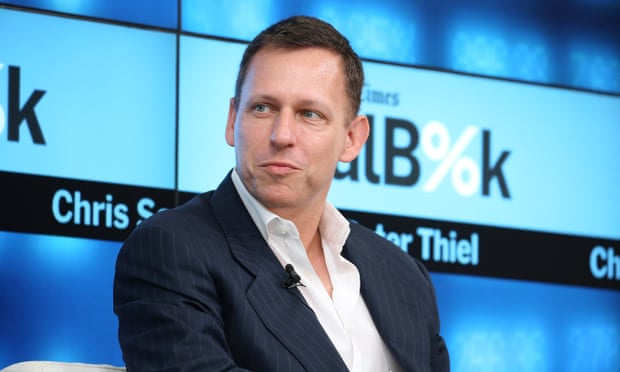
No major American cultural force is more opposed to examination and more active in suppressing it today than Silicon Valley. So when it was revealed this week that Facebook board member Peter Thiel had been secretly bankrolling a lawsuit to inflict financial ruin on the news and gossip site Gawker, Silicon Valley cheered.

The investor Vinod Khosla wrote on Twitter that the “press gets very uppity when challenged”. And that these bad journalists need “to be taught lessons”.

Wednesday, May 11, 2016

Will the Trans-Pacific Partnership Turn Silicon Valley Into Detroit?

The proponents of the Trans-Pacific Partnership (TPP) like to describe it as a free-trade deal for the 21st century. That might be a good sales pitch, but it’s not accurate. The TPP has little to with reducing trade barriers, which in most cases were already low. The TPP can more accurately be described as a piñata, that is chock full of special deals for the corporate interests who negotiated it. It will likely do more to impede trade than promote it, and in the process it creates rules that potentially override democratic decision-making at all levels of government.

Wednesday, February 17, 2016

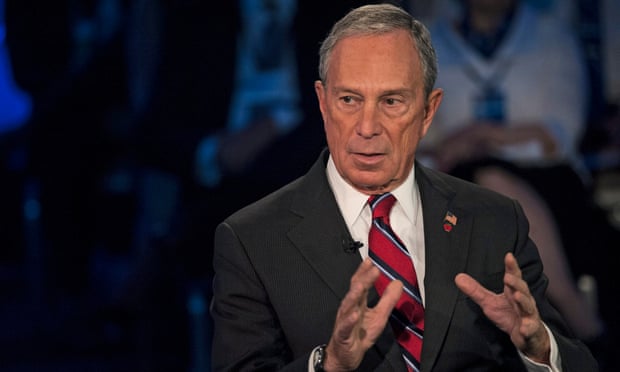
The 'good billionaire': Silicon Valley roots for Bloomberg for president

Michael Bloomberg may feel that his recent hints at a 2016 run for the White House have barely registered in a presidential year dominated by big characters and unexpected twists.

After the initial stir caused by news the former New York mayor was considering entering the 2016 race as a centrist, independent candidate, he has quickly receded to the shadows, barely discussed by either Democratic or Republican candidates.

Sunday, January 24, 2016

Revealed: White House seeks to enlist Silicon Valley to 'disrupt radicalization'

The White House will attempt to enlist Silicon Valley’s major technology firms in its efforts to combat terrorism on Friday when a delegation of the most senior intelligence officials fly to California to meet with executives from companies including Facebook, Twitter, Apple, Microsoft, YouTube and others.

A copy of the agenda obtained by the Guardian indicates the White House seeks more or less to channel Silicon Valley’s talent into its war against Islamic State and other extremist groups.

Saturday, September 05, 2015

US Professors Protest Indian Prime Minister Narendra Modi's Silicon Valley Visit

More than 100 academics from major US universities have issued a scathing critique of Indian Prime Minister Narendra Modi ahead of his visit to Silicon Valley and warned US technology executives against supporting his Digital India initiative.

A letter sent last week to leaders of Silicon Valley tech companies said Modi's initiative — which seeks to expand Internet access and develop online tools to improve government performance — lacks adequate privacy protections and could impinge on Indians' rights.

But the letter goes further by accusing Modi's conservative government of authoritarian practices, including harassing critics, clamping down on advocacy groups, meddling with academic institutions and denying foreign scholars entry into India for conferences.

Wednesday, July 29, 2015

Silicon Valley Emerges as a Political Force

When Jeb Bush visited Silicon Valley this week, the Republican candidate was visiting the heart of a Democratic state that few expect to be contested in the 2016 presidential election. But when it comes to the political money chase, the Northern California home of the world’s technology giants spreads the wealth to both parties—positioning the tech industry as one of the most powerful forces in American politics.

Since 2008, the Internet firms, software companies, computer manufacturers and data processors that comprise Silicon Valley have delivered more than $172 million worth of campaign contributions in federal elections, according to data compiled by the Center for Responsive Politics. That’s a nearly 40 percent increase over the prior 8 years. Counting only presidential election years, the increase is even more dramatic: The $109 million of Silicon Valley money pumped into the 2008 and 2012 elections represents a 61 percent increase from 2004 and 2000.

Meet the Engineer Who Forced Silicon Valley's Gender Problem Into the Open

BACK IN OCTOBER 2013, Tracy Chou, a top engineer for the social scrapbooking site Pinterest, was flying home to San Francisco with fellow attendees of the annual Grace Hopper Celebration, the nation's biggest conference for women in computing. "If this flight out of Minneapolis goes down," she tweeted, "Silicon Valley is going to be down a substantial % of female engineers."

She was only half joking. At the conference, Facebook COO Sheryl Sandberg had posited that the Valley's gender gap was actually getting worse, and the comment set Chou's geek gears whirling. "Not that I disagree with the premise," she says. "I just had this thought that nobody actually knows what the numbers are."

Thursday, February 19, 2015

How the Government Outsourced Intelligence to Silicon Valley

For years, the outsourcing of defense and intelligence work was, with good reason, controversial in political circles. But in the last years of Bill Clinton’s administration, the president authorized the CIA’s creation of the first US government–sponsored venture capital firm, In-Q-Tel, designed to invest in cutting-edge Silicon Valley companies. The firm, named after Ian Fleming’s fictional character “Q,” who masterminds James Bond’s spy gadgets, was founded on September 29, 1999, when the intelligence agencies came to realize they couldn’t produce the technology required to make sense of the vast amount of data they had acquired.

Monday, December 08, 2014

Hanging Out With the Tech Have-Nots at a Silicon Valley Shantytown

In the heart of Silicon Valley, a stone's throw from Apple's headquarters, is a 68-acre homeless camp that's widely believed to be the largest in the country. The Jungle, as it's known, is more accurately described as a shantytown: a collection of shacks, adobe dugouts, and treehouses inhabited by some 300 people, many of whom have lived here for years. In a land of million-dollar bungalows, it's a last place of refuge for many locals who've missed out on the booming tech economy.

Thursday, November 20, 2014

By Worshiping Silicon Valley, Do We Condone Inequality?

When the 2012 Singularity Summit took place in San Francisco, hundreds of people watched artificial intelligence visionary Ray Kurzweil speak in Nob Hill, one of the city's richest neighbourhoods. Afterwards, they descended a steep slope for drinks in the Tenderloin, one of its poorest. Among them was young B.C. writer (and former Tyee intern) Adam Pez, who found it hard to ignore the symbolism. Kurzweil had used upward-sloping graphs to argue techno-progress is inexorable. The steep slope separating downtrodden Tenderloin from wealthy Nob Hill had a similar shape.

Thursday, August 28, 2014

Actually, Minority Workers Are Everywhere In Silicon Valley -- They're Just Not Treated As Well

Despite what you may have heard, there are actually many black and Hispanic workers at tech companies. They're just not paid much, and they mostly don't get the same benefits as white and Asian employees.

Black and Hispanic workers make up 41 percent of private security guards, 72 percent of janitors and 76 percent of maintenance workers in Silicon Valley, according to a report released Tuesday by Working Partnerships USA, a labor-affiliated nonprofit that works on behalf of temporary employees.

Friday, May 30, 2014

Silicon Valley Firms Are Even Whiter and More Male Than You Thought

After stalling for years, Google finally released data on the diversity of its workforce Wednesday, admitting that the company is "miles from where want to be." Lazlo Bock, Google's senior vice president of people operations, noted that "being totally clear about the extent of the problem is a really important part of the solution," adding that the company is supporting code education among historically underrepresented groups.

Tuesday, June 25, 2013

Welcome to the (Don't Be) Evil Empire

Finally, journalists have started criticizing in earnest the leviathans of Silicon Valley, notably Google, now the world’s third-largest company in market value. The new round of discussion began even before the revelations that the tech giants were routinely sharing our data with the National Security Agency, or maybe merging with it. Simultaneously another set of journalists, apparently unaware that the weather has changed, is still sneering at San Francisco, my hometown, for not lying down and loving Silicon Valley’s looming presence.

Monday, June 24, 2013

The Surveillance-Marketing Complex, Coming Soon to a Computer Near You

Here's a quote that should probably scare you:

    "We are all in these Big Data business models."

Why scary? Because the "we" in this case is Silicon Valley and the American intelligence community. As James Risen and Nick Wingfield reported yesterday in the New York Times, the interests of tech companies and the NSA have been converging over the past decade in two ways. The first way is fairly prosaic: Lots of Silicon Valley companies are in the business of selling stuff to the NSA: storage hardware, sophisticated communications equipment, data analytics software, and more. But while this may have increased recently, it's not fundamentally new. It's just the latest high-tech twist on the good old military-industrial complex.

Tuesday, June 18, 2013

Big Brother and Silicon Valley

The word “HACK” is painted across the main square of Facebook’s campus in letters so large that they can be seen from space. The term has lost its negative connotation in Silicon Valley; freewheeling coding sessions and virtual breaking and entering have become the same thing. The culture of hacking is rebellious, idealistic, and militantly anti-bureaucratic—fitting for an age that glorifies entrepreneurship—and it marks a stark shift from the recent history of scientists in American life. During the heyday of the space program, rocket scientists and computer engineers worked closely with NASA officials. The bureaucrat and the geek were not polar opposites but complementary types who often seemed indistinguishable—straight arrows with an occasional streak of repressed weirdness. But, with the counterculture and the advent of the personal computer as a tool for individual liberation, John Glenn gave way to Steve Jobs, “Apollo 13” to “The Social Network.”

Friday, June 07, 2013

Silicon Valley's Awful Race and Gender Problem in 3 Mind-Blowing Charts

Catherine Bracy moved to San Francisco from Chicago during the 2012 campaign to run Team Obama's technology field office, a first-of-its-kind project that enlisted Silicon Valley's whiz-kid engineers to build software for the campaign. (That tech savvy, of course, played a pivotal role in Obama's victory.) What struck Bracy about the tech-crazed Bay Area, she recounted Thursday in a talk at the Personal Democracy Forum tech conference, was the jarring inequality visible everywhere in Silicon Valley—between rich and poor, between men and women, between white people and, well, everyone else.

Monday, May 27, 2013

A Reply From Silicon Valley

The same week as my piece in The New Yorker on the political culture of Silicon Valley came two big stories from the tech world: Tumblr, a blogging platform founded by a high-school dropout (now all of twenty-six) named David Karp, was bought by Yahoo for $1.1 billion; and a Senate report revealed that Apple has pushed tax avoidance to its most creative outer limits, incorporating three ghost subsidiaries in Dublin to hide billions of dollars—almost a third of Apple’s profits over the past three years—from the United States Treasury.

Together, these stories tell us that Silicon Valley continues to create hugely popular products that generate fantastic wealth at the top; and that there is no such thing as tech exceptionalism. The technology industry remains another special interest, as intent as the oil and pharmaceutical sectors on maximizing profits and minimizing its obligation to pay taxes. Why is this surprising? Because, as I wrote in the piece, millions of people seem to take technological innovation for a social and political revolution (“Think Different”), a confusion encouraged by many tech leaders. Even Senator John McCain, after chiding Apple’s C.E.O. Tim Cook for doing his best to cheat America out of its share of the company’s patents and intellectual property, gushed to Cook, “You managed to change the world”—thereby echoing a common Silicon Valley mantra, as well as the title of my piece. (By the way, other Senate Republicans, such as Rand Paul, actually praised Apple for starving the public sector of revenue—more evidence of the institutional collapse that’s at the heart of my new book “The Unwinding: An Inner History of the New America.”)