Democracy Gone Astray

Democracy, being a human construct, needs to be thought of as directionality rather than an object. As such, to understand it requires not so much a description of existing structures and/or other related phenomena but a declaration of intentionality.
This blog aims at creating labeled lists of published infringements of such intentionality, of points in time where democracy strays from its intended directionality. In addition to outright infringements, this blog also collects important contemporary information and/or discussions that impact our socio-political landscape.

All the posts here were published in the electronic media – main-stream as well as fringe, and maintain links to the original texts.

[NOTE: Due to changes I haven't caught on time in the blogging software, all of the 'Original Article' links were nullified between September 11, 2012 and December 11, 2012. My apologies.]

Showing posts with label Superinsect. Show all posts

Wednesday, August 08, 2012

Superinsects Are Thriving in This Summer's Drought

This summer, a severe drought and genetically modified crops are delivering a one-two punch to US crops.

Across the farm country, years of reliance on Monsanto's Roundup Ready corn and soy seeds—engineered for resistance to Monsanto's Roundup herbicide—have given rise to a veritable plague of Roundup-resistant weeds. Meanwhile, Monsanto's other blockbuster genetically modified trait—the toxic gene of the pesticidal bacteria Bt—is also beginning to lose effectiveness, imperiling crops even as they're already bedeviled by drought. Last year, I reported on Bt-resistant western rootworms munching on Bt-engineered corn in isolated counties in Minnesota, Iowa, and Illinois.
Thursday, December 08, 2011

Monsanto (Still) Denies Superinsect Problem, Despite Evidence

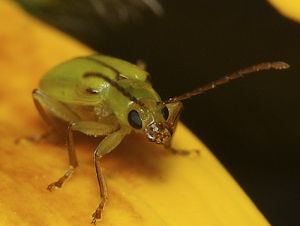
Back in August—as I reported here—something strange began to happen in isolated Iowa corn fields: Otherwise healthy corn plants were falling over, their roots devastated by a ravenous insect called the corn rootworm.

The weird part wasn't pest outbreaks in vast corn fields; farmers know that when you plant a huge amount of land with a single crop, you're also providing a friendly habitat for insects that like to eat that crop. The odd part was that the fields were planted with seed engineered by Monsanto precisely to kill the corn rootworm. Monsanto's product—known as Bt corn—had failed; rootworms were developing resistance to it.

At the time, the EPA—which is responsible for registering pesticide-containing crops like Monsanto's—maintained an icy silence on the matter. But last week, the agency released a report (PDF) that, in calm bureaucratese, rebuked Monsanto for its "inadequate" system for monitoring. It's one of those delectable reports written not by political appointees or higher-ups, but rather by staff scientists reporting what they see. The document offers a fascinating glimpse into the way the agency conducts business with Monsanto.