Democracy Gone Astray

Democracy, being a human construct, needs to be thought of as directionality rather than an object. As such, to understand it requires not so much a description of existing structures and/or other related phenomena but a declaration of intentionality.
This blog aims at creating labeled lists of published infringements of such intentionality, of points in time where democracy strays from its intended directionality. In addition to outright infringements, this blog also collects important contemporary information and/or discussions that impact our socio-political landscape.

All the posts here were published in the electronic media – main-stream as well as fringe, and maintain links to the original texts.

[NOTE: Due to changes I haven't caught on time in the blogging software, all of the 'Original Article' links were nullified between September 11, 2012 and December 11, 2012. My apologies.]

Showing posts with label TFSA. Show all posts

Thursday, May 28, 2015

93 Per Cent of Canadians Get Nothing from Doubling TFSA Limits

At a time when the Canadian economy is sputtering -- with virtually no growth, weak job creation, poor job quality, large trade deficits, record household debt, and low confidence levels -- governments need to be careful in their policy choices.

What will best drive jobs and growth, and provide the most help to the largest number of those who really need help the most? Growth and fairness must be prime objectives.

TFSAs: Who really benefits from new contribution limits?

The fight for the "middle class" is often a key part of every election campaign — and one that is fought on many fronts.

The contribution limit on tax-free savings accounts has already presented itself as one.

The federal government used last month's budget to make good on an election promise — it "doubled" the contribution limit on tax-free savings accounts.

Tuesday, April 28, 2015

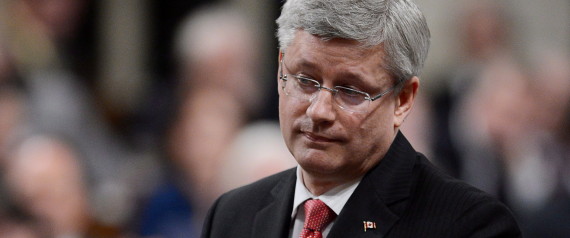
TFSAs, middle class focus of heated question period as Harper defends Oliver

Prime Minister Stephen Harper pledged to fight the Liberals on tax cuts during a fiery question period in which Tom Mulcair and Justin Trudeau attacked the Conservatives' newly tabled budget.

Mulcair, the NDP leader, and Trudeau, the Liberal leader, have condemned the government's plan to nearly double to $10,000 the limit for tax-free savings account contributions. They also say the government's income-splitting plan will mostly help the country's wealthiest families. Both parties seek middle-class voters in the lead-up to the 2015 election, and each argues it is the best choice to help the majority of Canadians get ahead.
Friday, April 10, 2015

Doubling TFSA Limit Mostly Helps The Wealthy, Threatens Government Finances: Critics

The Tories’ plan to double the contribution limit on tax-free savings accounts (TFSAs) hasn’t even been officially announced yet, but critics have already said it’s a giveaway to wealthier Canadians and a threat to the financial stability of the federal government.

According to reports at iPolitics and the Toronto Star, Finance Minister Joe Oliver on Tuesday circulated a letter to the Conservative caucus extolling the virtues of raising the TFSA limit to $11,000 from the current $5,500. The move was widely seen as a sign that the policy announcement is imminent.

Sunday, March 01, 2015

Doubling contributions to TFSAs is simply pampering the privileged

The Harper government gives five reasons why Canadians ought to be happy with its proposal to double the maximum contribution to the Tax-Free Savings Account. Examine each of its points more closely, however, and it’s clear that the TFSA carries far higher risks than rewards — for individual Canadians as well as for the economy as a whole.

Tuesday, February 24, 2015

Tories’ TFSA promise would mainly benefit the wealthy: report

A plan to double the amount people can put in a tax-free savings account is facing new criticism that – like income splitting – it would benefit mainly the most well-off Canadians.

Rhys Kesselman, a professor at Simon Fraser University who holds the Canada Research Chair in public finance, is releasing a report on Tuesday that says most people – except very high earners, some older workers and retirees – are already unable to contribute the maximum, currently $5,500.