
Showing posts with label Tax Cuts. Show all posts
Showing posts with label Tax Cuts. Show all posts
Saturday, September 07, 2024
Rep. Mike Johnson’s Largest Donor Was AIPAC. He’s Trying to Cut Free Tax Filing to Send Weapons to Israel
Friday, October 06, 2023
White House Rips Trump’s Tax Cut Push: ‘Welfare For Big Corporations’

Some Trump advisers, according to plans discussed in a Washington Post report on Monday, would like to further push the tax cuts for the wealthy and corporations Republicans passed during Trump’s first term in office, potentially lowering the corporate tax rate from 21% to 15%. Before the 2017 tax law’s passage, the rate stood at 35%, and President Joe Biden has proposed increasing it to 28%.
Wednesday, August 01, 2018
BC’s Massive Tax Giveaway to the Rich
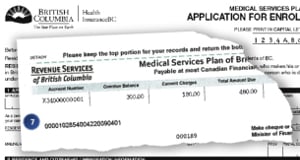
Significant tax cuts to personal income taxes between 2001 and 2008, combined with increases to regressive taxes like MSP premiums have reshaped our tax system to favour the top one per cent of households at the expense of middle- and modest-income British Columbians.
Thursday, January 21, 2016
Trudeau's nannies are trivial compared to scandal of corporate tax cuts

For Prime Minister Justin Trudeau that rough patch has come in the form of nannies on the federal payroll.
It is not a real scandal.
The federal government pays for all kinds of goods and services public officials might need.
Saturday, September 12, 2015
Jeb Bush Wants To Double Down On His Brother's Tax Cuts For The Rich

The current income tax rate on the wealthiest Americans is 39.6 percent, where it stood when Jeb's brother ran for president in 2000. At the time, George W. pushed to cut the top rate to 33 percent. Jeb would slash it to 28 percent -- almost one-third less than the current rate.
Thursday, August 27, 2015
Raising RRSP withdrawal limit no solution to unaffordable housing

But the Conservatives' plan to increase what first-time homebuyers can pull from their RRSPs for a down payment -- from a maximum of $25K to $35K -- would do nothing to help ease the unaffordability of housing. That's because an effective policy response either has to control prices (for example by means of a speculation tax), cool demand (by more tightly regulating speculative buyers), or increase the supply (by building more affordable housing). But a policy such as the one proposed, aimed at simply encouraging more demand, would only result in the bidding upof prices. That's how supply and demand works.
Saturday, June 27, 2015
After Cutting Taxes On The Rich, Kansas Will Raise Taxes On The Poor To Pay For It

More than half of the $384 million in new revenue expected from the tax hike will come from cigarette taxes and sales taxes, two policies described as “regressive” because they fall more heavily on lower-income taxpayers than on the wealthy. Even though everyone who shops will pay the new 6.5 percent sales tax rate – up from 6.15 percent in previous years, and the 8th-highest of any state according to the Tax Foundation – the move is regressive because poorer shoppers already have to stretch each dollar farther than their more flush counterparts.
Monday, April 27, 2015
House Votes To Repeal Tax On Richest 0.2 Percent Of Americans
Called the Death Tax Repeal Act of 2015, the bill would end the nearly 100-year-old federal estate tax. All but three Republicans voted in favor, while all but seven Democrats voted against. The legislation passed 239 to 179.
Monday, April 13, 2015
Tax-free savings accounts rob tax revenue from the future

But as personal tax advisors discuss the advantages of a proposed Conservative Party plan to increase or even double the amount Canadians are allowed to set aside, there's another consideration that has hardly been mentioned.
Tuesday, March 31, 2015
Who gets the biggest share of the benefits from Tory ‘family tax cut?’
 OTTAWA - Just over half of the money the federal government is set to spend on child care will go to parents of teenagers or families who do not pay to put their kids in daycare, says a new report by the parliamentary budget officer.
Jean-Denis Frechette's latest report comes days after the Conservatives introduced legislation to enact its so-called "family tax cut" — a multibillion-dollar suite of measures that includes the controversial income-splitting plan.
Monday, March 30, 2015
BMO: Provinces Will Take Back Three-Quarters Of Tories' Tax Cuts
The Harper government’s tax cuts and expanded family benefits will put some $4.5 billion in Canadians’ pockets this year, but provincial austerity budgets will eat up about three-quarters of that, BMO economist Robert Kavcic estimates.
Tuesday, February 24, 2015
Tories’ TFSA promise would mainly benefit the wealthy: report

Rhys Kesselman, a professor at Simon Fraser University who holds the Canada Research Chair in public finance, is releasing a report on Tuesday that says most people – except very high earners, some older workers and retirees – are already unable to contribute the maximum, currently $5,500.
Thursday, February 19, 2015
Crunched By His Big Tax Cuts, Scott Walker Will Skip $108 Million In Debt Payments

The governor has to close a $283 million shortfall by the end of June. To do so, he will delay making the $100 million payment that is due in May on short-term debt, which doesn’t require legislative approval. The terms of the debt allow the state to defer a payment in any given year without defaulting. The move will increase its debt-service bills by $545,000 in the next budget year starting July 1 and by $18.7 million in the following one.
Sunday, February 15, 2015
House Begins Passing Series of Deficit-Hiking Tax Cuts
The House voted 272 to 142 to make permanent a number of temporary provisions that are aimed at helping businesses earning up to $2 million. The main cut, which would add $77 billion to deficits over 10 years, allows businesses to immediately write off new equipment purchases up to $500,000. Temporary versions of the measure have been passed about a dozen times before, generally as economic stimulus measures.
Friday, January 23, 2015
To Make Up For His Massive Tax Cuts, Kansas Governor Proposes Cutting Schools

The defining characteristic of the governor’s various proposals for fixing the nearly billion-dollar deficit is that they will create larger problems down the road. The proposed budget would replace the state’s current financing formula for schools with block grants that districts could use as they see fit. But that flexibility masks a significant cut in classroom resources for a state that has already been accused by judges of falling hundreds of millions of dollars short of the bare-minimum level of education funding required by the Kansas Constitution.
Thursday, December 11, 2014
Harper's Family Tax Cut Credit Does Not Deliver True Income-Splitting
 Prime Minister Stephen Harper on the federal campaign trail in 2011 pledged to allow spouses and common-law partners with children to split their incomes on their tax returns once the budget deficit was eliminated.
This would mean that when one partner is in a higher marginal tax bracket, that person would be able to split some income with the other person. When the money moves to the other return it is taxed at a lower rate and they save tax dollars.
Tuesday, November 25, 2014
New Commercial Promoting Tory Tax Cuts Paid For By Taxpayers
The ad, set in suburbia, promotes four tax measures that have not yet been approved by Parliament and which are aimed at families with young children. The tax cuts are expected to cost $26.8 billion over six years and to benefit around four million families, according to the government's own figures.
Friday, November 14, 2014
Tax cuts for the affluent the real Harper government priority

For the Harper Conservatives, a fiscal surplus is the means to provide tax cuts for the affluent while posing as good fiscal managers.
To achieve a balanced budget, the federal government has imposed deep cuts to federal program spending. The impact of these cuts on services to Canadians is real, and will be felt even more in the future.
We were told that these cuts were necessary to balance the books. But the real priority is tax cuts for the affluent.
Thursday, November 06, 2014
Public pays for ads promoting Tory tax pitch

Radio ads have already hit the air promoting the recently announced income-splitting plan for families with children and changes to the Universal Child Care Benefit.
The radio spots end with a brief caveat: the tax changes are "subject to parliamentary approval."
The Conservative majority in the House of Commons passed a ways and means motion this week adopting the tax-cut plan, but legislative approval won't come until next year.
Wednesday, November 05, 2014
Is the Conservative tax plan principled or just vote-buying?

The first element of the package adds $60 per month to the Universal Child Care Benefit (UCCB) for each child aged 0 to 17, which takes the taxable UCCB to a total of $160 monthly for children aged 0 to five and $60 for those aged six to 17. The UCCB expansion was twinned with repeal of the non-refundable Child Tax Credit, which had an annual value of $338 per child—but only paid out to those who owed income taxes. The second major element is an update of the Child Care Expenses Deduction by $1,000—the first time the deduction’s value has moved since 1998. The final new element in the package is an attempt to meet the 2011 election campaign promise to allow income-splitting between parents of children. The Family Tax Cut announced on Thursday fell short of that 2011 promise by limiting the dollar value of the provision to $2,000. There was also a fourth element to Thursday’s tax package, but it was just a re-announcement of an expansion to the Children’s Fitness Tax Credit, which I analyzed a few weeks ago.
Subscribe to:
Posts (Atom)