Democracy Gone Astray

Democracy, being a human construct, needs to be thought of as directionality rather than an object. As such, to understand it requires not so much a description of existing structures and/or other related phenomena but a declaration of intentionality.
This blog aims at creating labeled lists of published infringements of such intentionality, of points in time where democracy strays from its intended directionality. In addition to outright infringements, this blog also collects important contemporary information and/or discussions that impact our socio-political landscape.

All the posts here were published in the electronic media – main-stream as well as fringe, and maintain links to the original texts.

[NOTE: Due to changes I haven't caught on time in the blogging software, all of the 'Original Article' links were nullified between September 11, 2012 and December 11, 2012. My apologies.]

Showing posts with label Tunis. Show all posts

Tuesday, December 30, 2014

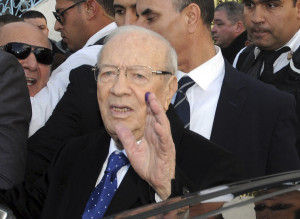
Clashes Rock Tunisia After Essebi Claims Victory In Presidential Election

TUNIS, Dec 22 (Reuters) - Veteran politician Beji Caid Essebsi has won Tunisia's first free presidential election, official results showed on Monday, the final step in a transition to democracy after an uprising that ousted autocrat Zine El-Abidine Ben Ali in 2011.

But rioting broke out in one southern city, with police firing teargas to disperse hundreds of youths who burned tires and blocked streets to demonstrate against the victory of an official from Ben Ali's old guard.

Essebsi beat rival and incumbent Moncef Marzouki with 55.68 percent of the vote against 44.32 percent, the results showed.

Monday, December 29, 2014

Tunisia Votes In Historic Presidential Runoff

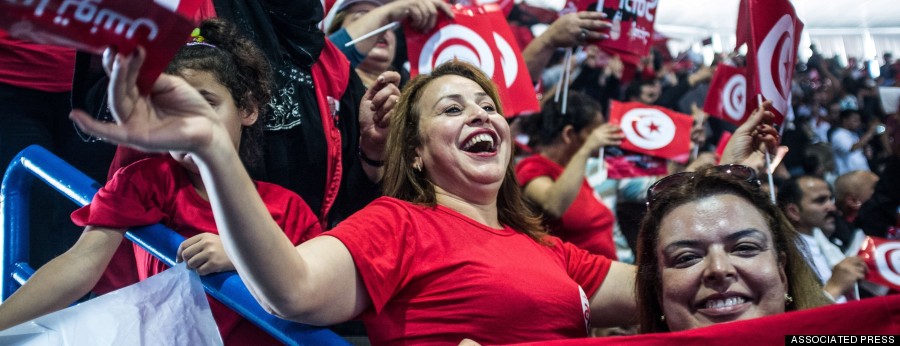
TUNIS, Dec 21 (Reuters) - Tunisians voted on Sunday in a presidential run-off election that completes the country's transition to full democracy nearly four years after an uprising which ousted autocrat Zine El-Abidine Ben Ali.

With a new progressive constitution and a full parliament elected in October, Tunisia is hailed as an example of democratic change for a region still struggling with the aftermath of the 2011 Arab Spring revolts.

Friday, October 31, 2014

Tunisia Is Where The Arab Spring Worked -- And Why

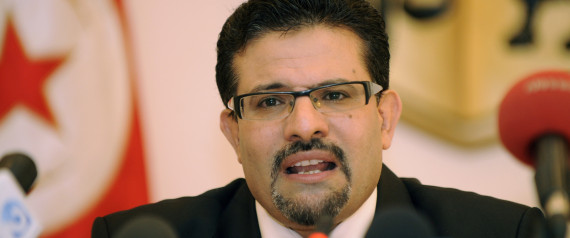
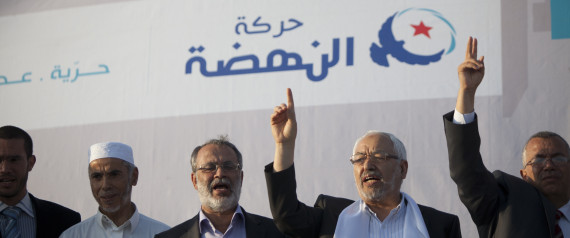
Florian Guckelsberger and Lars Mensel of The European sat down with Rafik Abdessalem -- the former foreign minister of Tunisia and a leading member of the Ennahda Party, the moderate Islamist party that came in second in the weekend's parliamentary elections. Presidential elections will be held Nov. 23.

The European: Mr. Secretary, do you feel that the term “Arab Spring” is still the right way to describe what took place in the MENA region during the last four years?
Abdessalem: I think it is the right term. This is a wave of political change in the whole region and what happened in Tunisia affected the whole region. Now we have a wave of counterrevolutions. And they again affect the entire region. But I think there is no escape from political change.

Thursday, October 30, 2014

Why Aren’t Europe and the U.S. Doing More to Support Tunisia’s Transition Into Democracy?

Fears that the historic vote on Sunday in Tunisia might be marred by violence committed by the country’s tiny lunatic fringe were not borne out.  The interim government of Prime Minister Mehdi Jomaa deployed 80,000 police and troops to protect polling stations.

Contrary to the breathless reporting one hears in the mass media, however, Tunisia hasn’t seen very much political violence since its revolution in 2011.  Of Tunisia’s 11 million people (it is a little more populous than Michigan), only about 5,000 are estimated to belong to the far right fundamentalist Salafi tendency, and those who commit political violence are vanishingly small.  The tiny Ansar al-Shariah terrorist organization has mounted a handful of attacks in the rural areas of the country, in remote and rugged regions.  In 2013 two horrific assassinations were committed by the same group, of far-left politicians from the small Popular Front.  The political fall-out from those killings was enormous, as I detailed in my recent book, The New Arabs:  How the Millennial Generation is Changing the Middle East.  But as for people being killed or seriously injured in political violence in all of the past 12 months, the number would be very small.

Thursday, February 27, 2014

How One Country Emerged From the Arab Spring With a Democratic State

Tunisians have shattered the dogma that citizens of the Arab world must either accept a secular authoritarian status quo or submit to Islamist authoritarian rule.

When Tunisians rose up in peaceful protest from December 2010 to January 2011 to oust former President Zine el-Abidine Ben Ali, they inspired Egyptians, Libyans and Syrians to take to the streets against their own autocratic leaders. None of the uprisings in any of those countries have ended in anything resembling democracy. Even in Egypt, the country whose path has most closely followed Tunisia’s, the secular/Islamist divide has led to bloodshed and trauma.

Friday, January 31, 2014

4 Ways Tunisia Is Now More Progressive Than The United States

After what had at times been a slow and frustrating process, the Tunisian National Assembly on Sunday evening voted to approve what is one of the most progressive constitutions in the region, with only 12 members of the 216-member legislative body voting against. Tunisian President Moncef Marzouki and outgoing Assembly chief Mustapha Ben Jaafar signed the document on Monday morning, bringing it into effect.

Tuesday, October 01, 2013

Tunisian Government To Step Down, Ruling Islamist Ennahda Party Agrees To Negotiate With Opposition

TUNIS, Tunisia — Tunisia's governing Islamist party has agreed to resign in favor of a caretaker government in an attempt to resolve a political crisis that has paralyzed the country, officials said Saturday.

The assassination of a left-wing politician at the end of July – the second in five months – was the turning point for the country's disgruntled opposition, which pulled its deputies out of parliament and staged a string of protests across the country.

Saturday, April 06, 2013

Water Justice for Tunisia: Regime change is not enough!

From March 26-30, an estimated 50,000 people flocked to Tunisia to participate in the first World Social Forum to take place in the Arab world. The theme was dignity -- a term that had become a battle cry during the revolutionary protests that took place throughout the region in 2010 and 2011.

Organizations working on water issues gathered a day earlier to hold discussions on the central role of water in the fight for human dignity. During the December 2010 protests in Tunisia that sparked the wave of revolutions in the Arab World, thousands had marched chanting, "Yes to bread and water! No to Ben Ali!" It was a clear message that the people would no longer tolerate a regime that denied them their basic rights.

Tuesday, March 26, 2013

Water Justice Day in Tunis

More than 80 people from around the world -- representing at least 25 different organizations -- gathered for a 'Water Justice Day' forum at the Université de Tunis in advance of the World Social Forum.

Presentations were heard from water movement activists from Turtle Island/ North America, India, Kenya, Senegal, South Africa, Asia, Chile, Europe, France, Greece, Italy, and Palestine.

To change the system we need to recover our ability to dream

The World Social Forum (WSF) 2013 beings today in Tunisia. Pablo Solon is an organizer with the Climate Space at the WSF, and will be helping convene a number of sessions in Tunisia around the themes addressed in this article.

There is no single answer, no single campaign nor single approach.

To reduce greenhouse gas emissions to a level that avoids catastrophe, we need to:

 -Leave more than two-thirds of the fossil fuel reserves under the soil;

Monday, April 09, 2012

Tunisia Ennahda Party Emails Hacked: Anonymous-Linked Group Says It Compromised Messages

TUNIS, April 8 (Reuters) - A group claiming affiliation with activist hacker collective Anonymous says it has hacked 2,725 emails belonging to Tunisia's ruling Ennahda party, including those of the prime minister, in the latest challenge to the Islamist-led government.

In a video posted on a Facebook page belonging to Anonymous TN, a hacker wearing the trademark activist "Guy Fawkes" mask, said the emails were released in protest against Ennahda's alleged failure to protect the unemployed and artists who were attacked by Salafi Islamists during a recent protest.

The activist said the emails include phone numbers, bank transactions and invoices paid during Tunisia's election campaign in October, in which Ennahda won more than 40 percent of parliament seats, going on to lead the government.

One of the emails was from Prime Minister Hamadi Jebali, a senior Ennahda official, to the Turkish embassy, attaching Foreign Minister Rafik Abdesslem's CV.

"To the Tunisian government, we have kept a large part of your data secret. If you do not wish to see these published on the internet we ask you to work to the best of your ability to avoid internet censorship and to respect human rights and the freedom of expression in Tunisia," the activist said.