Democracy Gone Astray

Democracy, being a human construct, needs to be thought of as directionality rather than an object. As such, to understand it requires not so much a description of existing structures and/or other related phenomena but a declaration of intentionality.
This blog aims at creating labeled lists of published infringements of such intentionality, of points in time where democracy strays from its intended directionality. In addition to outright infringements, this blog also collects important contemporary information and/or discussions that impact our socio-political landscape.

All the posts here were published in the electronic media – main-stream as well as fringe, and maintain links to the original texts.

[NOTE: Due to changes I haven't caught on time in the blogging software, all of the 'Original Article' links were nullified between September 11, 2012 and December 11, 2012. My apologies.]

Showing posts with label Arab Spring. Show all posts

Saturday, September 23, 2023

Remembering Mohamed Bouazizi: The man who sparked the Arab Spring

“17 December 2010 would have been a normal day if the local press and people hadn’t been here,” says Ali Bouazizi. “The fact they decided to stop being afraid of the government changed everything.”

It is 9pm and Ali, who is now 48 years old, has just returned home from work in his mini-market in Sidi Bouzid, a small town in the centre of Tunisia.

He used to see his cousin, Mohamed, almost daily, as the 26-year-old often helped out in Ali’s shop.

“I was very fond of him,” he says. “He was a good person. His only problem was that he would get angry quickly and couldn’t see reason anymore.”

'He ruined us': 10 years on, Tunisians curse man who sparked Arab spring

His act of despair still shakes the Arab world. Mohamed Bouazizi, the 26-year-old fruit seller whose self-immolation triggered revolutions across the Middle East, has a boulevard named after him in Tunisia’s capital, Tunis. In his home town of Sidi Bouzid, he is depicted in a giant portrait facing the local government headquarters.

But a decade since he set himself on fire in protest at state corruption and brutality, Bouazizi is out of fashion in Tunisia – along with the revolution his death inspired. His family have moved to Canada and cut most ties with Sidi Bouzid. “They were smeared,” says Bilal Gharby, 32, a family friend.

Friday, October 31, 2014

Tunisia Is Where The Arab Spring Worked -- And Why

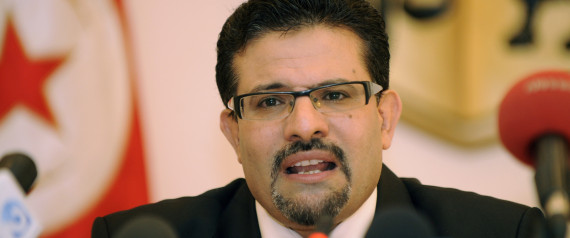
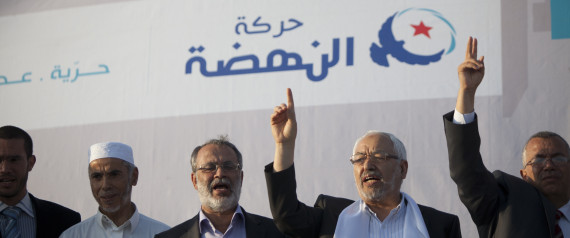
Florian Guckelsberger and Lars Mensel of The European sat down with Rafik Abdessalem -- the former foreign minister of Tunisia and a leading member of the Ennahda Party, the moderate Islamist party that came in second in the weekend's parliamentary elections. Presidential elections will be held Nov. 23.

The European: Mr. Secretary, do you feel that the term “Arab Spring” is still the right way to describe what took place in the MENA region during the last four years?
Abdessalem: I think it is the right term. This is a wave of political change in the whole region and what happened in Tunisia affected the whole region. Now we have a wave of counterrevolutions. And they again affect the entire region. But I think there is no escape from political change.

Thursday, February 27, 2014

How One Country Emerged From the Arab Spring With a Democratic State

Tunisians have shattered the dogma that citizens of the Arab world must either accept a secular authoritarian status quo or submit to Islamist authoritarian rule.

When Tunisians rose up in peaceful protest from December 2010 to January 2011 to oust former President Zine el-Abidine Ben Ali, they inspired Egyptians, Libyans and Syrians to take to the streets against their own autocratic leaders. None of the uprisings in any of those countries have ended in anything resembling democracy. Even in Egypt, the country whose path has most closely followed Tunisia’s, the secular/Islamist divide has led to bloodshed and trauma.

Friday, January 31, 2014

4 Ways Tunisia Is Now More Progressive Than The United States

After what had at times been a slow and frustrating process, the Tunisian National Assembly on Sunday evening voted to approve what is one of the most progressive constitutions in the region, with only 12 members of the 216-member legislative body voting against. Tunisian President Moncef Marzouki and outgoing Assembly chief Mustapha Ben Jaafar signed the document on Monday morning, bringing it into effect.

Tuesday, October 01, 2013

Tunisian Government To Step Down, Ruling Islamist Ennahda Party Agrees To Negotiate With Opposition

TUNIS, Tunisia — Tunisia's governing Islamist party has agreed to resign in favor of a caretaker government in an attempt to resolve a political crisis that has paralyzed the country, officials said Saturday.

The assassination of a left-wing politician at the end of July – the second in five months – was the turning point for the country's disgruntled opposition, which pulled its deputies out of parliament and staged a string of protests across the country.

Friday, May 10, 2013

Tahrir Square youth leader arrested in Cairo

A leader of one of the youth movements behind Egypt's 2011 uprising has been detained by security forces, officials have told reporters.

Ahmed Maher, co-founder of the pivotal April 6 movement, was held at Cairo airport "based on the orders of the general security department at the interior ministry", a security official told the AFP news agency.

Saturday, April 06, 2013

A gloriously crude topless 'jihad' from a Femen activist

She's topless. She's angry. And she is, literally, taking liberties. The activist in this picture took part in a protest in Paris in support of Amina Tyler, a young Tunisian woman who has been targeted by Islamists after she put a bare-breasted picture of herself on her Facebook page in March with the words "Fuck Your Morals" and "My Body Belongs To Me, And Is Not The Source Of Anyone's Honour" painted across her chest.

Both Tyler and this activist are members of Femen, the radical feminist group that originated in the Ukraine and specialises in topless politics. Hackers attacked Femen's Tunisian Facebook page replacing pictures with texts from the Qur'an, while a prominent cleric has suggested Tyler might be stoned.

Sunday, March 24, 2013

Morsi Issues Vague Warning After Violence Rocks Cairo

CAIRO — Egypt's president delivered a stern warning to his opponents on Sunday, saying he may be close to taking unspecified measures to "protect this nation" two days after supporters of his Muslim Brotherhood and opposition protesters fought street battles in the worst bout of political violence in three months.

Nearly 200 people were injured in Friday's violence, some seriously, outside the headquarters of the Brotherhood, Egypt's dominant political group.

Monday, February 25, 2013

Libya's Nightmarish Winter

The West's hypocrisy and oil greed are coming home to roost with a vengeance in Libya as the Arab Spring in that country turns into a nightmarish winter characterized by armed gangs, economic collapse, a decline in services by an incompetent government and increasing political domination by radical Islamists.

Whether or not the Libyan people think this is better than living under the autocratic and bizarre Muammar Gaddafi is obviously for them to decide. But the notion that getting rid of Gaddafi was somehow going to bring liberal democracy to this oil-rich country was never believed by the Western powers, including Canada, who brought about his downfall. We will never know if a civil war in that country without the West's intervention on one side would have seen Gaddafi ousted. It seems unlikely. Gaddafi would also still be alive without U.S. intelligence provided to the rebels on his attempted escape.

Monday, February 18, 2013

Mona Eltahawy, Egyptian-American Activist, On The Power Of Protest

Mona Eltahawy meets me in Harlem at one of her favorite bars, the place she goes to watch and enthusiastically live-tweet soccer matches. We sit outside and keep our jackets on. Hers is a bright coral pink, as is her hair. The Egyptian-American writer tells me it’s a deliberate choice. “My nieces love pink and they're both fierce girls, so I love the idea of co-opting pink from princesses to protests,” she says.

In the U.S., Eltahawy is currently one of the most prominent female voices speaking out on the contemporary Muslim world. She juggles many titles: Feminist. Award-winning writer. Media personality. And a new label she’s only recently felt comfortable adopting -- activist.

Tuesday, January 29, 2013

Crackdown or coup, what is Egypt's army up to?

Why would the chief of the Egyptian army wade into the latest political crisis, with calamitous warnings that the country is in danger of falling apart?

"The continuing conflict between political forces and their differences concerning the management of the country could lead to a collapse of the state, and threaten future generations," said Gen. Abdel-Fattah al-Sisi, who also acts as defence minister.

Friday, January 25, 2013

Egypt Protests: Violence Flares In Tahrir Square On Second Anniversary Of Uprising

CAIRO, Jan 25 (Reuters) - Youths fought Egyptian police in Cairo and Alexandria on Friday on the second anniversary of the revolt that toppled Hosni Mubarak and brought the election of an Islamist president who protesters accuse of riding roughshod over the new democracy.

The Jan. 25 anniversary showcased the divide between the Islamists and their secular foes that is hindering President Mohamed Mursi's efforts to revive an economy in crisis and reverse a plunge in Egypt's currency by enticing back investors and tourists.

Rethinking Egypt's revolution

It isn't immediately clear who is behind the highly produced, richly coloured ad on Egypt's state-owned television, but the message is.

"Be safe, Egypt," it concludes.

The phrase is borrowed from the Egyptian anthem, which plays softly in the background over a pensive montage of proud-looking Egyptians variously working, marching and waving flags — all of it a seemingly nostalgic echo of the revolution that erupted here in Tahrir Square two years ago today.

The network's version of a public service announcement seems an attempt to will into existence an Egypt that is very different from the current one — a country where Egyptians might celebrate, instead of protest, on the anniversary of the unplanned revolution that deposed the long-entrenched regime of Hosni Mubarak in a mere 18 days.

Sunday, January 06, 2013

The Revolution Added Two Years: On Cairo

In Cairo, there is a street named after the Arab League. It’s a grand boulevard that cuts through Mohandiseen, a neighborhood built in the 1950s to house engineers and other civil servants, whose ranks swelled during the 1960s with the guarantee of employment under the state socialism of President Gamal Abdel Nasser. These days, the boulevard is lined with luxury car showrooms, drab mid-rises and fast-food chains, all forming the commercial spine of an upscale area too expensive for most clerks and bureaucrats. Last December, on one of the quiet streets that radiates off the boulevard, I visited the office of an architect named Dina Shehayeb. A professor at the Housing and Building National Research Center in Cairo, Shehayeb also runs her own firm, which focuses on community-based development and the revitalization of historic areas. The deadly street battles of late November between the police and unarmed protesters on Mohamed Mahmoud Street near Tahrir Square had ended, and the attacks on protesters by military police outside the People’s Assembly near Tahrir were a week away. Cairo was relatively calm. But in her office, Shehayeb spoke heatedly of a city transformed during the reign of the recently deposed president, Hosni Mubarak.

Monday, December 10, 2012

Egypt Protests: After Mohammed Morsi Annuls Decree, Opposition Seeks To Maintain Momentum

CAIRO, Egypt -- Egypt's liberal opposition called for more protests Sunday, seeking to keep up the momentum of its street campaign after the president made a partial concession overnight but refused its main demand he rescind a draft constitution going to a referendum on Dec. 15.

President Mohammed Morsi met one of the opposition's demands, annulling his Nov. 22 decrees that gave him near unrestricted powers. But he insisted on going ahead with the referendum on a constitution hurriedly adopted by his Islamist allies during an all-night session late last month.

Thursday, December 06, 2012

Egypt Protests: Clashes Between Supporters, Opponents Of President Mohammed Morsi Kill 5 In Cairo

CAIRO — The Egyptian army sealed off the presidential palace with tanks and barbed wire Thursday, a day after fierce clashes between supporters and opponents of the Islamist leader over a disputed constitution killed at least six people.

Compounding President Mohammed Morsi's woes, another member of his 17-person advisory panel resigned in protest of his handling of the crisis, bringing the total to seven in the past two weeks. Rafik Habib, the only Coptic Christian adviser, was the latest to resign.

Tuesday, September 18, 2012

Democracy declined worldwide in 2011, Arab Spring nations at risk

WASHINGTON, Sept 17 (TrustLaw) - Democratic governance declined throughout the world in 2011, showing that gains made in the Middle East and North Africa during the Arab Spring are very fragile and in its chaotic aftermath leaders may slip back into authoritarian rule, a U.S. watchdog group said on Monday.

Only Tunisia has improved markedly its overall governance score amongst the Middle East-North African countries that were surveyed in the latest Countries at the Crossroads report published by Freedom House. Bahrain slipped backward and Egypt edged up only slightly.

Friday, September 14, 2012

The Occupy movement one year on: What is left?

In few days, on September 17, we will commemorate one year since the start of the Occupy Wall Street (OWS) movement -- a movement that many said was inspired by the Arab revolutions and the Indignés movement of Europe. Many activists, including me, thought that this movement would have a long breath and might even bring social change to America and to the world.

One year later, can we still believe so? What worked and what went wrong?

Sunday, July 29, 2012

Democracy is in the eye of the beholder

What do people mean when they talk about democracy? I’m not thinking of historians, politicians or philosophers; just people.

When I arrived in Tunis, where the Arab Spring began, which spread to Cairo and then was the model for Real Democracy Now in Madrid, which in turn inspired the Occupy movements everywhere, I was hustled by a driver into his taxi. I sat beside him. Neither of us had our seatbelts buckled.