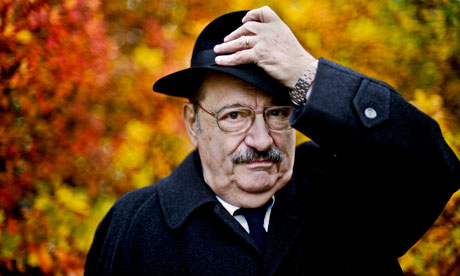
Outside Umberto Eco's office window in Milan looms the intimidating mass of Sforzesco castle, a reminder, with its towers and blackbirds, of various continental wars. Here once stood the 14th-century Castrum Portae Jovis – the Porta di Giove fortress – which was destroyed by the short-lived Aurea Republic of 1447. Between these walls, Leonardo Da Vinci and Donato Bramante once laboured; these very buttresses were conquered by Napoleon. And just beyond the moat – an area now invaded by tourists who have come to visit Michelangelo's La Pietà Rondanini – Marshall Radetzky's Austrian troops bombed the rioting city in 1848.
"When it comes to the debt crisis," says Eco, "and I'm speaking as someone who doesn't understand anything about the economy, we must remember that it is culture, not war, that cements our [European] identity. The French, the Italians, the Germans, the Spanish and the English have spent centuries killing each other. Today, we've been at peace for 70 years and no one realises how amazing that is any more. Indeed, the very idea of a war between Spain and France, or Italy and Germany, provokes hilarity. The United States needed a civil war to unite properly. I hope that culture and the [European] market will do the same for us."
"When it comes to the debt crisis," says Eco, "and I'm speaking as someone who doesn't understand anything about the economy, we must remember that it is culture, not war, that cements our [European] identity. The French, the Italians, the Germans, the Spanish and the English have spent centuries killing each other. Today, we've been at peace for 70 years and no one realises how amazing that is any more. Indeed, the very idea of a war between Spain and France, or Italy and Germany, provokes hilarity. The United States needed a civil war to unite properly. I hope that culture and the [European] market will do the same for us."