Democracy Gone Astray

Democracy, being a human construct, needs to be thought of as directionality rather than an object. As such, to understand it requires not so much a description of existing structures and/or other related phenomena but a declaration of intentionality.
This blog aims at creating labeled lists of published infringements of such intentionality, of points in time where democracy strays from its intended directionality. In addition to outright infringements, this blog also collects important contemporary information and/or discussions that impact our socio-political landscape.

All the posts here were published in the electronic media – main-stream as well as fringe, and maintain links to the original texts.

[NOTE: Due to changes I haven't caught on time in the blogging software, all of the 'Original Article' links were nullified between September 11, 2012 and December 11, 2012. My apologies.]

Showing posts with label Voter ID Laws. Show all posts

Tuesday, March 08, 2016

Are Big Power Companies Pulling a Fast One on Florida Voters?

The Florida Supreme Court is set to weigh in on a controversial ballot measure that environmentalists warn could erect a new obstacle for the state's struggling renewable-energy industry.

On Monday, the court is expected to begin hearing oral arguments over Amendment 1, a proposed ballot initiative that purports to strengthen the legal rights of homeowners who have rooftop solar panels. But critics in the solar industry and environmental groups claim that if the measure passes in November, it would actually deal a major blow to rooftop solar by undermining one of the key state policies supporting it.

Wednesday, February 24, 2016

Virginians Describe How The State Has Made It Harder For Them To Vote

RICHMOND, VIRGINIA — When Karen Stallings decided to move her blind, 84-year-old father from Arizona into her home in Virginia, she expected many new challenges in her life. She did not expect voting to be one of them.

And yet, a few months before election day rolled around, she realized her father’s drivers license was out-of-state and expired. And under Virginia’s strict voter ID law, every voter needs an acceptable, unexpired form of photo identification to cast a regular ballot. So in the middle of the day, in the middle of the week, Stallings drove her father to the DMV to register to vote and get a photo ID card.

Thursday, February 18, 2016

Students And Veterans Turned Away From The Polls Under Wisconsin’s New Voter ID Law

Wisconsin’s local primary election put the state’s new voter ID law to the test Tuesday, causing problems that left officials seriously concerned about how voters will be impacted this November.

The election decided several mayoral contests and helped conservative Justice Rebecca Bradley clear a key hurdle to maintaining her seat on the state’s powerful Supreme Court.

Thursday, April 30, 2015

Will the Courts Finally Block Texas’ Worst-in-the-Nation Voter-ID Law?

The 2014 election in Texas illuminated the burdens of voter-ID laws. Because of the law—the strictest in the country—many longtime voters were turned away from the polls and unable to vote.

The Texas voter ID law is once again before a court on Tuesday, when the US Court of Appeals for the Fifth Circuit will consider whether to uphold a lower-court decision striking down the law as an “unconstitutional poll tax.”

Wednesday, April 29, 2015

Four Years Later, Texas Is Still Defending Its Voter ID Law

WASHINGTON -- A federal appeals court will hear oral arguments on Tuesday in a case that could have national implications for states that require voters to present government-issued forms of photo identification at the polls.

The issue at hand -- Texas' contentious photo ID law -- is expected to ultimately make its way to the Supreme Court. But first a three-judge panel of the 5th Circuit Court of Appeals will hear the case. There, voting rights advocates will argue that a federal judge's ruling from October -- which called the law an unconstitutional "poll tax," intentionally discriminatory and an unconstitutional burden on the right to vote -- should be upheld. Critics of the law argued that hundreds of thousands of Texans lacked the correct form of identification, but the state's leadership has insisted that the law is meant to protect against voter fraud and is not an effort to make it more difficult for any demographic to vote.

Wednesday, November 05, 2014

Even Without Voter ID Laws, Minority Voters Face More Hurdles to Casting Ballots

Over the past decade, Republican legislators have pushed a number of measures critics say are blatant attempts to suppress minority voting, including voter ID requirements, shortened early voting periods, and limits on same-day voter registration. But minority voters are often disenfranchised in another, more subtle way: polling places without enough voting machines or poll workers.

Sunday, October 19, 2014

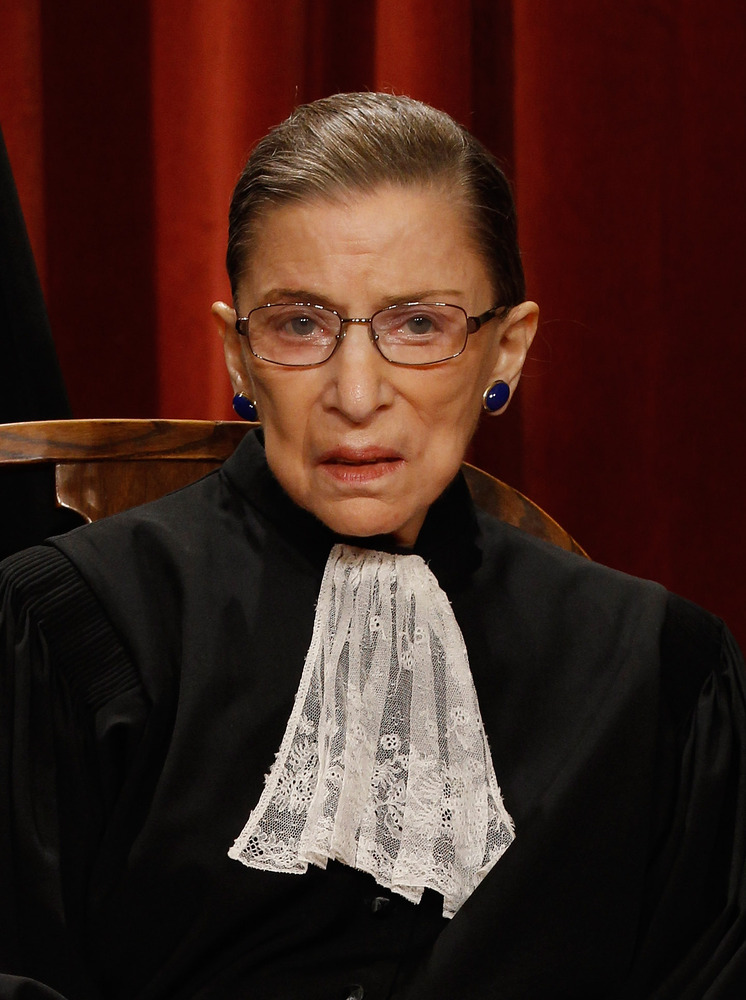
Ruth Bader Ginsburg Pens Scathing Dissent On Texas Voter ID Law

Supreme Court Justice Ruth Bader Ginsburg issued a six-page dissent early Saturday morning, blasting the court's decision to allow Texas to use its new voter ID law in the November elections. She was joined in the dissent by Justices Elena Kagan and Sonia Sotomayor.

"The greatest threat to public confidence in elections in this case is the prospect of enforcing a purposefully discriminatory law, one that likely imposes an unconstitutional poll tax and risks denying the right to vote to hundreds of thousands of eligible voters," Ginsburg wrote.

Ginsburg disputed the Fifth Circuit court of appeals' argument that it was too close to the November election to stop the law. Early voting begins on Monday in Texas.

Friday, October 10, 2014

Study: Voter ID Laws Cut Turnout By Blacks, Young

WASHINGTON (AP) — States that toughened their voter identification laws saw steeper drops in election turnout than those that did not, with disproportionate falloffs among black and younger voters, a nonpartisan congressional study released Wednesday concluded.

As of June, 33 states have enacted laws obligating voters to show a photo ID at the polls, the study said. Republicans who have pushed the legislation say the requirement will reduce fraud, but Democrats insist the laws are a GOP effort to reduce Democratic turnout on Election Day.

Wednesday, April 30, 2014

Striking Down Wisconsin Voter ID Law, Judge Finds ‘No Rational Person Could Be Worried’ About Voter Fraud

A federal judge invalidated Wisconsin’s photo ID requirement Tuesday, in at least the third court ruling to strike down the law.
The ruling is an overwhelming win for plaintiffs, who argued that the voter ID law suppresses ballot access in the state. And while the decision could be overturned on appeal before the U.S. Court of Appeals for the Seventh Circuit, the law has also already been blocked by two state court decisions, one of which is still in effect. In March, Gov. Scott Walker (R) threatened to go so far as calling a special session to pass a modified law so that some ID provision is in place during the November election.

Tuesday, November 26, 2013

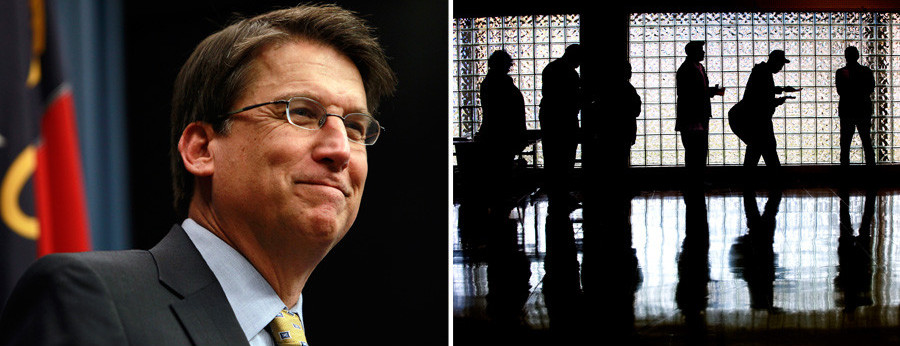
Pat McCrory: We Didn't 'Shorten Early Voting,' We 'Compacted The Calendar'

WASHINGTON -- On Aug. 13, North Carolina Gov. Pat McCrory (R) signed into law a voter ID bill that was widely denounced by civil rights advocates. Not only did it mandate government-issued photo IDs at the polls, but it reduced the state's early voting period from 17 to 10 days.

According to McCrory, however, he didn't actually shorten the voting.

Wednesday, November 06, 2013

Voter ID Laws in Action: "Looks Like I Don't Get to Vote Today"

When voters across America hit the polls yesterday, many eyes were on Texas, which has faced recent criticism that its new voter ID law could make it harder for women to vote. But plenty of other states have passed restrictive voter ID laws recently. Legislators claim the laws clamp down on voter fraud—there were only 13 credible cases of in-person voter impersonation between 2000 and 2010—by requiring voters to present various forms of identification. Poor, elderly, and minority voters, along with women, are hit particularly hard by these strict voting requirements, and voters of all stripes were feeling the effects as they tried to vote yesterday.

Tuesday, November 05, 2013

Texas' Restrictive Voter ID Law Stops A Former U.S. House Speaker From Getting A Voter ID Card

Former U.S. Speaker of the House Jim Wright (D-Texas) tried to get a voter identification card at a Texas Department of Public Safety office on Saturday.

But the only photo identification cards Wright has -- an expired Texas driver's license and a Texas Christian University faculty identification card -- do not satisfy the requirements of the state's restrictive vote identification law, passed in 2011. Wright is 90 years old.

“I earnestly hope these unduly stringent requirements on voters won’t dramatically reduce the number of people who vote,” Wright told the Star-Telegram on Saturday. “I think they will reduce the number to some extent.”

Saturday, August 17, 2013

Pennsylvania Voter ID Law Barred From Enforcement In November Election By Judge

HARRISBURG, Pa. — A state judge issued an order Friday that is expected to block enforcement of Pennsylvania's strict voter-identification law in the Nov. 5 general election.

Local poll workers can ask voters to show IDs if they have them and distribute written material about the law, but they may not tell voters at the polls that photo IDs could be required in future elections, Commonwealth Court Judge Bernard McGinley said.

"There is no value in inaccurate information, and the court does not deem inaccurate information `educational.' It is not a matter of confusion – it is a matter of accuracy," McGinley wrote.

Saturday, August 03, 2013

North Carolina Voter ID Law Could Lead To Increased Voter Intimidation, Harassment, Election Officials Fear

In the run-up to the 2012 presidential election, reports of harassment and intimidation at the polls were so rampant in North Carolina that the state's top election official was obliged to send a memo to his employees reminding them that they could call police if necessary.

Now, as North Carolina's governor prepares to sign one of the most restrictive election bills in the nation, civil-rights advocates and election officials in the state expect to see a rise in what they call voter intimidation.

Friday, July 19, 2013

North Carolina Republicans Push Harsh New Voter ID Law

As Congress held hearings this week on whether to resurrect the heart of the Voting Rights Act, the North Carolina Senate introduced a harsh new voter ID law that could be passed in a matter of days. (See my new piece on the state’s Moral Monday protest movement for how activists are resisting the GOP’s agenda.)

The Senate version of the bill, posted today, is significantly tougher than the House bill passed in April. North Carolina was one of fifteen states subject to Section 4 of the Voting Rights Act, which the Supreme Court recently ruled unconstitutional, so the state no longer needs to clear its voting changes with the federal government. North Carolina Republicans have acted accordingly, making a very bad law even worse.

Thursday, February 07, 2013

The Constitutional Roadblock to Efforts to Fix Federal Elections

Yesterday The New York Times ran a front-page feature on attempts by Democrats, both in the White House and on Capitol Hill, to pass reforms to fix the scandalously long lines faced by voters at the polls last November. It comes the same day that the Virginia House and Senate passed a bill to disallow the use of a utility bill, pay stub, bank statement, government check or Social Security card as acceptable identification to present at the polls—making it, of course, all the harder for traditionally Democratic constituencies in this crucial battleground state to have their voice heard at the ballot box.

Monday, February 04, 2013

Canada Voter ID Laws Challenged In BC Court Of Appeal

VANCOUVER - The contention that federal voting laws requiring all people to present identification at the ballot box could deny society's most vulnerable people from ticking their preferred candidate will be put to the test for a second time, Monday in British Columbia's highest court.

Two anti-poverty activists and a visually impaired woman who couldn't find the proper ID to vote in the last federal election are appealing a B.C. Supreme Court ruling that found the current law only presents a "minor inconvenience" for most.

Wednesday, December 12, 2012

Scott Tranter, Republican Consultant: Voter ID And Long Lines Help Our Side

Republican campaign consultant Scott Tranter appeared on a panel Monday hosted by the Pew Center on the States to discuss the long lines and voter ID controversies that plagued the 2012 election. In his comments, Tranter seemed to imply that he believed these issues were helpful to Republicans and should be pursued for that reason.

"A lot of us are campaign officials -- or campaign professionals -- and we want to do everything we can to help our side. Sometimes we think that's voter ID, sometimes we think that's longer lines -- whatever it may be," Tranter said with a laugh.

Tranter owns Vlytics, a company that was paid more than $3,000 by former presidential candidate Mitt Romney's campaign for "data consulting."

Original Article
Source: huffington post
Author: John Stephens

Thursday, December 06, 2012

Nevada Led the Country in Expanding the Vote. Now, It's Eyeing Voter ID

Nevada boasted the nation’s highest turnout increase on Election Day, thanks to its innovative efforts to make voting more accessible. But less than a month later, Secretary of State Ross Miller, a Democrat, is now suggesting the use of voter ID—which could reverse his own efforts to expand democracy and mean a lower turnout in subsequent elections.

Saturday, September 22, 2012

Voter ID Laws Take Aim At College-Student Voters

In Tennessee, a new law requiring voters to show photo identification at the polls explicitly excludes student IDs.

In Wisconsin, college students are newly disallowed from using university-provided housing lists or corroboration from other students to verify their residence.