Democracy Gone Astray

Democracy, being a human construct, needs to be thought of as directionality rather than an object. As such, to understand it requires not so much a description of existing structures and/or other related phenomena but a declaration of intentionality.
This blog aims at creating labeled lists of published infringements of such intentionality, of points in time where democracy strays from its intended directionality. In addition to outright infringements, this blog also collects important contemporary information and/or discussions that impact our socio-political landscape.

All the posts here were published in the electronic media – main-stream as well as fringe, and maintain links to the original texts.

[NOTE: Due to changes I haven't caught on time in the blogging software, all of the 'Original Article' links were nullified between September 11, 2012 and December 11, 2012. My apologies.]

Showing posts with label Warren Buffett. Show all posts

Friday, July 07, 2017

Warren Buffett: cutting jobs is standard capitalist formula

Warren Buffett has defended the Brazilian buyout house with which he attempted to take over Unilever, by saying 3G was only following a “standard capitalist” stance to doing business by slashing costs and cutting staff.

Buffett’s investment group Berkshire Hathaway and 3G, backed by the Brazilian billionaire Jorge Lemann, own 51% of Kraft Heinz, which made a £115bn approach to household groups company Unilever in February.

Tuesday, March 08, 2016

Buffett Says He Loves Renewables, So Why Is His Company Trying To Kill Solar Energy?

Warren Buffett’s recent annual letter to shareholders extols renewable energy. Yet he fails to mention that his company is working to crush solar energy in Nevada and around the western United States.

In Part One, I explored how Buffett, despite being one of the world’s most successful investors, mistakenly downplays the climate risk to his company, Berkshire Hathaway (BH). In particular, he fails to tell investors of the climate risk associated with his massive $1.1 billion investment in Canadian tar sands giant Suncor, a company that can only make a big profit by helping to destroy a livable climate.

Monday, February 29, 2016

Warren Buffett Is Wrong About Climate Change

Warren Buffett doesn't want you to know how his empire is preparing to deal with the disastrous effects of climate change. In fact, he said in a letter released Saturday, he isn't exactly sure this whole "climate change" thing is real, anyway.
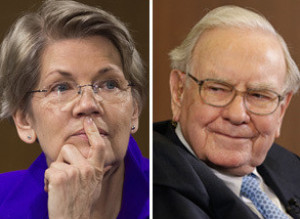
In his annual letter to investors in his conglomerate Berkshire Hathaway, the billionaire investor fought back against a proposed shareholder resolution demanding his insurance subsidiaries measure and disclose the risks that climate change poses to their business and how the company is responding to the threat. Buffett compared fears over climate change to the brouhaha around apocalyptic Y2K predictions.

Saturday, September 12, 2015

Warren Buffett: Poverty In The U.S. 'Makes No Sense'

Warren Buffett doesn't think any Americans should be poor anymore.

In an economy that produces over $54,000 in gross domestic product per capita, the billionaire says, regulators must rein in the fast-widening gap between the poor and the super-rich.

"You expect unequal results in a market economy, very unequal," the Berkshire Hathaway founder said in a video published Tuesday by Reuters TV. "But you really shouldn't have an economy with over $50,000 in GDP per person and have lots of people living in poverty who are willing to work. I mean, that makes no sense."

Tuesday, March 03, 2015

Warren Buffett On Elizabeth Warren: 'She Would Do Better If She Were Less Angry'

Warren Buffett thinks Elizabeth Warren should dial down the anger.
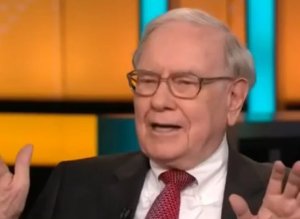
“She would do better if she was less angry and demonized less,” said the Berkshire Hathaway chairman and CEO on Monday when CNBC anchor Joe Kernen asked for his thoughts on the Democratic senator from Massachusetts.

Friday, October 03, 2014

Warren Buffett Defends Burger King's Plan To Flee To Canada

Warren Buffett defended Burger King's plan to expatriate to Canada in an appearance on CNBC's Squawk Box Thursday morning, saying that the deal isn't a move to skirt taxes.

"I would tell you that overwhelmingly most inversion deals have had a huge tax motivation in doing them. I can tell you this one didn't," the billionaire Berkshire Hathaway CEO responded when host Andrew Ross Sorkin asked if the deal was unpatriotic.

Friday, August 16, 2013

Warren Buffett Buys Stake In Calgary's Suncor

Warren Buffett has bought into the Alberta oilsands with a stake in Suncor Energy Inc., according to a Securities Exchange Commission filing released today.

Buffett’s Berkshire Hathaway Holdings owned 17.8 million Suncor shares on June 30, a stake valued at more than $500 million in the Calgary-based heavy-oil producer.

Wednesday, August 17, 2011

Stop Coddling the Super-Rich

OUR leaders have asked for “shared sacrifice.” But when they did the asking, they spared me. I checked with my mega-rich friends to learn what pain they were expecting. They, too, were left untouched.

While the poor and middle class fight for us in Afghanistan, and while most Americans struggle to make ends meet, we mega-rich continue to get our extraordinary tax breaks. Some of us are investment managers who earn billions from our daily labors but are allowed to classify our income as “carried interest,” thereby getting a bargain 15 percent tax rate. Others own stock index futures for 10 minutes and have 60 percent of their gain taxed at 15 percent, as if they’d been long-term investors.

These and other blessings are showered upon us by legislators in Washington who feel compelled to protect us, much as if we were spotted owls or some other endangered species. It’s nice to have friends in high places.

Tuesday, August 16, 2011

Should Billionaires Pay Lower Taxes Than You Do?

Billionaire investor Warren Buffett wants to pay more money in taxes. He also thinks that other rich investors like him aren't paying their fair share. In order to level the playing field, he wants to see the tax code reformed so that investments don't receive such favorable tax treatment. Let's look at the logic behind taxing investors so little, and whether there are some sensible reforms to make here.

Buffett's Argument

First, what exactly is Warren Buffett complaining about in his New York Times op-ed this morning? He bemoans the fact that he only paid a 17.4% tax rate last year, which would effectively put him in the bracket for making an income of between $8,500 and $34,500. Of course, he didn't. The numbers he provided imply that he made close to $40 million. That's not a bad year. So what's going on here? He explains:
Some of us are investment managers who earn billions from our daily labors but are allowed to classify our income as "carried interest," thereby getting a bargain 15 percent tax rate. Others own stock index futures for 10 minutes and have 60 percent of their gain taxed at 15 percent, as if they'd been long-term investors.
Buffett seems confused about why it is that investors aren't taxed at a higher rate. Why isn't their dividend and capital gains income taxed like the income of any other worker? So let's help him to understand why such income is taxed at a lower rate. There are two main reasons.

Monday, August 15, 2011

Stop coddling the super-rich: Buffett

Billionaire Warren Buffett urged lawmakers to raise taxes on the country’s super-rich to help cut the budget deficit, saying such a move will not hurt investments.

“My friends and I have been coddled long enough by a billionaire-friendly Congress. It’s time for our government to get serious about shared sacrifice,” The 80-year-old “Oracle of Omaha” wrote in an opinion article in The New York Times.

Buffett, one of the world’s richest men and chairman of conglomerate Berkshire Hathaway Inc , said his federal tax bill last year was US$6,938,744.

“That sounds like a lot of money. But what I paid was only 17.4% of my taxable income – and that’s actually a lower percentage than was paid by any of the other 20 people in our office. Their tax burdens ranged from 33% to 41% and averaged 36%,” he said.