Democracy Gone Astray

Democracy, being a human construct, needs to be thought of as directionality rather than an object. As such, to understand it requires not so much a description of existing structures and/or other related phenomena but a declaration of intentionality.
This blog aims at creating labeled lists of published infringements of such intentionality, of points in time where democracy strays from its intended directionality. In addition to outright infringements, this blog also collects important contemporary information and/or discussions that impact our socio-political landscape.

All the posts here were published in the electronic media – main-stream as well as fringe, and maintain links to the original texts.

[NOTE: Due to changes I haven't caught on time in the blogging software, all of the 'Original Article' links were nullified between September 11, 2012 and December 11, 2012. My apologies.]

Monday, October 03, 2011

Troy Davis Funeral: More Than 1,000 People Attend Service

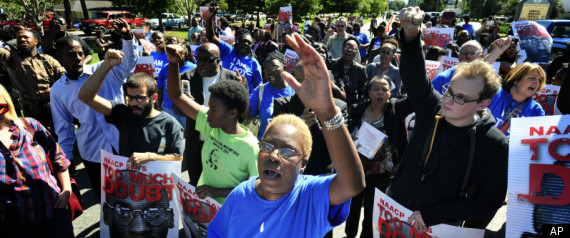
SAVANNAH, Ga. — Sent to death row 20 years ago as a convicted cop killer, Troy Davis was celebrated as "martyr and foot soldier" Saturday by more than 1,000 people who packed the pews at his funeral and pledged to keep fighting the death penalty.

Family, activists and supporters who spent years trying to persuade judges and Georgia prison officials that Davis was innocent were unable to prevent his execution Sept. 21. But the crowd that filled Savannah's Jonesville Baptist Church on Saturday seemed less interested in pausing in remorse than showing a resolve to capitalize on the worldwide attention Davis' case brought to capital punishment in the U.S.

Benjamin Todd Jealous, national president of the NAACP, brought the crowd to its feet in a chant of "I am Troy Davis" – the slogan supporters used to paint Davis as an everyman forced to face the executioner by a faulty justice system. Jealous noted that Davis professed his innocence even in his final words.

40 Detained During Moscow Gay Pride Rally

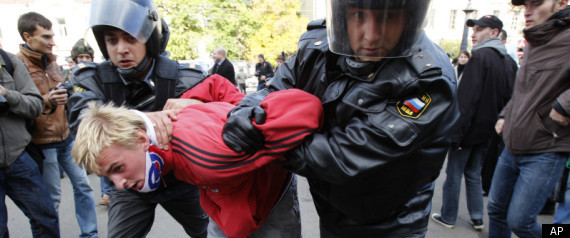
MOSCOW -- Russian police say they have detained dozens of anti-gay protesters and gay rights activists during a gay pride rally in central Moscow.

Saturday's protest was one of the few gay rights events sanctioned by authorities. In recent years, several attempts to hold gay pride marches in Moscow and other Russian cities have been blocked by police, Russian Orthodox Church activists and soccer fans.

Moscow police spokesman Anatoly Lastovetsky said 40 people were detained Saturday.

He told The Associated Press that police were "finding out whether (the detained) were part of the rally or the people who tried to thwart it."

During the rally, several men were seen trying to pelt the protesters with tomatoes and unfurling posters with pejorative remarks about homosexuality.

Origin
Source: Huffington 

Canadian version of Wall Street occupation planned

Organizers in Toronto and several other Canadian cities say they plan to follow the example of anti-Wall Street activists in the United States by taking to the streets later this month to protest the global financial system.

The New York activists say they are protesting to bring attention to corporate greed and government-backed bailouts of American banks. Similar demonstrations have already spread to Albuquerque, N.M., Boston and Los Angeles.

In Toronto, activists say they plan to converge in the city’s financial district on Saturday Oct. 15. A tentative schedule on a website called Occupy Toronto says the occupation will begin at 10 a.m. ET that day. The group plans to use the weekend to organize itself and says it will wait to march on the streets until the Toronto Stock Exchange opens on Monday.

Canadian protests are also planned for Calgary, Vancouver, Victoria, Ottawa, Montreal, Nova Scotia and Newfoundland, according to a website called Occupy Together.

The Toronto organizers are using the same rallying cry as those in New York, saying they are part of 99 per cent of people who are struggling while the wealthiest 1 per cent of the world’s population prospers.

The Toronto group held its first organizing meeting on Sept. 29. By Sunday afternoon, 800 people said they planned to attend the Occupy Toronto event, according to its Facebook page.

In Vancouver, organizers say they plan to occupy an area outside the Vancouver Art Gallery. Those attending have been asked to bring tents with them and the group’s Facebook page says protesters will stay “as long as it takes.”

The Occupy Together website suggests similar events are being planned in Mexico, Australia, Tokyo, about a dozen European countries and more than 40 U.S. states.

On Saturday night, more than 700 people were arrested on the Brooklyn Bridge in connection with the anti-Wall Street protest, after a march closed down a lane of traffic for several hours.

Origin
Source: Globe&Mail 
Phony Fear Factor

The good news: After spending a year and a half talking about deficits, deficits, deficits when we should have been talking about jobs, job, jobs we’re finally back to discussing the right issue.

The bad news: Republicans, aided and abetted by many conservative policy intellectuals, are fixated on a view about what’s blocking job creation that fits their prejudices and serves the interests of their wealthy backers, but bears no relationship to reality.

Listen to just about any speech by a Republican presidential hopeful, and you’ll hear assertions that the Obama administration is responsible for weak job growth. How so? The answer, repeated again and again, is that businesses are afraid to expand and create jobs because they fear costly regulations and higher taxes. Nor are politicians the only people saying this. Conservative economists repeat the claim in op-ed articles, and Federal Reserve officials repeat it to justify their opposition to even modest efforts to aid the economy.

The first thing you need to know, then, is that there’s no evidence supporting this claim and a lot of evidence showing that it’s false.

Settlement construction still major obstacle to peace

The issue of construction in the settlements continues to be a major obstacle in the peace process.


In the midst of the American and Israeli diplomatic campaign to attain a majority in the UN Security Council against the unilateral Palestinian application for statehood, the Regional Planning and Building Council in Jerusalem approved construction of 1,100 apartments on the southern slopes of the East Jerusalem neighborhood of Gilo, which is over the Green Line.

The unilateral decision was made while the Quartet was waiting for the parties' response to its new initiative on negotiations, which is intended to save the two-state solution and prevent another outbreak of violence.

The issue of construction in the settlements continues to be a major obstacle in the peace process. Palestinian Authority President Mahmoud Abbas has announced that a hiatus on such construction is a condition to renewing negotiations. As far as the Palestinians are concerned, the issue of sovereignty in East Jerusalem is to be clarified in permanent-status talks. The international community, including the United States, does not recognize the application of Israeli law and administration to East Jerusalem. U.S. Secretary of State Hillary Clinton and European Union foreign policy chief Catherine Ashton joined the Palestinian protest against the decision to expand Gilo. The Quartet warned that Israel's move endangers its efforts to achieve peace.

Prime Minister Benjamin Netanyahu rejected the criticism, saying that Gilo is not a settlement, but rather a Jerusalem neighborhood five minutes from the center of the capital. He noted that all Israeli governments built in such neighborhoods. Indeed, successive Israeli governments built thousands of apartments in Jewish neighborhoods in East Jerusalem, and also poured billions of shekels into the establishment of settlements in the Gaza Strip and the West Bank.

This shortsighted policy is one of the obstacles to the establishment of two states based on the 1967 borders.

A series of international agreements to which Israel is a signatory obliges the government to avoid unilateral steps on matters to be decided in final-status talks. The government must remember that this obligation also applies to East Jerusalem. Breaching it harms our credibility, undermines the prime minister's call for a renewal of talks and may prove disastrous in the long term.

Origin
Source: Ha'aretz 

The Bankers and the Revolutionaries

AFTER flying around the world this year to cover street protests from Cairo to Morocco, reporting on the latest “uprising” was easier: I took the subway.       

The “Occupy Wall Street” movement has taken over a park in Manhattan’s financial district and turned it into a revolutionary camp. Hundreds of young people chant slogans against “banksters” or corporate tycoons. Occasionally, a few even pull off their clothes, which always draws news cameras.
       
“Occupy Wall Street” was initially treated as a joke, but after a couple of weeks it’s gaining traction. The crowds are still tiny by protest standards — mostly in the hundreds, swelling during periodic marches — but similar occupations are bubbling up in Chicago, San Francisco, Los Angeles and Washington. David Paterson, the former New York governor, dropped by, and labor unions are lending increasing support.

I tweeted that the protest reminded me a bit of Tahrir Square in Cairo, and that raised eyebrows. True, no bullets are whizzing around, and the movement won’t unseat any dictators. But there is the same cohort of alienated young people, and the same savvy use of Twitter and other social media to recruit more participants. Most of all, there’s a similar tide of youthful frustration with a political and economic system that protesters regard as broken, corrupt, unresponsive and unaccountable.

Sunday, October 02, 2011

New Republic: How Did Trickle-Down Get Acceptable?

Sometime while I wasn't paying attention trickle-down economics got respectable.

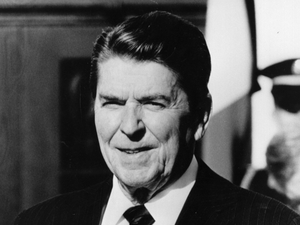
In 1981, when President Ronald Reagan lowered marginal tax rates, his main purpose was to drop the top rate from 70 percent to 50 percent (and subsequently all the way down to 28 percent; the top rate is currently 35 percent). But it was important not to admit as much, because that would be "trickle-down economics." That was the derisive term Democrats attached to Reaganomics. In 1981 the Atlantic published a profile of the White House budget director, David Stockman, in which Stockman said all kinds of impolitic things. About the most impolitic was his admission that the Reagan tax cuts had been "a Trojan horse to bring down the top tax rate." The article's author, William Greider, could barely contain his delight:

"A Trojan horse? This seemed a cynical concession [italics mine] for Stockman to make in private conversation while the Reagan Administration was still selling the supply-side doctrine to Congress. Yet he was conceding what the liberal Keynesian critics had argued from the outset—the supply-side theory was not a new economic theory at all but only new language and argument to conceal a hoary old Republican doctrine [italics mine]: give the tax cuts to the top brackets, the wealthiest individuals and largest enterprises, and let the good effects 'trickle down' through the economy to reach everyone else. Yes, Stockman conceded, when one stripped away the new rhetoric emphasizing across-the-board cuts, the supply-side theory was really new clothes for the unpopular doctrine of the old Republican orthodoxy [italics mine]. 'It's kind of hard to sell [italics mine] "trickle down,"' he explained, 'so the supply-side formula was the only way to get a tax policy that was really "trickle down." Supply-side is "trickle-down" theory.'"

Manitoba Election: Third-World Living Conditions For First Nations Should Be Election Issue Says Grand Chief David Harper

WINNIPEG - One of Manitoba's aboriginal leaders says the lack of clean, running water and the third-world living conditions of Manitoba's First Nations should be a central issue in the provincial election.

Grand Chief David Harper, who represents the province's northern First Nations, said many communities in the northeast have been neglected for years.

"Here we are sitting in northeastern Manitoba and it's in a third world state," he said in a recent interview. "There is a lack of running water, no running water. This coming winter, some kids and elders in that area, will not have any clean drinking water. Yet every flu season, it seems to happen that people are dying."

But as the province prepares to go to the polls Tuesday, very little has been done to woo First Nation voters. Very few political leaders have ventured into predominantly First Nation northern ridings and none have focused heavily on aboriginal policies.

Tories Planning To Bring Back Controversial Anti-Terrorism Measures Without Safeguards

The Conservative government is thinking of permanently bringing back tough anti-terrorism measures that civil libertarians decry, despite the fact Canadian authorities never successfully used the legal tools when they had them, The Huffington Post Canada has learned.

The Tories announced in their campaign platform that they planned to bring back legislation giving law enforcement officials the power to arrest someone without a warrant and force individuals to testify before a judge. Prime Minister Stephen Harper told the CBC earlier this month that, despite being rarely applied, there were times when preventative arrests and investigative hearings were needed to combat terrorism.

The use of preventative arrests, however, has never been reported.

Investigative hearings were almost used once, when authorities tried to compel an unco-operative witness to testify in the Air India case. The evidence was never used and Parliament was never told an investigative hearing took place.

Mandatory reporting was part of the checks and balances the majority Liberals included in the Anti-terrorism Act, which set out the controversial provisions in the wake of 9/11. The measures expired five years later after Parliamentarians reviewed them and the NDP and Liberals voted against reinstating them.

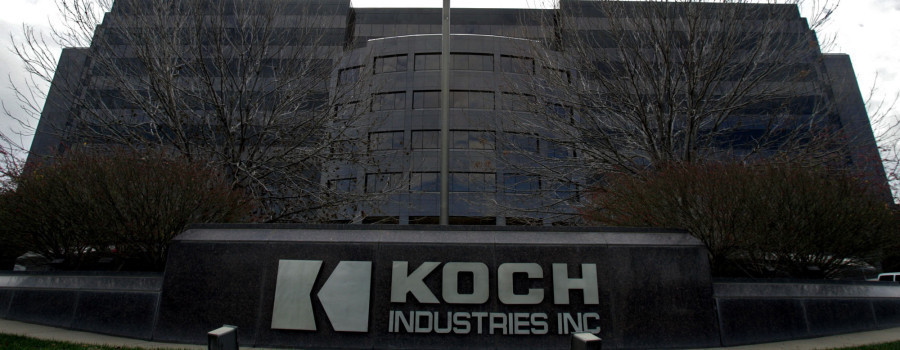
Koch Brothers Flout Law Getting Richer With Secret Iran Sales

In May 2008, a unit of Koch Industries Inc., one of the world’s largest privately held companies, sent Ludmila Egorova-Farines, its newly hired compliance officer and ethics manager, to investigate the management of a subsidiary in Arles in southern France. In less than a week, she discovered that the company had paid bribes to win contracts.

“I uncovered the practices within a few days,” Egorova- Farines says. “They were not hidden at all.”

She immediately notified her supervisors in the U.S. A week later, Wichita, Kansas-based Koch Industries dispatched an investigative team to look into her findings, Bloomberg Markets magazine reports in its November issue.

By September of that year, the researchers had found evidence of improper payments to secure contracts in six countries dating back to 2002, authorized by the business director of the company’s Koch-Glitsch affiliate in France.