Democracy Gone Astray

Democracy, being a human construct, needs to be thought of as directionality rather than an object. As such, to understand it requires not so much a description of existing structures and/or other related phenomena but a declaration of intentionality.
This blog aims at creating labeled lists of published infringements of such intentionality, of points in time where democracy strays from its intended directionality. In addition to outright infringements, this blog also collects important contemporary information and/or discussions that impact our socio-political landscape.

All the posts here were published in the electronic media – main-stream as well as fringe, and maintain links to the original texts.

[NOTE: Due to changes I haven't caught on time in the blogging software, all of the 'Original Article' links were nullified between September 11, 2012 and December 11, 2012. My apologies.]

Thursday, December 19, 2013

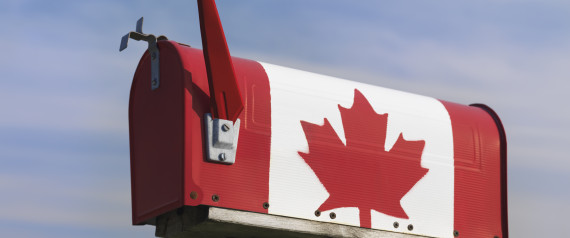
Canada Post CEO Deepak Chopra says there’s ‘no time to waste’ in cutting door-to-door delivery

OTTAWA ―­Canada Post president and CEO Deepak Chopra told the House of Commons transport committee Wednesday that his Crown corporation needs to start implementing its controversial plan immediately or risk losing millions of dollars a day.

“We have no time to waste, and we must act now and act with a sense of urgency,” he told the committee in his first public appearance since Canada Post announced last week it would eliminate door-to-door delivery, hike the cost of stamps and reduce the size of its work force over the next five years.

Obama and Climate Change: The Real Story

Two years ago, on a gorgeous November day, 12,000 activists surrounded the White House to protest the proposed Keystone XL pipeline. Signs we carried featured quotes from Barack Obama in 2008: "Time to end the tyranny of oil"; "In my administration, the rise of the oceans will begin to slow."

Our hope was that we could inspire him to keep those promises. Even then, there were plenty of cynics who said Obama and his insiders were too closely tied to the fossil-fuel industry to take climate change seriously. But in the two years since, it's looked more and more like they were right – that in our hope for action we were willing ourselves to overlook the black-and-white proof of how he really feels.

Ottawa's shift leaves Ontario with $640-million less in federal transfers

After years of stepping in to prevent provinces from receiving lower transfers from Ottawa, the Conservative government has quietly shelved the practice – leaving Ontario with a $640-million cut.

Finance Canada has invoked a policy over the past four years called “total transfer protection” as a temporary move to help provinces and territories “in transitioning through current economic challenges.”

Canada Post's Deepak Chopra says seniors want exercise from picking up mail

The head of Canada Post says seniors have told the corporation they want more exercise and fresh air in answer to an MP's question about how the elderly will be especially hard hit by the cancellation of home mail delivery.

Deepak Chopra was answering questions put to him by MPs at a special emergency meeting of the transport committee Wednesday. Parliament has risen so most MPs are back in their ridings for a Christmas break and won't return until the end of January.

Canada Post Parcel Shipments Hit Record High

MISSISSAUGA, Ont. - At the Canada Post facility on the outskirts of Toronto, employees are hurriedly processing thousands of parcels to keep pace with shipments that arrive every few minutes.

It's the Christmas season, easily the busiest time of year at the post office, but activity at the Gateway parcels hub in Mississauga, Ont. is especially lively this year.

Canada's One Per Cent Sees Share Of Taxes Shrinking

Canada’s wealthiest people are paying a shrinking amount of the country’s total tax burden, according to an analysis of new StatsCan data.

The share of federal and provincial taxes paid by the richest one per cent of earners fell to 20.8 per cent in 2011, from 23.3 per cent in 2007, says an analysis from the Globe and Mail’s Economy Lab.

Congress Passed A Budget, But It Could Still Blow Up In Their Faces

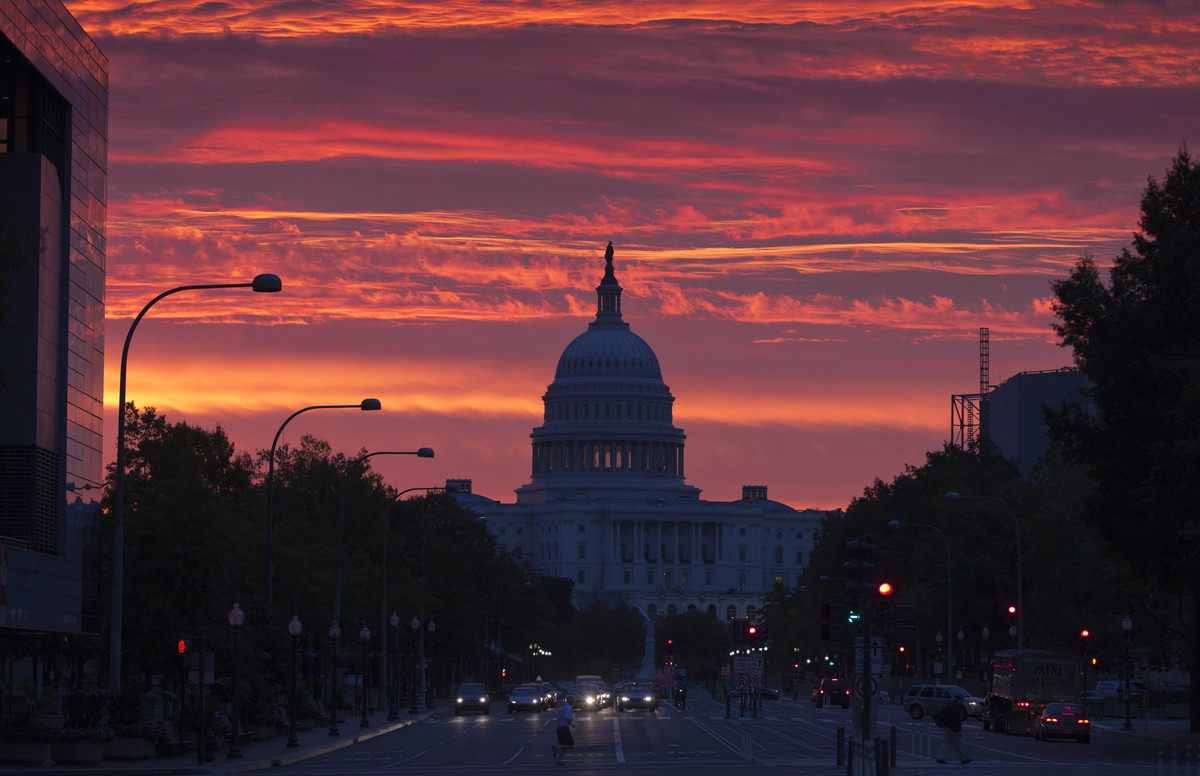
WASHINGTON -- Congress' current victory lap is premature. As lawmakers head back to their districts, fresh off passing a budget bill to fund the government for the next two years -- the Senate vote this afternoon merely a formality -- the prospects of political paralysis and even another government shutdown haven't completely faded.

The next deadline, in fact, is right around the corner. By Jan. 15, appropriators from the House and Senate will have to figure out how to turn that new budget framework into mutually agreed-upon funding levels for 12 spending bills, one for each of the Appropriations subcommittees.

More Than 1 In 10 Americans Who Work Full Time Are Still Poor

A good job may be hard to find in this tepid recovery, but low-wage work still abounds. Whether it's washing dishes, serving Big Macs or folding sweaters for a store display, low-paying jobs have been added to the American economy at a fairly brisk clip since the recession ended in 2009. Middle- and high-paying jobs, not so much.

By one estimate, one in four private-sector jobs in the U.S. now pays less than $10 per hour, well below a living wage in many areas of the country. Compared to better-paying positions, these jobs are also more likely to come without regular schedules or benefits, like health care coverage, paid vacation time or sick leave -- the basic trappings of middle-class work. In other words, employment doesn't guarantee a life above the poverty line; according to census data, more than one in 10 Americans who work full-time are still poor.

Low-wage workers have been striking over pay, and Congress is considering legislation that would raise the federal minimum wage from $7.25 to $10.10 per hour. With the U.S. Senate set to debate its bill soon, HuffPost reached out to readers who work hard and still have a difficult time making ends meet. Many struggle to secure full-time employment and scramble to find extra work in their spare time. Others make just above the minimum wage and still can barely scrape by.

They eat what they can afford, rather than what they want. Some avoid going to the doctor, even when they're gravely ill. Others turn off the hot water in their homes and wear clothes given to them by friends.

What they all seem to have in common is a desire to work and a hope to someday earn something more. "I think there's great honor in working," Bernadette Feazell, a pawn shop employee in Austin, Texas, said. "I work hard. And frankly, it's not because I think I'm worth $9 an hour."

Original Article
Source: huffingtonpost.com/
Author: Dave Jamieson

Asking the N.S.A. the Right Question

On March 5, 1976, a Baltimore man named Michael Lee Smith robbed a woman named Patricia McDonough. Smith drove off in a late-model Monte Carlo, which McDonough described to the police. After the robbery, he began making threatening phone calls to his victim. The cops tracked down Smith’s home address by tracing his license-plate number, and they soon set out to prove that he was the same person harassing McDonough over the phone.

Without obtaining a court order or warrant, Baltimore police instructed the local phone company to install a mechanical device known as a pen register at its offices to record the numbers dialed from Smith’s rotary phone. The pen register was a primitive technology. It used paper tape to record the information, and it didn’t actually tell the police whether the attempted phone calls were ever completed. But the register detected that on March 17th, the phone at Smith’s home dialed the seven digits of McDonough’s home phone number.

Fracking could be allowed under homes in Britain without owners' knowledge

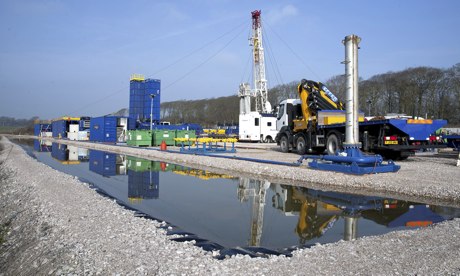
Fracking could take place under thousands of homes without their owners' knowledge after ministers said companies would no longer have to notify people directly about potential gas drilling in their areas.

Nick Boles, the planning minister, said the law would be changed to allow gas companies to put in fracking applications without sending out letters to tell people about possible drilling beneath their properties. Instead, companies will be required to publish a notice in a local newspaper and put up site displays in local parishes, as well as conducting a wider consultation.