Democracy Gone Astray

Democracy, being a human construct, needs to be thought of as directionality rather than an object. As such, to understand it requires not so much a description of existing structures and/or other related phenomena but a declaration of intentionality.
This blog aims at creating labeled lists of published infringements of such intentionality, of points in time where democracy strays from its intended directionality. In addition to outright infringements, this blog also collects important contemporary information and/or discussions that impact our socio-political landscape.

All the posts here were published in the electronic media – main-stream as well as fringe, and maintain links to the original texts.

[NOTE: Due to changes I haven't caught on time in the blogging software, all of the 'Original Article' links were nullified between September 11, 2012 and December 11, 2012. My apologies.]

Wednesday, November 26, 2014

The FBI Is Very Excited About This Machine That Can Scan Your DNA in 90 Minutes

Robert Schueren shook my hand firmly, handed me his business card, and flipped it over, revealing a short list of letters and numbers. "Here is my DNA profile." He smiled. "I have nothing to hide." I had come to meet Schueren, the CEO of IntegenX, at his company's headquarters in Pleasanton, California, to see its signature product: a machine the size of a large desktop printer that can unravel your genetic code in the time it takes to watch a movie.

Schueren grabbed a cotton swab and dropped it into a plastic cartridge. That's what, say, a police officer would use to wipe the inside of your cheek to collect a DNA sample after an arrest, he explained. Other bits of material with traces of DNA on them, like cigarette butts or fabric, could work too. He inserted the cartridge into the machine and pressed a green button on its touch screen: "It's that simple." Ninety minutes later, the RapidHIT 200 would generate a DNA profile, check it against a database, and report on whether it found a match.

After Fearmongering Kills the NSA Reform Bill, What’s Next?

For a few hours on Tuesday, the Islamic State looked like the best thing that ever happened to the National Security Agency. The USA Freedom Act, a modest bill seen as the best chance for reforming one of the NSA’s dragnet surveillance programs, failed to clear a procedural hurdle in the Senate by two votes after Republicans insisted that it would precipitate a terrorist attack.

“This is the worst possible time to be tying our hands behind our back,” Mitch McConnell said. “We live in a dangerous world, and the threat by ISIL only makes it more so.” Marco Rubio chimed in with his own warning: “God forbid that tomorrow we wake up to the news that a member of ISIL is in the United States,” he said. Former CIA director Michael Hayden penned a Wall Street Journal op-ed under the headline, “NSA Reform That Only ISIS Could Love.”

New Scrutiny of Goldman’s Ties to the New York Fed After a Leak

From his desk in Lower Manhattan, a banker at Goldman Sachs thumbed through confidential documents — courtesy of a source inside the United States government.

The banker came to Goldman through the so-called revolving door, the symbolic portal that connects financial regulators to Wall Street. He joined in July after spending seven years as a regulator at the Federal Reserve Bank of New York, the government’s front line in overseeing the financial industry. He received the confidential information, lawyers briefed on the matter suspect, from a former colleague who was still working at the New York Fed.

Police Arrest Protesters as St. Louis Awaits Grand Jury Decision

FERGUSON, Mo., Nov 20 (Reuters) - Police arrested about six people overnight after they tried to block a street in a protest calling for a grand jury to charge a white police officer over the fatal shooting of an unarmed black teen in August.

A few dozen demonstrators, some chanting "Indict that cop," gathered outside the city police station late on Wednesday in sub-freezing temperatures.

Spanish Parliament Calls For Recognition Of Palestinian State

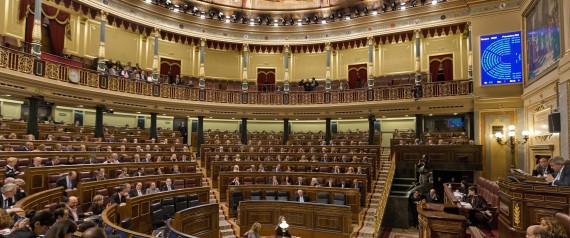
MADRID, Nov 18 (Reuters) - Spanish lawmakers on Tuesday urged their government to recognize Palestine as a state, albeit only when the Palestinians and Israel negotiate a solution to their long-standing conflict.

The symbolic motion, which echoes similar votes last month in Britain and Ireland, was backed by all the political groupings in the lower house after the ruling People's Party (PP) watered down the wording hours after an attack in Jerusalem.

Hong Kong Activists Try To Storm Legislature

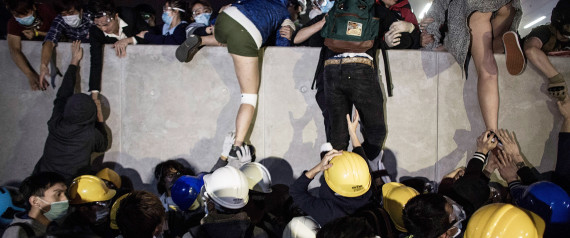
HONG KONG (AP) — Tensions spiked at democracy protests that have gripped Hong Kong for nearly two months as a small group of activists clashed with police while trying to break into the city's legislature early Wednesday.

Police arrested six people in the overnight clashes and warned of more arrests. The scuffling came hours after authorities enforced a court order to clear some barricades from a small section of a nearby site occupied by pro-democracy activists.

Misconceptions of Political Islam

As soon as the Tunisian elections results were announced with Nidaa Tounes overtaking Ennahdha party, celebrations of the "Islamists'" defeat at the hands of the "secularists" got underway across the media in France and many other western capitals. The historical context of a country in the aftermath of a revolution, its socio-political circumstances and complex regional conditions was banished from the narrative. Between cliches of bad "Islamists" "defeated" by good "secularists" and jubilant resurrections of old prophesies of the "failure of political Islam," the contest was portrayed as a battle of ideologies and world views.

Global corruption a bigger scourge than terrorism

While the G20 summit in Australia made headlines over global warming, economic growth and terrorism, much less attention was paid to the giant spectre of global corruption.

That is too bad as this is a problem that is arguably more dangerous to humanity than even terrorism because it siphons off an estimated $1 trillion from developing countries annually through bribery, money laundering, tax evasion, extortion and other financial crimes.

Is Dianne Feinstein Crafting a Secret Water Deal to Help Big Pistachio?

UPDATE: Sen. Dianne Feinstein has called off her backroom negotiations to push a California water bill through the current, lame-duck Congressional session, The Fresno Bee reported late Thursday afternoon. But she's not finished trying to make a deal with Big Ag-aligned GOP reps. She vowed to "put together a first-day bill for the next Congress, and it can go through the regular order,” the Bee reported.

Sen. Dianne Feinstein (D-Calif.) is negotiating a behind-closed-doors deal with Republican lawmakers to pass a bill that would ostensibly address California's drought—an effort that has uncorked a flood of criticism from environmental circles.

Can We Defend Our Pensions Without Challenging Financialized Capitalism?

Unrelenting employer attacks on workplace based pension plans are intensifying, and the struggle to defend them is becoming more challenging right across the country.

One recent development appears to be an important partial victory. Some 900 workers at Bombardier’s Thunder Bay production facility, represented by Unifor, launched an eight-week strike on July 14, and the dispute centred on an employer demand to eliminate the secure, “defined benefit” type pension plan with an individualized “defined contribution” savings scheme for all new hires. Bombardier’s proposal was hardly a new idea – private sector employers without unions have been unilaterally imposing just that for a number of years, and it’s the model that has sparked a series of important battles at unionized private sector employers such as Vale-Inco, Air Canada, the Big Three Automakers, U.S. Steel, and many others. Even highly profitable companies have been dumping or restructuring their pension commitments to workers – all workers where possible, new hires only if necessary.