Democracy Gone Astray

Democracy, being a human construct, needs to be thought of as directionality rather than an object. As such, to understand it requires not so much a description of existing structures and/or other related phenomena but a declaration of intentionality.
This blog aims at creating labeled lists of published infringements of such intentionality, of points in time where democracy strays from its intended directionality. In addition to outright infringements, this blog also collects important contemporary information and/or discussions that impact our socio-political landscape.

All the posts here were published in the electronic media – main-stream as well as fringe, and maintain links to the original texts.

[NOTE: Due to changes I haven't caught on time in the blogging software, all of the 'Original Article' links were nullified between September 11, 2012 and December 11, 2012. My apologies.]

Showing posts with label Antarctica. Show all posts

Wednesday, August 08, 2018

Antarctic Ice Sheet Is Melting Way Faster Than Expected, Scientists Warn

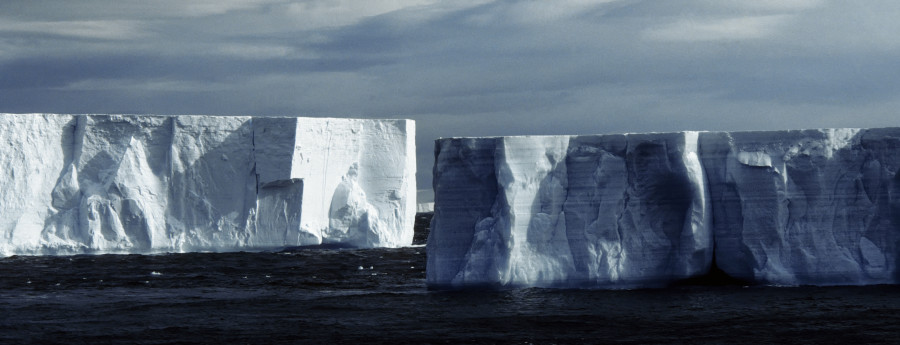
The Antarctic ice sheet is melting at a faster rate than at any previously recorded time, according to a comprehensive new study.

The planet’s largest ice sheet is now losing more than 240 billion tons of ice every year ― a threefold increase from less than a decade ago. The melting is happening so fast that it could cause sea levels to rise 6 inches by the end of the century, the study projects.

Tuesday, June 23, 2015

''Imminent'' Collapse of the Antarctic Ice Shelf and a ''New Era'' in the Arctic

Recently, two friends and I attempted to climb Washington State's beautiful, glacier-clad Mount Baker. Roped up while climbing up a glacier, roughly 1,500 feet below the summit, our route reached an impasse.

Given that it was technically early in the climbing season, and that we were on the standard route, we were dismayed to find a snow bridge spanning a 10-foot wide crevasse about to collapse. Finding no other way around the gaping void, we agreed to turn back and return another day.

Thursday, March 19, 2015

The melting of Antarctica was already really bad. It just got worse.

A hundred years from now, humans may remember 2014 as the year that we first learned that we may have irreversibly destabilized the great ice sheet of West Antarctica, and thus set in motion more than 10 feet of sea level rise.

Meanwhile, 2015 could be the year of the double whammy — when we learned the same about one gigantic glacier of East Antarctica, which could set in motion roughly the same amount all over again. Northern Hemisphere residents and Americans in particular should take note — when the bottom of the world loses vast amounts of ice, those of us living closer to its top get more sea level rise than the rest of the planet, thanks to the law of gravity.

Sunday, March 01, 2015

Glacial Melting In Antarctica Makes Continent The 'Ground Zero Of Global Climate Change'

CAPE LEGOUPIL, Antarctica (AP) — From the ground in this extreme northern part of Antarctica, spectacularly white and blinding ice seems to extend forever. What can't be seen is the battle raging thousands of feet (hundreds of meters) below to re-shape Earth.

Water is eating away at the Antarctic ice, melting it where it hits the oceans. As the ice sheets slowly thaw, water pours into the sea — 130 billion tons of ice (118 billion metric tons) per year for the past decade, according to NASA satellite calculations. That's the weight of more than 356,000 Empire State Buildings, enough ice melt to fill more than 1.3 million Olympic swimming pools. And the melting is accelerating.

Monday, October 06, 2014

Glaciers Lose 204 Billion Tons of Ice in Three Years

Antarctica is losing so much mass that it’s actually changing Earth’s gravity.

Antarctica is famously a continent capped with ice, but as Earth’s climate changes and the polar regions get warmer, its ancient ice is beginning to melt. The immediate consequence of the melting is the growing instability of ice shelves, places where the ice covering extends into the ocean. However, if we really want to know how quickly Antarctica is losing ice, we need a way of measuring that loss in terms of total mass.

Tuesday, August 26, 2014

World's Largest Ice Sheets Melting At Fastest Rate Ever Recorded

Greenland and Antarctica are home to the two largest ice sheets in the world, and a new report released Wednesday says that they are contributing to sea level rise twice as much as they were just five years ago.

Using the European Space Agency's CryoSat 2 satellite, the Alfred Wegener Institute from Germany has found that western Antarctica and Greenland are losing massive amounts of ice.melt

Tuesday, May 06, 2014

Antarctic Ice Shelf On Brink Of Unstoppable Melt That Could Raise Sea Levels For 10,000 Years

OSLO, May 4 (Reuters) - Part of East Antarctica is more vulnerable than expected to a thaw that could trigger an unstoppable slide of ice into the ocean and raise world sea levels for thousands of years, a study showed on Sunday.

The Wilkes Basin in East Antarctica, stretching more than 1,000 km (600 miles) inland, has enough ice to raise sea levels by 3 to 4 metres (10-13 feet) if it were to melt as an effect of global warming, the report said.

Monday, December 23, 2013

West Antarctic Ice Loss Speeds Up

LONDON, 20 December – Ice is being lost over the West Antarctic ice sheet at a faster rate. The European Space Agency’s Cryosat – a satellite with a radar altimeter that can peer through the clouds and see in the dark – has confirmed that 150 cubic kilometres of ice are drifting into the Southern Ocean each year: a much faster rate than the calculation for 2010.

After observations between 2005 and 2010, gathered by 10 different satellite missions, Antarctic scientists and oceanographers calculated that the melting of ice from the West Antarctic peninsula was causing global sea levels to rise by 0.28mm a year. The latest survey suggests this rate is 15% higher.

Wednesday, May 15, 2013

Greenland, Antarctica ice melt to be less severe than feared: scientists

OSLO — A melt of ice on Greenland and Antarctica is likely to be less severe than expected this century, limiting sea level rise to a maximum of 69 centimetres, an international study said on Tuesday.

Even so, such a rise could dramatically change coastal environments in the lifetimes of people born today with ever more severe storm surges and erosion, according to the ice2sea project by 24, mostly European, scientific institutions.

Tuesday, April 16, 2013

Summer Ice Melt In Antarctica Is At The Highest Point In 1,000 Years, Researchers Say

CANBERRA (Reuters) - The summer ice melt in parts of Antarctica is at its highest level in 1,000 years, Australian and British researchers reported on Monday, adding new evidence of the impact of global warming on sensitive Antarctic glaciers and ice shelves.

Researchers from the Australian National University and the British Antarctic Survey found data taken from an ice core also shows the summer ice melt has been 10 times more intense over the past 50 years compared with 600 years ago.

Tuesday, December 25, 2012

West Antarctica Warming Twice As Fast As Previously Believed: Study

OSLO, Dec 23 (Reuters) - West Antarctica is warming almost twice as fast as previously believed, adding to worries of a thaw that would add to sea level rise from San Francisco to Shanghai, a study showed on Sunday.

Annual average temperatures at the Byrd research station in West Antarctica had risen 2.4 degrees Celsius (4.3F) since the 1950s, one of the fastest gains on the planet and three times the global average in a changing climate, it said.

Thursday, August 30, 2012

Antarctic may host methane stores

Large volumes of methane - a potent greenhouse gas - could be locked beneath the ice-covered regions of Antarctica, according to a new study.

It says this methane could be released into the atmosphere as ice retreats, contributing to climate warming.