Democracy Gone Astray

Democracy, being a human construct, needs to be thought of as directionality rather than an object. As such, to understand it requires not so much a description of existing structures and/or other related phenomena but a declaration of intentionality.
This blog aims at creating labeled lists of published infringements of such intentionality, of points in time where democracy strays from its intended directionality. In addition to outright infringements, this blog also collects important contemporary information and/or discussions that impact our socio-political landscape.

All the posts here were published in the electronic media – main-stream as well as fringe, and maintain links to the original texts.

[NOTE: Due to changes I haven't caught on time in the blogging software, all of the 'Original Article' links were nullified between September 11, 2012 and December 11, 2012. My apologies.]

Showing posts with label Methane. Show all posts

Thursday, September 21, 2023

Paper straws and you

There are approximately 1.3 billion people in India — and several hundred million cows.

The amount of methane gas those cows produce likely equals, or maybe even exceeds, all the carbon emissions of California, New York and Connecticut combined.

It would seem that, here in the U.S., our environmental warriors against greenhouse gas should be calling for an end to all these cows.

Monday, February 15, 2016

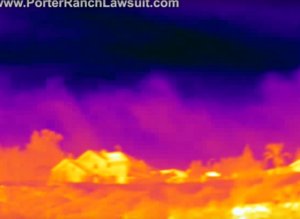
California's Massive Methane Leak Temporarily Stopped For First Time In Months

LOS ANGELES -- Southern California Gas Co. announced Thursday that it has temporarily controlled the flow of natural gas at the Aliso Canyon gas storage facility, which has been leaking for nearly four months.

“We have temporarily controlled the natural gas flow from the leaking well and begun the process of sealing the well and permanently stopping the leak,” said Jimmie Cho, SoCalGas' senior vice president of gas operations, in a statement.

Friday, October 09, 2015

Oil Industry Could Cut Methane Emissions 45% Right Now: Report

CALGARY -- A new report commissioned by an environmental group says Canada's oil and gas industry could reduce methane emissions by 45 per cent using existing technology.

The study, carried out by energy industry research firm ICF International, found that the industry could eliminate the equivalent of 27 million tonnes of carbon dioxide emissions at a cost of $2.76 per tonne.

Tuesday, September 09, 2014

Bad News for Obama: Fracking May Be Worse Than Burning Coal

If you're a politician, science is a bitch; it resists spin. And a new set of studies—about, of all things, a simple molecule known as CH4—show that President Obama's climate change strategy is starting to unravel even as it's being knit. To be specific: Most of the administration's theoretical gains in the fight against global warming have come from substituting natural gas for coal. But it looks now as if that doesn't really help.

Sunday, May 11, 2014

Shale Gas Plagued By Unusual Methane Leaks

According to a spate of recent scientific studies from the United States and Australia, the shale gas industry has generated another formidable challenge: methane and radon leakage three times greater than expected.

In some cases the volume of seeping methane, a greenhouse gas that traps heat 25 times more effectively than carbon dioxide, is so high it challenges the notion that shale gas can be a bridge to a cleaner energy future, as promoted by the government of British Columbia and other shale gas jurisdictions.

Friday, January 31, 2014

Public deserves answers about methane leaks in B.C.'s natural gas sector

The B.C. Ministry of Environment stands by its "implausibly low" estimate of methane leaks from the natural gas sector according to an official "information note" triggered by DeSmog's two-part article series last May.
The DeSmog investigation revealed methane leaks were likely 7 times greater than the B.C. government is reporting based on data from U.S. studies. The real climate impacts of those leaks would be like adding at least three million cars to B.C. roads.

Monday, December 30, 2013

Ice-free Arctic in two years heralds methane catastrophe – scientist

A new paper in the journal Nature argues that the release of a 50 Gigatonne (Gt) methane pulse from thawing Arctic permafrost could destabilise the climate system and trigger costs as high as the value of the entire world's GDP. The East Siberian Arctic Shelf's (ESAS) reservoir of methane gas hydrates could be released slowly over 50 years or "catastrophically fast" in a matter of decades – if not even one decade – the researchers said.

Not everyone agrees that the paper's scenario of a catastrophic and imminent methane release is plausible. Nasa's Gavin Schmidt has previously argued that the danger of such a methane release is low, whereas scientists like Prof Tim Lenton from Exeter University who specialises in climate tipping points, says the process would take thousands if not tens of thousands of years, let alone a decade.

Tuesday, November 26, 2013

U.S. Methane Study Says Emissions 50 Percent Higher Than EPA Estimates

WASHINGTON (AP) — The United States is spewing 50 percent more methane — a potent heat-trapping gas — than the federal government estimates, a new comprehensive scientific study says. Much of it is coming from just three states: Texas, Oklahoma and Kansas.

That means methane may be a bigger global warming issue than thought, scientists say. Methane is 21 times more potent at trapping heat than carbon dioxide, the most abundant global warming gas, although it doesn't stay in the air as long.

Friday, July 26, 2013

New study on Arctic methane is more evidence of looming climate catastrophe

Warning that a dramatic "burp" or "pulse" of methane from beneath the fragile permafrost of the Arctic caused by continued global warming would set off a "climate catastrophe," a new study says that the continued melting is also an economic "time bomb" that could cost the global economy $60 trillion.

Billions upon billions of tons of methane remain stored in the permafrost throughout the Arctic regions, but specific concern has been placed on the enormous reserves that sit locked beneath the East Siberian Arctic Shelf. Scientists have repeatedly warned that if these deposits -- many frozen in the form of methane hydrates -- were released, they would trigger massive feedback loops and dramatically increase the rate of global warming.

Thursday, May 09, 2013

Unreported Emissions from Natural Gas Blow Up British Columbia's Climate Action Plan - BC's Carbon Footprint Likely 25% Greater Than Reported

Methane emissions from British Columbia's natural gas industry are likely at least 7 times greater than official numbers blowing BC's Climate Action Plan out of the water. Natural gas is nearly all methane and since methane is such a powerful climate warming gas these unreported emissions mean the total CO2 equivalent emissions for the entire province are nearly 25% higher than is being reported.

Thursday, August 30, 2012

Antarctic may host methane stores

Large volumes of methane - a potent greenhouse gas - could be locked beneath the ice-covered regions of Antarctica, according to a new study.

It says this methane could be released into the atmosphere as ice retreats, contributing to climate warming.

Tuesday, May 15, 2012

Thermometer rising: Ice, methane, and climate change

In an article entitled Game over for the climate published in the New York Times last week, climatologist James Hansen, director of the NASA Goddard Institute for Space Studies, drew an environmental line in the sand:

"If Canada proceeds, and we do nothing, it will be game over for the climate. Canada's tar sands, deposits of sand saturated with bitumen, contain twice the amount of carbon dioxide emitted by global oil use in our entire history. If we were to fully exploit this new oil source, and continue to burn our conventional oil, gas and coal supplies, concentrations of carbon dioxide in the atmosphere eventually would reach levels higher than in the Pliocene era, more than 2.5 million years ago, when sea level was at least 50 feet higher than it is now. That level of heat-trapping gases would assure that the disintegration of the ice sheets would accelerate out of control. Sea levels would rise and destroy coastal cities. Global temperatures would become intolerable. Twenty to 50 percent of the planet's species would be driven to extinction. Civilization would be at risk."