Democracy Gone Astray

Democracy, being a human construct, needs to be thought of as directionality rather than an object. As such, to understand it requires not so much a description of existing structures and/or other related phenomena but a declaration of intentionality.
This blog aims at creating labeled lists of published infringements of such intentionality, of points in time where democracy strays from its intended directionality. In addition to outright infringements, this blog also collects important contemporary information and/or discussions that impact our socio-political landscape.

All the posts here were published in the electronic media – main-stream as well as fringe, and maintain links to the original texts.

[NOTE: Due to changes I haven't caught on time in the blogging software, all of the 'Original Article' links were nullified between September 11, 2012 and December 11, 2012. My apologies.]

Showing posts with label Anti-Bilingualism. Show all posts

Wednesday, February 11, 2015

A Unilingual Foreign Affairs Minister Is a National Embarrassment

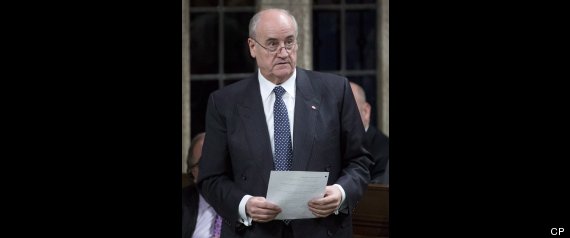
A country must understand and be loyal to its roots. One of Canada's roots is its linguistic duality. Our history gives the Government of Canada the duty to promote the double heritage of our two official languages, French and English. This double heritage belongs to all Canadians.

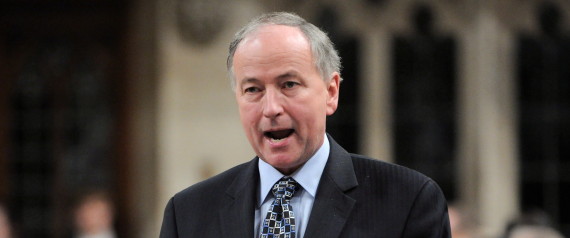
By appointing a unilingual Foreign Affairs Minister, Rob Nicholson, Prime Minister Harper fails to understand his role to protect this precious heritage. He also handicaps heavily our country's ability to take advantage of our linguistic duality on the world stage. In 2015, it is totally unacceptable.

Friday, March 21, 2014

Tories Chipping Away At Official Bilingualism, NDP Charge

OTTAWA — The Conservative government is chipping away at official bilingualism, the NDP charged Tuesday, pointing to the elimination of bilingual positions at the Canada Revenue Agency.

NDP official languages critic Yvon Godin wrote to the Office of the Commissioner of Official Languages on Monday complaining that the federal government had arbitrarily changed the linguistic designation of certain positions within the public service, from bilingual to unilingual English positions.

Wednesday, April 10, 2013

John Baird’s ‘English only’ business cards violated language law, says watchdog

OTTAWA – Foreign Affairs Minister John Baird has joined his cabinet colleague International Cooperation Minister Julian Fantino under the microscope of Parliament’s language watchdog over separate “English only” controversies.

While Fantino is under investigation over a directive for bureaucrats to send him correspondence for review in English only, a new report by Official Languages Commissioner Graham Fraser said Baird’s Department of Foreign Affairs and International Trade had violated its obligations under federal language legislation by printing English only business cards for the minister.

Document supports claim that Julian Fantino’s office issued English-only directive for correspondence

OTTAWA—Another document dictating the language of communication from the office of International Co-operation Minister Julian Fantino has surfaced a day after he denied the existence of any such directives ordering messages be in English only.

On Monday, The Canadian Press obtained an email dated July 11, 2012, that was a written by a manager to some employees at the Canadian International Development Agency.

Monday, April 08, 2013

Julian Fantino's Office Issues English-Only Communication Directive Twice

OTTAWA - The office of International Co-operation Minister Julian Fantino twice issued a directive that all communication with his signature be in English only, even if the recipient was French-speaking.

Official Languages Commissioner Graham Fraser has agreed to look into the matter after a complaint from the New Democrats, who argue the order may violate the Official Languages Act.

Wednesday, December 19, 2012

Harper takes responsibility for naming auditor general who doesn't speak French

OTTAWA - Canada's auditor general ought to be able to speak both English and French, Prime Minister Stephen Harper says.

Naming the otherwise qualified, English-only Michael Ferguson to the post last year was — while unavoidable — less than ideal, the prime minister acknowledged in a year-end interview with French broadcaster TVA.

"There was a process, and at the end of that process, I had one name really qualified for the position: I decided to name Mr. Ferguson with his commitment under the circumstances," Harper said.

Monday, November 26, 2012

Merit, collegiality trumps bilingualism for high court jobs: Nicholson letter

OTTAWA - Bilingualism will never trump merit or the ability to get along with colleagues when it comes to appointing judges to the Supreme Court, Justice Minister Rob Nicholson argues in a recently released letter.

The three-page letter, dating from 2011 but only recently released under federal access to information laws, makes the case that bilingualism is ensured through legislation that requires three Quebec judges on the Supreme Court and 15 for the Federal Court and Federal Court of Appeal.

Saturday, October 27, 2012

Bilingualism debate heats up on Parliament Hill as Tories study NDP bill

OTTAWA – The bilingualism debate is heating up on Parliament Hill in the wake of new data suggesting English Canadians are losing interest in French, and amid media reports that Prime Minister Stephen Harper feels it was a “mistake” to appoint unilingual anglophones to senior positions such as the office of the auditor general and the Supreme Court.

Harper reportedly made his comment after several cabinet ministers told the Tory caucus last week that the government would support legislation introduced by the NDP to require that all officers of Parliament be functionally bilingual.

Thursday, October 25, 2012

Conservatives put language rights, bilingualism back into the spotlight

With internal debates over abortion and pension benefits just behind them, the solidarity of the Conservative caucus is about to be put to the test again, this time over language rights.

Within weeks, the House of Commons is expected to vote on an NDP bill that would make fluency in French and English a prerequisite for all future officers of Parliament.

The measure would apply to a list of 10 officials ranging from the auditor general and the chief electoral officer to the privacy commissioner.

Saturday, September 08, 2012

Quebec Language Laws: Graham Fraser, Federal Language Commissioner, Keeping Close Eye On Quebec After PQ Win

CALGARY - Canada's languages watchdog issued a warning to Quebec's new minority government Friday, saying he is keeping a close eye on moves toward toughening the province's language laws.

Graham Fraser, a former journalist from Quebec who literally wrote the book on the history of the newly elected Parti Quebecois, says he wants to make sure any changes Pauline Marois makes don't run afoul of the Charter of Rights and Freedoms.

Friday, June 29, 2012

Who will speak up for Canada?

Think back to 1995, when Canada was in the throes of a national unity crisis. The “Yes” side in the Quebec referendum was fast gaining momentum on the eve of the vote. Brian Tobin and Sheila Copps decided to organize a Montreal “love-in” to show Quebeckers that Canadians cared deeply about Quebec and its place in the Canadian family.

Air Canada, Canadian Pacific and Via Rail offered deep discounts, in some cases up to 90 per cent of the cost, for Canadians to make their way to Montreal. Every available bus in Ontario was conscripted and 75 packed buses left New Brunswick to make their way to Montreal.

Saturday, June 23, 2012

Is bilingualism still relevant in Canada?

For three days in April, Chantelle Prentice camped outside in Salmon Arm, B.C., guarding her place in line – not for concert tickets or the latest iPhone, but to snag one of 17 coveted French immersion spots at Bastion Elementary School for her five-year-old son, Taylor.

An anglophone who hated her own high-school French courses, Ms. Prentice still feels strongly that bilingualism is central to Canada’s identity, as well as a gateway to other languages.

Friday, June 15, 2012

Language watchdog says DND violated Anglo rights

OTTAWA — The Department of National Defence violated Canada's official languages law by closing a library at a Quebec recruitment school that was serving the minority English-language community in a region south of Montreal, says a new report released by the federal government's language watchdog.

The department decided to shut down the General Jean V. Allard Commemorative library in Saint-Jean-sur-Richelieu, Que., due to budget cuts on Sept. 30, 2010, replacing it with an Educational Resources Centre for military and civilian personnel and for students at the Land Force Quebec 5 Area Support Group.

Saturday, February 11, 2012

The dénouement of French Canada

The recently released results from the 2011 Canadian census read very different in French and English.

In English, the census tells a story of growth and prosperity. In French, the census announces the decline of Quebec's standing in Confederation - and of the French language's place in North America.

Lester Pearson predicted that he would be the last Canadian prime minister to speak only English. To date, his prediction has held true. But not for much longer, by the looks of things.

The 2001 and 2006 Censuses showed sharp declines in the relative size of the population that claimed French as a "mother tongue," down to barely more than one-fifth.

The 2011 census, once its results are made fully public, is likely to show another and probably even sharper drop. The first release of census data this week already shows that the total population of Quebec - including all linguistic groups - continues its rapid decline relative to the rest of Canada. It's a good guess that the French-speaking population will report the steepest decline.

The statistics tell only part of the story. A 35-year-old Québécois who moves to Alberta in search of work, and there meets and marries a girl from a Chinese immigrant background, will probably bolster the national statistics for "French as mother tongue" sometime into the 2060s. But he won't be speaking French at work. He probably won't be speaking very much French at home. And it's even more doubtful that his children and grandchildren will report French as their "mother tongue."

Tuesday, February 07, 2012

Tories concerned AG would be perceived as partisan appointment

OTTAWA -- Newly appointed Auditor General Michael Ferguson was pilloried for not being able to speak French, but government documents reveal the Conservatives were also concerned its choice for auditor general would be perceived as a partisan appointment.

Notes to Treasury Board President Tony Clement indicate the Conservatives were prepared to defend newly-appointed auditor Michael Ferguson beyond the attacks they were already fending off concerning his inability to communicate in both official languages.

"Although no one has made this criticism, the Opposition might claim the appointment is partisan," emails released under Access to Information read.
The concern was three-fold.

A line could be drawn, the emails read, between Prime Minister Stephen Harper's choice and the fact that Conservative New Brunswick Premier Bernard Lord appointed Ferguson to auditor general of the province.

Alternatively, that line could go from Harper to the fact that Ferguson was "very critical" of the Liberal Shawn Graham government, or to the fact that he was appointed deputy finance minister by another Conservative New Brunswick Premier, David Alward.

Sunday, January 22, 2012

Bilingualism has a fresh face

Canada's changing linguistic makeup should pro-vide an impetus to revisit bilingualism as currently defined by Ottawa. A new study by Quebec professor Francois Vaillancourt and three of his Quebec colleagues that was recently published by the Fraser Institute, implicitly raises questions about present approaches to bilingualism.

(For the record, the authors take no position on whether official bilingualism is a good idea or bad policy).

On the hard numbers, the authors note bilingualism costs $2.4 billion a year, with $868 million of that spent by the provinces and the rest spent by Ottawa.

Here's what the Vail-lancourt study does not measure: For example, dual labelling requirements that increase the price of Canadian goods and services. That is likely impossible to quantify - one can't find every expenditure on bilingualism by every private company and add it up - but that's a real economic cost insofar as a company must comply with federal requirements, even where such compliance is silly.

For example, why must a wine importer ensure both English and French alike are pasted on a bottle of Malbec from Argentina? Does anyone seriously think Quebecois wouldn't recognize a Malbec without required French labelling? Or that any of us couldn't understand the contents if the only label was in Spanish?

Similarly, why should a small Quebec business be forced to spend money on bilingual labels for some product it might only export to francophone communities in Manitoba and New Brunswick? If a company figured it needed bilingual labels to gain customers (or avoid losing them), they'd do it voluntarily; that regulation has always been superfluous.

While some provinces have comparatively larger shares of official linguistic minorities (French or English), only New Brunswick has a sizable minority unable to communicate in the dominant provincial language. There, unilingual French speakers are 10 per cent of the population.

In Quebec, unilingual speakers unable to speak the majority language (French) constitute just 2.4 per cent of the population. Everywhere else, unilingual minorities are tiny, just fractions of one per cent.

Beyond the English in Quebec and francophones everywhere else, it's useful to consider other "linguistic minorities" to begin an honest discussion about the future of bilingualism in Canada. British Columbia is a good place to start. Its numbers illustrate a significant trend: how other minority languages are swamping French as the top minority language.

British Columbia has the smallest percentage of people who list French as their mother tongue, at just 1.3 per cent. In B.C. (and here I depart from the study and into 2006 Statistics Canada census data), Chinese dialects account for 8.4 per cent of the population. Punjabi comes next (3.9 per cent) and German (2.1 per cent). Minority languages in B.C. that look to overtake French soon, due to immigration patterns, appear to be Tagalog and Spanish. In all, non-official languages already make up almost 27 per cent of B.C.'s population.
In Alberta, languages listed as one's mother tongue include Chinese dialects (three per cent), Ger-man (2.6 per cent) and then French (1.9 per cent).

In Ontario, just 25,000 people speak French at home in metropolitan Toronto, while almost 1.4 million people speak a non-official language (and 3.5 million speak English).

Overall, in Canada's most populous province, French as a mother tongue (at 4.1 per cent of the population) is still second after English. However, only 6,000 people separate that second-place position from those who identified a Chinese dialect (four per cent) as their mother tongue.

French is in relative decline even in Quebec, albeit marginally. In 2006, 79 per cent of Quebecers identified French as their first language, compared to 82.5 per cent in 1951.

Here's the broad over-view: People who speak more than one language have opportunities to inter-act with others in a manner unilingual speakers do not; they also have greater career opportunities. Bilingualism is thus desirable for personal reasons, though that doesn't necessitate laws, regulations or even constitutional action. Of course, all of those have been at play in Canada and constitutional mandates in particular are almost impossible mechanisms with which to fiddle.

Bilingualism in Canada's political context has always been interpreted to be English and French. What's obvious is that apart from Quebec, Canada's new bilingual makeup is about English, plus some language other than French.

The growth of non-official languages raises two observations.

First, the simple demo-graphic fact of Canada's linguistic makeup is shifting in a way that makes official bilingualism policies - and at least some of the money routinely spent - dated.

Second, unless one aims for a career in the civil ser-vice (federally and in some provinces) or in federal politics, Cantonese, Mandarin, Korean and Spanish might be more helpful to a child's future career.

Original Article
Source: calgary herald 
Author: Mark Milke 
Thursday, January 19, 2012

Harper’s French disconnection

Peter White is about as conservative (and Conservative) as they come. He worked at Brian Mulroney’s side throughout the former prime minister’s nine-year tenure. In 2001, he turned his frustration with Jean Chrétien’s seemingly perpetual hold on power into a book, Gritlock, perhaps best described as a blueprint of how to neuter the then-powerful Liberal brand. In his free time, the former Hollinger Inc. executive has relentlessly pushed the Conservative brand in his native Quebec, both as a riding president and party organizer. And he’s sick of trying.

In a scathing open letter addressed to Canadians in general and the Conservative party in particular, White roundly criticizes the Conservative Party of Canada for ignoring francophones in general and Quebec in particular. “Today the voice of Quebec is virtually absent in Ottawa’s halls of power, or if present, it is a voice grown mighty small, and mighty easy to ignore,” White writes in the letter dated Jan. 12. “Since the election of May 2, 2011, many Quebec observers have concluded that Mr. Harper has consciously decided to ignore Quebec, now that he has convincingly demonstrated that he can win a majority without it.”

For some Conservatives outside the province, Stephen Harper might be forgiven for shunning Quebec. The Prime Minister has never been particularly popular in the province; he won a majority in last spring’s election thanks largely to a marked increase in support in Ontario and sustained support in the western provinces. In Quebec, meanwhile, the party lost five incumbent MPs (equalling half of its provincial caucus) and nearly a quarter of its popular vote. It marked the first time since the Conscription Crisis of 1917 that a government formed a majority with so little support from Quebec.

But while the rebalancing of power in favour of the West may seem natural for the Toronto-born, Alberta-bred populist, White says Harper’s Quebec brush-off will lead to a “de-Canadianization of Quebec,” in which Quebecers see less and less of themselves in the federal government—and turn (or return) instead to the Bloc Québécois. “Any competent demagogue—and there are several—could easily fan the tinder into flames by decrying the many petty slights inflicted on Quebec’s honour and pride at the hands of Ottawa since Mr. Harper has been Prime Minister.”

Wednesday, January 18, 2012

Still unilingual after all these years

Canada's provinces spend almost $1-billion a year offering services and education in both official languages. According to a report issued Monday by Vancouver's Fraser Institute, the more than $900-million spent by the provinces each year, coupled with the $1.5-billion Ottawa spends offering federal services in French and English, means that bilingualism costs Canadian taxpayers $2.4-billion annually.

Is it worth it? In just two provinces - Quebec and New Brunswick - are more than 1% of the population unilingual in a minority language. According to the 2006 Census, 2.4% of Quebec's population (182,000 people) are unilingual anglophones, unable to speak and understand French. Meanwhile, 10.2% of New Brunswickers (about 75,000 people) claim to be unilingual francophones who struggle to comprehend English.

Only in one other province do as many as four-tenths of 1% of the population identify themselves as exclusive speakers of the minority official language. That is in Ontario, where just over 43,000 of the province's more than 13 million residents claim to be unilingual French.

Just 0.05% of Albertans (1,600 residents) claim to speak French only. In Saskatchewan, that number is fewer than 400 people. In B.C., it's about 1,200. In each of P.E.I. and Newfoundland, there are fewer than 100 French-only residents, yet those two provinces spend about $5million and $3.4-million, respectively, offering bilingual services.

Monday, January 16, 2012

Bilingual spending costs $2.4 billion per year

OTTAWA — The requirement for bilingualism at the federal and provincial level costs governments $2.4 billion per year, according to a new report from the Fraser Institute.

Of that, the federal government is spending $1.5 billion, while the provinces spend $900 million — $623 million of that is in Ontario, the highest spending province.

"The issue we examine in this study is not whether bilingualism is good or bad policy, but the costs above and beyond that of providing education and other services in the majority language," Universite de Montreal economics professor Francois Vaillancourt said in a statement.

The study, titled Official Language Policies of the Canadian Provinces: Costs and Benefits, breaks down the costs associated with providing services in the minority language in each province — French through most of the country and English in Quebec.

According to the study's authors, the annual cost for providing bilingual services is centred around French-language training.

While Ontario spends the most of bilingual services, New Brunswick, Canada's only officially bilingual province, spends the second most annually at $85 million.

Quebec rounds out the top three with an annual bilingual cost of $50 million.

The study concludes that provinces with large francophone populations could reduce spending on services by contracting them out and instituting a user pay system.

Original Article
Source: Canada.com 

Saturday, January 14, 2012

Government pulls out of language training

The federal government is getting out of the business of providing language training to its employees, throwing 179 teachers and instructors across Canada out of work.

The move - which started with downsizing in the 1990s, and intensified after a 2006 Treasury Board decision - marks the first time in decades that the government won't be directly offering French and English training to public servants to meet the language requirements of their jobs.

The Canada School of the Public Service, which runs language training, notified employees about the cut in a national conference call Friday, along with plans to help departments manage the transition to using private language schools. Most of the jobs are in the National Capital Region, but the majority were term positions. About 66 of the positions were permanent jobs and those workers may find jobs in other departments.

Larry Rousseau, vicepresident for the National Capital Region at the Public Service Alliance of Canada, said the government decision to turn all teaching to the private sector will invariably erode the quality of instruction and undermine the strides made in bilingualism within the public service.

"This was purely an ideological cut," he said. "It shouldn't have happened and the only reason I can find is that the government has made a decision that this will play well in the heartland and show we are getting out of the business of making people bilingual."