Democracy Gone Astray

Democracy, being a human construct, needs to be thought of as directionality rather than an object. As such, to understand it requires not so much a description of existing structures and/or other related phenomena but a declaration of intentionality.
This blog aims at creating labeled lists of published infringements of such intentionality, of points in time where democracy strays from its intended directionality. In addition to outright infringements, this blog also collects important contemporary information and/or discussions that impact our socio-political landscape.

All the posts here were published in the electronic media – main-stream as well as fringe, and maintain links to the original texts.

[NOTE: Due to changes I haven't caught on time in the blogging software, all of the 'Original Article' links were nullified between September 11, 2012 and December 11, 2012. My apologies.]

Showing posts with label Bilingualism. Show all posts

Monday, July 15, 2013

Phil McNeely’s complaint about DND’s Nortel move falls on deaf ears

The country’s language watchdog says he won’t investigate a complaint that alleges moving Defence department staff and military personnel to the former Nortel campus would harm Ottawa’s francophone community.

Liberal MPP Phil McNeely spearheaded an effort in April to try to stop the proposed move, arguing it would force large numbers of francophones who work for the Department of National Defence and currently live in Orléans to relocate to the city’s west end. He argued that they would have less access to French language services in that part of the city.

Tuesday, April 09, 2013

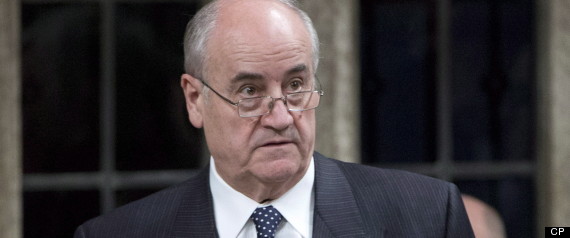
CIDA Email Directs English Communications Only From Julian Fantino

OTTAWA - Another document dictating the language of communication from the office of International Co-operation Minister Julian Fantino has surfaced a day after he denied the existence of any such directives ordering messages be in English only.

On Monday, The Canadian Press obtained an email dated July 11, 2012, that was a written by a manager to some employees at the Canadian International Development Agency.

Thursday, December 06, 2012

French-Canadians see threat to language, but anglophones ‘still don’t get it

A high percentage of francophones believe the future of their language in Canada is threatened. But in a sign of the persistence of the country’s two solitudes, relatively few anglophones agree, a Department of Canadian Heritage survey shows.

The survey of 1,504 Canadians, conducted by the department’s official languages support programs branch, found that eight in 10 francophones continue to believe the future of French in Canada is threatened, including more than two-thirds who strongly agree. Just 12 per cent disagree.

Wednesday, October 24, 2012

Dominance of French and English languages shrinking, census shows

Immigration is turning Canada into a country of many languages, with the historic dominance of French and English shrinking.

Canada remains a nation of French and English speakers, but people are speaking a greater variety of languages at home, as long-term trends in immigration shape the country’s linguistic landscape.

The proportion of Canadians who reported speaking two or more languages at home was 17.5 per cent in 2011, up from 14.2 per cent five years earlier, according to Statistics Canada language data from the 2011 Census.

Wednesday, October 17, 2012

Budget cuts are hurting bilingualism, official languages watchdog warns

Canada’s languages watchdog is raising the alarm about “a language chill” in the way government budget cuts affect the right to work – and be served – in either French or English.

Official languages commissioner Graham Fraser said Tuesday his office is receiving frequent complaints about the government’s downsizing and its affect on the bilingual nature of work in the federal public service.

Saturday, September 01, 2012

5 reasons to pay attention to the Quebec election

When the Quebec election was called at the beginning of August, it was in the shadow of protests by students caught in their own war over tuition, and allegations of corruption in the construction industry.

Economic storm clouds also hung over the province, and while they haven't cleared, the tuition fight and corruption allegations have not consumed the headlines as much as expected in the somewhat unusual, for Quebec, three-way race between Jean Charest's embattled Liberals, Pauline Marois's aspiring Parti Québécois and François Legault's upstart Coalition Avenir Québec.

Wednesday, July 04, 2012

Bilingual Benefits: Is It Worth The Trouble Of Learning French Anymore?

There’s no doubt Canadians are facing an extremely competitive job market. In January, Statistics Canada revealed there are three times more people applying for jobs than there are openings.

But there are also public servants retiring at an increasing rate, with 4,800 and 6,000 bilingual positions needing to be filled every year in federal government roles. A 2009 parliamentary committee report noted there are not enough bilingual graduates to fill these positions, though job prospects at the federal level have changed dramatically since the Tories' March budget, which aims to cut 19,000 positions in the public service.

Monday, June 11, 2012

Tories divided over NDP bilingualism bill

OTTAWA — An internal Conservative party debate on bilingualism in Canada has led the Harper government to review its options over legislation introduced by the Opposition New Democrats that would require all Parliamentary officers and watchdogs, such as the auditor general, to speak both of Canada's official languages.

The debate prompted Quebec's Maxime Bernier to come out in support of the bill, the Language Skills Act, last month before his government officially took a position.

While some cabinet colleagues were sitting on the fence, some have openly opposed the principle that the officers of Parliament should speak both French and English.

Tuesday, June 05, 2012

French endures on Parliament Hill thanks to the Bloc Québécois

MONTREAL—When Lucien Bouchard and his Bloc Québécois cohort stormed Parliament Hill in the mid-1990s, they certainly did not see themselves as the agents of former prime minister Pierre Trudeau’s goal of a Parliament that reflects Canada’s linguistic duality.

Ironically, the Bloc — which came to the federal capital to lead Quebec out of Parliament — may come to be best remembered for turning the House of Commons into a francophone-friendly environment.

New data about the use of French in the Commons suggests that over its two decades on the Hill, the Bloc presided over the equivalent of a cultural revolution. It endures to this day.
For the purposes of the study, Scott Piroth — a lecturer at Ohio’s Bowling Green State University — sampled five question periods selected at random in every Parliament since 1958 for a total of 5,532 questions and answers.

Sunday, January 22, 2012

Bilingualism has a fresh face

Canada's changing linguistic makeup should pro-vide an impetus to revisit bilingualism as currently defined by Ottawa. A new study by Quebec professor Francois Vaillancourt and three of his Quebec colleagues that was recently published by the Fraser Institute, implicitly raises questions about present approaches to bilingualism.

(For the record, the authors take no position on whether official bilingualism is a good idea or bad policy).

On the hard numbers, the authors note bilingualism costs $2.4 billion a year, with $868 million of that spent by the provinces and the rest spent by Ottawa.

Here's what the Vail-lancourt study does not measure: For example, dual labelling requirements that increase the price of Canadian goods and services. That is likely impossible to quantify - one can't find every expenditure on bilingualism by every private company and add it up - but that's a real economic cost insofar as a company must comply with federal requirements, even where such compliance is silly.

For example, why must a wine importer ensure both English and French alike are pasted on a bottle of Malbec from Argentina? Does anyone seriously think Quebecois wouldn't recognize a Malbec without required French labelling? Or that any of us couldn't understand the contents if the only label was in Spanish?

Similarly, why should a small Quebec business be forced to spend money on bilingual labels for some product it might only export to francophone communities in Manitoba and New Brunswick? If a company figured it needed bilingual labels to gain customers (or avoid losing them), they'd do it voluntarily; that regulation has always been superfluous.

While some provinces have comparatively larger shares of official linguistic minorities (French or English), only New Brunswick has a sizable minority unable to communicate in the dominant provincial language. There, unilingual French speakers are 10 per cent of the population.

In Quebec, unilingual speakers unable to speak the majority language (French) constitute just 2.4 per cent of the population. Everywhere else, unilingual minorities are tiny, just fractions of one per cent.

Beyond the English in Quebec and francophones everywhere else, it's useful to consider other "linguistic minorities" to begin an honest discussion about the future of bilingualism in Canada. British Columbia is a good place to start. Its numbers illustrate a significant trend: how other minority languages are swamping French as the top minority language.

British Columbia has the smallest percentage of people who list French as their mother tongue, at just 1.3 per cent. In B.C. (and here I depart from the study and into 2006 Statistics Canada census data), Chinese dialects account for 8.4 per cent of the population. Punjabi comes next (3.9 per cent) and German (2.1 per cent). Minority languages in B.C. that look to overtake French soon, due to immigration patterns, appear to be Tagalog and Spanish. In all, non-official languages already make up almost 27 per cent of B.C.'s population.
In Alberta, languages listed as one's mother tongue include Chinese dialects (three per cent), Ger-man (2.6 per cent) and then French (1.9 per cent).

In Ontario, just 25,000 people speak French at home in metropolitan Toronto, while almost 1.4 million people speak a non-official language (and 3.5 million speak English).

Overall, in Canada's most populous province, French as a mother tongue (at 4.1 per cent of the population) is still second after English. However, only 6,000 people separate that second-place position from those who identified a Chinese dialect (four per cent) as their mother tongue.

French is in relative decline even in Quebec, albeit marginally. In 2006, 79 per cent of Quebecers identified French as their first language, compared to 82.5 per cent in 1951.

Here's the broad over-view: People who speak more than one language have opportunities to inter-act with others in a manner unilingual speakers do not; they also have greater career opportunities. Bilingualism is thus desirable for personal reasons, though that doesn't necessitate laws, regulations or even constitutional action. Of course, all of those have been at play in Canada and constitutional mandates in particular are almost impossible mechanisms with which to fiddle.

Bilingualism in Canada's political context has always been interpreted to be English and French. What's obvious is that apart from Quebec, Canada's new bilingual makeup is about English, plus some language other than French.

The growth of non-official languages raises two observations.

First, the simple demo-graphic fact of Canada's linguistic makeup is shifting in a way that makes official bilingualism policies - and at least some of the money routinely spent - dated.

Second, unless one aims for a career in the civil ser-vice (federally and in some provinces) or in federal politics, Cantonese, Mandarin, Korean and Spanish might be more helpful to a child's future career.

Original Article
Source: calgary herald 
Author: Mark Milke 

Saturday, January 14, 2012

Government pulls out of language training

The federal government is getting out of the business of providing language training to its employees, throwing 179 teachers and instructors across Canada out of work.

The move - which started with downsizing in the 1990s, and intensified after a 2006 Treasury Board decision - marks the first time in decades that the government won't be directly offering French and English training to public servants to meet the language requirements of their jobs.

The Canada School of the Public Service, which runs language training, notified employees about the cut in a national conference call Friday, along with plans to help departments manage the transition to using private language schools. Most of the jobs are in the National Capital Region, but the majority were term positions. About 66 of the positions were permanent jobs and those workers may find jobs in other departments.

Larry Rousseau, vicepresident for the National Capital Region at the Public Service Alliance of Canada, said the government decision to turn all teaching to the private sector will invariably erode the quality of instruction and undermine the strides made in bilingualism within the public service.

"This was purely an ideological cut," he said. "It shouldn't have happened and the only reason I can find is that the government has made a decision that this will play well in the heartland and show we are getting out of the business of making people bilingual."

Wednesday, November 09, 2011

Tory senator remains critical of unilingual AG appointment

OTTAWA — A Conservative senator from Montreal is standing by his criticism of his own government's decision to appoint a unilingual anglophone as auditor general, warning it sets a dangerous precedent that threatens bilingualism in the country.

In an interview Monday with Postmedia News, Leo Housakos, who was appointed to the Senate by Prime Minister Stephen Harper in December 2008, acknowledged he took some heat from his Tory colleagues for going public with his concerns last week. But Housakos said he firmly believes that important symbols of bilingualism in the country should neither be neglected nor belittled.

"There are certain positions in the federal government that are so symbolic to what Canada is all about and I just believe they have to be filled by people who are functionally bilingual," Housakos said.

The comments come a few days after Harper's government confirmed the nomination of Michael Ferguson for a 10-year term as auditor general, the watchdog of spending in federal departments and agencies.

Tuesday, November 08, 2011

Bilingualism needed? No for judges, yes for auditors-general

Should all Supreme Court judges be bilingual? Should all parliamentary officers be bilingual? This is a complex issue that can hardly be solved by blanket pronouncements, even though – big surprise – Quebeckers reacted with near-unanimous anger at the nominations of two unilingual anglophones for prominent posts.

Mr. Justice Michael Moldaver, a recent Supreme Court appointee, and Michael Ferguson, chosen as Canada’s new Auditor-General over the opposition parties’ protest, do not speak French, although they pledge they’ll learn. Mr. Ferguson said he'll learn the language within a year.

Alas, by promising they’ll quickly become fluent in French, these two gentlemen show they’re either presumptuous or completely ignorant of what learning another language entails. French is not a language one can learn in a year or so, especially not as an adult (and both men are well over 50). It takes years of study and practice to become fluent in either French or English, and my guess is that, despite their goodwill, neither Judge Moldaver nor Mr. Ferguson will ever become functionally bilingual, let alone able to write in French (given that written French is fraught with arcane rules).

Writing proficiency is not what is expected of a Supreme Court judge or an Auditor-General – their texts can go through the expert hands of professional translators. But it would be nice if they could read a French-language document, understand arguments made in French and then, in the case of the Auditor-General, be able to answer questions asked in French. Still, unless one is exceptionally gifted at learning languages, such relatively modest goals represent a huge challenge that will require years of hard work, especially for people whose day job is extremely demanding.

Saturday, November 05, 2011

Tories sending signals they don't care about bilingualism

On Nov. 6, 1867, in first the speech of the first sitting of the House of Commons, John A. Macdonald called on MPs to elect MP James Cockburn as Speaker.

Joseph Dufresne, the Conservative MP for Montcalm, Que., rose to object.

Hansard reports: "Mr. Dufresne addressed the house in French, expressing his dissatisfaction at the nomination of Mr. Cockburn, on the grounds that that gentleman could not speak the French language. He thought it was to be regretted that, at the inauguration of a new system, greater respect was not shown to Lower Canada in this matter. He looked upon this as a matter of national feeling."

MPs ignored the national feelings of French Canadians that day, and picked Cockburn, which meant that unilingual MPs from backwoods Quebec could not communicate with the Speaker.

On Thursday, Conservative MPs voted to appoint Michael Ferguson, a unilingual New Brunswick accountant, as auditor general, ignoring the national feeling of French Canadians. The NDP and Bloc voted against and the Liberals walked out, a distressing departure from the tradition that the House unites behind the appointment of officers of Parliament.

Saturday, October 29, 2011

Michael Ferguson Auditor General Nomination: Senator James Cowan Asks Clerk Of The Privy Council To Answer Questions On Nominee's Lack Of French

He may be a very nice man and a competent auditor general, but opposition parties in Ottawa feel it's really too bad the Conservatives' pick for the country’s next AG, Michael Ferguson, didn't meet the job's most basic requirement: bilingualism.

How did this happen?

That's what the Liberal leader in the Senate James Cowan wants to find out.

How was it that Ferguson, the Prime Minister's choice to replace outgoing Auditor General Sheila Fraser, was even considered for a job whose ad clearly stated: "proficiency in both languages is essential"?

After devoting every single question during the Senate's question periods Wednesday and Thursday to asking that very question, Cowan wrote to Senator Marjory LeBreton, the Government Leader in the upper chamber, Thursday asking that the Clerk of the Privy Council — the top public servant leading the job search — testify as to the process that allowed Ferguson's name to move forward for consideration.

Friday, October 21, 2011

Don't let budget cuts hit bilingualism, Ottawa told

The federal government has to be careful that its planned budget cuts don't have an undue impact on bilingualism, the commissioner of official languages warned Tuesday.

In his annual report, Graham Fraser said official languages shouldn't bear an unfair proportion of the reductions.

“I am not claiming that official languages are being targeted specifically — or that they should be exempted — but there is a risk that they will be unduly affected,” he said at a news conference.

“The government must ensure the decisions that are made during each department's budget review take into account potential consequences for official language communities.

“It is important to make sure that there are no unintended consequences for Quebec's English-speaking communities and for French-speaking communities in the rest of the country.”