Democracy Gone Astray

Democracy, being a human construct, needs to be thought of as directionality rather than an object. As such, to understand it requires not so much a description of existing structures and/or other related phenomena but a declaration of intentionality.
This blog aims at creating labeled lists of published infringements of such intentionality, of points in time where democracy strays from its intended directionality. In addition to outright infringements, this blog also collects important contemporary information and/or discussions that impact our socio-political landscape.

All the posts here were published in the electronic media – main-stream as well as fringe, and maintain links to the original texts.

[NOTE: Due to changes I haven't caught on time in the blogging software, all of the 'Original Article' links were nullified between September 11, 2012 and December 11, 2012. My apologies.]

Showing posts with label Languages. Show all posts

Monday, October 07, 2013

If the will is there, Indigenous languages can still flourish

"Years ago while visiting his grandma Lucinda Robbins in Tahlequah, Oklahoma, CEO Don Thornton purchased a Cherokee-English Dictionary written by a professor from the local University.
When he showed the dictionary to his grandma, she commented in a frail but angry voice: “That man used to come to my house for three years asking how to say words in Cherokee.  Pretty soon it would be lists of phrases.  I fixed his lists for three years and all I wanted was a copy of the finished work but never received one.”
Don flipped through the pages of the entire dictionary looking for her name but Lucinda Robbin’s name was nowhere to be found.  She was not credited for her work, not only that, she was never paid and did not even receive a copy of the work."

Tuesday, June 11, 2013

Neoliberalism has hijacked our vocabulary

At a recent art exhibition I engaged in an interesting conversation with one of the young people employed by the gallery. As she turned to walk off I saw she had on the back of her T-shirt "customer liaison". I felt flat. Our whole conversation seemed somehow reduced, my experience of it belittled into one of commercial transaction. My relation to the gallery and to this engaging person had become one of instrumental market exchange.

Sunday, October 28, 2012

Kenney Taking Heat Over Gaelic Language Comments

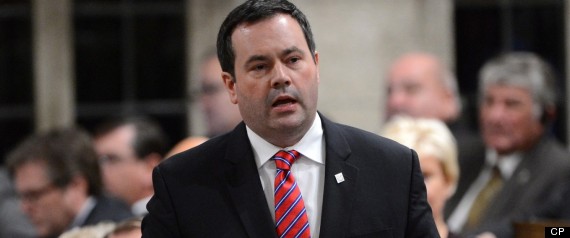
Gaelic speaking Nova Scotians are not happy with federal minister Jason Kenney.

Kenney has weighed in on the merits of the language and the government's role in preserving it. Kenney said federal government money should not be used to promote languages that are fighting for survival.

Wednesday, October 24, 2012

Dominance of French and English languages shrinking, census shows

Immigration is turning Canada into a country of many languages, with the historic dominance of French and English shrinking.

Canada remains a nation of French and English speakers, but people are speaking a greater variety of languages at home, as long-term trends in immigration shape the country’s linguistic landscape.

The proportion of Canadians who reported speaking two or more languages at home was 17.5 per cent in 2011, up from 14.2 per cent five years earlier, according to Statistics Canada language data from the 2011 Census.

Aboriginal languages in deep trouble, but some rescue efforts paying off

In a way, the chattering half-dozen First Nations youngsters are learning their mother tongue for the first time – and the future of the once-mighty Mohawk language is hanging in the balance.

The students are a critical component of a language-revitalization program at the Tsi Tyonnheht Onkawenna Language and Cultural Centre in Tyendinaga First Nation that hopes to breathe new life into the community’s original identity, one small voice at a time.

Saturday, September 08, 2012

Quebec Language Laws: Graham Fraser, Federal Language Commissioner, Keeping Close Eye On Quebec After PQ Win

CALGARY - Canada's languages watchdog issued a warning to Quebec's new minority government Friday, saying he is keeping a close eye on moves toward toughening the province's language laws.

Graham Fraser, a former journalist from Quebec who literally wrote the book on the history of the newly elected Parti Quebecois, says he wants to make sure any changes Pauline Marois makes don't run afoul of the Charter of Rights and Freedoms.

Sunday, February 19, 2012

Native American Languages Siletz Dee-Ni, Ashininaabemowin Facing 'Extinction'


 VANCOUVER, British Columbia — Many of the world's minority languages, some spoken by only a handful of speakers, are on the brink of extinction, and community activists and scientists are teaming to try to keep them alive.

One example is the Native American language Siletz Dee-ni, which was once spoken widely by native people in Oregon, but which now may be spoken fluently by only one man: Alfred "Bud" Lane.

"We're a small tribe on the central Oregon coast," Lane said via telephone here at the annual meeting of the American Association for the Advancement of Science. "Like most small groups of people, our pool of speakers has been reduced over a period of time, until the 1980s when very few speakers were left. Linguists labeled it 'moribund.'" [Q&A: Dead Languages Reveal a Lost World]

But Lane and his community decided to fight back.

Sunday, January 29, 2012

Je Speak Inuktitut

The case for mandating aboriginal languages in Canadian public schools.


While the United States and the social democracies of Europe tend to simplify matters by encouraging assimilation of new immigrants, Canada likes to complicate things. We offer plurality and multiculturalism – or, perhaps more accurately, interculturalism. Like an ever-expanding circle, we accommodate, incorporate, and amalgamate other cultures. But what we are less good at is accommodating – and, indeed, understanding – the foundational diversity that makes us unique.

Former prime minister Pierre Elliot Trudeau understood that French and English were more than just two languages spoken in a country – that they were two fundamental elements of a nation. His government’s Official Languages Act of 1969 – which officially made Canada a bilingual country – cemented a cultural reality that had been there all along.

In Ontario, we attempt to honour this reality by mandating French as a Second Language (FSL) in public education (until Grade 9) and offering French Immersion (FI) programs of varying intensity. Language, more than anything, provides access to, and appreciation for, a culture. For Canadians, learning French reinforces a sense that the French culture is part of who we are. It is thus sad when, as a country, Canada downplays the importance of the other non-Anglo foundation of our prosperous nation – Aboriginal Peoples and their cultures.