Democracy Gone Astray

Democracy, being a human construct, needs to be thought of as directionality rather than an object. As such, to understand it requires not so much a description of existing structures and/or other related phenomena but a declaration of intentionality.
This blog aims at creating labeled lists of published infringements of such intentionality, of points in time where democracy strays from its intended directionality. In addition to outright infringements, this blog also collects important contemporary information and/or discussions that impact our socio-political landscape.

All the posts here were published in the electronic media – main-stream as well as fringe, and maintain links to the original texts.

[NOTE: Due to changes I haven't caught on time in the blogging software, all of the 'Original Article' links were nullified between September 11, 2012 and December 11, 2012. My apologies.]

Showing posts with label Libya. Show all posts

Friday, September 22, 2023

Heads of Libya’s warring sides in Russia for talks

Talks in Russia aimed at agreeing on an unconditional and open-ended ceasefire in Libya failed to achieve a breakthrough on Monday and have been adjourned for the night.

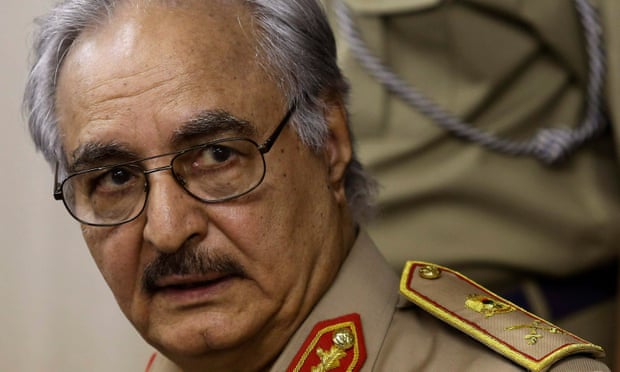
The head of the UN-supported Government of National Accord (GNA), Fayez al-Sarraj, signed a draft ceasefire agreement, while Khalifa Haftar – commander of the eastern-based Libyan National Army (LNA) – requested more time to consider it.
Friday, July 27, 2018

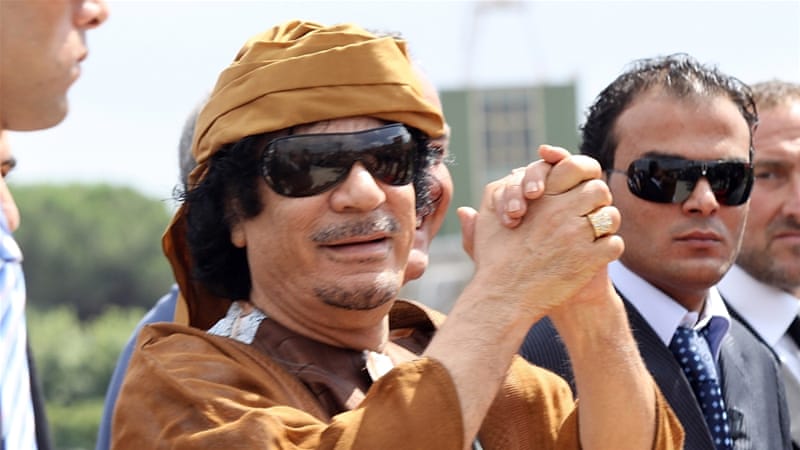
Libya six years on: No regrets over Gaddafi's demise

The six years since the Libyan people's successful uprising to end Muammar Gaddafi's rule have seen the country divided between rival governments, various armed groups, ethnic militias, and a renegade general.

A once united rebel front has now broken into innumerable armed factions loyal to their home cities, political or religious ideology, or foreign backers.

Friday, June 23, 2017

Abandoned at Sea

The rescuers prepare for the calm days, more than the stormy ones.

On land in small towns near the Libyan coast, refugees from Africa and the Middle East are crowded into safe houses, waiting for good weather. When the sea quiets, the refugees pack onto rubber dinghies or large wooden fishing vessels and set off in the early morning toward Europe.

Wednesday, March 01, 2017

EU reaches out to Russia to broker deal with Libyan general Haftar

European diplomats are attempting a last-ditch effort to dissuade Russia from helping the renegade military strongman Khalifa Haftar seize overall military power in Libya.

Haftar, the military commander of Libya’s eastern government, has sought Moscow’s help to battle Isis, but European diplomats fear that that he could join what has been described as Vladimir Putin’s axis of secular authoritarians in the Middle East alongside Syrian president Bashar al-Assad and Egyptian president Abdel Fatah al-Sisi.

Friday, March 18, 2016

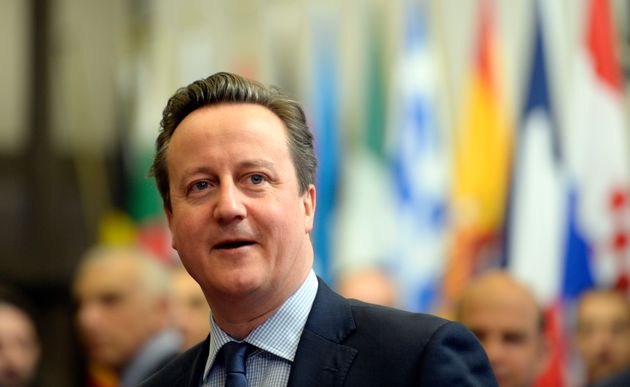
David Cameron’s Plan To Use Navy Vessels Near Libyan Coast To Deter Migrants Labelled ‘Outrageous’

David Cameron wants to deploy Royal Navy vessels close to the coast of Libya to deter thousands of migrants from embarking on the perilous sea journey to Europe this summer in a plan that has been labelled “outrageous”.

The Prime Minister told European Union leaders at a summit in Brussels that he is extending the deployment of HMS Enterprise on anti-trafficking operations in the central Mediterranean at least until the summer. He also wants to see the mission expanded into Libyan territorial waters to enhance its deterrent effect.

Tuesday, March 01, 2016

A New Libya, With ‘Very Little Time Left’

It was a grisly start to the new era for Libya, broadcast around the world. The dictator was dragged from the sewer pipe where he was hiding, tossed around by frenzied rebel soldiers, beaten bloody and sodomized with a bayonet. A shaky cellphone video showed the pocked face of Col. Muammar el-Qaddafi, “the Leader” who had terrified Libyans for four decades, looking frightened and bewildered. He would soon be dead.

Monday, February 23, 2015

How ISIS-Allied Militants Gained Ground In Libya

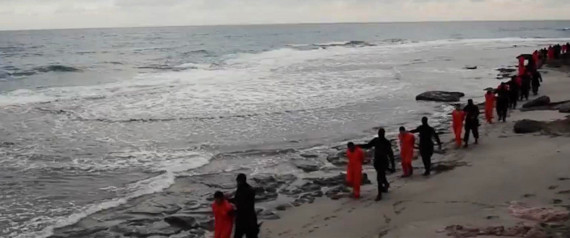
Militants linked to the Islamic State group released a gruesome video on Sunday showing the beheadings on a Libyan beach of 21 Coptic Christians from Egypt. The brutal murders once again put the spotlight on the power vacuum in the North African nation and have raised concerns the failing state is proving to be fertile ground for extremist groups.
Saturday's killings weren't the first by Libyan fighters claiming allegiance to the Islamic State group, which has taken over parts of Iraq and Syria. IS-linked militantsclaimed responsibility for the January attack on a luxury hotel in Tripoli, which left 10 people dead. They also claimed a role in the murder of more than a dozen soldiers and the execution of two Tunisian journalists, The Guardian notes.

Tuesday, September 23, 2014

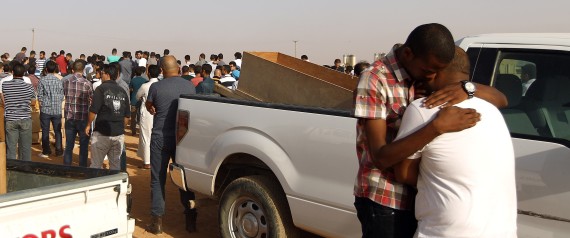
Activists, Journalists Killed In Spate Of Assassinations In Libya

CAIRO (AP) — Targeted killings in Libya over two days left 10 rights activists, journalists, and members of the security forces dead in the country's east, local security officials said Saturday.

Among the slain Thursday and Friday were two activist bloggers, and four current and former military and police officers. The officials said three other people who were targeted survived assassination attempts in the eastern city of Benghazi.

The officials spoke on condition of anonymity because they were not authorized to brief reporters.

The identity of the assailants was not immediately known. Islamic radical militias, however, have been blamed for frequent killings of secular activists, judges, moderate clerics, policemen and soldiers in Benghazi, Libya's second largest city.

Libya is witnessing the worst bout of violence since the 2011 ouster of longtime dictator Moammar Gadhafi.

Original Article
Source: huffingtonpost.com/
Author: AP | By MARIAM RIZK

Wednesday, August 27, 2014

Arab Nations Strike in Libya, Surprising U.S.

CAIRO — Twice in the last seven days, Egypt and the United Arab Emirates have secretly launched airstrikes against Islamist-allied militias battling for control of Tripoli, Libya, four senior American officials said, in a major escalation of a regional power struggle set off by Arab Spring revolts.

The United States, the officials said, was caught by surprise: Egypt and the Emirates, both close allies and military partners, acted without informing Washington, leaving the Obama administration on the sidelines. Egyptian officials explicitly denied to American diplomats that their military played any role in the operation, the officials said, in what appeared a new blow to already strained relations between Washington and Cairo.

Monday, May 19, 2014

Rogue Libyan General's Troops Attack Parliament

TRIPOLI, Libya (AP) — Forces apparently loyal to a renegade Libyan general said they suspended parliament Sunday after earlier leading a military assault against lawmakers, directly challenging the legitimacy of the country's weak central government three years after the overthrow of dictator Moammar Gadhafi. Libya's leadership condemned the attack and vowed to carry on.

Wednesday, December 18, 2013

Britain's MI6 linked to Libya torture scandal

False intelligence extracted by torture in Tripoli's notorious Abu Salim prison has been linked to arrests of Libyan dissidents in the United Kingdom, an investigation by Al Jazeera's People and Power has revealed.

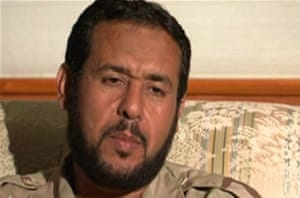
In this exclusive report, Abdel-Hakim Belhaj, the leader of the anti-Gaddafi resistance group, the Libyan Islamic Fighting Group (LIFG), explains that he and fellow leader Sami al-Saadi were subjected to torture by his Libyan interrogators, which forced them to give up the names of innocent residents in the UK.

Monday, October 07, 2013

U.S. Launches Raids In Somalia And Libya

MOGADISHU, Somalia -- MOGADISHU, Somalia (AP) — In a stealthy seaside assault in Somalia and in a raid in Libya's capital, U.S. special forces on Saturday struck out against Islamic extremists who have carried out terrorist attacks in East Africa, snatching a Libyan al-Qaida leader allegedly involved in the bombings of U.S. embassies 15 years ago but aborting a mission to capture a terrorist suspect linked to last month's Nairobi shopping mall attack after a fierce firefight.

A U.S. Navy SEAL team swam ashore near a town in southern Somalia before militants of the al-Qaida-linked terrorist group al-Shabab rose for dawn prayers, U.S. and Somali officials told The Associated Press. The raid on a house in the town of Barawe targeted a specific al-Qaida suspect related to the mall attack, but the operation did not get its target, one current and one former U.S. military official told AP.

Thursday, August 08, 2013

Can Libya Be Saved?

Two years ago this month, Tripoli, the capital of Libya, fell to the amalgam of rebel forces that had been closing in on the city. The country’s leader Muammar Qaddafi fled to his home town, Surt, where, on October 20, 2011, rebels stabbed, beat, and shot him to death after his convoy was hit by a NATO missile strike. Qaddafi’s eccentric, forty-two-year dictatorship was over, signalling the apparent end to a dramatic chain of events that had started nine months earlier, in the eastern city of Benghazi. There, inspired by the overthrow of Hosni Mubarak, in neighboring Egypt, Libyans had demonstrated against Qaddafi’s rule, and the protests had turned into a bloody national showdown with security forces. The protesters, eventually assisted by French, American, and British bombers under the NATO banner, succeeded. The smoke had not yet cleared when the victory was being touted as a shining example of what Western powers could do on a modern battleground without ever putting “boots on the ground.”

Monday, July 01, 2013

Was Benghazi Killing of Ambassador Stevens, 3 Others "Blowback" for Secret U.S. Assassinations?

A new book on last year’s Benghazi attack in Libya concludes the killing of U.S. Ambassador Christoper Stevens and three others was in part blowback for a secret assassination operation run in North Africa by the Joint Special Operations Command and John Brennan, President Obama’s then-counterterrorism adviser, now director of the CIA. According to "Benghazi: The Definitive Report," President Obama’s counterterrorism adviser, John Brennan, and JSOC commander, Admiral Bill McRaven, were running "off the books" unilateral operations in North Africa that were not coordinated through the Pentagon or other governmental agencies, including the CIA. Ambassador Stevens was reportedly never informed about these operations. We’re joined by the book’s authors, Brandon Webb and Jack Murphy, both veterans of U.S. special operations. Last week they published the contents of Ambassador Stevens’ diary from the days before the Benghazi attack on their website, SOFREP.com.

Video
Source: democracynow.org
Author: --

Monday, February 25, 2013

Libya's Nightmarish Winter

The West's hypocrisy and oil greed are coming home to roost with a vengeance in Libya as the Arab Spring in that country turns into a nightmarish winter characterized by armed gangs, economic collapse, a decline in services by an incompetent government and increasing political domination by radical Islamists.

Whether or not the Libyan people think this is better than living under the autocratic and bizarre Muammar Gaddafi is obviously for them to decide. But the notion that getting rid of Gaddafi was somehow going to bring liberal democracy to this oil-rich country was never believed by the Western powers, including Canada, who brought about his downfall. We will never know if a civil war in that country without the West's intervention on one side would have seen Gaddafi ousted. It seems unlikely. Gaddafi would also still be alive without U.S. intelligence provided to the rebels on his attempted escape.

Saturday, January 26, 2013

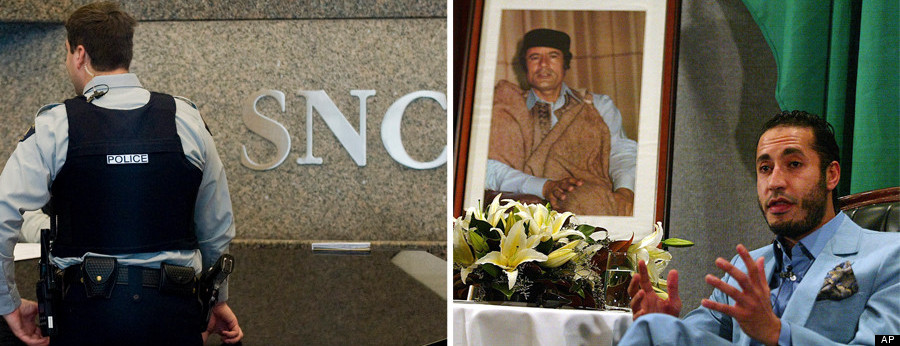
SNC-Lavalin Bribery Allegations: Saadi Gaddafi Got $160 Million For Contracts, RCMP Says

Canadian engineering giant SNC-Lavalin paid $160 million in bribes to the son of Libyan dictator Muammar Gaddafi in order to secure contracts in the North African country, according to RCMP documents obtained by the National Post and La Presse.

According to the documents, which were used by the RCMP to obtain a search warrant for a raid on SNC-Lavalin headquarters last spring, the company’s former head of construction, Riadh Ben Aissa, was responsible for funnelling the money to Saadi Gaddafi, the Post reported.

Friday, January 25, 2013

From Libya to Mali: Triumphs and Consequences

When the Gadhafi regime in Libya collapsed in 2011 following a mass uprising and civil war, the international community welcomed the ousting of a tyrannical dictator. But even in the euphoria of the moment, some observers of the region urged caution. I wrote in an article on The Mark at the time:

    An even more disturbing concern – which has received very little attention in the media – is the impact that the Libyan crisis could have on the rest of Africa. During his 40 years in power, Gadhafi has thrown his influence and money across the continent to prop up or bring down governments. He has done this more than any other African leader. His fingerprints can be found on armed conflict from Chad to Sudan to the Central African Republic. He has also cultivated a loyal band of mercenaries from sub-Saharan Africa that he now uses to terrorize his own people.

Wednesday, December 19, 2012

State Benghazi Report Is Harshly Critical Of Department, Busts Many Right-Wing Myths

WASHINGTON -- An investigation into the State Department's preparations for and management of the terrorist attack in Benghazi, Libya, has concluded that "systemic failures and leadership and management deficiencies" within the department played a major role in the devastation that took place there last September.

Four Americans were killed in the overnight raid on the compound, including U.S. Ambassador Chistopher Stevens. The ensuing controversy over the incident, and the administration's handling of it, threatened to derail President Barack Obama's reelection campaign through the fall.

Thursday, September 20, 2012

Libyan mission racked up $11M in hotel bills

When the Royal Canadian Air Force deployed over Libyan skies, its pilots bedded down safe and sound in hotels in Sicily.

In fact, all Canadian troops there in support of the UN-backed mission in Libya were booked into hotels — an initially ad hoc solution that lasted for nearly nine months and cost taxpayers millions of dollars.

CBC News has learned the Armed Forces likely spent about $11 million on hotel bills, which amounts to more than 10 per cent of the military's $103 million total cost of the mission.

Thursday, September 13, 2012

“Libya Surprise” Could Be Death Knell for Romney Campaign

Harold Wilson, who was Prime Minister of Britain twice, in the sixties and seventies, famously said a week is a long time in politics. Sometimes, so is a day. This time yesterday, the conventional wisdom, faithfully trotted out by yours truly among many, was that Obama was coasting to victory in a Presidential sweepstakes that was threatening to peter out in tedium.

So much for that. After last night’s “September surprise,” Obama is still home free, and Mitt Romney is still trailing. In fact, this might well be the death knell for his campaign. But what an uproar.