Democracy Gone Astray

Democracy, being a human construct, needs to be thought of as directionality rather than an object. As such, to understand it requires not so much a description of existing structures and/or other related phenomena but a declaration of intentionality.
This blog aims at creating labeled lists of published infringements of such intentionality, of points in time where democracy strays from its intended directionality. In addition to outright infringements, this blog also collects important contemporary information and/or discussions that impact our socio-political landscape.

All the posts here were published in the electronic media – main-stream as well as fringe, and maintain links to the original texts.

[NOTE: Due to changes I haven't caught on time in the blogging software, all of the 'Original Article' links were nullified between September 11, 2012 and December 11, 2012. My apologies.]

Showing posts with label Arctic. Show all posts

Wednesday, August 01, 2018

Arctic Temperatures Are Rising So Fast Computers Don’t Believe They’re Real

Three hundred and twenty miles north of the Arctic Circle, a weather station in America’s northernmost city of Utqiaġvik (formerly Barrow), Alaska, has been quietly collecting temperature data since the 1920s.

Early this month, while preparing a report on US climate, experts at the National Centers for Environmental Information (NCEI) noticed something odd: They were missing data from Utqiaġvik for all of 2017, and some of 2016.

Monday, July 30, 2018

Why Russia is sending robotic submarines to the Arctic

The Arctic: the smallest of Earth’s five oceans, with icy waters and dagger-like winds, is home to some of the most unforgiving conditions on the planet.

But far below the skin of sea ice that waxes and wanes with the seasons, this inhospitable ocean is hiding a treasure trove of natural resources – one that’s largely untapped by mankind.

Wednesday, June 28, 2017

Russia unveils new Arctic military base

Visitors to the Russian defence ministry website can now take a "virtual tour" of a new military base in a remote region of the Arctic.

Such media openness contrasts markedly with Russia's traditional military secrecy. However, the tour does not show any new military hardware.

Wednesday, April 27, 2016

China's Northwest Passage Ambitions Could Challenge Canada's Sovereignty: Expert

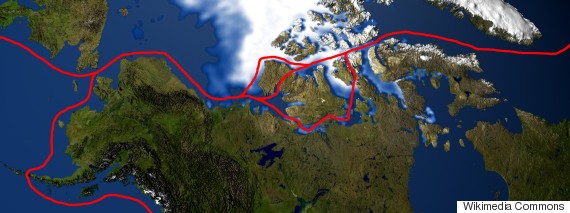
China wants to run tankers right up our Northwest Passage.

Not to find the hand of Franklin. But to ship goods to North America's East Coast ... and challenge Canadian jurisdiction over Arctic waters.

Friday, August 28, 2015

Conservative insider won huge contract to build Harper’s Arctic project

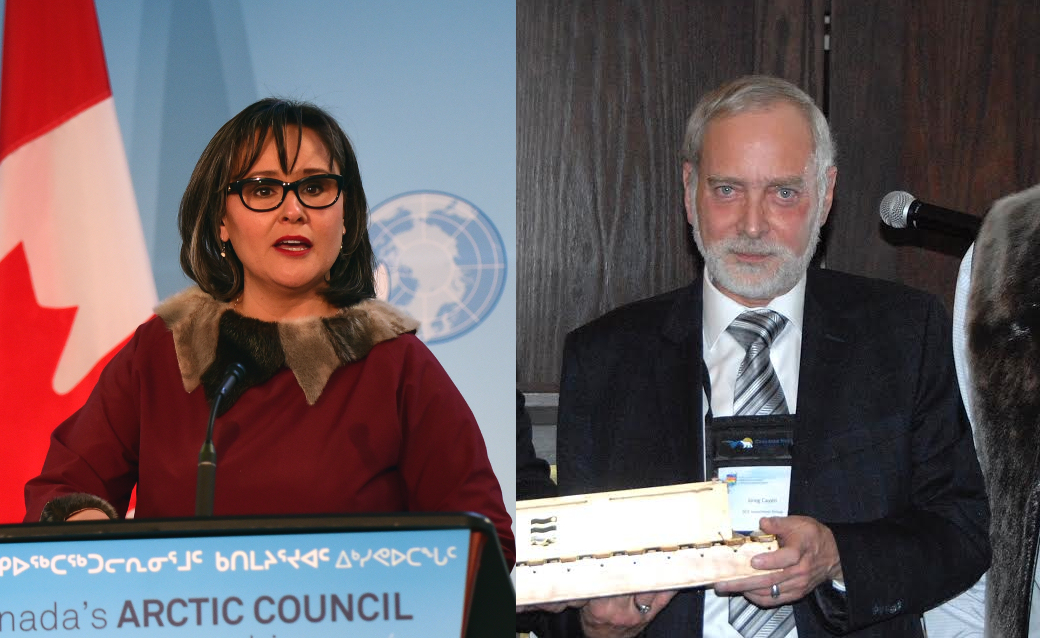
A hugely expensive public contract to build an Arctic research station —promoted by Prime Minister Stephen Harper —went to a joint venture that included a company run by a Conservative Party insider with close ties to Environment Minister Leona Aglukkaq, the National Observer has confirmed.

An $85-million construction contract to build the Canadian High Arctic Research Station (CHARS) was awarded in June 2013 to a partnership between EllisDon and NCC Dowland Construction —the latter is controlled by a prominent Iqaluit businessman, Greg Cayen, who has been a key planner behind Leona Aglukkaq’s two federal election victories.

Tuesday, August 04, 2015

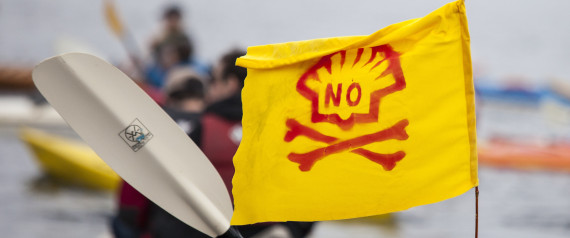
It's Time for Shell to Abandon Its Irresponsible Arctic Drilling Plans

At this moment, the damaged Fennica icebreaker is entering the water in my home of Portland, OR, in what could be a make-or-break moment for our environment and our future climate.

Here's the background: In 2008, President George W. Bush not only lifted the executive ban on Outer Continental Shelf drilling, but also leased parts of the Arctic's Chukchi Sea to Shell for oil and gas exploration.

Friday, May 29, 2015

Destroying What Remains: How the US Navy Plans to War Game the Arctic

I lived in Anchorage for 10 years and spent much of that time climbing in and on the spine of the state, the Alaska Range. Three times I stood atop the mountain the Athabaskans call Denali, "the great one." During that decade, I mountaineered for more than half a year on that magnificent state's highest peaks.  It was there that I took in my own insignificance while living amid rock and ice, sleeping atop glaciers that creaked and moaned as they slowly ground their way toward lower elevations.
Sunday, March 22, 2015

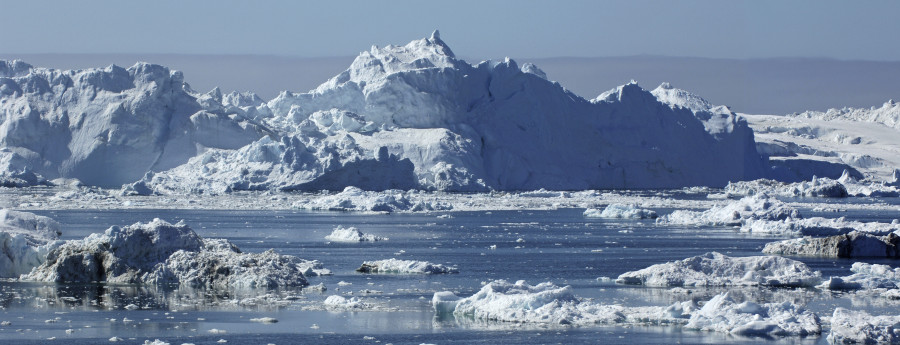
Arctic Sea Ice Hits Record Low Winter Maximum, Points To Evidence Of Long-Term Climate Change

OSLO, March 19 (Reuters) - Arctic sea ice this year is the smallest in winter since satellite records began in 1979, in a new sign of long-term climate change, U.S. data showed on Thursday.

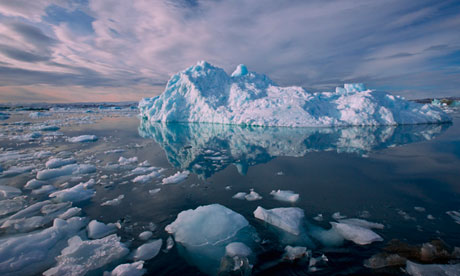
The ice floating on the Arctic Ocean around the North Pole reached its maximum annual extent of just 14.54 million square kms (5.61 million sq miles) on Feb. 25 - slightly bigger than Canada - and is now expected to shrink with a spring thaw.

Thursday, March 19, 2015

Russia Launches Massive Arctic Military Drills

MOSCOW (AP) — The Russian military on Monday launched sweeping military maneuvers in the Arctic and other areas, a show of force ordered by President Vladimir Putin amid spiraling tensions with the West over Ukraine.

The five-day Arctic drills involving 38,000 servicemen, more than 50 surface ships and submarines and 110 aircraft are intended to check the readiness of Russia's Northern Fleet and the military's ability to deploy additional forces from central Russia.

Thursday, December 18, 2014

Shell's Arctic Challenger to burn oil spills, as solution to the pollution

A vessel that is part of Shell Oil’s $5-billion drilling plans to tap the colossal oil and gas reserves in the Arctic sailed into the Port of Vancouver earlier this month, the Vancouver Observer has learned.  The arrival comes amid questions about the ship’s oil-spill-clean up tactics, as well as scientific predictions that 2014 may have been the hottest global temperature year on record.

The Arctic Challenger went into Seaspan's dry dock in Vancouver two weeks ago for systems work. The vessel represents the multinational energy corporation's hopes for demonstrating its technical know-how for cleaning up underwater Arctic oil spills.

Thursday, October 23, 2014

Fewer Arctic warships, leased tankers a sign of more modest shipbuilding plan

OTTAWA - The Harper government is trimming its expected order of Arctic patrol ships and evaluating a set of unsolicited proposals to convert civilian cargo ships for use by the Canadian navy, The Canadian Press has learned.

Both steps are a sign that more modest expectations have been set for the government's national shipbuilding strategy, which has yet to deliver a single vessel some three years after the shipyards were chosen in 2011.

The navy is set to retire its two replenishment ships, HMCS Preserver and the fire-damaged HMCS Protecteur, without having any replacements ready to sail, despite a decade-long replacement program.

Monday, September 29, 2014

Ice Melt Dilutes Arctic Sea’s CO2 Cleanup Role

LONDON—The Arctic ice cap has just passed its summer minimum—and it’s the sixth lowest measure of sea ice recorded since 1978, according to scientists at the US space agency NASA.

For three decades, the shrinking Arctic ice—and the growing area of clear blue water exposed each summer—has been a cause of increasing alarm to climate scientists.

Thursday, September 04, 2014

Federal government balks at backing Arctic Internet project

OTTAWA — The head of a company trying to lay a broadband fibre optic cable along the Northwest Passage — a project that would connect Tokyo to London — says the project may not go ahead unless the Canadian government becomes a major customer.

After three years of lobbying — and an appeal directly to Prime Minister Stephen Harper — the federal government doesn’t appear ready to do what Arctic Fibre is asking it to: Switch over three-quarters of its Internet services in the North to broadband cable from satellite services.

Sunday, August 24, 2014

Federal government puts polar briefings on ice

Federal scientists who keep a close eye on the Arctic ice would like to routinely brief Canadians about extraordinary events unfolding in the North.

But newly released federal documents show the Harper government has been thwarting their efforts.

In 2012, as the Arctic ice hit the lowest point ever recorded, scientists at the Canadian Ice Service were keen to tell Canadians about the stunning ice loss.

Thursday, February 27, 2014

Arctic Reindeer Reserve Offered Up For Oil, Gas Exploration: Documents

OTTAWA - Tracts of land that had been set aside for reindeer grazing in Canada's North have instead been offered up by the Conservative government for oil and gas exploration, newly released documents show.

Companies interested in obtaining petroleum exploration rights in the Mackenzie Delta and Beaufort Sea region of the Northwest Territories were asked last year to nominate blocks of land that they wanted to see included in a subsequent call for bids.

As Arctic Melts, Marine Mammals Become Sentinels for Disease

Massive ice loss in the Arctic is like a game of craps for scientists -- they can make some guesses about what an ice-free north could mean, but mostly they're just watching as some species catch a lucky break, and some don't, including humans.

Vibrio bacteria responsible for paralytic shellfish poisoning in humans, for example, have headed north with warmer waters. But the most recent big news is the discovery of Toxoplasma gondii in western Arctic beluga whales, a traditional food of some Inuit communities. Michael Grigg, a molecular biologist with the University of British Columbia's Marine Mammal Unit, reported the news at the American Association for the Advancement of Science Meeting.

Monday, December 30, 2013

Ice-free Arctic in two years heralds methane catastrophe – scientist

A new paper in the journal Nature argues that the release of a 50 Gigatonne (Gt) methane pulse from thawing Arctic permafrost could destabilise the climate system and trigger costs as high as the value of the entire world's GDP. The East Siberian Arctic Shelf's (ESAS) reservoir of methane gas hydrates could be released slowly over 50 years or "catastrophically fast" in a matter of decades – if not even one decade – the researchers said.

Not everyone agrees that the paper's scenario of a catastrophic and imminent methane release is plausible. Nasa's Gavin Schmidt has previously argued that the danger of such a methane release is low, whereas scientists like Prof Tim Lenton from Exeter University who specialises in climate tipping points, says the process would take thousands if not tens of thousands of years, let alone a decade.

Friday, December 13, 2013

Race to claim High Arctic's oil resources may be a fool's mission -- High Arctic is 'probably the most expensive place in the entire world to drill for oil'

When asked earlier this week about extending Canada's territorial claims in the Arctic, Foreign Affairs Minister John Baird was clear about the rationale.

"We are determined to ensure that all Canadians benefit from the tremendous resources that are to be found in Canada's Far North," he said.

But while the federal government is eager to establish its claims to the polar seabed, some Arctic experts believe that Ottawa is putting too much stock in trying to reap the potential riches of such a harsh domain.

Sorry Climate Change Skeptics: Arctic Melting Trend Continues Despite Milder Year

WASHINGTON (AP) — The rapid melting in the Arctic eased up this year. But the government says global warming is still dramatically altering the top of the world, reducing the number of reindeer and shrinking snow and ice, while increasing certain fish and extending the growing season.
The National Oceanic and Atmospheric Administration issued its report card for the Arctic on Thursday, portraying 2013 as moderate compared with the roasting 2012.

Monday, December 09, 2013

Arctic Ice Melt Tied To Heat Waves And Downpours In U.S., Europe And Elsewhere, Study Suggests

OSLO, Dec 8 (Reuters) - A thaw of Arctic ice and snow is linked to worsening summer heatwaves and downpours thousands of miles south in Europe, the United States and other areas, underlying the scale of the threat posed by global warming, scientists said on Sunday.

Their report, which was dismissed as inconclusive by some other experts, warned of increasingly extreme weather across "much of North America and Eurasia where billions of people will be affected".